Mix Beautiful Color

photo-6This magnet-sentiment was on Jim’s refrigerator:

It’s never too late to become what you might have been.

It is particularly poignant because both Jim and I are surprised, dare I admit, disoriented, after finally producing The Lost Boy. It was over a decade in coming. I’d stopped believing that it would ever find a path to the stage and, instead, would remain a good story for dinner conversation. Now that it’s out of the box and rolling around in the world of possible-next-productions, I hear Tom’s voice ringing in my ears, “Readiness is all.” It couldn’t happen until it was ready, until I was ready.

For the past decade, coincident with the development of The Lost Boy, I have been telling stories at conferences, with symphonies, during organizational trainings, and other random stage performances. I have inadvertently learned to tell a good story (or better stated while slaughtering all grammar: to tell a story good). 5 years ago I couldn’t have performed the play as I did last week. I didn’t have the chops for it. I do now.

Years ago, after being wowed by Jim Edmondson’s performance of King Lear, I asked him what he’d learned from doing the role. He replied, “I don’t have enough colors in my paint box to do it justice. Not yet.” This giant of American theatre blew my socks off with his performance, but felt that he fell short. He couldn’t yet fulfill the demands of the role. He knew there was more to grasp and his artistic arms were not long enough. He knew he was not yet ready. No amount of accolade or sock-less fans would change what he knew: there was more to the role than he could reach. More age, more life, more skill was needed. He taught me in that moment what it meant to be an artist. The compass is internal. The capacity is ever expanding if you work at it.

I now believe that, to produce The Lost Boy, I also needed to find the right reason before readiness was available. For years I thought I had an obligation to Tom. I thought I had to finish it for him and tell his story. That was only partially true. The real obligation was to myself. I had to finish it for me – and it took a good deal of readiness for me to see that. It had to become my play. And, in becoming my play, I can now see that I have a world of color in my paint box – and a world of color that I still need to develop. That is the name of this game of mastery. There is never an end. There are just more and more beautiful colors to find and mix and share.


Step Into The Field

photo-5[continued from “Jump!]

I wrote this phrase: “The one facilitates the journey for the many.” And, today, I would add: the one facilitates the journey for the many so that the many can experience the one. This little phrase is the point and the purpose of the theatre.

I’ve come to believe, at this stage in my artist life, that all processes of art-making are actually exercises in presence. And, presence, for me, has come to mean transcending any experience of separation. For instance, when I am fully engaged with painting a painting, “I” am nowhere to be found. Time disappears. There is only rolling creation. To use a cliché: something comes through me. Language is incapable of grasping what really happens and all we are left with is “something comes through” – a statement of separation.

A week ago today we were preparing to perform the closing of The Lost Boy. This play is unique in my experience for many reasons (it would require a book or two to explain the many layers of this cake), one of which was that we only had two performances: an opening and a closing. We hit our stride on the closing – and by that I mean we let go of thinking, preparing, adjusting…, and entered presence. We stepped onto the stage with no thought of “what’s first” and “what’s next.” The play happened with no effort. The Chili Boys played like never before. We were, to use another cliché, in the flow. I have never felt more alive, more connected, more present. It was fun!

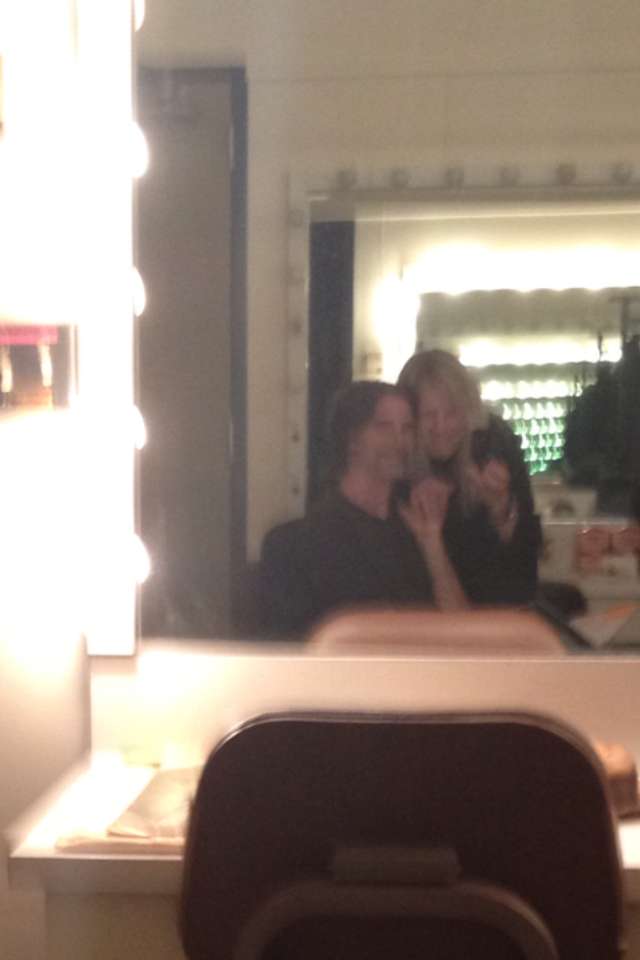
50 minutes before stepping onto the stage

50 minutes before stepping onto the stage

Years ago, I had the opportunity to assist Jim Edmondson in a series of plays and I riddled him with questions. He introduced me to the notion that the art of acting was the art of presence (though he used a different language). He taught me that words like “focus” and “intention” are merely tools for cultivating the capacity to be present. Presence is the portal and the actors’ (artists’) job is to step into presence so the audience can join them. Literally, join with them in the field of the present, the place of common story. To be. Together, in a single story. And, although he did not say it this way, he taught me that “to be” is infinitely more powerful than “to become.” “To be” is not an arrival platform; it is an experience of the many recognizing itself as the one [could you ask for a better definition of art!].

Mike, our stage manager extraordinaire, came down from the booth and told us that our performances were different than the first night. We were more potent; we found nuance and greater depth. He was right. We were finally able to surrender to the work, get out of our own way, and step into the field of shared story.

Jump!

photo

The set for The Lost Boy

Once, I stood on a ledge. I wanted to jump into a river several feet below but I was afraid. I’d watched kids do it all day. They told me in excited tones that it was only a 70-foot drop. I’m a bit afraid of heights – okay, I’m a lot afraid of heights – and from the ledge it looked to me more like 1000 feet. I jumped but have no memory of it. After investing in my fear for many minutes, I remember making a decision, standing and walking toward the edge. I remember bobbing to the surface and laughing aloud.

I learned a great lesson that day: if I put my focus on my fear I will be paralyzed. Before taking the big step off the ledge I sat on a rock, and told myself that I was afraid. I was stuck. I couldn’t move. My mind was atwitter with all the reasons I couldn’t do it. When, finally, I realized that, if I put the same amount of focus and energy into jumping as I was investing into being afraid, the jump would be easy. It would be inevitable. It would be a decision, a choice. And, it was easy. The jump was as intentional as the fear was irrational. It was enlivening.

The Chili Boys in rehearsal

The Chili Boys in rehearsal

Last week we performed my play, The Lost Boy and through the process I revisited my ledge of so many years ago. The opening night served as a touchstone of growth. A play is made complete with the addition of an audience. Boil a play down to its essence and there is an actor and an audience. One is exposed and vulnerable, the other is safe within a group. That’s what makes it work: the one facilitates the journey for the many.

The actor gives and the audience receives – and, if the actor is doing his or her job, the audience gives and the actor receives. It’s a loop. It is a relationship. For the actor, this dance of giving and receiving can be either a terrifying proposition or an exhilarating experience. It all depends upon where the actor places his or her focus. If the focus is on pleasing the audience, the play will be a miserable affair to perform. The audience will play the role of judge or worse, the enemy. It will be a ledge alive with irrational fear. If, instead, the focus is on the action of the play, the simplicity of doing, the experience will be alive and invigorating for everyone involved. The audience will be allies on a single journey with the actor. The actor will be present so that the audience can also experience presence.

When Kerri and I stepped onto the stage last Friday, there was no ledge; it was all jump…

[to be continued]

Get Back On And Ride

Guess what. I'm doing it.

Guess what? I’m doing it.

It is universally true that we must fail to learn. In fact, as absolutes and paradoxes go, the single universal lesson that we must learn is that there is no such thing as failure. To unlearn is, in fact, also to learn. Everything is a step forward when failure is out of the equation. I fell off my bike more than once before I learned to balance and ride. I made some terrifically ugly colors as I learned to paint. That is the nature of learning.

Over the past decade I’ve tried more than once to produce my play, The Lost Boy. And, like learning to ride a bike, I’ve fallen off with each attempt. The latest tumble came with a failed Kickstarter attempt. Sitting on the curb, my metaphoric bike akimbo, I asked, “What is it about this play?” It will not leave me alone and yet it has been more than difficult to produce. And, as it does, the learning followed the fall. And there is nothing to be done but get back up and ride.

And, as is also true, when you decide that you are going to do something, the way opens (note: that does not mean that there are no challenges). When we didn’t meet our Kickstarter goal, I had the option to let it go forever or, I had to decide that I was going to produce this play with bake sales, lemonade stands, or any other whacky idea that would get me to opening night. This play will not leave me alone and, as I learned in the fall, I will not leave it alone. The decision was already made and I needed the failed campaign to see it.

And the way opened. The University of the Pacific decided to donate the theatre and to help with some marketing through alumni networks. I laughed when, given their generous donation, I made my new budget. The amount I need (bare bones) to get to opening night is almost identical to the amount pledged in the failed campaign. So, taking what I’ve learned, I’ve mounted a new campaign and asked the previous pledgers to pledge again. And, since I adore paradoxes and don’t really believe in absolutes, I’m passing this link out in every way possible. Nothing is for sure – except that I will do this play in February in California.

The lesson, of course, is to ask for help and ask again (something I was not good at doing in the first campaign). The other lesson is this: a play that will not let you go is worth doing and it is worth doing whatever it takes to give it life. So help me give it life. Here’s the new Kickstarter campaign. Please support it if you can by pledging or passing the link out through your networks.

I don’t mind falling off my bike again because now I know that I will simply dust myself off and get back on to ride. Join me in California in February for the world premiere of The Lost Boy.

title_pageGo here to buy hard copies (and Kindle) of my latest book: The Seer: The Mind of the Entrepreneur, Artist, Visionary, Innovator, Seeker, Learner, Leader, Creator,…You.

Guess what. I'm doing it.

And, in case you missed it, here’s the link to the new The Lost Boy Kickstarter campaign

Mix Better Color

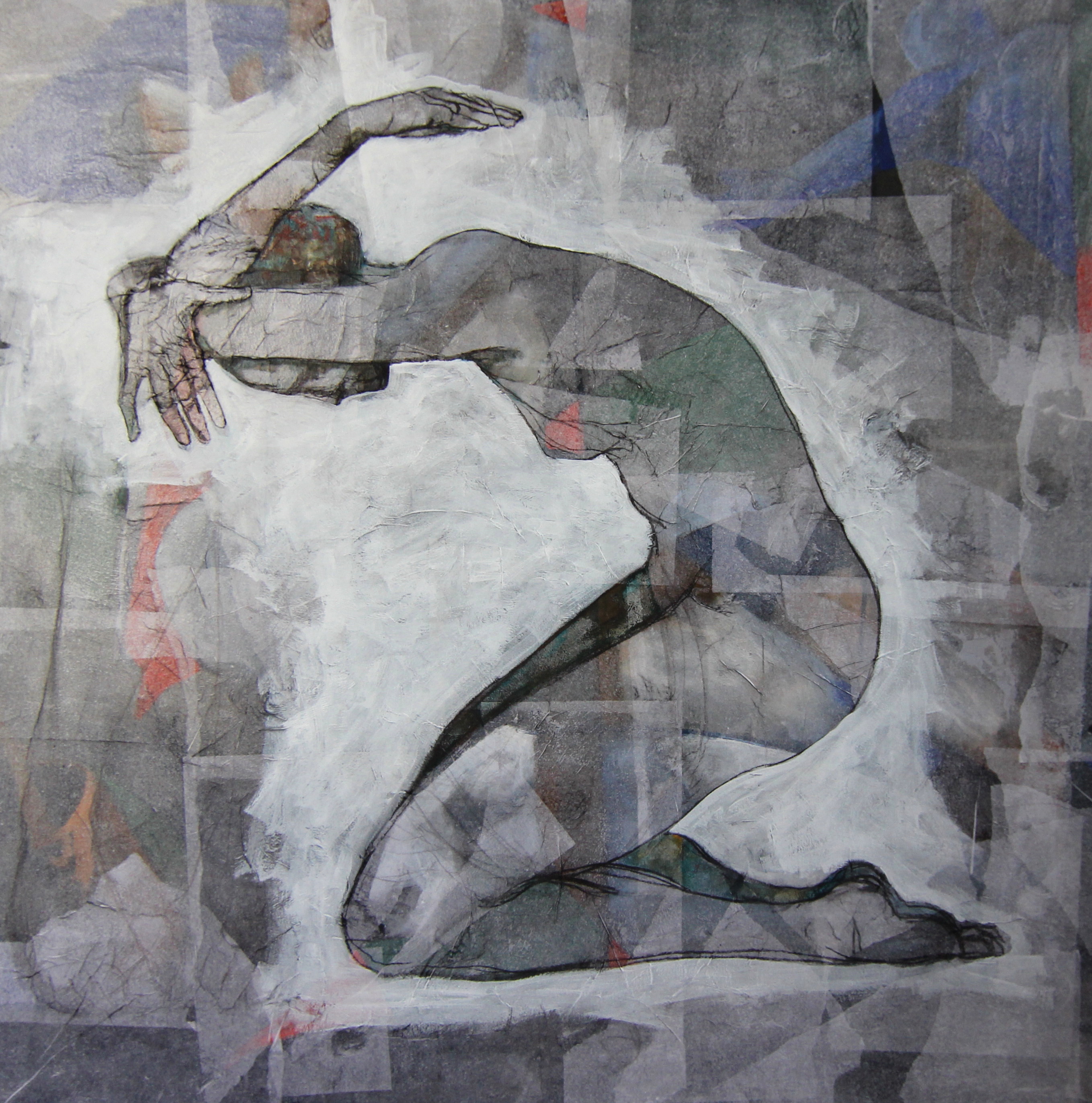
A painting from another time - and also from as as-yet-unfinished exloration

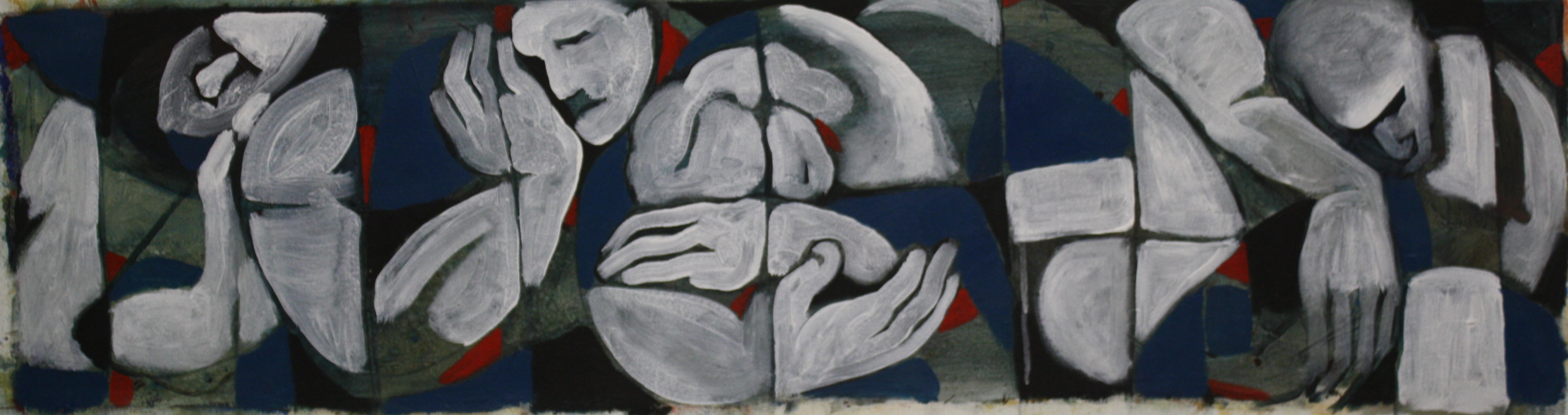
A painting called ‘Sleepers’  from another time – and also from as as-yet-unfinished exploration

The lake was angry. Because it is the fifth largest lake in the world, it packs a punch when enraged. The local news reported that the waves were 14ft high. The force of the waves smacking the shore hurled huge stones from the wall constructed on the banks to protect the land. Although it is an easy walk from our house, the wind was so powerful and cold that we drove the few blocks to see it.

There are days that the lake is glassy smooth and quiet with barely a noticeable ripple. This day the lake was muddy brown and dangerous. Parts of the bank collapsed. A tree close to the shore was consumed. Many years ago I was in a small boat protected by the islands from the force of the ocean’s wrath; for a few moments we had to round a point, exposed to the fury, to get into a bay. The captain pointed the boat directly into waves that towered over us. I’ve rarely felt like such a bug on the arm of an angry world. Had it decided to, the ocean would have smashed us with little or no notice. The lake was like that this day. I was grateful to be on shore. Sometimes awe for the power of nature requires a respectful distance.

Sometimes appreciating the fullness of life also requires a respectful distance. I recently took Bill and Linda down stairs into my current studio. They are elders and I have enormous respect for them. They’d asked to see my paintings. We spent several moments looking at my current work and then began stepping backwards in time. My paintings ring like songs from the past; each represents a specific era of my life and is capable of sparking intense remembering. It was fun to pull pieces for them, answer questions (or not answer them), and to open the doors of time. Like the lake, the doors were varied and unpredictable: some of the doors flooded me with peace, other doors overwhelmed me with grief, and still others brought intense joy. I loved it all because with time, with distance, life ceases to be about good times and bad times, hard times or ease, it’s all one long rich varied walk, all necessary and useful like color on a palette. Some of it goes to mud and that is the only way to learn to mix better color. Just as every forest fire causes renewal and every storm heaves stones and creates a new shoreline, sometimes distance and respect for this powerful messy life reveals the face of continual renewal and necessitates vast, quiet awe.

title_pageGo here to buy hard copies (and Kindle) of my latest book: The Seer: The Mind of the Entrepreneur, Artist, Visionary, Innovator, Seeker, Learner, Leader, Creator,…You.


Expose The Value

photo-3We debated our costumes for Brad and Jen’s Halloween extravaganza for months prior to the party. The letter for this year’s costume theme was “T” (with extra credit for using a “Q”). During the long hours of our summer road trips, our conversation sounded something like this:

“We could be Trollops.”

“Trollop is good. We could be Tin men.”

“I like that. What about Tootsie Pops!”

“Someone will come as a Tootsie Pop. How about Tramps.”

“No. I did that when I was twelve. What about tsunami! We could be a tsunami!”

And on and on we’d go. We finally settled on this bit of whimsy: Too-many-ideas & Too-many-questions. Kerri was going to be Too-many-ideas and I was intended to be Too-many-questions – but we changed our minds in the final hours.

At the party you might have asked, as many people asked us, “What is a Tarving Artist?” We wore paint-spattered clothes and artist aprons filled with paint and brushes. On the aprons we wrote: Dying Of Exposure. Between us we carried a donation bucket with a sign that read: Our “S” was repossessed. Please help us buy it back.

In the week prior to the party, Kerri was asked to play for an event. Every artist in the nation is used to hearing the words she hears weekly: “We have no money to pay you but it will be great exposure for you.” She is a consummate, career musician with 15 albums, (going on 16) and needs no help with her exposure. I loved her response: “Let me call my accountant and ask if she accepts exposure for payment.” Her latest encounter with empty exposure started a long hysterical conversation and note-comparison session of all the amazing ways people have asked us to work for anything and everything but money (Yes, it is true. When artists make art they are working as surely as a plumber who plumbs or a doctor who diagnoses. When was the last time you asked your dentist to work for exposure?).

The common mistake at the center of every work-for-exposure offer: it will be good for the artist. It’s never good for the artist. For two reasons it’s a notion that is good for everyone but the artist. First, no artist wants the kind of exposure that reinforces that their work is without real value. Second, no creative artist wants to be defined as a player of background music or drawer of dog portraits (unless, of course, their dream in life is to draw dog portraits). The act of drawing or playing a musical instrument is not what defines the artist or their art. It is a mistake to assume that because I can draw and paint that the act of drawing and painting is what constitutes the art. A carpenter uses a hammer but the hammer does not define their work. It is a tool. The keyboard, the paint and brushes are tools.

People who pay artists with exposure see the tool but not the artist. That is why Kerri and I opted to change our costume. Certainly dressing as a Tarving Artist was a statement but more than that, we realized that only a starving artist would agree to play for exposure; only a starving artist would agree to hammer incessantly to get the attention of people who can’t see them to begin with. It’s never good for the artist and is always a costume or role they assume for the empty promise of exposure. The cost for the artist is always greater than the exposure and at the end of the day, after trading a bit of their integrity, they still aren’t able to pay the bills.

title_pageGo here to buy hard copies (and Kindle) of my latest book: The Seer: The Mind of the Entrepreneur, Artist, Visionary, Innovator, Seeker, Learner, Leader, Creator,…You.

Yoga.ForwardFoldGo here for fine art prints of my paintings


Explore The Human

photo-2

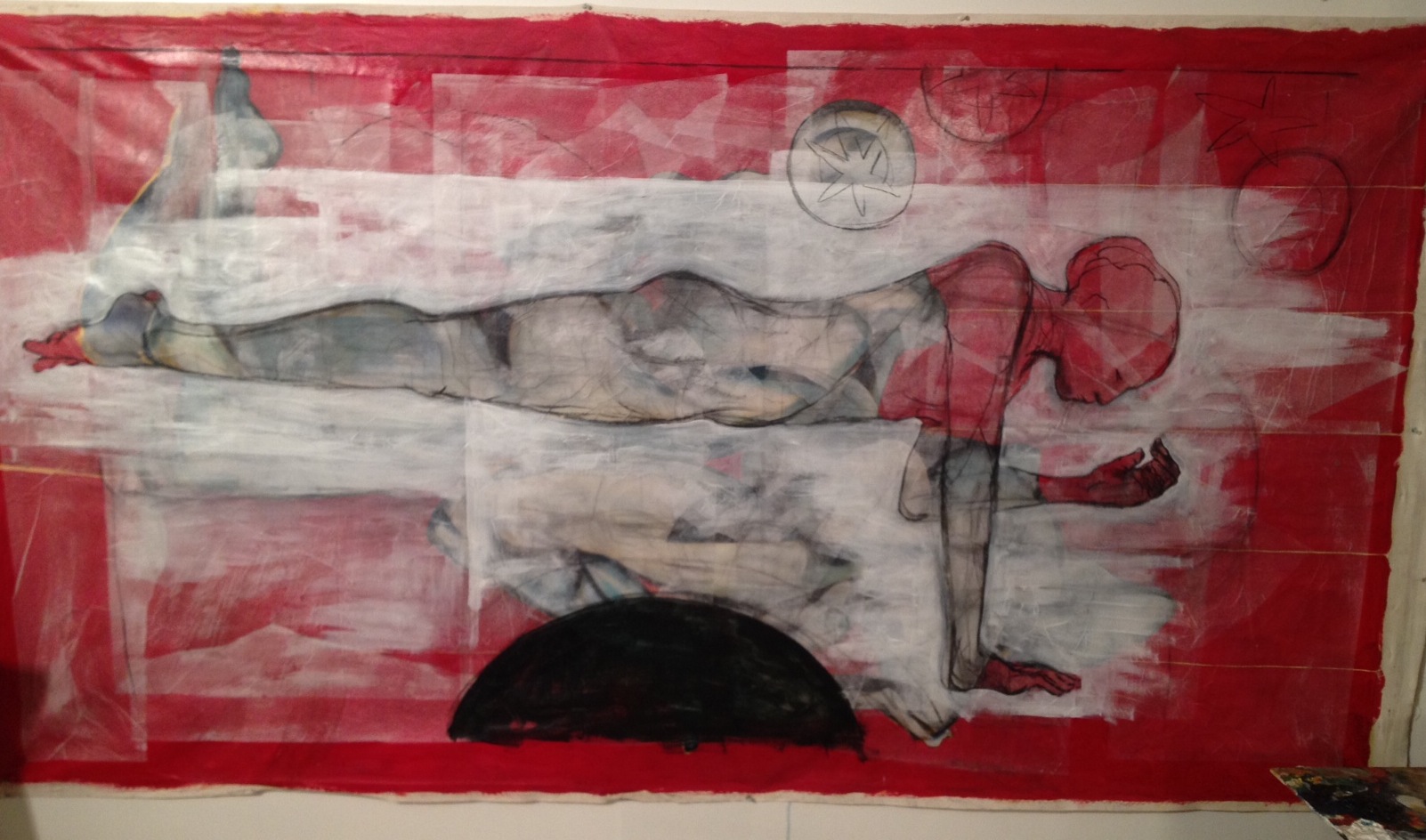
my latest work-in-progress. No name yet, approximately 5ft x 9ft.

Standing on the stair to her studio, Pam said, “I’m not sure where my work is going. I’ve pulled out all of the old paintings so I can see where I’ve been, what I’ve been doing, and maybe that will help me live into what’s next.” Like me, Pam has been a painter most of her life. She’s been through this transition many times before and recognizes the necessity of fallow artistic fields. Rather than push or panic, she’s matured as an artist and knows enough to value the emptiness.

With maturity comes faith. The muse never leaves. She rests. Artistic cycles are no different than seasons. Like a farmer living through the winter months on the harvest of the fall, Pam will spend hours sitting with her old work, thinking nothing, drinking in the nutrient of her artistic yield, allowing her inspiration fields to recharge and rejuvenate. She will allow herself to go empty, creating ample space for the new work when the muse reawakens. And then, one day, she will pick up a brush and be surprised by what comes through her.

Hans said, “An artist matures when he or she ceases working from their pain and begins exploring the human condition.” Working from the wound is necessary as adolescence is necessary. Most artists in our western tradition begin in rebellion, pushing against, making statements. We celebrate the outsider, the margin-sitter and so the wound can be difficult to escape: artistic pain becomes a role, an expectation. In practice it is akin to a developmental stall. The only place to go when pain is the norm is into the intellect: to produce, to make statements. Pain isolates and ultimately, an isolated artist is ineffective. Artistry, like all things vital, must occupy a shared space. It is communal or it is impotent.

Potency comes when the eyes turn out, when the question of “we” becomes more vital and interesting than the question of “I.” Artists mature when they reorient, when instead of the art expressing their pain, they serve the art and, make no mistake, art is another word for “human condition.” Art is bubbling life in all its forms: visual, kinesthetic, aural. As Hans said, “I want to fall deeper and deeper into the music. I want to find the edges and follow where it takes me, give myself over to it.”

title_pageGo here to buy hard copies (and Kindle) of my latest book: The Seer: The Mind of the Entrepreneur, Artist, Visionary, Innovator, Seeker, Learner, Leader, Creator,…You.

DSC_1196 copyGo here to support the kickstarter campaign for my play, The Lost Boy.

Do.

from my children's book, Play 2 Play

from my children’s book, Play 2 Play

About the river, Jim said something like this: I had to stop complaining, leave town, or do something about it.

Jim chose to do something about it. He got busy. Now, he’s dedicating time each week to clean and care for a stretch of the river. He’s working to make people aware of the rich life that the river supports. He’s drawing the plant life. He’s made and delivers an incredible Powerpoint presentation.

Jim came to an awareness threshold: complaining is not doing – but unlike most people, he crossed the threshold and changed. The first necessity in any change process is to change yourself. Complaining is a first step but it is where most people stop. Complaining feels good because it provides the illusion of action. Complaining can become fuel if it is followed with a step toward action.

I’ve worked with scores of people who wanted to write books or paint paintings and most came to me with a complaint: lack of time, no quiet space, or some other circumstance that blocked their happiness. When we removed complaining as an option, they created time or quiet space. They wrote. They painted. It was not magic. It was practical. Complaining requires dedicated energy. It also takes time and more than a little thought-space. Painting, writing, or cleaning the river also requires dedicated energy. The question is about where the energy is dedicated.

Ultimately, as Jim described it, the move from complaining to doing changed how he was in the world. He changed so his world could change. He stepped from helpless witness to active participant.

title_pageGo here to buy hard copies (and Kindle) of my latest book: The Seer: The Mind of the Entrepreneur, Artist, Visionary, Innovator, Seeker, Learner, Leader, Creator,…You.

DSC_1196 copyGo here to support my kickstarter campaign for my play, The Lost Boy


Ask, “Now What?”

photo-1On one of the many Post-It notes that line our idea wall is written, “Say ‘I Don’t Know.” It is especially relevant today as a few days ago, in a fit of spontaneous remodeling, we tore the five-decade-old laminate off the countertops. After the moment of deconstruction we looked at each other, shrugged our shoulders, and asked “Now what?”

I delight in moments like this for two reasons: 1) the first action (tearing off the laminate) always comes from years of wanting change but seeing only obstacles. In what feels like a spontaneous moment, the focus shifts from the obstacle to the action. 2) When the focus shifts only a single step is visible and that step is always some variation of, “I don’t know but I’m going for it anyway!” Second steps are generally invisible until there is a committed action, until there is a first step taken.

These two steps together are a good working definition for the creative process. Shift your focus from the obstacle to the only action you can see. Take the action. Repeat until the action takes hold of you.

The first step generally feels like deconstruction. It feels like breaking things or breaking out of things (like a focus on obstacles). A committed step into, “I don’t know” creates motion and motion begets motion. Rip off the old laminate without a plan and a plan will emerge. Or a mess will emerge followed by a new plan.

title_pageGo here to buy hard copies (and Kindle) of my latest book: The Seer: The Mind of the Entrepreneur, Artist, Visionary, Innovator, Seeker, Learner, Leader, Creator,…You.

Go here for all digital forms of The Seer.

Or, go here for fine art prints of my paintings (and other stuff, too)

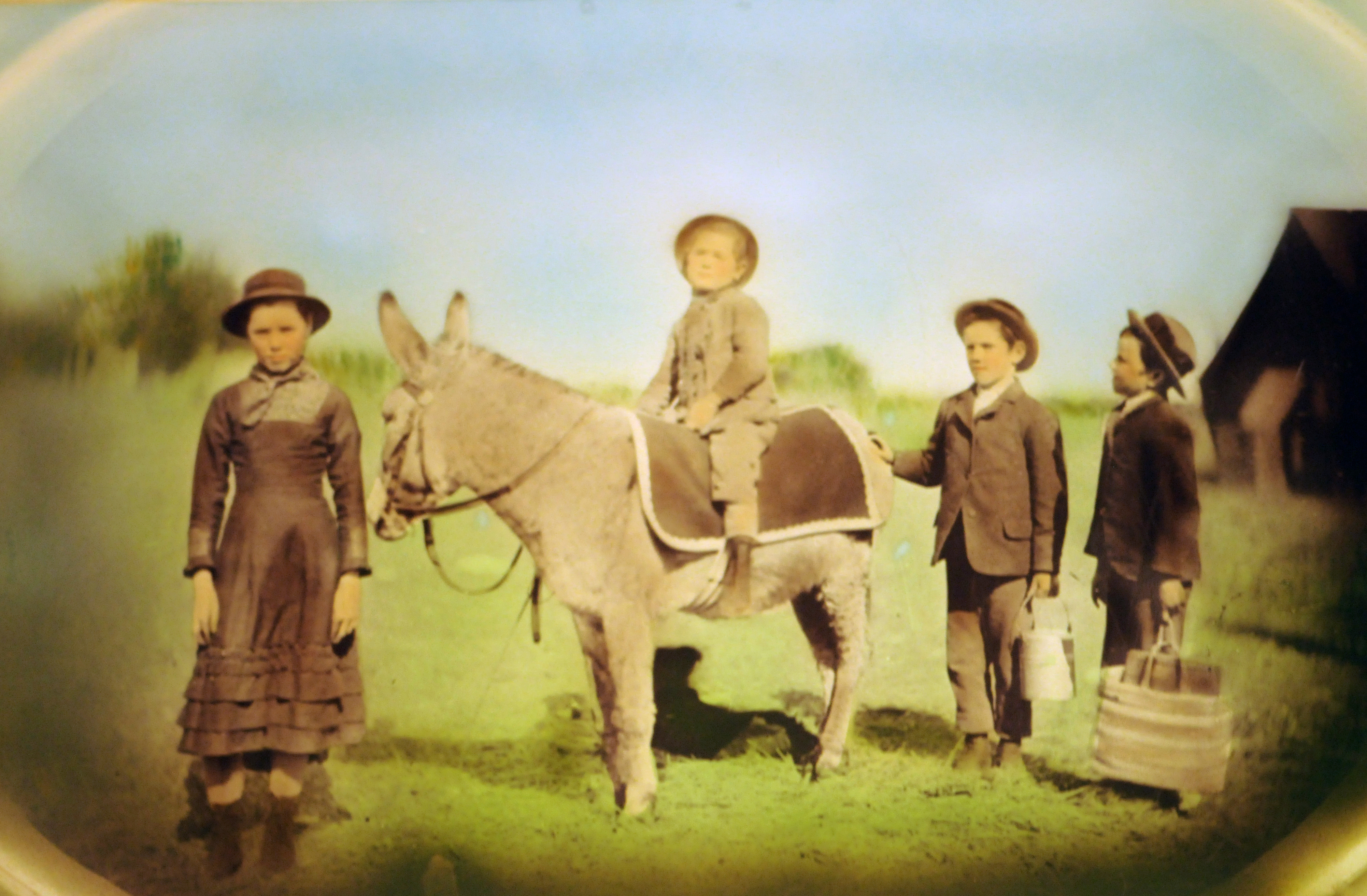
Eve, by David Robinson

Eve, by David Robinson

Aim For The Field

An illustration from my children's book, Play To Play

An illustration from my children’s book, Play To Play

Lately, Saul the Tai Chi master has been much in my thoughts. It is now September and it has been a year since he taught me a lesson that has become the new mantra of my life: orient to your own concern. Actually, he said that I should look beyond my opponent into the field of possibilities and orient to my own concern. “In this way,” he instructed, “you will no longer have an opponent.” He used the word “opponent” loosely. Any limitation or form of internal resistance is the opponent.

Beyond the opponent is a wide-open field of possibilities.

In the intervening year I have learned that I have been both my greatest opponent and the one who can look into the field of possibilities. Isn’t this true of all people? All stories worth telling (and hearing) are ultimately tales of transcending the inner opponent. If you need help identifying your personal mythic journey simply listen to the areas in life in which you say to yourself, “I can’t.” In that place you will find your opponent. You will also be surprised to find that your inner opponent is most often an orientation to other people’s concern; the fear of what others might think is a mighty inner-monster creator.

I’ve also learned that Saul’s lesson has come to me in many forms throughout the course of my life. For instance, many years ago I directed plays and, because I am also a visual artist, I was often in the position of designing the sets as well. With great love and humor, another terrific mentor watched as I struggled with my dual role. He gently showed me that I was orienting my designs according to the budget and construction limitations I perceived. I was working in the wrong order, asking “how” before lingering in the potential.   He told me that I needed to “Live first in the possibilities.” Design/orient according to the potential and not the limitations.

To live first in the possibilities is to walk the imagination without a leash. It is to let the imagination run wild. What is beyond your capacity to imagine? What is possible beyond the boundaries of belief? At one point in my life cell phones were science fiction. Today, they are ordinary.

Look beyond the opponent. Orient to your own concern. Imagine how life might change if instead of asking, “Can we do this?” we began by asking, “What’s possible?” And then aim for the field.

title_pageGo here to buy hard copies (and Kindle) of my latest book: The Seer: The Mind of the Entrepreneur, Artist, Visionary, Innovator, Seeker, Learner, Leader, Creator,…You.

Go here for all digital forms of The Seer.

Yoga Series 7Go here for fine art prints of my paintings