Or Will We? [David’s blog on Flawed Wednesday]

“When government fears the people, there is liberty. When the people fear the government, there is tyranny.” ~ Thomas Jefferson

And suddenly the winds arrive. The forecast warned us to expect powerful winds early this morning so I was taken aback when I opened the door to an eerie stillness. Dogga trotted outside into a world with nary a whisper of breeze. Three hours later, as we sat down to write, as if someone threw a magic switch, the first burst of wind rattled the windows. The trees moaned.

I was struck by this quote from Martin Prechtel:

“I knew that no worthy ritual was done for the experience of the ritual but was carried out to maintain a regular life of work and harvest, raising children and struggle.”

Rituals, like Easter or The Hajj or Diwali are appeals, acts of sacred orientation. They are acknowledgement of our smallness in the face of the vast mystery of this universe. They are meant to renew our connection to the immense, to life. Ultimately, they are the recognition that our actions, each and every day, no matter how small…matter; that we are active participants in the well-being, restoration and continuance of life. We are active creators of our relationship with the mystery.

Rituals are meant to affirm that we are not the overlords but are responsible for the care and feeding of “something bigger than myself.” We are a part of the whole. Nothing more.

Rituals are meant to remind us that we are not passive witnesses to the health of the community or the planet, but that we are stewards, active participants in our own and the community’s well-being: physically, mentally, spiritually. How we walk through life, how we treat each other, how we care for our environment, matters.

The aim is not the performance of the ritual. The aim is how the performance of the ritual intentionally orients us to daily life and to each other.

When the performance of the ritual becomes the point of the ritual it is a sure sign that the greater mythology is dying. Or already dead. And, mythology – a shared story – is the glue that holds a community together. Without it a community fractures.

Rituals need not be religious to be sacred. In the USA, our legal system and how it works is rooted in a ritual dedication to our national communal glue: the law. The Constitution is the sacred document at the center of our legal ritual and is built upon a sacred ideal: no man is above the law.

In America, the rule of law is king...For as in absolute governments the King is law, so in free countries the law ought to be King; and there ought to be no other. But lest any ill use should afterwards arise, let the crown at the conclusion of the ceremony be demolished, and scattered among the people whose right it is.” Thomas Paine, Common Sense

Historians will someday write of the collapse of our ritual of law. They will point to the Immunity decision written by Chief Justice John Roberts, someone who swore an oath to protect our Constitution, yet somehow granted a president immunity from the rule of law. He put the whims of a man above the law. The center collapsed.

Today, we witness the dissolution of ours law. A judge ruled and was ignored by a White House that knows the executive branch is immune from law and can, therefore, be law-less.

Last week we saw that congress – our makers of law – had no will to uphold their sacred duty of checks-and-balance to the executive. They signed away their power and with it, our freedoms as protected by their adherence to the Constitution. They meet now for no other reason than to meet – having abdicated their function in the ritual of democracy, having lost their purpose, they now function without meaning. They forgot their role in the ritual renewal of democracy. They now merely pretend that their actions matter.

The ritual collapses. The glue dissolves. It remains to be seen if the people, the ordinary everyday people, the people who, in a democracy, are meant to hold the power, will come together and reclaim our ritual of law from tyranny. Or will we, like the congress and the courts, fear the new king, abdicate our responsibility, remain silent and watch our freedoms circle the drain?

read Kerri’s blog on FLAWED WEDNESDAY

likesharecommentsubscribesupport…thankyou.

Get Your Snowman [David’s blog on DR Thursday]

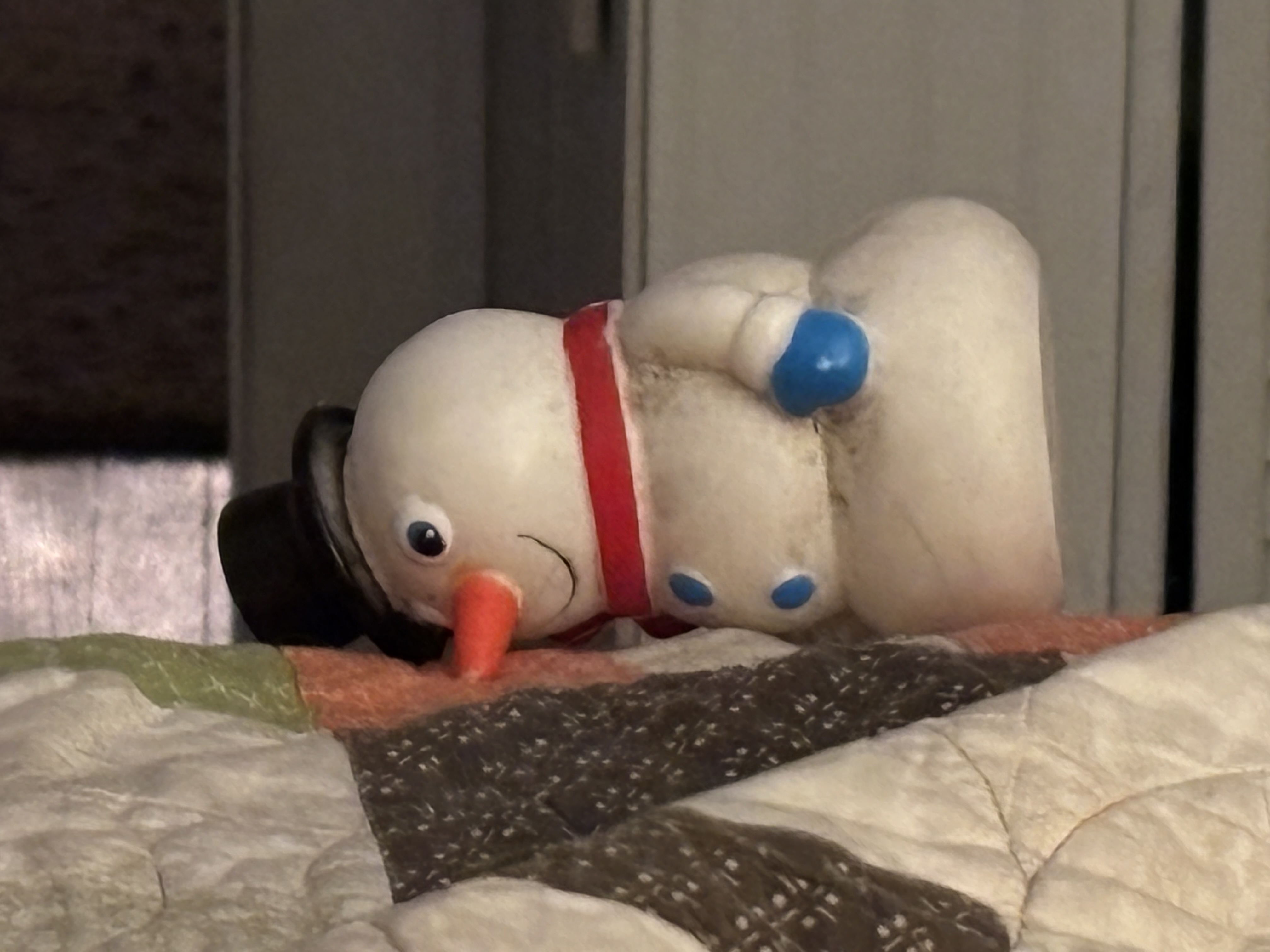
From his position on the raft he can look out the bedroom window and see the Dachshunds in the yard next door. He knows he’s not supposed to bark so he moans and twirls, groans and suffers, stifling his natural impulse, until a single bark escapes from his muzzle. That’s our cue to feign shock and to say with mock disapproval, “Get your snowman!” Dogga dutifully jumps from the bed and returns moments later with his snowman in his mouth.

The theory goes, with snowman in his mouth, he’s incapable of barking. It mostly works. Well, until recently, it worked like a charm. And then, our too-smart-dog discovered a technical work-around. He retrieved snowman on cue, as usual, but when he returned, he stopped just shy of the raft to show us that he’d done as he was told. Then, he dropped snowman on the floor, leaped onto the raft, and barked with abandon.

Game. Set. Match. Dogga outsmarts us. Again. Were he a sarcastic teenager we’d hide our laughter but as a gray bearded Aussie who’s spent his entire life studying our every move, we’re certain there’s no hiding anything from him. He often knows we are upset before we do. We laugh and laugh as he barks and barks at the marauding Dachshunds.

We’re not alone in being outwitted by our pooch. 20 is Dogga’s favorite human. Dogga has thoroughly trained him to drop snacks on demand from the dinner table. When Dogga begs, 20 employs a stern voice, telling Dogga to “Lay down!” and then, as if he is suddenly hypnotized by Dogga’s compliance, 20 slips a bite of dinner into Dogga’s open awaiting mouth. When we laugh at Dogga’s command over him, 20 grabs his chest, suffering mock heart-palpitations and asks, “Why do I come here?”

Rituals of laughter. Expressions of love.

Now more than ever, it’s important to remind myself each day, beyond the chaos and ill-intention swirling in the e-stream, that these are the real moments, the stuff-of-life that actually matters. The daily rite of the plastic snowman. Dogga manipulations. The tangible everyday moments to be savored and shared that make our life rich beyond measure.

(this post is my version of stuffing snowman in my mouth so I stop barking about the horror-story unfolding in our nation. Rest assured knowing that I am groaning and twirling and suffering as I stifle my natural impulse to bark – but I figured we could all use a break;-)

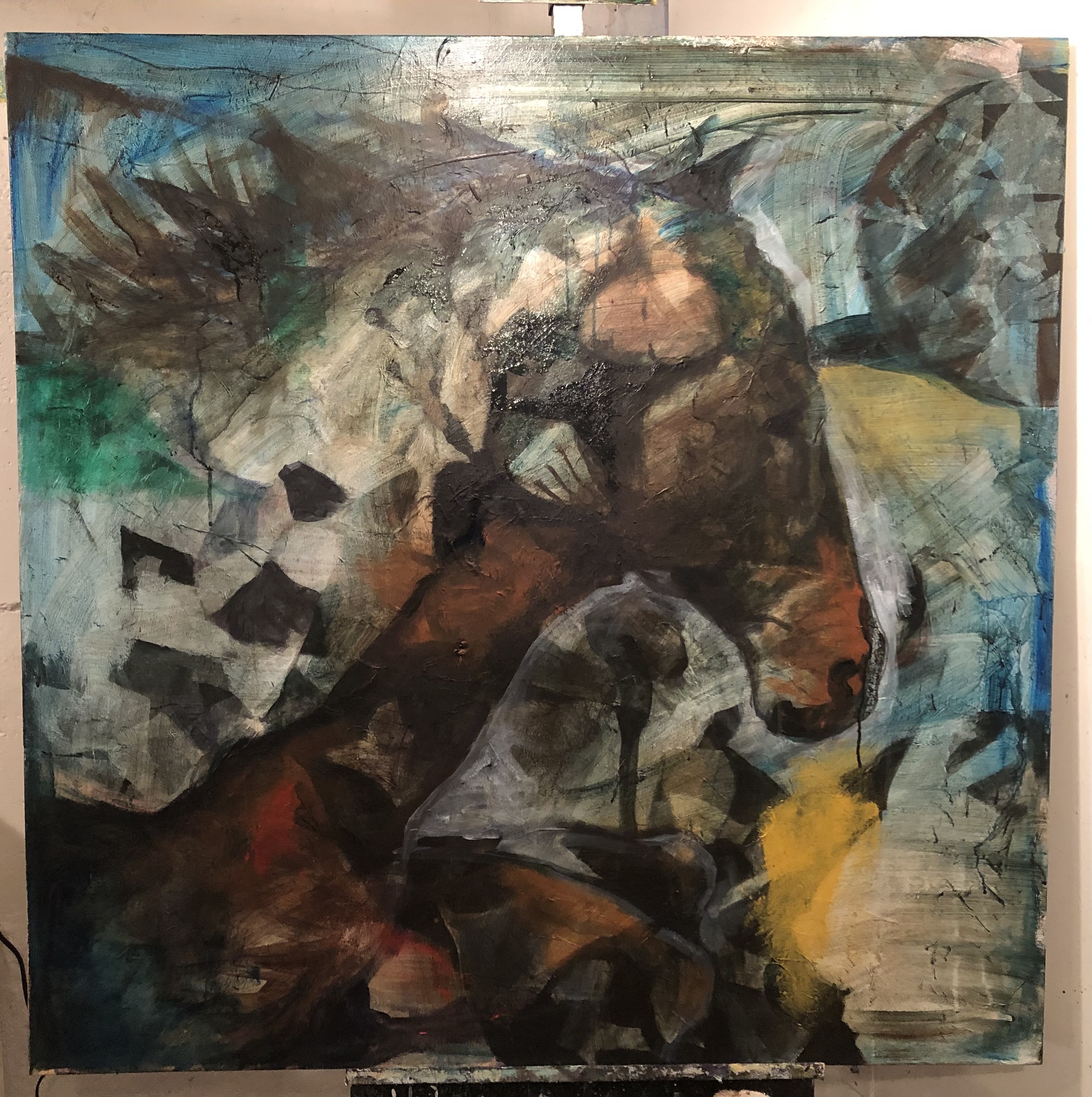
early work: In Dreams She Rides Wild Horses

visit my gallery site

read Kerri’s blogpost about SNOWMAN

likesharecommentsupportsubscribe…thankyou.

The Whole Of It [David’s blog on KS Friday]

Rather than cut back our ornamental grasses in the fall, we opt to leave them untouched until later in the spring. Not only do they provide shelter for the critters through the cold months, they are also visually stunning and, as an artist, to be stunned visually is high on my priority list. Raw sienna and ochre slow-dance against the cold ice blue of the snow. My favorite is the sunset playing through the waving winter plumes, orange, pink and purple.

The chipmunks have a highway that runs behind the grasses on the side of the yard. It stretches from their sanctuary, Barney-the-piano, all the way to Kerri’s potting bench just off the deck. Lately, a tiger striped kitty visits in the night and stays close-in to the grasses. Dogga has surprised it a time or two and it beats a hasty retreat. I know where the kitty has been during the night because Dogga starts his day by tracking the kitty-path, sniffing along the grasses.

Between the birds, squirrels, bunnies, chippies, the kitty and dogga…there is an entire world, a vibrant life story thriving in and among the winter grasses. They are more than ornamental.

I’m reading about initiation rituals. I came upon this sentence and read it a few times: “…we boys realized that every human being’s goal in the village was the eventual admission into the pursuit and maintenance of the sacred.” [Martin Prechtel, Long Life Honey in the Heart] Pursuit of the sacred is eventual. Admission into the pursuit of the sacred comes with living a bit of life, navigating hardship, peeling off layers of self-importance and fully grasping the reality of mortality. Developing eyes that can see the sacred. Nurturing a heart that opens and appreciates the smallest-as-the-grandest of moments. My favorite word in the sentiment is “maintenance” – it suggests participation as well as responsibility. The sacred is connective tissue to the future and the past and disappears without tending. The maintenance of the sacred is a relationship: attend to the sacred and it will attend to you.

Actions with service intention. Living with attention.

In my reading I’ve learned of the fate of the uninitiated, those who know no responsibility to the village. They are destined to be adolescents forever, void of any greater perspective or sense of communal responsibility. Never capable of approaching their responsibility to maintaining the sacred since, to them, nothing is sacred. Self-serving. A life that collapses into dull inattention and usury.

It is one way of understanding the incoming administration and comprehending the sad, sad confirmation hearings: we are captive to the uninitiated. The uninitiated enabling the uninitiated. Thuggery is the inevitable aim and refuge of the perpetually adolescent. In this cadre, clearly, nothing is sacred. Nothing disqualifies.

The eventual admission into the pursuit and maintenance of the sacred. Every human being’s goal – if they mature into well-rounded human beings. It’s not a given. It’s a realization that comes from an orientation: a sense of greater responsibility to the village: the village – not only a place, but a relationship of people to a place, to ancestry, to tradition, to each other, to a dedication for the soul-health of all, now and into the future.

These days I feel grateful to those elders who felt a responsibility toward me, to steward my growth. To those who took time and care to orient me onto a life-path pointing toward the eventual admission and maintenance of the sacred. To those who helped nurture in me eyes capable of seeing beyond the ornament, capable of seeing the vibrant colors in winter grasses, capable of relishing the abundant life taking shelter, playing chase, enjoying safe passage…the whole of it a sanctuary.

GRACE on the album RIGHT NOW © 2010 Kerri Sherwood

Kerri’s albums are available on iTunes and streaming on Pandora

read Kerri’s blogpost about WINTER GRASSES

sharesharesharelikesupportlikelikecommentdanceseethrive…thankyou.

Meet The Expectation [David’s blog on Two Artists Tuesday]

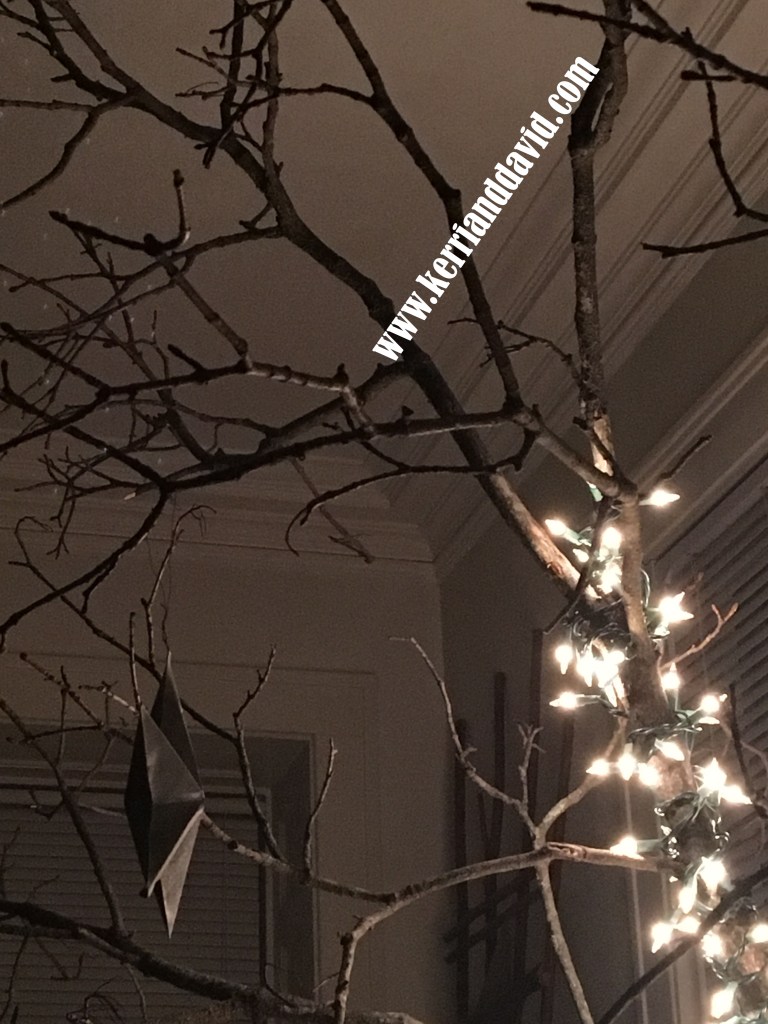
In our house they are called “happy lights” because they make us happy. And, because they make us happy, happy lights can be found in almost every room of our house. They wind around the headboard of our bed, they outline the window in the sitting room, they wind around the aspen log in our dining room. They wind around the big branches in our living room.

On particularly dark days, after opening the shades, the first action of the day is to plug in the happy lights. All of them. It’s a task that requires moving room-to-room, intentionally inviting happiness into the space. It’s not a bad way to start the day. It’s not a bad practice to stumble around the house, half awake, and expect happiness to turn on with the lighting of the happy lights. And, not surprisingly, happiness meets the expectation.

At the end of the day the last act of closing-up and tucking-in the house is to unplug the happy lights. It’s become a ritual of gratitude, a thankfulness for the happiness brought by the lights. Our headboard happy light, always the first light of the day, is the last light we turn off before sleeping, the last whisper of appreciation for the day.

In these past few months I have grown more conscious and grateful of our happy light ritual. The intentional invitation and invocation of happiness, the deliberate practice of gratitude, seems more and more necessary amidst the national dedication to maga-animus. If there is nothing to be done about the indecent darkness descending on the country, we can, at the very least, invite light into our home, and perhaps share some small measure of the happiness and kindness that our happy lights inspire.

read Kerri’s blogpost about HAPPY LIGHTS

likesupportsharecommentsubscribe…thankyou.

Walk The Path [David’s blog on Merely A Thought Monday]

On the first day of the new year we bundled ourselves against the cold and walked our usual loop. It is our custom to go outside, no matter the weather, and visit our trail as a ritual start to the new year.

The wind was bitter. Stepping onto the trail we were surprised and perplexed. The recent snow had melted off the path yet the tread-marks of walkers-past remained. It was as if a small group of people stepped in a pan of white paint and, oblivious of their tracks, continued down the trail.

We’ve seen lots of footprints in the snow. Never the reverse, snowprints on dirt.

“This could be our metaphor for the coming year,” I said. “Everything is the opposite of what is natural. Of what is normal.”

She wrinkled her brow. “I no longer know what normal is,” her quip muffled by her scarf. Too true. We are stepping into uncharted territory. Certainly unnatural.

“Shall we?” she asked, offering her gloved hand.

“Yes. Let’s.” There is nothing to be done now, in this new year, in this unnatural circumstance, but hold hands and walk the path.

read Kerri’s blogpost about FOOTPRINTS

likesharesupportcommentsubscribebundleupgoslow…thankyou.

The Fruit of Now [David’s blog on Not So Flawed Wednesday]

“But the Tzutujil, with no verb “to be,” spoke about their temple as a non-rigid, fluid thing to be added to and fed with offerings. These offerings kept the world alive, like the fertilizing and watering of a tree, an ancient tree that continually bears the fruit of “now”. “ ~ Martin Prechtel, Long Life Honey in the Heart

The fruit of now.

Sometimes I try to imagine living in a culture that believes their actions matter not only to the health of the world, but the very existence of the world. All the world a sanctuary. What must it feel like to live with the understanding that what we do and how we behave, what we honor and what we bring to the sanctuary more than sustains it? It recreates it. No action is insignificant. To be the collective stewards of an ancient relationship rather than pursuers of an individual abstract heaven. The fruit of now.

Day one of a new year. Yesterday I wrote about my resolution, to be careful what I pretend to be.

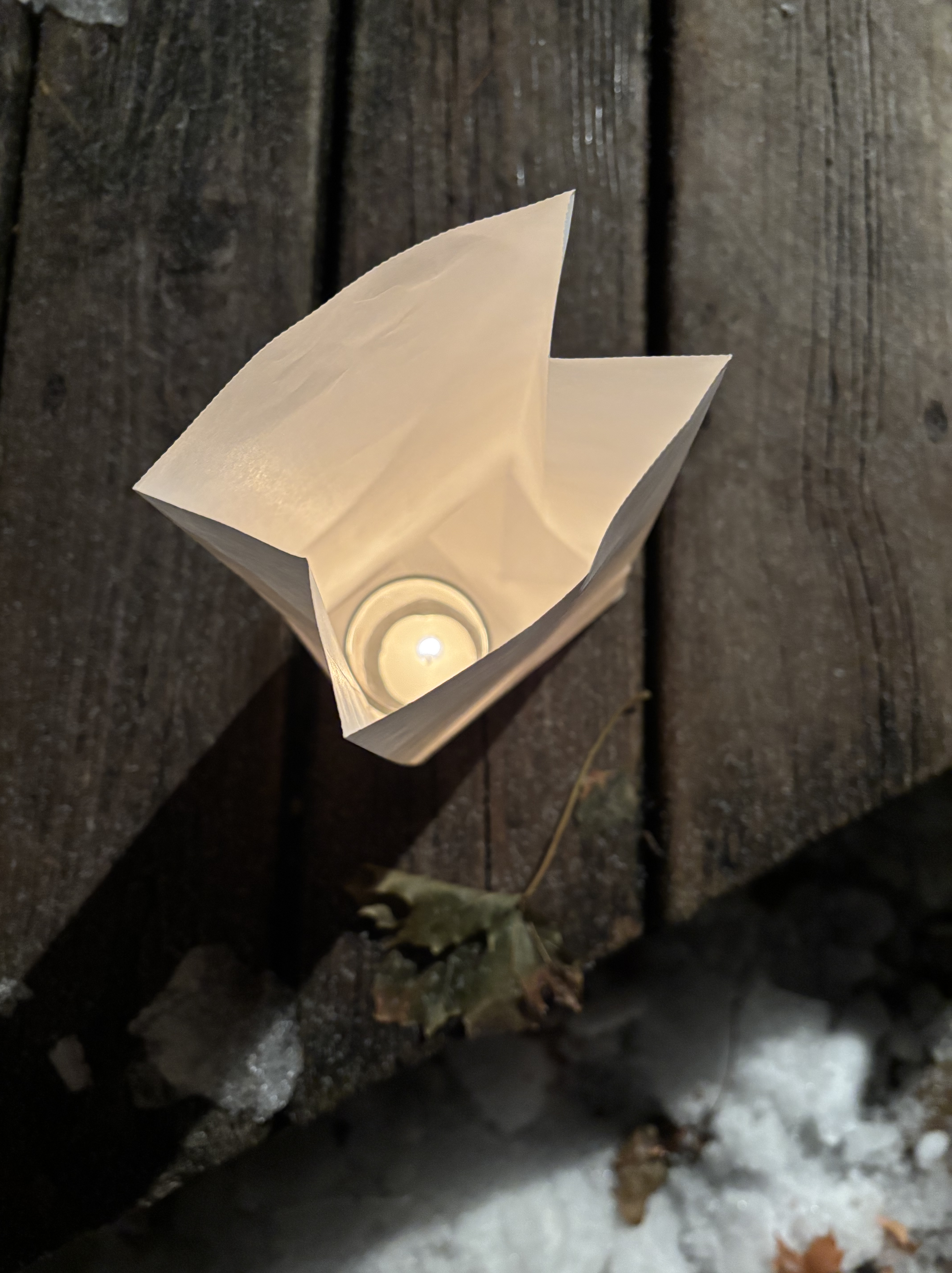
Yesterday Kerri wrote about being a source of light. A luminaria. Illumination. “A lamp kept burning before the sacrament.” To be a source of light in a dark time.

This morning I awoke thinking about kintsugi: the Japanese art of repairing broken pottery by mending the areas of breakage with urushi lacquer dusted or mixed with powdered gold, silver, or platinum. It was mentioned in the Hallmark movie we watched on Sunday night. A cherished angel, broken and repaired. Kintsugi is meant to take what is broken and make it more beautiful by highlighting rather than hiding the cracks.

Kintsugi is a nice compliment to my resolution of being careful about what I pretend to be. It is a worthy intention, rather than hide my broken bits, I might spend this year gluing them back together in such a way that I highlight rather than conceal them. To be an honestly messy human is to be a source of light in a dark time. In that way, might I become more beautiful?

Or, perhaps the becoming-more-beautiful never stops. Kintsugi is not an achievement, an end result. It is an ongoing process. I can imagine, as one of the many stewards of the ancient relationship, responsible for the health of the sanctuary, the ancient tree, becoming more beautiful is an intention, a daily practice. And, knowing that what I-and-we-do-and-say matters to the health of the whole, in this ritual passage into the new year, I-and-we might enjoy the fruit of now, taking this step across the threshold into the new year as if what we do matters to the health of the world, shining as a source of light in a dark time.

read Kerri’s blog about A Luminaria

likesharesupportsubscribecommentshinetendwaterfeedthesoul…thankyou.

The Seed Of Hope [David’s blog on Merely A Thought Monday]

Years ago, after watching a workshop production of Romeo & Juliet performed by actors who were in their teens – the age of Romeo & Juliet – our post-play discussion touched on a truism: when you are young, everything seems eternal. If you are in pain, it is forever. If you are in bliss, it is all-consuming. The young lovers, once in pain, felt that they had no other path but to end their pain.

Long life teaches that nothing is forever. Just wait awhile and hope will come skipping around the bend.

In the cycle of the year, these dark winter days are made celebratory by the ever-so-slight return of the light. For generations, people have gathered to honor the promise of future warmth. Hope will soon have buds appear on barren branches.

Some folks-on-earth believe that their act of gathering, performing their ritual, invokes the return of light. They are participants and not mere observers. They are stewards of life rather than consumers of resource.

It’s an interesting exercise. Try it. Tonight, when you light your candles, imagine for a moment that your action matters. It is not merely beautiful.

Imagine, in the moment of touching match to wick, that you are a bringer of light. Imagine that the earth hears and responds to the songs that you sing or that the sun is listening to your heart. Imagine that you are a keeper-of-the-seed-of-hope and, with the magnifying power of family, friends, and community, together, you have to power to reawaken the spring.

read Kerri’s blogpost about WINTER

likesharesupportcommentsubscribe…thankyou.

Bitter Sweet [David’s blog on saturday morning smack-dab]

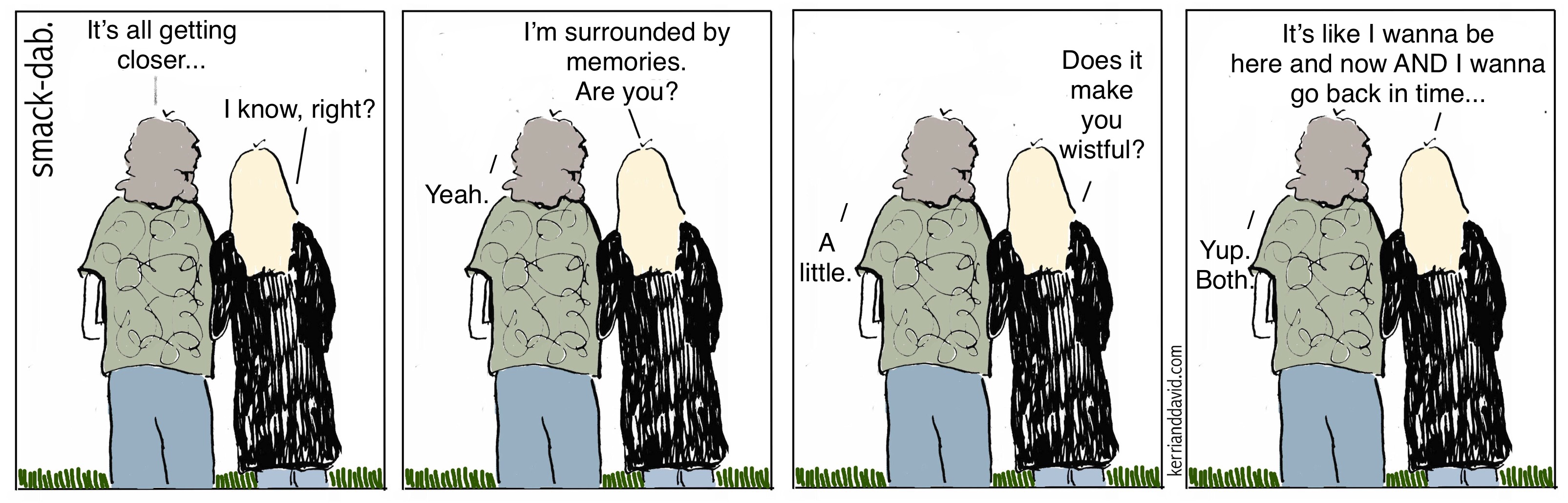
And isn’t that the point of a tradition? To connect the memories of the past to the celebration of today in order to pass them into the future? As Jean Houston once wrote: we are the burning point of the ancestral ship. In our ritual we honor the ancestors en route to joining them.

Conservation and progress need not be at odds.

Today is the Solstice. I just read that the Latin origin of the word “solstice” is “the sun stands still”. “This is because the sun’s apparent movement north or south stops before changing direction.”

In this moment, all of us, regardless of religious tradition or to which date we assign the light’s return, in lighting our candles, making our meals, singing our songs…we stand still with the sun. Just for a moment, in the pause between far and near, we acknowledge that we are the connective tissue between yesterday and tomorrow, bearers of the ritual, missing those we no longer see yet grateful beyond words for those we hug, hold close, and send into the future with leftovers from the feast. Bitter sweet.

read Kerri’s blogpost about BOTH/AND

smack-dab © 2024 kerrianddavid.com

likesharesupportcommentsubscribe…thank you.

Remember The Ritual [David’s blog on DR Thursday]

One week from today is Boxing Day. The day after Christmas.

If you seek a symptom for the source of the troubles of our world, you need only look at Boxing Day. Boxing Day was once a day to donate gifts to those in need, but it has evolved to become a part of Christmas festivities, with many people choosing to shop for deals…” I’m not trying to be cynical. I’m trying to point out the obvious.

I’m re-reading Martin Prechtel’s book, Long Life Honey In The Heart. It’s a book about the Tzutujil initiation into maturity. “Initiation was mandatory in those days and constituted the beginning of adulthood. This rite of passage, however, was not what made you into an adult. This first initiation only made you ripe enough to continue on in a lifelong pursuit of turning yourself into an adult, on through the next three layers of service to the village.”

Can you imagine a community in which service to others is the very pursuit that defines the achievement of adulthood?

According to the Tzutujil ideal, very few of us in this nation turn ourselves into adults. In fact, if you look at the incoming administration, it’s easy to see the absence of adults – grown bodies stuck in adolescent minds and obsessed with self-increase. Service to the community – the point of governance – is nowhere to be found. They are – without exception – men and women of our time.

It is not an understatement or any great revelation to suggest that we have lost our way. We’ve confused money with morality and follow business gain as our north star. Business is a lousy organizing principle for a community. It has its place, certainly. The unbridled levers of business too easily lead to exploitation. Additionally, everything should not run like a business, especially service organizations like healthcare or education. Or religious institutions. Or the arts. Or government. Some things are sacred and business is not one of them. Personal gain at any cost – has a cost – and it is the unity of the community.

We see yard signs everywhere that read, “Keep Christ in Christmas,” to which Kerri responds, “How about keeping Christ in Christianity?”

It’s a pattern. Where the health of the community is involved there are two paths: one is service and the other is self-service. One way leads to cohesion and the other to disillusion. We should not be surprised that our leaders are infantile and our religious holidays subvert giving for gain.

Maybe the place to restart our journey toward a healthy nation is to begin the pursuit of turning ourselves into adults; reinforce in each other the development of a healthy inner life. Perhaps, since we are hellbent on turning back time, we should begin by remembering and practicing the original ritual of Boxing Day.

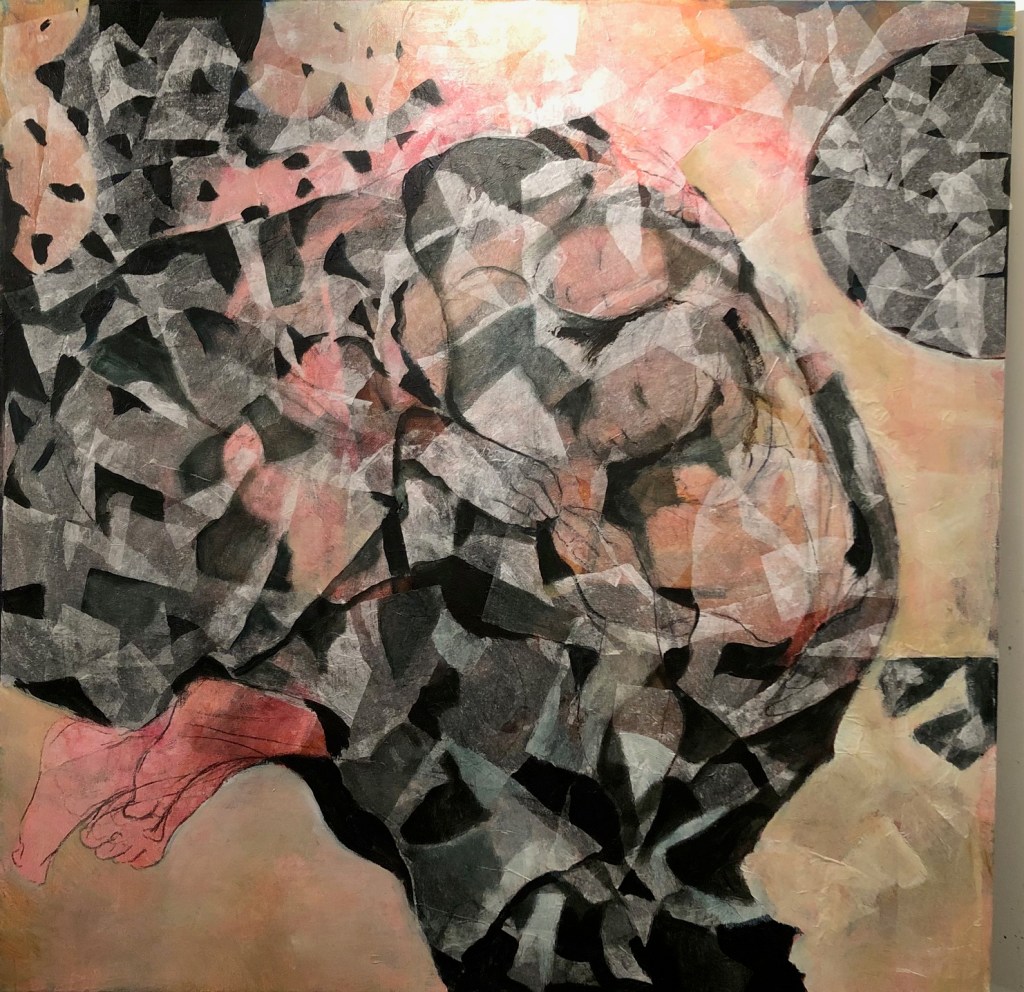
a work in progress

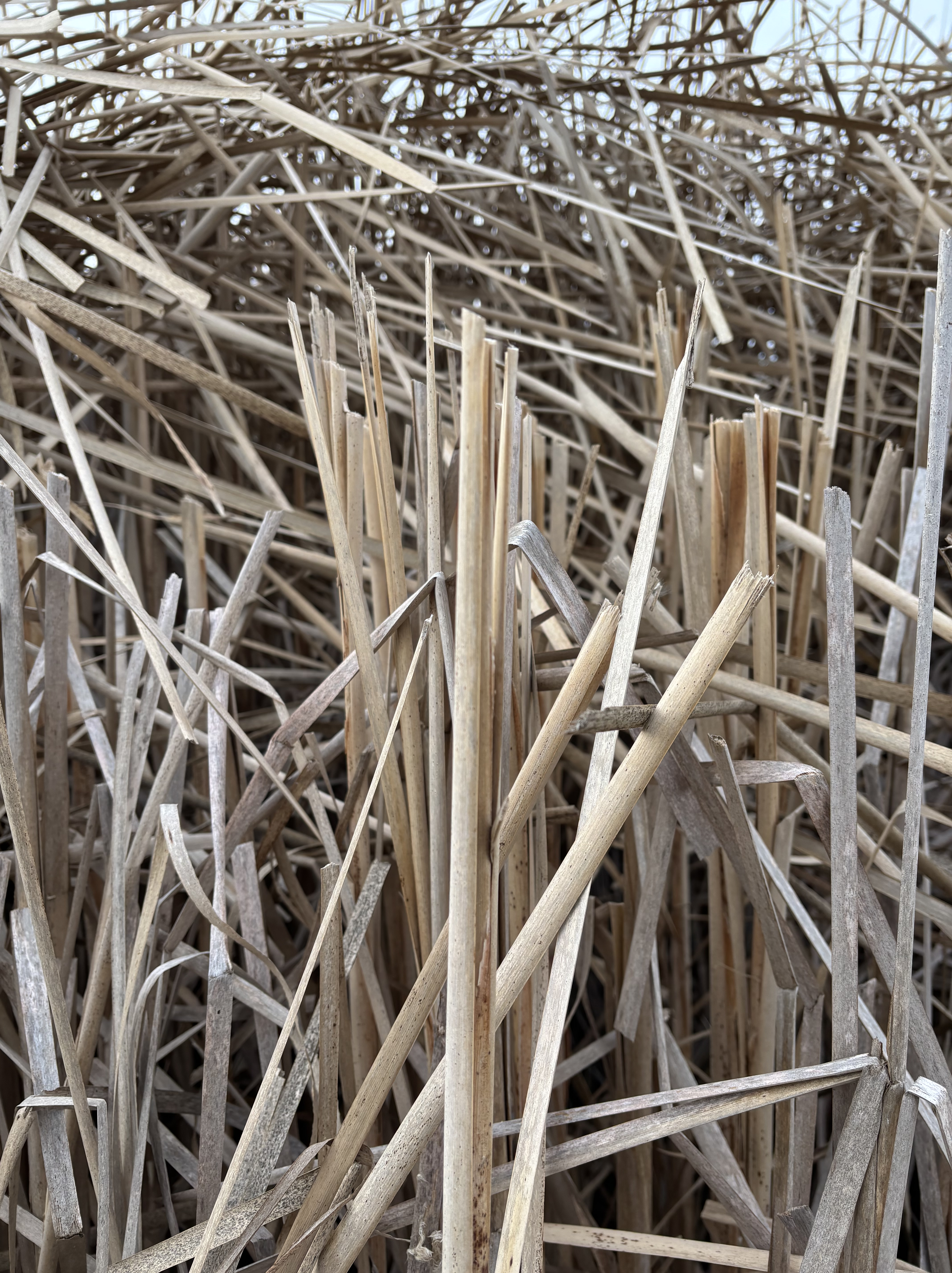
read Kerri’s blogpost about REEDS

likesharesupportcommentsubscribe…thank you.

So We Do [David’s blog on Merely A Thought Monday]

When I began blogging nearly fifteen years ago I believed that I would in a matter of days run out of things to say. I’ve now completely flipped in my belief: not only have I not yet run out of things to say, I now know that there’s not enough time in my life to write all that I want to write. My list of ideas is longer than my remaining days.

Kerri and I through our Melange have been writing together for six years and eight months. We’re having a hilarious experience that is becoming increasingly more and more frequent. When we are with friends and family and start to recount a story from our recent past, they will cut us off and say, “Yeah, I read about that in your blog.” It always takes us aback and makes us giggle.

We are an open book – perhaps too open! But we also edit. Our posts are rarely longer than 500 words. We write snapshots, not totalities. We know that people in our social-media-world won’t read what we write if it’s too long. Each day we ask, “Is this too much?” or, “How can I condense this?” Each day we ask, “Should I stop here?” We rarely tell the full tale. There’s always a next thought, a detail, a longing…There’s always so much more to say, much more that could be written.

It’s become a gift to me, a reminder that I can never know the whole story of any other person’s life. The important stuff as well as the little moments can never be fully expressed. Feelings and yearnings can’t be captured in words. Poetry is the art of attempting to express the impossible.

Lately, after we hear once again, “Yeah, I read about that in your blog,” when we are alone, Kerri asks me, “Are we too much?” It’s become something of a ritual.

Are we too much?

Rilke wrote, “Go into yourself. Find out the reason that commands you to write; see whether it has spread its roots into the very depths of your heart…” This is what I know: we love to write together so we do. And, we love to share what we love. So we do.

read Kerri’s blogpost about A BLANK PAGE

like. share. comment. subscribe. support…thank you.