Seek Solitude

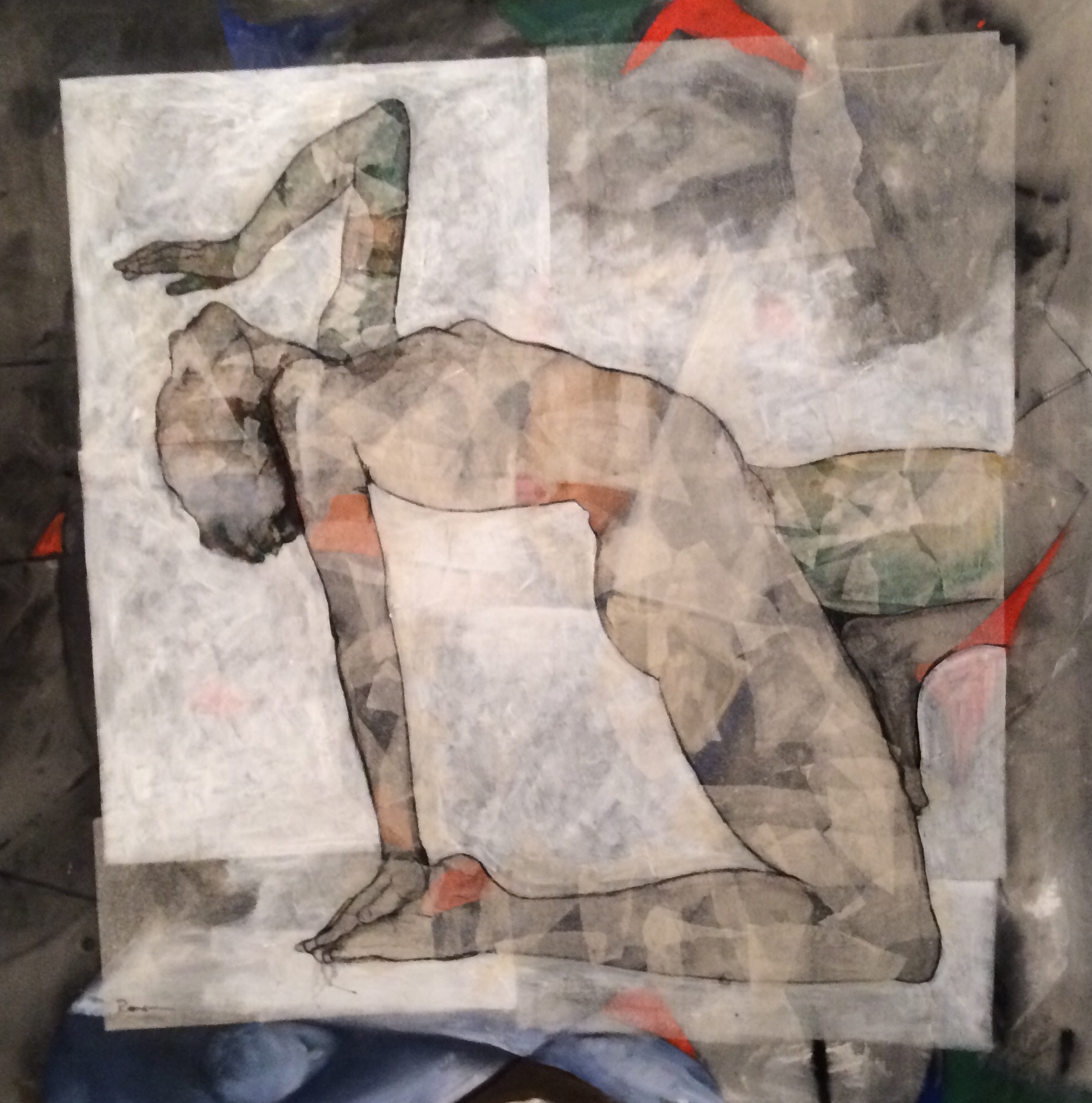
from my Yoga series of paintings

from my Yoga series of paintings

It is easier to sail many thousands of miles through cold and storm and cannibals, in a government ship, with five hundred men and boys to assist one, than it is to explore the private sea, the Atlantic and Pacific Ocean of one’s being alone. ~Henry David Thoreau, Walden

I remember watching a documentary of the painter Lucien Freud. He said he couldn’t understand why anyone would choose to be a painter because the choice meant living a solitary life. His comment struck me as odd because, for me, solitude was necessary for the muse to come through. I often yearned for solitude. I always looked forward to my time with the muse.

More than twenty years ago, for a period of time, I was painting exclusively. I had an abundance of solitude. Each evening my dear friend Albert would show up at my door, force me out of the studio and take me to a coffeehouse. He told me that he feared my isolation, that without human contact and conversation, I might twist. His fear, although probably valid, also struck me as odd.

A solitary life can be quiet, prayerful; it can be full. A solitary life can also be lonely and empty. The difference, of course, is in the presence of a relationship. Most painters that I know, most artists, feel as if they are a “channel to something bigger.” Something comes through and it is in the solitary moments that the channel opens. It is in the solitary moments that the relationship becomes available. The relationship with the muse can be full, rich, and three-dimensional. I imagine monks, nuns and ascetics of all spiritual traditions know this relationship, too. Solitary need not be lonely just as, paradoxically, the loneliest place on earth can be in the middle of city teeming with people.

The exploration of the private sea, the Atlantic and Pacific Ocean of one’s being is the province of the artist. The relationship with “something bigger,” with the muse, is the seed from which all art forms grow. The seed is visible in the adornments found in pyramids, in the harp of Orpheus, and in the paintings of Marc Chagall. It is present when children with gusto run their fingers through paint or dance all alone in the grass just because it feels good.


Dance With The Fire

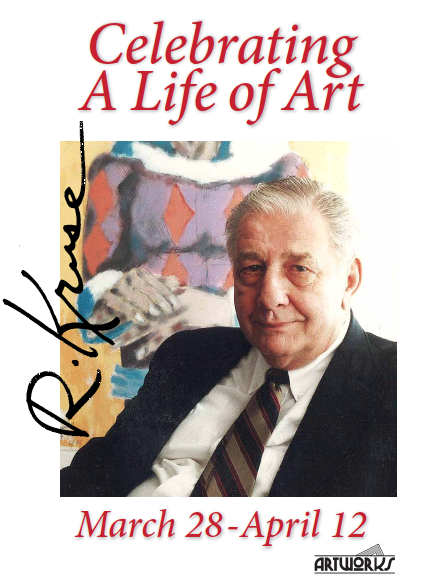
Screen Shot 2015-03-29 at 5.21.46 PMLast night was Duke’s (Richard Kruse’s) memorial art show. There was an abundance of food, wine, laughter and stories. The gallery was literally filled with his paintings, prints, and sculpture. He was prolific. His paint encrusted chair, draped with his paint spattered coat, sat empty before his easel; on the easel was a large sketch pad, a place for notes for Duke and his family. I watched people approach the chair, catching their breath before sitting to compose their thoughts in the very chair he’d occupied for decades to compose the paintings that lined the walls. The chair became sacred space, a bridge between worlds.

I did not know him but I felt an immediate kinship with his work. He was a figurative painter – as am I – and given to the mystic – as am I: he worked the figure to find the soul shining inside – as do I. It was a great treat to thumb through his sketchbook. The energy and freedom of his drawings took my breath away; this was a man who needed to make art. It was an imperative made visible. I found an even deeper kinship in his imperative.

It’s hard to explain to someone who is not filled with the fire, the inner necessity to draw, dance, make music,…. It is more than a want or desire. It can be ignored but withering is the price. If it is not honored it will consume. To someone who does not know this fire the making of art appears as an indulgence. To someone who burns with the fire, anything else is a distraction; they will construct their life patterns according to the necessity of the fire.

The myth of the suffering artist is perpetuated by non-artists. The only artists that suffer are those who ignore their gift. Most people, despite their rhetoric, fear the kind of freedom and energy evident in Duke’s sketchbook. Artists run at the unknown. They develop craft so they might relinquish control in order to dance with the fire. Too much investment in control (of self, of other, of circumstance) smothers the flame. By the stories I heard, by the power of his sketches, by the laughter his life evoked, I can only assume that Duke must have been a master of this fire-dance.


Open The Door

648. Join me in inspiring truly powerful people. Each day I will add a new thought, story or idea to support your quest and mine.

When I was a kid I was standing on a barrel so I could reach the pencil sharpener. I sharpened my pencil with such fury that I tipped the barrel over and landed on the pencil: it stabbed my right palm and the lead snapped off. I was in a hurry because I was drawing a picture and I wanted to capture the image before the magic dissipated. That’s how I experienced artistry as a boy: a magic door opened. I saw an image on a blank piece of paper and it was my task to bring it into the visible world before the door closed. Sometimes I knew I had lots of time; sometimes I knew the door was only going to be open for a moment and it was a race to get enough of the image so that I might complete it after the door closed. I had a muse and she lived on the other side of the door. I spent many hours staring at blank sheets of paper willing her to open the channel and send me an image.

My fall off the barrel was over 40 years ago and I still carry the lead mark in my palm. It has become a reminder of the magic. It took me 30 years after the fall to realize that I had control over the door; the magic was not separate from me. I merely had to turn the knob, I simply needed to open and receive the image. Like two people in love but afraid to reveal their feelings I came to realize that the muse was waiting for me and I was waiting for the muse. She wanted me to turn the knob and say, “I’m here.” I was waiting for her to turn the knob and say, “I’m here.”

I look at the pencil mark on my palm when I need to remind myself that there is no door; my muse and I are now one. There is no hurry. In fact, what I came to understand was “the door” opened when I became present. As a boy, staring at a blank piece of paper, counting my breaths, I unwittingly developed a nice meditation practice and when I dropped into the moment the door opened. I work with many people and what I’ve learned is that magic is not unique to me – it is available to everyone. We are magic – all of us. If the nozzle is closed it is because we stand in the past arguing for the wound or seeking a future place, somewhere out there where there is magic to be claimed. My work is to say, “Slow down. There is nothing broken so there is nothing to be fixed. Look at what is right in front of you. Stand here and nowhere else: let the world see that you are magic.”