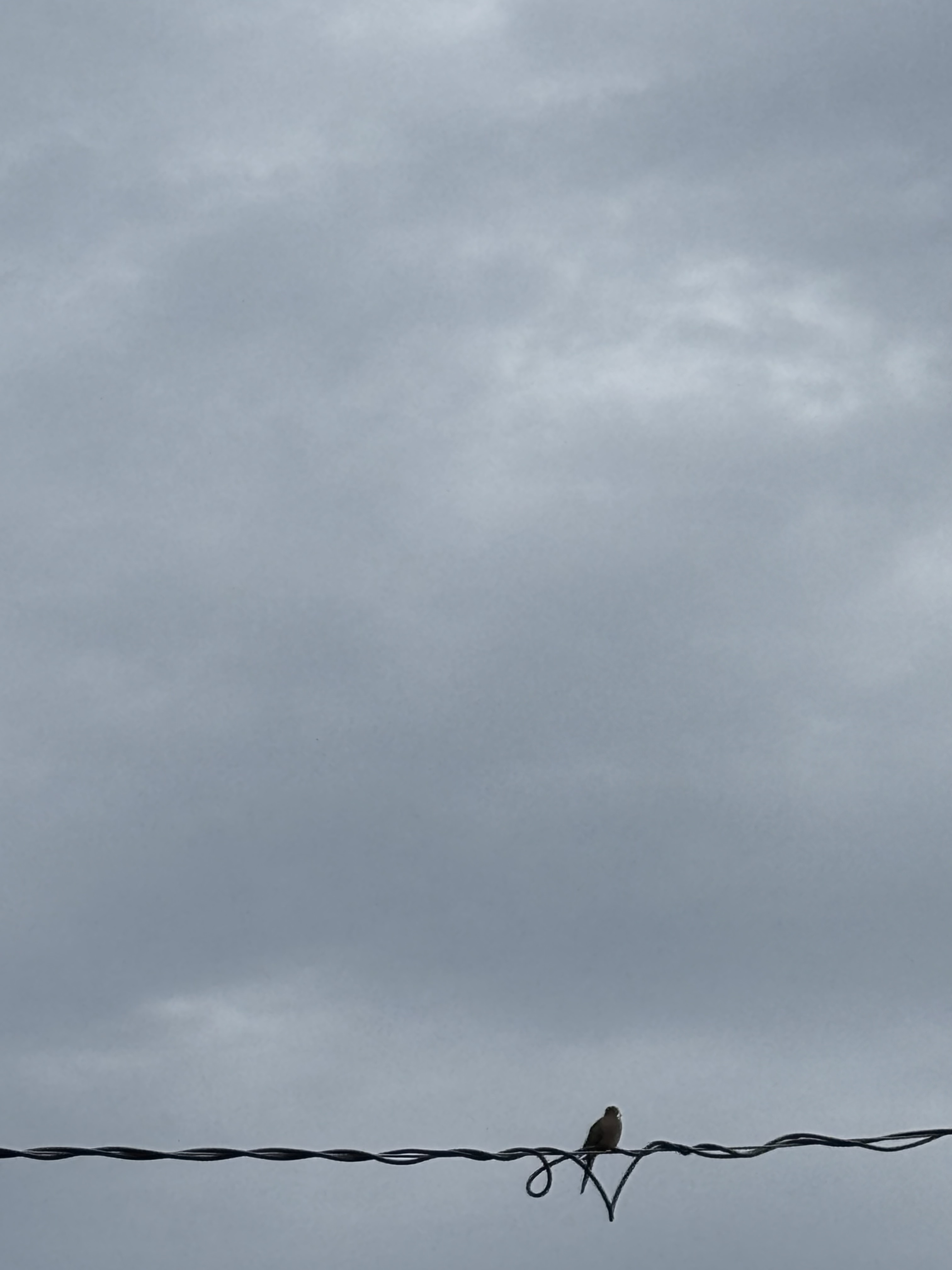
I’ve read that mourning doves are “strongly monogamous and often mate for life.” I’ve also read that, when one of the pair dies, “The survivor often sits in a nearby tree or roof and coos repeatedly, calling for a partner that will not answer.”
Lately, each afternoon, the mourning dove arrives to hold its vigil. It sits on the same wire in the same spot. Each day we watch for it and when it arrives, we hold vigil with it. We watch. We know that its partner will not appear. We wait for it to know. It is silent.
“It’s so sad,” Kerri whispers. I nod.
This dove reminds me of the last time I saw my great-aunt Dorothy. Del had died suddenly and she was heartbroken. It was the first and only time I saw this powerful mountain woman wearing a dress. Emerald green. I almost did not recognize her. As a boy I’d followed her up mountains, unable to keep up. In her grief she was barely standing. She passed a few months later; a broken heart.
I had my annual physical yesterday. The doctor asked me if I had a will. Then, she asked if there was someone who knew my wishes. I thought of Kerri waiting for me in the reception area. I answered easily, “Yes.” For a moment I was overcome with gratitude; I have not always been able to answer, “Yes,” so I repeated my answer, “Yes.”
Yes.
Sitting on the examination table, I shifted my weight, the paper crinkled. I thought of the mourning dove, the weight of grief sitting on the wire. Dorothy. Loneliness. Heart break. Gratitude. Kerri waiting for me. The paper crinkled. The doctor listened to my heart.
Today, the mourning dove did not return. We held our vigil for it none-the-less.

WRITTEN IN YOUR LIFE on the album AS SURE AS THE SUN © 2002 Kerri Sherwood
read Kerri’s blogpost about THE MOURNING DOVE

likesharecommentsupportthankyou!

Filed under: Gratitude, KS Friday, Love, Uncategorized | Tagged: artistry, david robinson, davidrobinsoncreative.com, Gratitude, grief, heart, Kerri Sherwood, kerri sherwood itunes, kerrianddavid.com, kerrisherwood.com, loss, love, mourning, mourning doves, story, studio melange, the melange, vigil | Leave a comment »