Follow The Hummingbird [David’s blog on Not So Flawed Wednesday]

If you want to understand the power of story – if you care to discover how every cultural story is both universal and deeply personal, take the time to read and reread and reread Martín Prechtel’s small book, The Disobedience of the Daughter of the Sun. After telling the story, he peels back the layers of understanding, the story of the daughter’s disobedience is a roadmap to an intentional life. It is connective tissue to generational wisdom:

“…that though we as listeners have the illusion that we have jumped into the story, the story has actually jumped into us and uses our lives to tell out its story.”

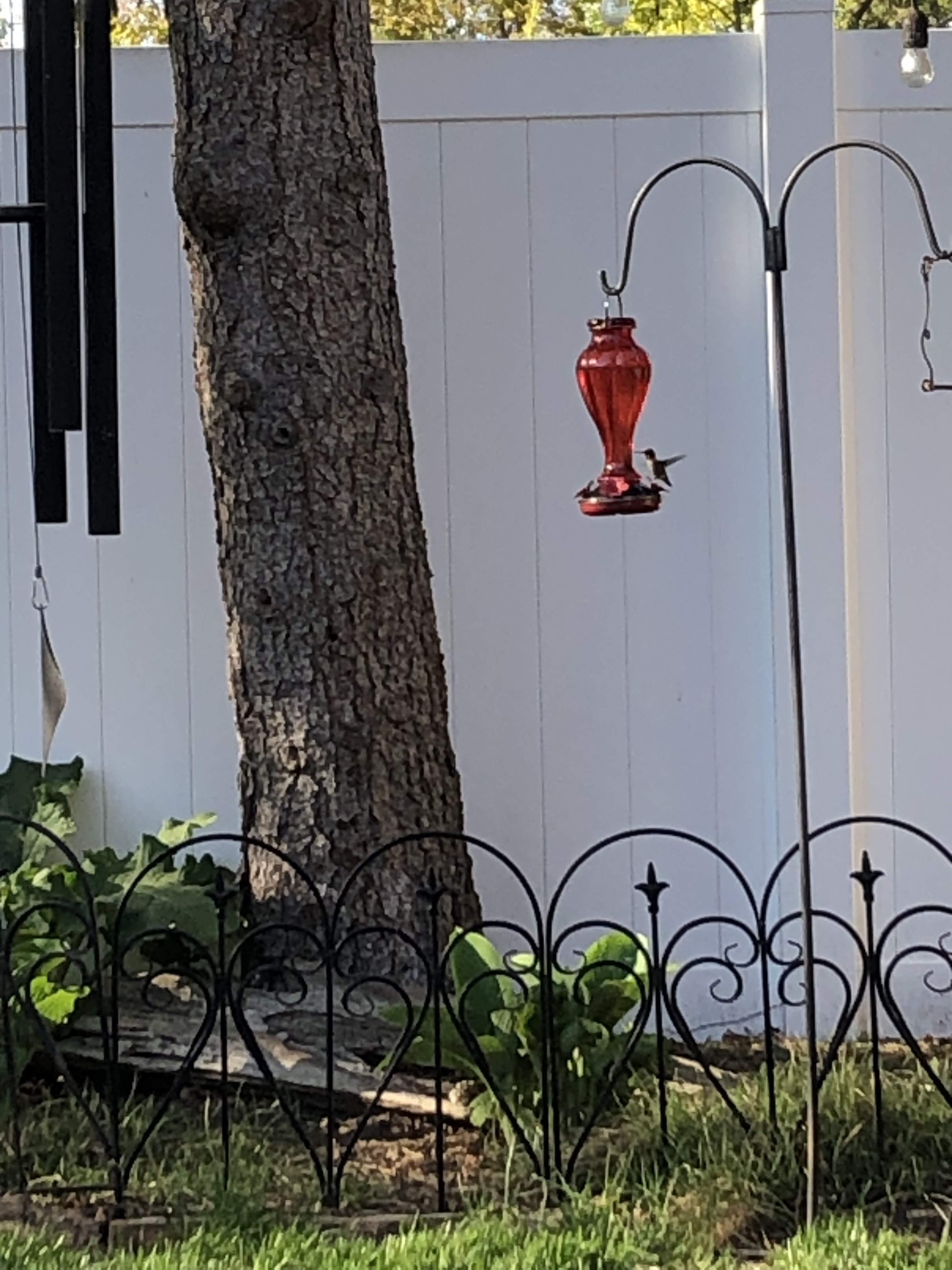
Sitting in our backyard, the sun lowering in the sky, the hummingbird arrived. A hummingbird is featured prominently in the The Disobedience of the Daughter of the Sun and this little visitor brought the story to my mind. Like all deep-story-roots, it is a tale as relevant to us as it is to the Indigenous people who live it – to keep the story alive.

“This is a commentary on the inevitable human problem of tribalism and the tragic results of ethnocentricity. It reminds us that a preoccupation with purity is a sign that a people have lost their real stories, lost their place in history, lost their land and relationship with nature and in an effort to be “someone” they engineer mythologies that are rationalist inventions to corroborate a pure ancestry. This same rationalism probably killed their stories and their Indigenous relationship with the land to begin with.”

Have you ever read anything that so accurately describes our struggle in these un-United States? As we witness the scrubbing of DEI initiatives, the blatant and brutal whitewashing of our nation’s history in order to engineer and perpetuate a mythology of white male purity, a made-up tale planted in the shallow barren soil of nationalist Christianity…we see the undeniable sign that we have lost our real story.

As is true of all great storytellers, Martín guides us toward hope and renewal:

“The story of their cultural loss should be their story, and from that grief they could grow a new culture. If you go back far enough, all people are mixed no matter what they say, and that is no disgrace.”

There is a path. It begins with grieving our loss. Together. And then, there is this:

“The story also says that a peoples’ attachment to their homeland and customs is necessary, wonderful, and life-giving, but should never be allowed to fuel a destructive chauvinism that excludes the rest of the world’s love for its own life and land.”

These are just a few of the lessons carried within an ancient Mayan tale. They are relevant to us today. We need only care enough to open our hearts and listen. And listen again. And then simmer in the slow opportunity that avails itself in the land beyond “problem-solving”.

The promise of our crossroads nation: to grow a new culture. Isn’t that the heart of our matter? Out of many, one.

There’s a hummingbird that can show us the way.

read Kerri’s blogpost about THE HUMMINGBIRD

likesharecommentsupportsubscribe…thankyou.

Or Will We? [David’s blog on Flawed Wednesday]

“When government fears the people, there is liberty. When the people fear the government, there is tyranny.” ~ Thomas Jefferson

And suddenly the winds arrive. The forecast warned us to expect powerful winds early this morning so I was taken aback when I opened the door to an eerie stillness. Dogga trotted outside into a world with nary a whisper of breeze. Three hours later, as we sat down to write, as if someone threw a magic switch, the first burst of wind rattled the windows. The trees moaned.

I was struck by this quote from Martin Prechtel:

“I knew that no worthy ritual was done for the experience of the ritual but was carried out to maintain a regular life of work and harvest, raising children and struggle.”

Rituals, like Easter or The Hajj or Diwali are appeals, acts of sacred orientation. They are acknowledgement of our smallness in the face of the vast mystery of this universe. They are meant to renew our connection to the immense, to life. Ultimately, they are the recognition that our actions, each and every day, no matter how small…matter; that we are active participants in the well-being, restoration and continuance of life. We are active creators of our relationship with the mystery.

Rituals are meant to affirm that we are not the overlords but are responsible for the care and feeding of “something bigger than myself.” We are a part of the whole. Nothing more.

Rituals are meant to remind us that we are not passive witnesses to the health of the community or the planet, but that we are stewards, active participants in our own and the community’s well-being: physically, mentally, spiritually. How we walk through life, how we treat each other, how we care for our environment, matters.

The aim is not the performance of the ritual. The aim is how the performance of the ritual intentionally orients us to daily life and to each other.

When the performance of the ritual becomes the point of the ritual it is a sure sign that the greater mythology is dying. Or already dead. And, mythology – a shared story – is the glue that holds a community together. Without it a community fractures.

Rituals need not be religious to be sacred. In the USA, our legal system and how it works is rooted in a ritual dedication to our national communal glue: the law. The Constitution is the sacred document at the center of our legal ritual and is built upon a sacred ideal: no man is above the law.

In America, the rule of law is king...For as in absolute governments the King is law, so in free countries the law ought to be King; and there ought to be no other. But lest any ill use should afterwards arise, let the crown at the conclusion of the ceremony be demolished, and scattered among the people whose right it is.” Thomas Paine, Common Sense

Historians will someday write of the collapse of our ritual of law. They will point to the Immunity decision written by Chief Justice John Roberts, someone who swore an oath to protect our Constitution, yet somehow granted a president immunity from the rule of law. He put the whims of a man above the law. The center collapsed.

Today, we witness the dissolution of ours law. A judge ruled and was ignored by a White House that knows the executive branch is immune from law and can, therefore, be law-less.

Last week we saw that congress – our makers of law – had no will to uphold their sacred duty of checks-and-balance to the executive. They signed away their power and with it, our freedoms as protected by their adherence to the Constitution. They meet now for no other reason than to meet – having abdicated their function in the ritual of democracy, having lost their purpose, they now function without meaning. They forgot their role in the ritual renewal of democracy. They now merely pretend that their actions matter.

The ritual collapses. The glue dissolves. It remains to be seen if the people, the ordinary everyday people, the people who, in a democracy, are meant to hold the power, will come together and reclaim our ritual of law from tyranny. Or will we, like the congress and the courts, fear the new king, abdicate our responsibility, remain silent and watch our freedoms circle the drain?

read Kerri’s blog on FLAWED WEDNESDAY

likesharecommentsubscribesupport…thankyou.

Step Into The Path [David’s blog on DR Thursday]

“When living simply, most people’s problems were part of the breathing and functioning of The Big Picture of life, for which few humans, if any, had a large enough vision or imagination to comprehend.” ~ Martin Prechtel, Long Life Honey in the Heart

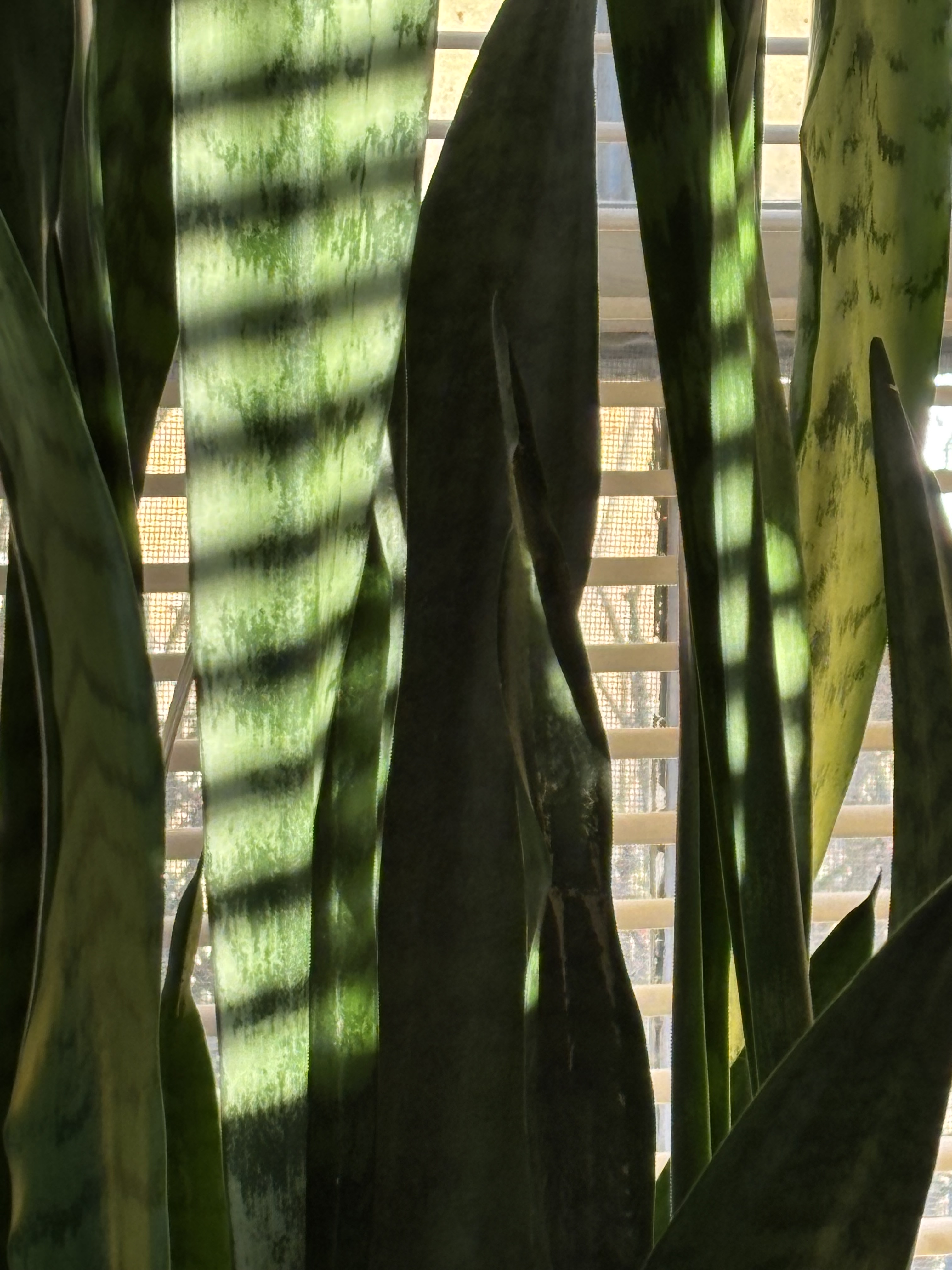
Our snake plant has easily tripled in size since we brought it home. It resides on the deep window sill in our living room and will soon outgrow its nook. We tease about cutting holes in the ceiling to accommodate its astounding reach. It is a constant source of inspiration; sometimes it seems like an alien being, sometimes kelp-like and belongs in the ocean, often the light-play on its leaves makes Kerri run for her camera.

“To the Tzutujil, people were not put into this world to have a good time; they were put here to be beautiful.” ~ Martin Prechtel

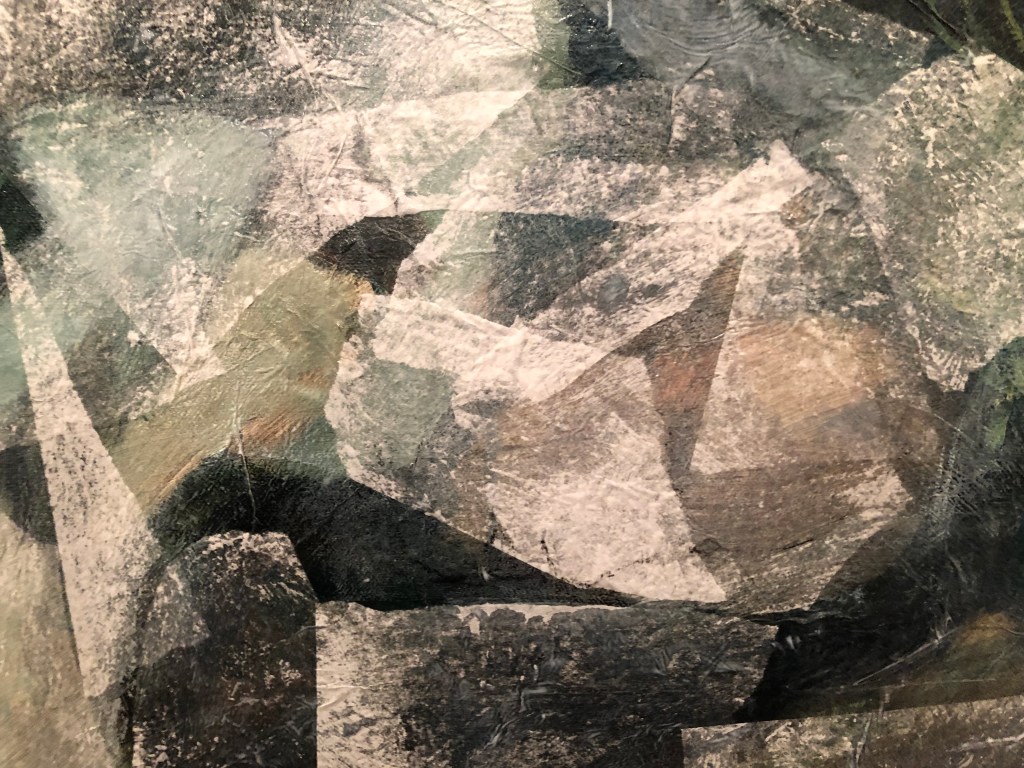
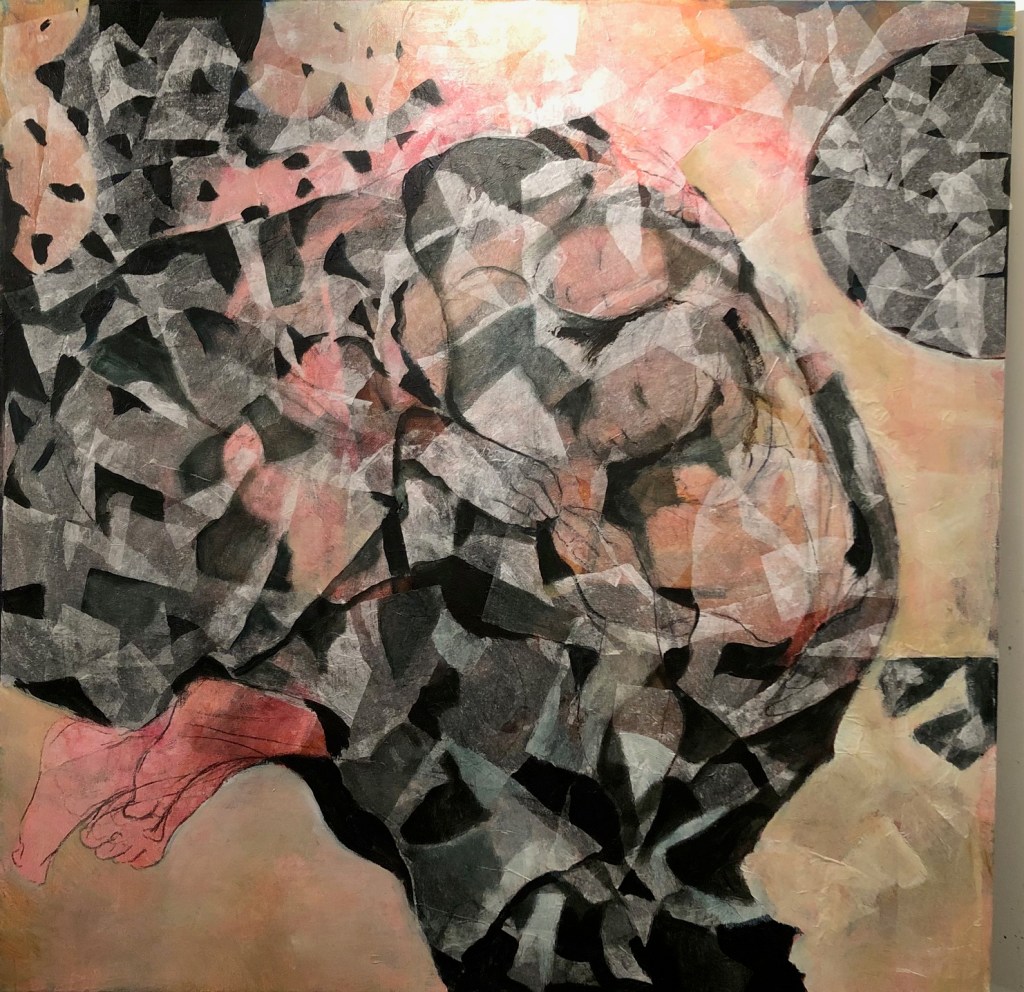
Following the recommendation of Horatio, I have been painting crap for weeks. To be clear, I haven’t been painting crap – that would be odd – rather, my work has been crap. Making messes. Rather than brushes I’ve been using rags and scraping tools. Wiping off, covering over, finger painting. It’s freeing.

My studio is a sanctuary where I can, for a little while, forget what is happening in-and-to our nation. Each day I read or receive an email with these questions: What is happening? What is going to happen? The first is easy to answer: our democracy is being systematically dismembered. The second is impossible to know.

I remembered a play titled The White Rose. It chronicles the arrest and ultimate execution of students from the University of Munich who protested against and resisted the Nazis. It prompted me to Google what the German people did to resist the rise of Hitler. It might surprise you to learn that the German people did not go quietly into the fascist dark night.

“How wonderful it is that nobody need wait a single moment before starting to improve the world.” ~ Anne Frank

Do you remember the pro-Democracy protests in Tiananmen Square and the man who stood in front of a tank? Not all people have had freedom of speech, a free press, a society striving for social equality, the privilege of voting…they would die – and have died – for what we have taken so for granted that it is now, by popular vote, being stripped away.

The potential loss is too great to comprehend.

Did you learn about The Selma Marches* in school? Black Americans were being prevented from voting. Thousands of non-violent protesters marched and were met by violence. It was a seminal moment in the Civil Rights Movement in the United States. We have in our history great examples of courage in the face of thuggery. John Lewis. Martin Luther King. Rosa Parks and Liz Cheney are cut from the same cloth.

Empowered people empower others. What is going to happen? What we allow to a happen.

Anne Frank wrote from her hiding place, “In the long run, the sharpest weapon of all is a kind and gentle spirit.” Kind and gentle spirits need not be passive or alone. They can join hands and march. Together they can face-down the corruption and indecency. They can harbor the persecuted. They can step into the path of an oncoming tank and with their courage touch the heart and shared humanity of the world.

*No matter what history the current administration attempts to erase, it is Black History Month and the history of the United States is rich with people of courage who faced incredible resistance to preserve and forward the ideals of democracy.

detail of a painting in progress: can you see her face?

read Kerri’s blogpost about SNAKE PLANT

likesharesupportcommentjoinhandssubscribe…thankyou.

The Fruit of Now [David’s blog on Not So Flawed Wednesday]

“But the Tzutujil, with no verb “to be,” spoke about their temple as a non-rigid, fluid thing to be added to and fed with offerings. These offerings kept the world alive, like the fertilizing and watering of a tree, an ancient tree that continually bears the fruit of “now”. “ ~ Martin Prechtel, Long Life Honey in the Heart

The fruit of now.

Sometimes I try to imagine living in a culture that believes their actions matter not only to the health of the world, but the very existence of the world. All the world a sanctuary. What must it feel like to live with the understanding that what we do and how we behave, what we honor and what we bring to the sanctuary more than sustains it? It recreates it. No action is insignificant. To be the collective stewards of an ancient relationship rather than pursuers of an individual abstract heaven. The fruit of now.

Day one of a new year. Yesterday I wrote about my resolution, to be careful what I pretend to be.

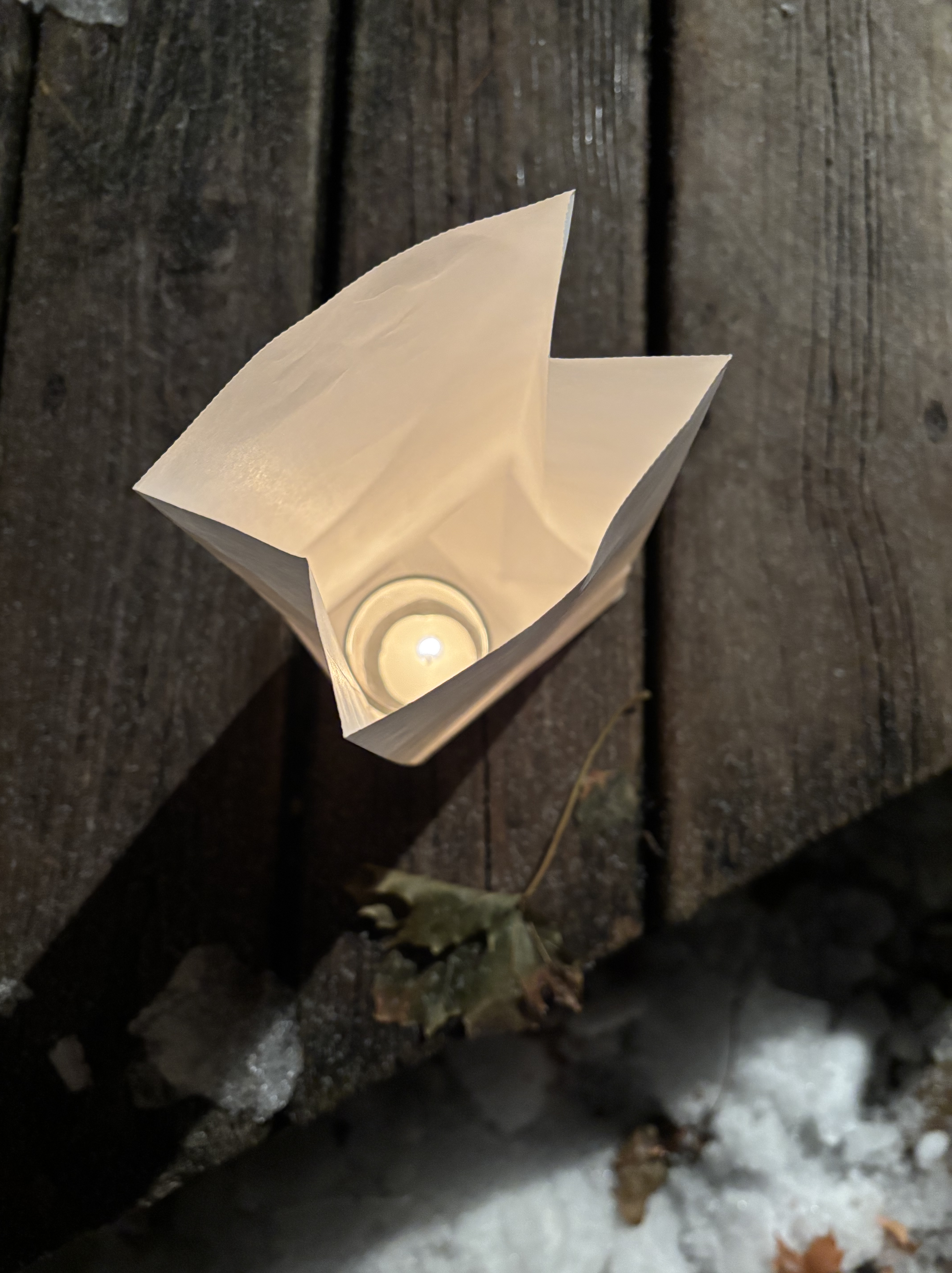
Yesterday Kerri wrote about being a source of light. A luminaria. Illumination. “A lamp kept burning before the sacrament.” To be a source of light in a dark time.

This morning I awoke thinking about kintsugi: the Japanese art of repairing broken pottery by mending the areas of breakage with urushi lacquer dusted or mixed with powdered gold, silver, or platinum. It was mentioned in the Hallmark movie we watched on Sunday night. A cherished angel, broken and repaired. Kintsugi is meant to take what is broken and make it more beautiful by highlighting rather than hiding the cracks.

Kintsugi is a nice compliment to my resolution of being careful about what I pretend to be. It is a worthy intention, rather than hide my broken bits, I might spend this year gluing them back together in such a way that I highlight rather than conceal them. To be an honestly messy human is to be a source of light in a dark time. In that way, might I become more beautiful?

Or, perhaps the becoming-more-beautiful never stops. Kintsugi is not an achievement, an end result. It is an ongoing process. I can imagine, as one of the many stewards of the ancient relationship, responsible for the health of the sanctuary, the ancient tree, becoming more beautiful is an intention, a daily practice. And, knowing that what I-and-we-do-and-say matters to the health of the whole, in this ritual passage into the new year, I-and-we might enjoy the fruit of now, taking this step across the threshold into the new year as if what we do matters to the health of the world, shining as a source of light in a dark time.

read Kerri’s blog about A Luminaria

likesharesupportsubscribecommentshinetendwaterfeedthesoul…thankyou.

Remember The Ritual [David’s blog on DR Thursday]

One week from today is Boxing Day. The day after Christmas.

If you seek a symptom for the source of the troubles of our world, you need only look at Boxing Day. Boxing Day was once a day to donate gifts to those in need, but it has evolved to become a part of Christmas festivities, with many people choosing to shop for deals…” I’m not trying to be cynical. I’m trying to point out the obvious.

I’m re-reading Martin Prechtel’s book, Long Life Honey In The Heart. It’s a book about the Tzutujil initiation into maturity. “Initiation was mandatory in those days and constituted the beginning of adulthood. This rite of passage, however, was not what made you into an adult. This first initiation only made you ripe enough to continue on in a lifelong pursuit of turning yourself into an adult, on through the next three layers of service to the village.”

Can you imagine a community in which service to others is the very pursuit that defines the achievement of adulthood?

According to the Tzutujil ideal, very few of us in this nation turn ourselves into adults. In fact, if you look at the incoming administration, it’s easy to see the absence of adults – grown bodies stuck in adolescent minds and obsessed with self-increase. Service to the community – the point of governance – is nowhere to be found. They are – without exception – men and women of our time.

It is not an understatement or any great revelation to suggest that we have lost our way. We’ve confused money with morality and follow business gain as our north star. Business is a lousy organizing principle for a community. It has its place, certainly. The unbridled levers of business too easily lead to exploitation. Additionally, everything should not run like a business, especially service organizations like healthcare or education. Or religious institutions. Or the arts. Or government. Some things are sacred and business is not one of them. Personal gain at any cost – has a cost – and it is the unity of the community.

We see yard signs everywhere that read, “Keep Christ in Christmas,” to which Kerri responds, “How about keeping Christ in Christianity?”

It’s a pattern. Where the health of the community is involved there are two paths: one is service and the other is self-service. One way leads to cohesion and the other to disillusion. We should not be surprised that our leaders are infantile and our religious holidays subvert giving for gain.

Maybe the place to restart our journey toward a healthy nation is to begin the pursuit of turning ourselves into adults; reinforce in each other the development of a healthy inner life. Perhaps, since we are hellbent on turning back time, we should begin by remembering and practicing the original ritual of Boxing Day.

a work in progress

read Kerri’s blogpost about REEDS

likesharesupportcommentsubscribe…thank you.

Use Joy Language

joy-croppedTripper Dog-Dog-Dog has moved through several names in his 3 years on earth. He has a cornucopia of names. For a while I dropped the “Tripper” part of his name and simply called him Dog-Dog. Now, much as a mother might use their child’s middle name, we only call him Tripper when he’s in trouble.

Lately I call him Dog-a-Dog (or doggadogga). He answers to Wag-A-Wag. He is an Australian Shepherd and has a bobbed tail that never stops wagging. He is a happy, happy boy. When I let him out in the morning I call him Fuss Bucket. When he comes back in I call him Poop Sack (for obvious reasons) or Bark Monster or Fur Ball. He sheds like a champion. When he circles through the rooms of our house looking for a safe place to deposit his bone, I (cleverly) call him Bone.

All the variations and derivatives are terms of endearment. Dog-Dog knows and responds in kind. Love is like that. Once, sitting on a train, I watched a grandfather lovingly toss his toddler grandson in the air saying, “You’re just Rubbish! That’s what you are! Rubbish!” The boy squealed with delight. The grandfather chuckled with pleasure and repeated the toss, “You’re just Rubbish!”

Language is a beautiful paradox. It is reductive even as it points to the unfathomable universe and the infinity of love. It is referential; we sometimes forget that the word “tree” is not the tree itself. It is merely an invented-phonetic-pointer toward something too complex to comprehend.

Language is powerful beyond comprehension. We use it to narrate our worlds, both inner and outer. The words we choose create the world we see. The words we choose define the world we inhabit. In my consulting/coaching days I used to love playing with exercises that revealed how easily we come to the language of gossip and blame. It requires almost no effort. Like sugar, hate-speak is addictive. It is the mark of a lazy mind.

The language of love takes some intention and consciousness. It demands conscious effort. It requires paying attention. It requires focusing the energy of the mind and, like any focus (or muscle) it demands exercise to be healthy. And, when exercised, it becomes easy. With great love, the word “Rubbish” can generate squeals of pleasure. The name “Fuss Bucket” will engender a full body joy-wag. And, a full body joy-wag will bring the love full circle. Love is like that. Joy is like that.

In his many books, Martin Prechtel writes beautifully about the power and necessity of speaking beautifully. Speaking beautifully creates a beautiful thinker and a beautiful thinker creates – narrates – a beautiful story, a beautiful world.

Prints/Mugs/Pillows/Cards/Totes

kerrisherwood.com   itunes:  kerri sherwood


Save