Share Through Your Eyes [David’s blog on Not So Flawed Wednesday]

We slept on the living room floor last night. Our chugga-chugga air conditioner doesn’t reach our bedroom at the back of the house. Record breaking heat drove us to improvisation. “We’re camping!” we exclaimed, spreading blankets on the throw-rug, Dogga jumping with enthusiasm into our bed-making-attempts, ruffling our efforts.

In the morning, we could barely move. “My shoulder is killing me!” I whined.

“My hips are burning,” she frowned.

We laughed and together howled, “OUCH!” I creaked to the kitchen to make coffee.

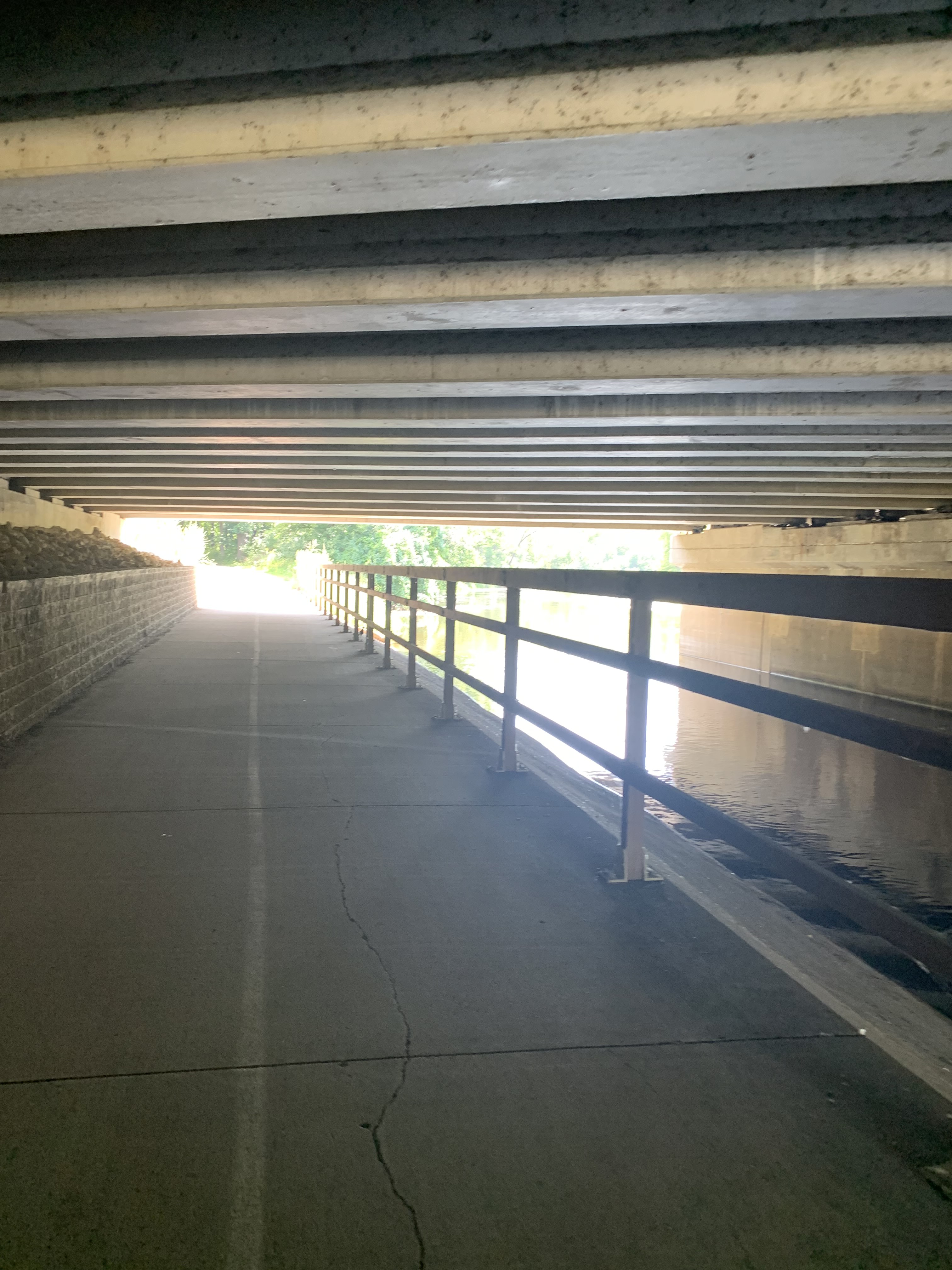
While waiting for the coffee to brew I thought of the underpass. On Saturday we explored a new part of the river trail that ran beneath several busy roads, including the interstate highway. As we left the heat of the sun and entered the cool of the underpass, Kerri asked, “Do you think people sleep under here?”

“Yes, I do.”

Standing at the coffeemaker I was awash with thankfulness. I slept on the floor by choice. Our dog woke us this morning nuzzling our faces. Our ancient air conditioner kept us cool through a brutally hot night. We laughed at our aches and pain.

It’s funny the way thoughts tumble and connect with memory, constellating into well-worn images or plowing new conceptual pathways. Udayana University, Bali. One of my graduate school peers had just completed a presentation on homelessness in the United States. The Udayana faculty was horrified. “But you are the richest country on earth,” a wide-eyed Balinese professor stuttered. “How can you let a member of your community go without a home?” To him, it was the height of shame for a community not to care for their own. It was, in fact, inconceivable. This moment was central to my memory: I saw in his eyes the high esteem he held for us fall into the dark basement. He was suddenly very proud to be Balinese. His community might not have financial resources but they had a form of wealth that made paupers of his American guests.

“It’s the contrast principle”, 20 says. Oppositions illuminate. Cultural differences clarify. What we normalize we cease seeing. I’ve stepped over people sleeping in the street. In Seattle, I routinely rode my bike on paths under a freeway lined with tents and shopping-cart-possessions. In Bali, a man stopped his work in the fields and walked with me because it was rude to let a guest walk alone. We did not speak because we did not share a common language. When I reached my destination, we nodded and shared through our eyes that most universal of gratitudes: genuine appreciation for the companionship of the other; an authentic wish for the well-being of all.

read Kerri’s blogpost about THE UNDERPASS

like. share. support. comment. thank you

Take A Look At Strider

802. Join me in inspiring truly powerful people. Each day I will add a new thought, story or idea to support your quest and mine.

He was formidable walking down the hill toward the waterfront. Wrapped in a grey blanket that made him look like a Jedi knight he took bold confident strides. He was a paradox: homeless and determined, aimless and intentional. People parted and opened a path for him even before they could see him. They felt him coming. He was a force.

For a moment I felt as if I was watching two worlds overlap. His grey blanket-cape swirling through a crowd of reserved business-casual wear. He was the most alive person on the street and the most fearsome. He was striding beyond the rules. He didn’t care if he was hit by a car or ran over a tourist. He didn’t care and the freedom of not caring was dangerous. I could see the message in his pace: no one cared for him so why should he care for anyone. He was experiencing the worst punishment a tribe can deliver: he was cast out. He did not belong.

I knew he had no destination because I recognized the force that drove him. He wanted his life to be different. He wanted a break, an opportunity, anything that looked like hope. And there was none in sight. He was pissed at his life choices. All he could do in this moment was walk and walk fast, hard, and determined and burn off the fury. It would either make him feel the vibrancy of his life or exhaust him and either way he would emerge from his walk in another mindset. He would find hope or fatigue and sleep. He would live another day.

As I watched him descend the hill, knowing that he would simply turn and walk right back up again only to descend one more time – a modern day Sisyphus – I also realized that the folks in business-casual were probably doing the same thing only with less awareness but with a modicum of hope. Someone cared about their actions. Someone cared that they showed up. They had a place to go. The strider did not.

Last night, I had yet another conversation about the need to create community and connectivity – this time with a maker of software. My fascination with this conversation began nearly 15 years ago in school with the ongoing ever-present conversation about creating community. I hear it in one form or another almost everyday. Here in a metro area of almost 2 million people we feel the need to create community and that can only be true because we do not experience it beyond the superficial. A community cares for the health and well being of all of its members. A community does not place the interests of the few above the values of the whole.

I have been walking since January AND I have places to go. If I do not show up at Carol’s before midnight I get a text. Judy checks in with me. Horatio and Arnie want to know how I am doing. Megan reminds me to eat and throughout the day tugs on the lifeline to see if I will tug back. I am loved. I have been meditating on this thing called home that has evaded me or that I have avoided (I don’t know which) and the strider shook my meditation like a snow globe. I think I will find home because I am determined to create it. I wonder if any of us will ever really know a greater community? The man in the cape swirled down the hill and people parted, they glanced but mostly did not give him a second look. Outcasts are ordinary. Not belonging to something bigger is an everyday occurrence. Do you feel it?

Buy The Man A Coffee

651. Join me in inspiring truly powerful people. Each day I will add a new thought, story or idea to support your quest and mine.

I was all night at the studio. When I spend the night in the studio I become gushingly grateful for the Starbucks that opens at 6:30am. It is only a few blocks away and I staggered the distance and collapsed on the counter. They know me so I didn’t have to speak – a good thing because I was desperate beyond words – and the nice baristas tilted back my head and poured the rejuvenating elixir into my mouth. My dad used to call coffee “the nectar of the gods” and on mornings like this I am certain that there is nothing more true in the entire universe. Soon I was sitting upright at the corner table, holding my enormous coffee cup with both hands, watching the early morning commuters’ bustle in on their way to work. “How can anyone bustle at this time of day?” I pondered feeling vaguely assaulted by the brisk pace of business.

In the far corner of the café, slightly hidden by the holiday products display, a man was sleeping. Like me, he was holding his cup with both hands but I could tell, even from across the café, that he’d pulled a used cup from the garbage, maybe several days ago; his cup hadn’t seen coffee in some time. His head had fallen backwards, his mouth was wide open, and he was snoring. The other customers pretended he wasn’t there. A barista tried to wake him but he was sleeping the sleep of someone, like me, who’d been up all night but unlike me, he’d been out in the cold and freezing rain. He believed his paper cup gave him admission to be inside; if he could not afford to be a patron he’d pretend to have coffee and hope no one would notice – at least until he was warm. I’m certain it was not in his plan to sleep but the truth of his exhaustion took over.

The police came. They were about to call the paramedics when the exhausted man blinked open his eyes and, confused, not knowing where he was, so deep was his sleep, that he jumped up. The police tensed as if facing a threat and almost as an act of unconscious surrender, the man sat back down. Then he recognized where he was, groaned and looked for his cup. It was gone, and with it, his hope for staying warm. “Are you alright?” the cop asked. He was kind. The man nodded his head, “I fell asleep I guess,” he said. The cop nodded his head. “Do you need some help? Can we take you somewhere?” The man shook his head, apologized to the police, pulled his coat around himself, and walked out into the wet dark morning.

“Is he alright?” a barista asked. The cop wanted to say, “No!” but instead looked out the door and said, “I guess so. He’s gone.” The cops went to their next call. The bustle resumed. Genuine concern eclipsed only by the needs of commerce. None of us transcended our inability to connect with the real human need even in the midst of this season of giving. We betray so much in the actions that we do not take and the things we do not say.

Sitting at my corner table I remembered a phrase that I learned last week from Kevin Honeycutt. He was talking about doing anything and everything to change the culture that produces bullies. He called it – us – The Mean Culture. Bullies are not the aberration that we like to pretend; they are an expression of cultural value, dog-eat-dog-business-is-business and all of that. Sometimes the beating is subtle, more public, and so commonplace as to be invisible amidst the hustle and bustle. Sometimes changing the mean culture can begin with something as simple as buying a man a cup of coffee or perhaps simply letting him sleep.