Be Clumsy

a detail of my painting, May You Be.

a detail of my painting, May You Be.

Clumsy (klum’ ze) adj. 1. lacking dexterity, grace or skill; awkward. 2. ungracefully shaped or made; unwieldy. 3. awkwardly or unskillfully said or done, ill-contrived.

“We don’t allow ourselves to be clumsy,” Kerri said. “Life is clumsy.”

Many years ago I read a commentary that suggested we moderns have a harder time of feeling good about ourselves than people of ages past. The argument went something like this: we have an impossibly high standard to meet and it is mostly illusory. For instance, our predecessors compared themselves and their successes against a relatively small village populace. We are swimming in pool that stretches around the earth. The athletes in our ancestral villages ran against their neighbors, the artists created for a specific purpose that served a tangible need in their community. Our young runners know to the hundreth-of-a-second what greatness requires. They run against the world. Our artists rarely know outside of their own inner imperative why they are creating. With no outer limit they spend a great deal of time wondering if their work has any impact or greater significance. With no outer limit it has no defined audience or community. Stephen, a gifted and prolific artist, used to ask, “Why don’t people recognize the value of art?”

The argument is largely a question of access. Our predecessors had limited and very abstract access to the news of the day, to the happenings beyond their region. We have a 24-hour global news cycle that comes to us on multiple devices that are designed to grab and keep our attention. It is not passive. On our multiple devices we are bombarded with images and messages of what we should look and feel like. Yet, almost all of the images populating our personal measuring stick are constructed. They are manipulated, retouched, powdered and Photoshopped. Legs are stretched. Wrinkles are removed. Sunsets are filtered. We measure ourselves against illusions.

Thus, intermediaries are everywhere. Interpreters abound. I rarely go into a gallery without a curator telling me why the work on the walls is important. The news of the day makes us the rope in a tug-of-war of interpretation.

Art, like life, like deep spirituality, requires direct engagement. It is made rich in the rough draft and the mistake. The broken road is interesting, vital. Learning is a process that takes time. It is messy. It is clumsy. It is not straight, paved, and has no road signs. And, it cannot be walked alone.

There is no forgiveness (of self or other) on the path of perfection; forgiveness is in short supply when the standard is both impossible to attain and an illusion. On the clumsy path, on the messy and muddy road, lives grace, generosity of spirit and deep forgiveness.

Clumsy (klum’ ze) adj. 1. Human
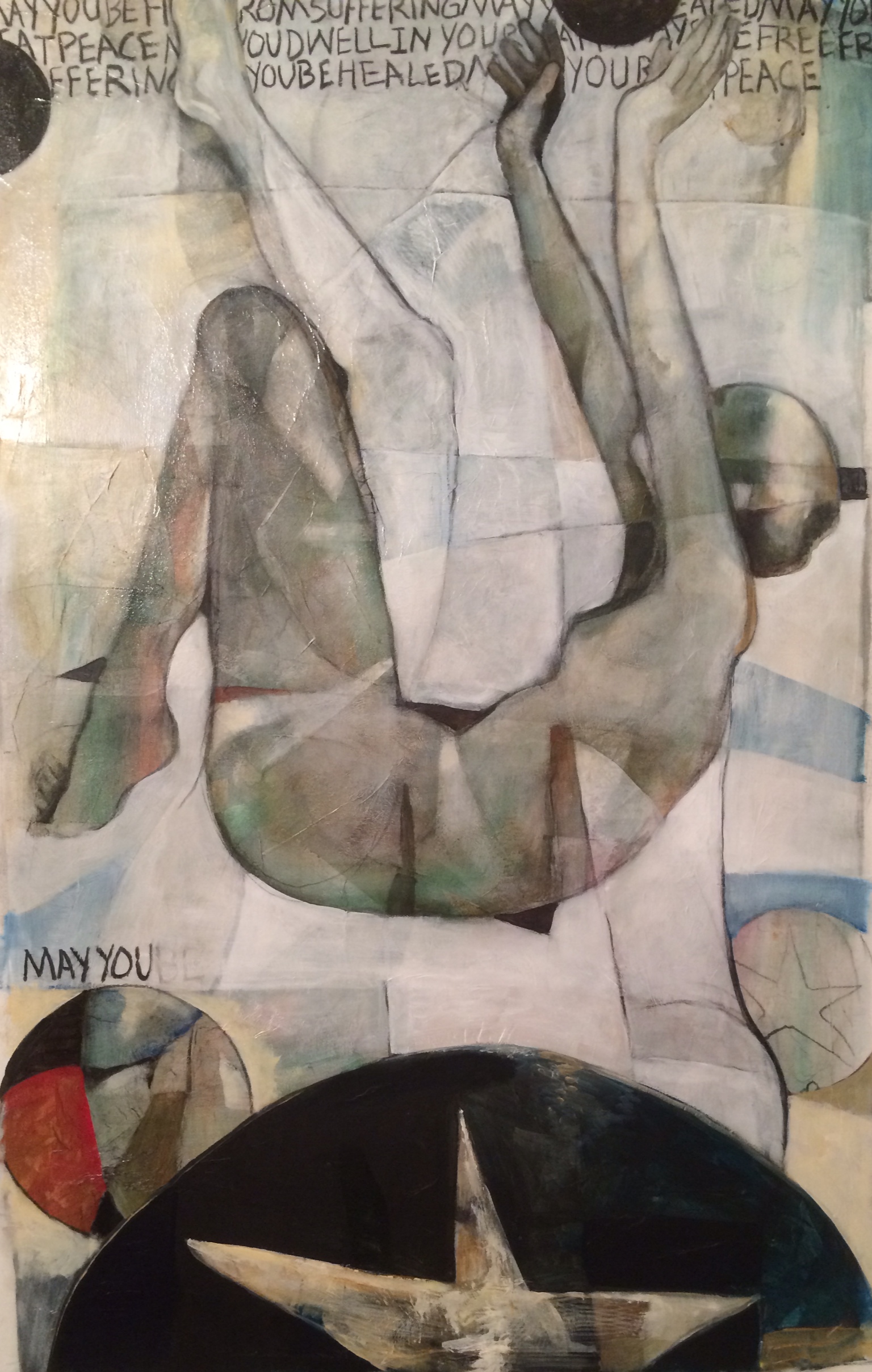
May You Be

May You Be


Recognize The Gift

Kerri with her mom, Beaky

Kerri with her mom, Beaky

Late night thoughts from the ER.

Earlier in the day Beaky told me that she had no special talents and I protested! She is one of the best storytellers I’ve ever known. She’s a natural. She can’t help herself. Sit with Beaky and you’ll hear some great stories. Beaky is like the rest of us: she doesn’t recognize her greatest gift because she thinks it is ordinary. She overlooks her gift because she thinks everyone can do what she does easily. That is the way with gifts: it is in the ordinary that we ultimately recognize our extraordinary-ness.

Beaky fell and we spent the night with her in the emergency room. As we sat by her bed, waiting for the pain medication to kick in, she said, “Did I ever tell you about the time…?” We heard stories about stags leaping over the car and the late-in-life marriage of her brother.

Another gift, related to her gift of story or, perhaps, an extension of her story-gift: people smile when they hang out with Beaky, even under extreme circumstances. For instance, writhing in pain, she looked into the eyes of a nurse and said, “I wish I had some of what you have! You have such a lovely smile.” And a new story begins; the nurse moved into the hall to tell the night staff about the kind woman in room 28.

After a sleepless night, Kerri and I sat in the hospital café and talked about the lessons of life, the lessons in generosity of spirit, the instruction in Grace and the rich stories we are receiving. From this seat, not much else seems important.

title_pageGo here to buy hard copies (and Kindle) of my latest book: The Seer: The Mind of the Entrepreneur, Artist, Visionary, Innovator, Seeker, Learner, Leader, Creator,…You.

Johnny crop copySupport the Kickstarter campaign for my play, The Lost Boy

Greet The Day

photo-1Behind Beaky’s house is a retention pond. There is an alligator that occasionally breaks the surface and when it does I say, “Looking for poodles…” Kerri punches my arm and smiles.

The house is nearly empty; Beaky moved into assisted living almost 2 years ago and slowly her possessions have been packed or passed on to family members. It has been a quiet attrition, a gradual acknowledgment of the step into the next phase of life.

We stay in the house when we visit. We sip our coffee, sit in camping chairs, and watch the waters of the pond change with the progress of the morning sun. A cormorant comes each morning. It stands at the pond’s edge, spreads it’s wings, and drinks the sun. “It’s as if it is opening its heart to greet the new day,” Kerri says.

She tells me that the cormorant comes to the exact spot where, a year ago, her family gathered to spread her father’s ashes. A single cormorant came that day, too. In the middle of the rite, the bird landed, stepped into the setting sun, and spread it’s wings. Her father loved the pond. It was as if the spirit of her father came as the cormorant. It opened its heart. It greeted the sunset.

The news with Beaky is not good. I watched Beaky’s face as Kerri wheeled her from the doctor’s office. Beaky is no longer living, as she says, “indefinitely.” Her path is now definite (as I suppose all of our paths are truly definite even though we rarely consider it so). She looked relieved. She looked easy and quiet. Beaky said, “I’ve lived a good life! I’m ready.”

Now, as is true with abundant life, there is metaphor upon metaphor. There is the house. There is the alligator breaking the surface. There is the cormorant spreading its wings. There are cycles of life, passing moments, possessions never really possessed. There are stories made and stories lost. There is a family with an open heart, watching the progress of the sun, ready to greet the day.

title_pageGo here to buy hard copies (and Kindle) of my latest book: The Seer: The Mind of the Entrepreneur, Artist, Visionary, Innovator, Seeker, Learner, Leader, Creator,…You.

Or, go here for all digital forms of The Seer


OR! Go here for fine art prints of my paintings

I call this painting, "Canopy"

I call this painting, “Canopy”


What Do You Value?

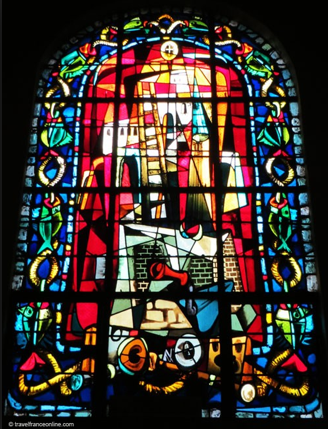
One of the windows by Max Ingrand at Saint Pierre de Montmarte

One of the windows by Max Ingrand at Saint Pierre de Montmarte

What has value? What has merit?

Or, here’s a better question: What is value? What is merit?

During our travels I looked at a lot of art and architecture from across the centuries and across many different cultures. There is a very old church, Saint Pierre of Montmarte, one of the oldest in Paris, seated adjacent to Sacre Coeur high on the hill overlooking the city. This ancient church has been outfitted with stained glass windows, designed by Max Ingrand, that I can only describe as cubist. The collision of ancient church and modern window is breathtaking and perfect. The windows were so beautiful (to me) that they brought tears to my eyes. It was hard for me to leave the church as I was so taken by the windows yet I was also aware of the number of people moving through that were not impacted at all. Later, I entered Sacre Coeur and felt nothing. To me, it was impressive, impersonal, and left me cold – yet I watched others catch their breath with its scope and grandeur. They were moved to tears.

Is value purely personal and subjective?

I remember listening to a recorded lecture by Joseph Campbell. He said that you could tell what a society valued by the buildings constructed in the city center. For centuries, churches occupied the village center. Financial institutions occupy our village/value center. Is value an agreement? Is it a focal point of worship? Take a gander at the titles in the local bookstore and you will find that money, morality, spirituality, and success are odd bedfellows. Is a good life richly lived demarcated by the size of a bank account? Tourists in the distant future will visit the holy sites occupying our village center and read placards about what we valued.

Near Sacre Coeur is the cemetery at Montmartre. We descended the hill to the cemetery and walked the paths through the monuments and graves. They fascinate me. They are essences, value statements distilled to a thick concentrate of marble and stone. There are angels and gargoyles, draped figures in repose and riders of the apocalypse. There are statements: loving father, devoted mother. There are roles: composer, writer, soldier, painter, baker, philosopher, politician. The famous are interred next to the ordinary. In a cemetery, all lives are even. Standing amidst the graves I see lives lived, dreams dreamed and realized or unrealized, and I wonder what each person valued during their allotment of days, and what they valued on the very last day.

Value is relative and passing? An extraordinary moment, when conscious, is valuable.

This is from Rumi: Spirit is so mixed with the visible world that giver, gift, and beneficiary are one thing. You are the grace raining down; the grace is you.

Value is grace? You? What surrounds you?

Go here to get my latest book, The Seer: The Mind of the Entrepreneur, Artist, Visionary, title_pageSeeker, Learner, Leader, Creator…You.