Upside Down [David’s blog on Merely A Thought Monday]

We saw the sticker on the back of a traffic sign. “What’s the definition of hippy?” she asked.

Since she is a detail-girl, I Googled the definition. I am famous for making up definitions and she’s on to my game. I read aloud: “usually a young person who rejects the mores of established society (as by dressing unconventionally or favoring communal living) and advocated a non-violent ethic.” Or, “having very large hips.”

She frowned. “Do you have to be a young person to reject the mores of established society?”

“Are we young people?” I responded and she smiled. Always the rebel.

As we strolled away from the sticker I wondered about the mores of our society that so assumes violence as conventional that non-violence is considered – by definition – unconventional.

Sometimes this world seems upside-down.

The moment was made more ironic because, just moments before, every phone on the busy street rang with an alarm: there was an active shooter just six minutes drive away, a fifteen minute walk, and the police were locking down the area. Everyone stared at their phones and continued with their business.

What was the most unnerving? That there was an active shooter close-by or that no one was surprised?Everyone continued shopping. Violence as a convention.

“I think I want to be a hippy,” she said. Me, too.

read Kerri’s blog about HIPPIES

like. share. subscribe. support. comment. many thanks.
Name Your Wine [on Two Artists Tuesday]

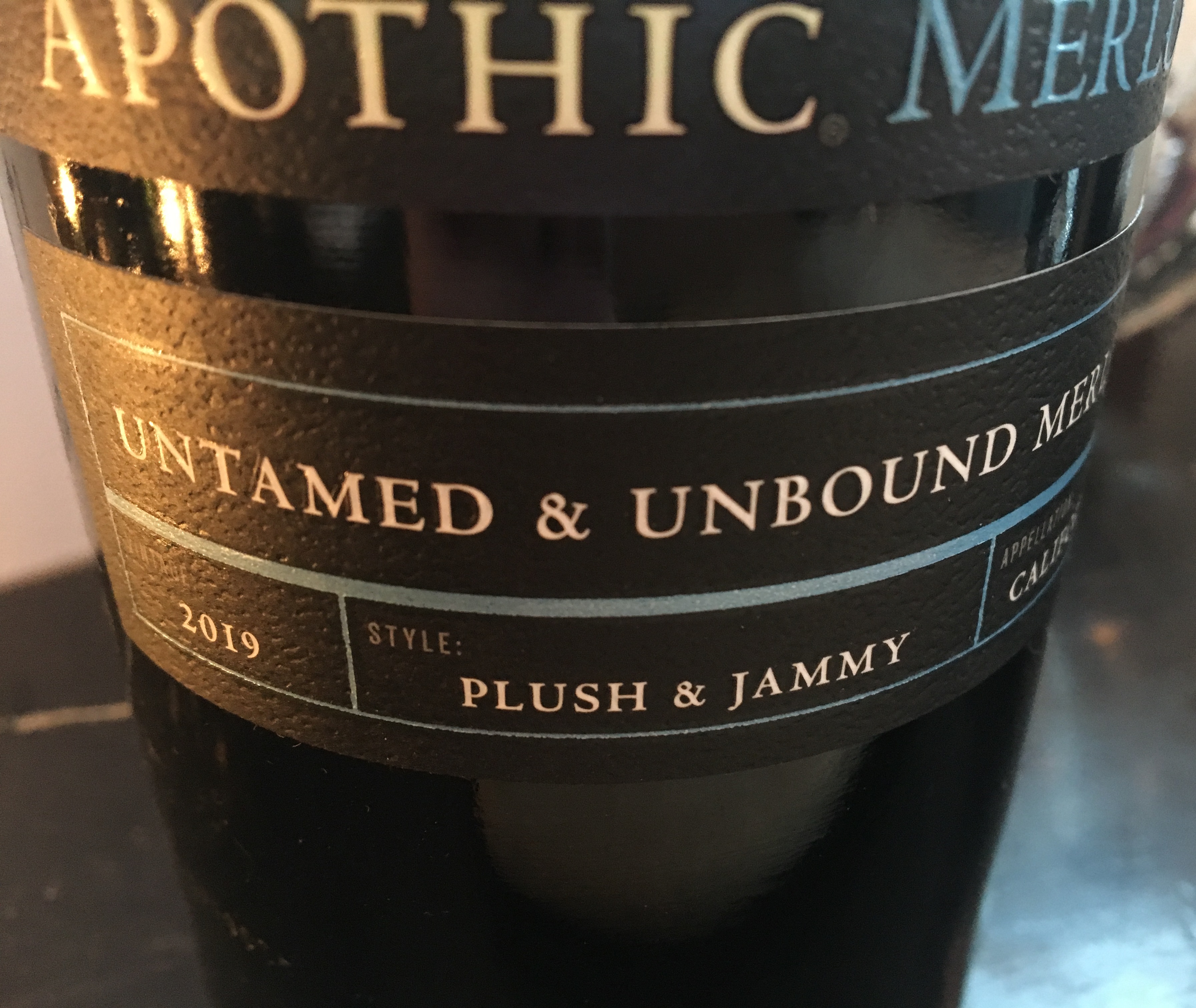
“Ooooh,” I said, reading the bottle, “I want to be untamed and unbound. Plush and jammy!” She rolled her eyes. I won’t tell you what she said. There might be children reading.

As wine bottles often do, it inspired an interval of time paying attention to the phrases I paste on the labels of my life. What if I described my days with wine-label terminology? Last week was definitely earthy and robust. Crusty with hearty notes of calamity.

In my work life, I’m hearing with alarming frequency the word taxonomy. We need to create a taxonomy. We are approaching a taxonomy. The study of naming. The science of definition. With what classification will we identify, and therefore label, our creation? If our product was wine, what would we say of it? Bold and expansive, yet subtle and refined? Are we talking about what it is, what it does, or defining it so it will sell? Those levers are never mutually exclusive. A written language is always an abstraction. Reaching yet never hitting its mark.

Aren’t we living in an age where the world is seeking a new-ish taxonomy? Spin your news channels and hear the same story-wine described in remarkably contradictory terms. What is fruity to one audience is classified as filthy to the other. Two labels, one wine. One team refusing to taste for themselves. We brand ourselves “divided.”

William Shakespeare either created or wrote for the first time in the English language over 1,700 words. I want him on my taxonomy team. I want him to lead my wine-life-labeling committee. Though, I imagine he would be amused to tears at our wild word-world of marketing, our reality-wielding-“news” channels, he wouldn’t be at all surprised that the power of a label pasted on an experience. “Call it what you will,” he might say, “It’s a sorry sight.” No matter. Words, words, words.

Sorry sight! A great name for a wine. A bold red blend for a brave new world. William gives it two thumbs up. Edgy and energetic, nutty and dippy with hints of crackers.

read Kerri’s blog post about WINE LABELS

See The Spaces [on DR Thursday]

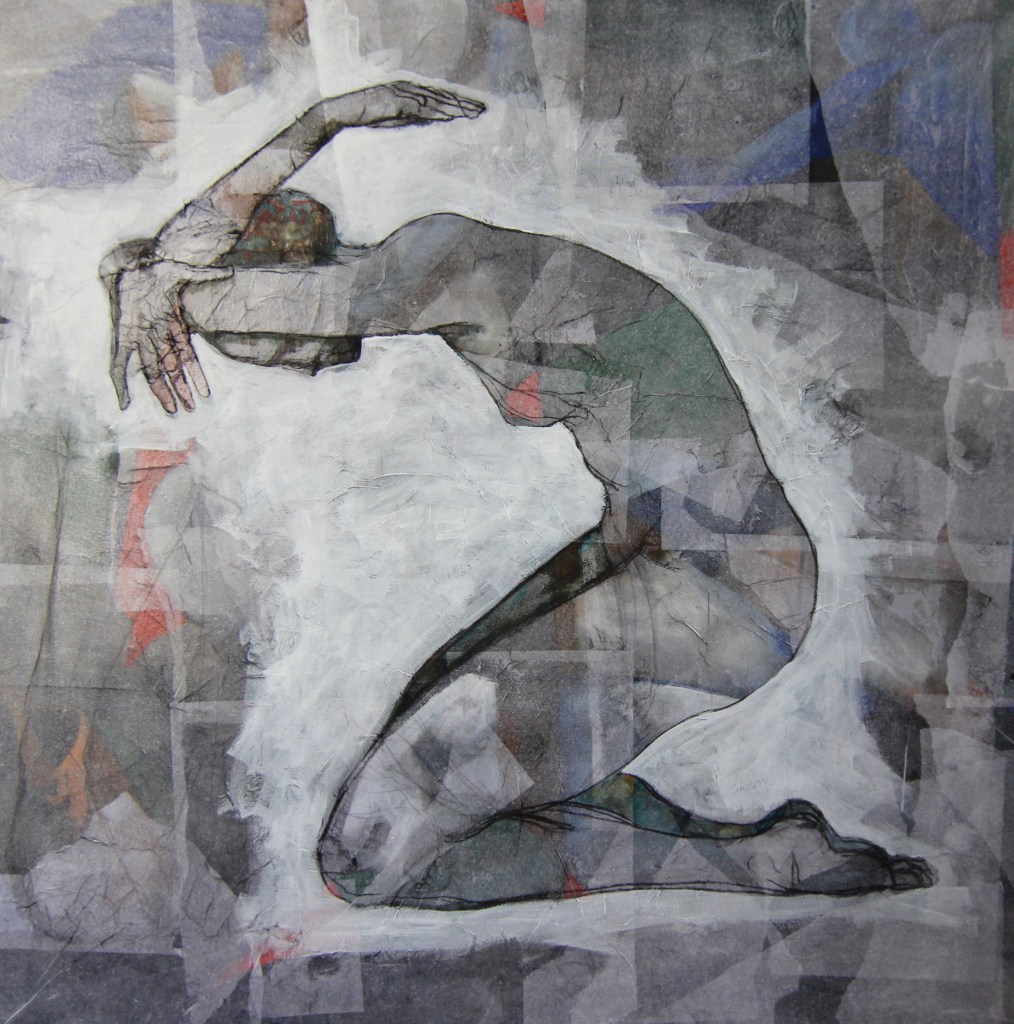
The space around and between. Shapes that share edges. Emptiness that provides definition. In art it is called negative space. Not-the-object. In art classes, students draw the negative spaces in order to see or to learn a new way of seeing. Try it. See the holes and the space around the leaves as primary. It’s not as easy as it sounds.

Some folks use the term “air space” because they get snagged on the word “negative.” It’s a term of opposition when set next to “positive.” Yet, just as there is an electric field that flows between negative and positive ions, electrons and protons, there is a field that flows between negative and positive space. Yin and Yang. A dynamic polarity. A creative field of movement and energy. The air space is alive because of the perceived opposition. The positive space is not visible without the negative.

When I was a consultant, I used the phrase “the space between” to imply relationship. There are people. There is the space between people. Relationship is invisible but it defines the people. Relationship illuminates the otherwise unknowable individual. They are impossible to separate. In a community obsessed with nouns, bottom lines, test scores and individual rights, the verbs and the relationships often go unnoticed and unappreciated. As if the negative space didn’t matter. The space between is where the movement lives and the problems are solved. It is where new seeing is possible. It is created and creative. The word “community” lives in the space between.

Try it. Take a day and focus on the space between. See relationship as primary. You may experience a whole new way of seeing.

20 sent this image,a memorial. It makes the point.

read Kerri’s blog post about NEGATIVE SPACE

iconic ©️ 2010 david robinson

Tell A Good Story

The Storyteller emerges from the forest. Lucy & The Waterfox

The Storyteller emerges from the forest. Lucy & The Waterfox

Over the years I’ve tried countless marginally successful ways to define for others what I do. It would seem obvious: I am a painter. I am a writer. Oh, and a theatre artist. And a consultant. And I’ve maintained a coaching practice. I’ve worked in education, the corporate world, with non-profits, and with entrepreneurs. So, in conclusion, I do too many things.

Well, that’s not exactly true. I do one thing. I deal in story.

I speak the language of story and that is confusing in any arena. What does it mean? Such a simple word, story, and yet it can mean so many different things. For instance, a truism in effective, transformational coaching is that the story doesn’t matter. By story, coaches mean the circumstance; in transformation, in the fulfillment of potential, the details of what happened – the story – are not useful. The circumstance story usually equates to blaming or endless attempts at self-fixing. The circumstance story gets in the way of growth. It is an anchor in the sea of dysfunction.

I don’t work with circumstance stories.

By story, I mean inner monologue, the-story-you-tell-yourself-about-yourself. By story, I mean the language that we use within ourselves to articulate belief. I work with the orientation story, the personal and communal mythology. Rather than get in the way, the orientation story defines the way. It defines what we see. It defines our relationship with time, with nature, with god, with community: it is the lens through which we make meaning. I help people change their lenses. Try explaining that to a CEO!

Last year, when Skip and I shuttered our business, I also shuttered my coaching practice. I ended my corporate work. Much of it came to feel like wearing an ill-fitting shirt –or a host of ill-fitting shirts – so I decided to clean out the closet. I wanted to drop all the definitions, the old forms, to make space for the new.

Last week I decided it was time to peek into the empty closet. And, as serendipity would dictate, I happened to be reading Frank Delaney’s engaging book, The Last Storyteller. On page 99 of this fictional tale, this is what I read:

“…every legend and all mythologies exist to teach us how to run our days. In kind fashion. A loving way. But there’s no story, no matter how ancient, as important as one’s own. So if we’re to live good lives, we have to tell our own story. In a good way. A way that’s decent to ourselves.”

I threw my head back and laughed. There is no story as important as one’s own. To live a good life we have to tell our own story in a good way. And then, there was this:

“…I don’t give anybody advice. All I do is release the good thinking that’s already inside of you. You’re the one who acts on your own advice, and I have the pleasure of helping you reach those thoughts about yourself. So it’s not me helping you. It’s you helping you.”

Ask me today what I do and I will say, I write. I paint. Ask me for more detail and I’ll open the book to page 99.

[to be continued]

title_pageGo here to buy hard copies (and Kindle) of my latest book: The Seer: The Mind of the Entrepreneur, Artist, Visionary, Innovator, Seeker, Learner, Leader, Creator,…You.

All digital forms of The Seer can be found here