

TODAY’S FEATURED PRINT FOR HUMANS

FOR TODAY’S FEATURED PRINT FOR HUMANS, GO HERE.
Filed under: Art, Awakening, Prints for Humans, Truly Powerful People | Tagged: awake, awakening, consciousness, sleep, waking up | 1 Comment »
TODAY’S FEATURED PRINT FOR HUMANS
FOR TODAY’S FEATURED PRINT FOR HUMANS, GO HERE.
Filed under: Art, Awakening, Prints for Humans, Truly Powerful People | Tagged: awake, awakening, consciousness, sleep, waking up | 1 Comment »

From the archives: Pidgeon Pier. This painting is about paying attention
“It has become my view–my faith–that all elements of nature have that power to produce peace. It is surely why so many are drawn away from their urban lives and back to natural places. But those places need not be grand scenic vistas. The same peace can be found in the dandelion growing in the nearest vacant city lot.
It is, in the end, a choice either to “shut up and listen” to these sources of strength–no matter how great or humble or where we encounter them–or to hurry on by.”
~Master Jim Marsh in a comment about my post, Sit By The River
There was a cool breeze off the lake this morning that slowed the mounting humidity. We were a mile into our usual morning walk, rounding the path to the rocky lakeshore, when we entered the storm of dragonflies. There were hundreds of them, hovering just above our heads, occupying a narrow band that stretched as far as the eye could see!
I gasped and stopped! Never in my life had I seen so many dragonflies. Kerri said, “They come out when the weather has been hot and without rain.” Before continuing on our way, we stood for a few moments appreciating the hovering, the methodical zigging-and-zagging. Until our path deviated from the coast, they were with us, green and purple spirits, riding the air-line where earth meets water. For me it was pure magic.
Many years ago, as a way of ending our relationship, a woman told me that it was too hard to be with a mystic. I’d never before (or since) thought of myself as a mystic so I looked it up to make sure I understood why a mystic might not be easy to live with:
Mystic (noun): a follower of mysticism.
Mysticism (noun):
1. Belief in intuitive spiritual revelation,
2. Spiritual system,
3. Confused and vague ideas.
I laughed aloud when I read the three definitions of mysticism; the third definition applied to the previous two! I left my dictionary with two beliefs:
Hearts know. Thoughts babble. And the only way to sort it all out is to stand still, stop the babbling, and see the miracle.
Filed under: Art, Awakening, Creativity, Energy, Gratitude, Intuition, Language, Perspective, Seeing, Truly Powerful People | Tagged: awareness, clarity, conscious, consciousness, dragonflies, heart, instinct, intuition, language, muse, mystic, stillness, wordplay | 2 Comments »
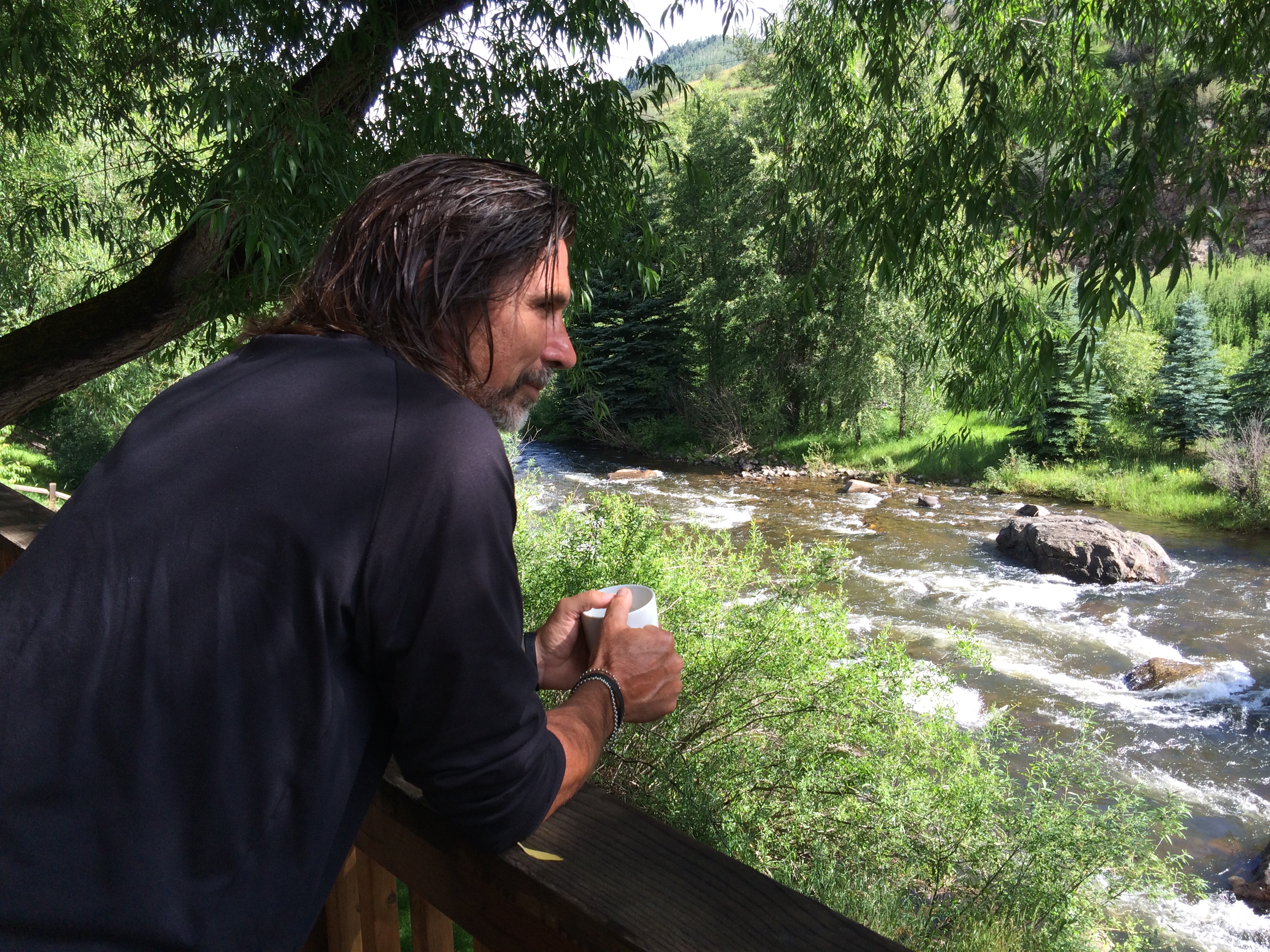 The back deck of the Minturn Inn overlooks the Eagle River. We sit in the sun and are mesmerized by the sound of the rushing water. It is liquid peace. In this moment I believe that people seeking to develop a meditation practice should begin sitting by a river. The water easily carries away all thought and worry.
The river is a great giver of perspective, a great deliverer of presence.
I am struck by this power of the river – and it is a power. We easily grasp nature’s power when a tornado levels a town or an earthquake devastates a city but forget that there is a flip side, a quieter side to nature’s ominous power. There is a vast quiet. In our world peace seems nearly impossible to achieve yet in less than a minute, sitting by the river, I am steeped in peace. That is an awesome power!
I once read (somewhere) that we have a vibrant internal compass capable of ringing true from false, right from wrong. If we make a choice that is out of our integrity, the compass spins wildly out of control, setting off an unstoppable inner monologue, a great inner debate. If the choice is in alignment, the moment passes unnoticed. True north is known by the absence of spinning. Inner quiet is an affirmation. Nature – including our inner nature – doesn’t lie.
Sitting on the deck, breathing in the mist and peace of the rushing water, I know that what’s most important in this life, the real art, happens in the quiet spaces, the moments that thought cannot penetrate, the spaces that require no definition or justification. They are the moments ripe with gratitude. They are the moments dripping with appreciation. I know that all the debates and disagreements and defenses are paper tigers. I also know that this peace is not the province of the river. It is, in fact, available all the time. The river simply reminds me to hush up and listen.
Filed under: Art, Awakening, Gratitude, Power, Seeing, Truly Powerful People | Tagged: alignment, artist, awakening, awareness, beauty, center, consciousness, death, meditation, perspective, power, river | 2 Comments »

Eve, by David Robinson
The nights have been bitter cold and clear. The cold always seems to make the stars sharp like crystals. Standing on the back deck, looking at the stars, I remembered a conversation I had years ago. I was working with students and we strayed into a discussion of human beings connection to the stars. It was cosmology in a nutshell.
Here was the gist of the conversation: something happened to human consciousness when they (we) understood that our patterns of life on earth were (are) oriented to happenings in the sky. For instance, our impulse to worship is intimately connected to the solstice and equinox: the disappearance and return of the light. Our migration habits, planting habits, daily rising-and-shining habits are relative to the movement of the sun. The tides in the ocean and the waters in our body are responsive to the pull of the moon. With the awareness, we crossed a line from chaos to order, from unconsciousness to consciousness. There was a relationship, a pattern, a belonging, a participation. There was something bigger.
During that same period in my life I also worked with a group of inner city students who had never seen the stars. It was a revelation for me. For them, there was no sense of relationship, there was no “something bigger.” There was a load of anger and existential separation.
This holiday season, I was struck by two things: 1) how many times I had conversations with people, glued to their televisions, who are frightened and feeling helpless by the happenings in the world, and 2) how many casual family photos crossed my path featuring a gathering of individuals, alone together, faces to smart phones. Everyone was looking down.
Standing on the back deck on a dark and starry night, wrapped against the cold, I wonder what some distant teacher in the future will tell his or her students about what happened to human consciousness when they (we) ceased looking up.
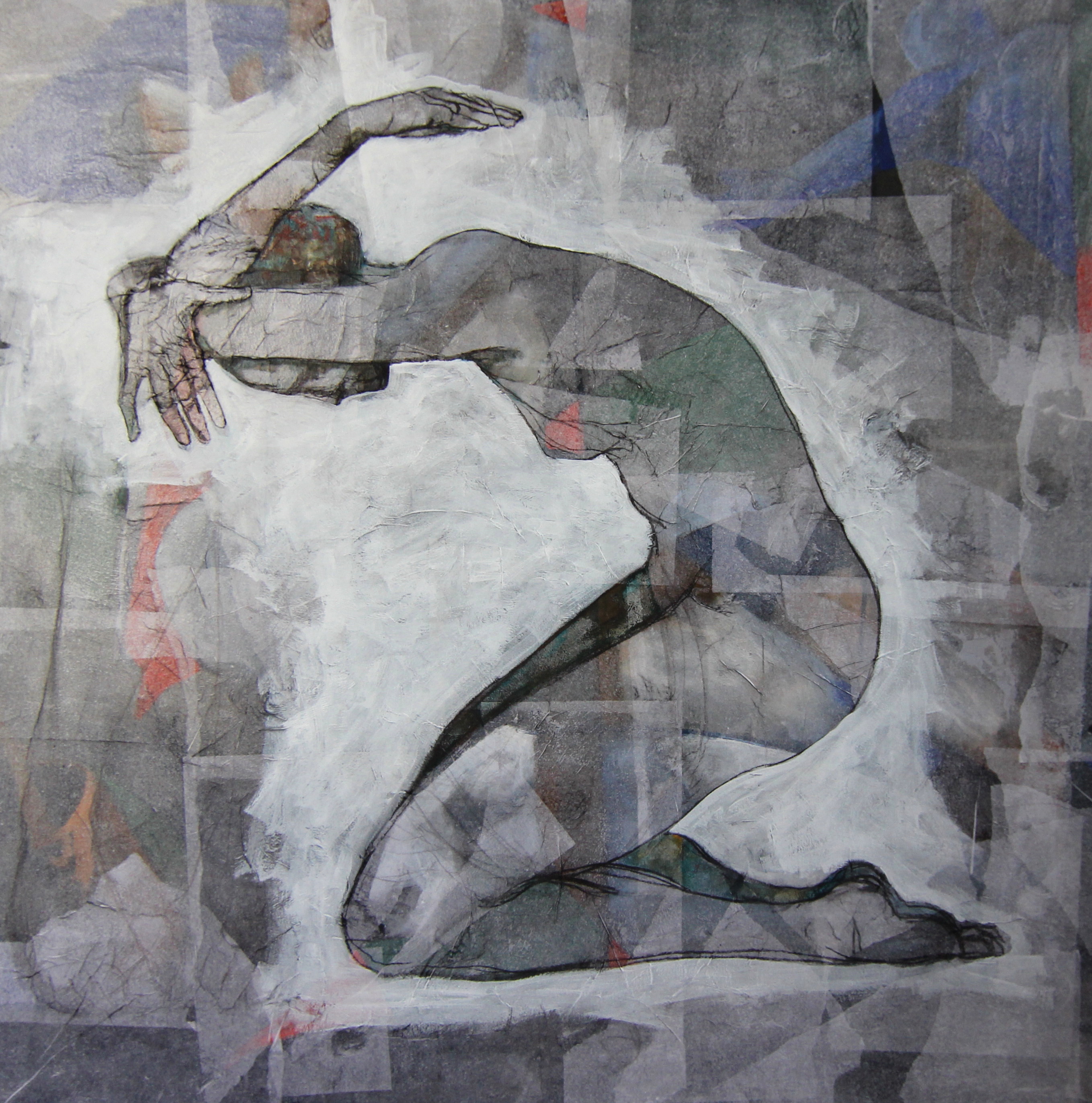 Go here for prints of my paintings
Filed under: Art, Awakening, Identity, Perspective, Random, Seeing, Truly Powerful People | Tagged: belonging, conscious, consciousness, cosmos, existence, relationship, stars | 1 Comment »

My painting, ‘Dancing In The Front Yard’
It is the season of the light’s return. The Equinox is only a few days away. The dark days bode of new light. It is the literal, solar-lunar cycle-dance of rebirth, the return of the sun.
The great theatre artist, Jim Edmondson, spoke of all life as a dance of giving and receiving. To give and receive are energies similar to the tides or the intake and exhale of breath. The dance requires both giving and receiving and, in truth, they are not separate but are one action, one continuous connected cycle as is chaos and order, birth and death, winter and summer, boredom and breakthrough.
All stories lead back to this dance, this source of light’s disappearance and return. Frodo wrestles with the pull of the ring, Orpheus descends into darkness to bring Eurydice back to the light, a too-early-death affords a healthy heart and new life to a stranger, a baby is born and down the hall Hospice is called, lost love leads to new love, we wrestle with our limitations and someday transcend them (or not); we dance the dance every day because, in truth, we never know what the day brings and learn that this life sparkles when with clear intention we bring our light to the day. What else?
With all of our talk of transformation and renewal, we pretend that the dance is something new, something we must intend, when it is a dance as old as time and as ordinary and extraordinary as the sun setting and rising again. It is new when we pay attention and greet each day as a new step in a very old dance, a new opportunity to give and receive. To live fully, to transform, requires nothing more than to pay attention and let yourself dance.
 Join the campaign to fund my play, The Lost Boy
Filed under: Awakening, Emergence, Gratitude, Metaphor, Transcendence, Truly Powerful People | Tagged: consciousness, giving, life, receiving, renewal, transformation | Leave a comment »
 Some random thoughts on consciousness:
Last night I read that, according to some traditions, all forms of separation are an illusion. Only the whole is real but to experience the whole, one must experience him or her self as separate from it. What a conundrum!
Or, is it a gift? Tonight we witnessed the most extraordinary sunset. It’s been stormy these past few days and this evening the storms finally broke. The colors of the sunset were subtle, muted, otherworldly. Breathtaking.
We witness all of creation. All of it. And, as witnesses, we experience ourselves as separate from it. A sunset stops us in our tracks because we glimpse the glory of it all. Once, I stood on top of a mountain at sunrise and cried for the sheer beauty of what I was witnessing. Or, perhaps I cried for the feeling; I was, for a brief moment, not separate.
Consciousness is like a flashlight. We point its beam. We see what we illuminate. And, we illuminate what we see. We assign meaning and value where we point our beam. Some experiences – like sunsets – we define as glorious. Some, we define as lacking. Both are forms of meditation. Every choice to aim the beam is a meditation. All assignment of what is found in the light of the beam is a meditation.
What is your meditation?
As Joe said, the entire universe tends toward wholeness. Every time I recall his words I realize a deeper truth in what he said. We tend toward wholeness because we are already whole; the illusion of separation makes us think otherwise. In fact, thinking makes us think otherwise.
The Balinese have an art form, the shadow puppet, called Wayan Kulit. The audience sees the story as shadows cast on a screen. The performance is meant to remind the community that what they see is illusion. It is meant to remind them that they (we) are all casters of shadows. Our minds are screens upon which we play our dramas. Behind the screen, when all the characters are put away, when all the conflict is resolved, when all the separate pieces unified, there is only one artist, and we are….all.
 Go here for my latest book, The Seer

For fine art prints of my paintings, go here.
Filed under: Awakening, Language, Transcendence, Truly Powerful People | Tagged: choice, conscious, consciousness, feeling, meditation, witness | 1 Comment »
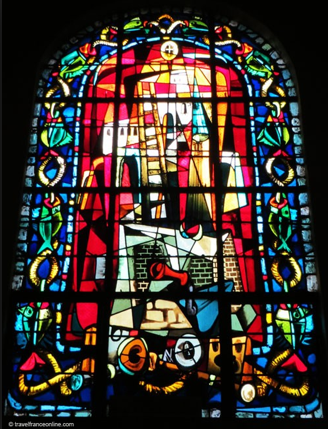
One of the windows by Max Ingrand at Saint Pierre de Montmarte
What has value? What has merit?
Or, here’s a better question: What is value? What is merit?
During our travels I looked at a lot of art and architecture from across the centuries and across many different cultures. There is a very old church, Saint Pierre of Montmarte, one of the oldest in Paris, seated adjacent to Sacre Coeur high on the hill overlooking the city. This ancient church has been outfitted with stained glass windows, designed by Max Ingrand, that I can only describe as cubist. The collision of ancient church and modern window is breathtaking and perfect. The windows were so beautiful (to me) that they brought tears to my eyes. It was hard for me to leave the church as I was so taken by the windows yet I was also aware of the number of people moving through that were not impacted at all. Later, I entered Sacre Coeur and felt nothing. To me, it was impressive, impersonal, and left me cold – yet I watched others catch their breath with its scope and grandeur. They were moved to tears.
Is value purely personal and subjective?
I remember listening to a recorded lecture by Joseph Campbell. He said that you could tell what a society valued by the buildings constructed in the city center. For centuries, churches occupied the village center. Financial institutions occupy our village/value center. Is value an agreement? Is it a focal point of worship? Take a gander at the titles in the local bookstore and you will find that money, morality, spirituality, and success are odd bedfellows. Is a good life richly lived demarcated by the size of a bank account? Tourists in the distant future will visit the holy sites occupying our village center and read placards about what we valued.
Near Sacre Coeur is the cemetery at Montmartre. We descended the hill to the cemetery and walked the paths through the monuments and graves. They fascinate me. They are essences, value statements distilled to a thick concentrate of marble and stone. There are angels and gargoyles, draped figures in repose and riders of the apocalypse. There are statements: loving father, devoted mother. There are roles: composer, writer, soldier, painter, baker, philosopher, politician. The famous are interred next to the ordinary. In a cemetery, all lives are even. Standing amidst the graves I see lives lived, dreams dreamed and realized or unrealized, and I wonder what each person valued during their allotment of days, and what they valued on the very last day.
Value is relative and passing? An extraordinary moment, when conscious, is valuable.
This is from Rumi: Spirit is so mixed with the visible world that giver, gift, and beneficiary are one thing. You are the grace raining down; the grace is you.
Value is grace? You? What surrounds you?
Filed under: Awakening, Gratitude, Perspective, Truly Powerful People | Tagged: consciousness, extraordinary, grace, spirit, value | 2 Comments »
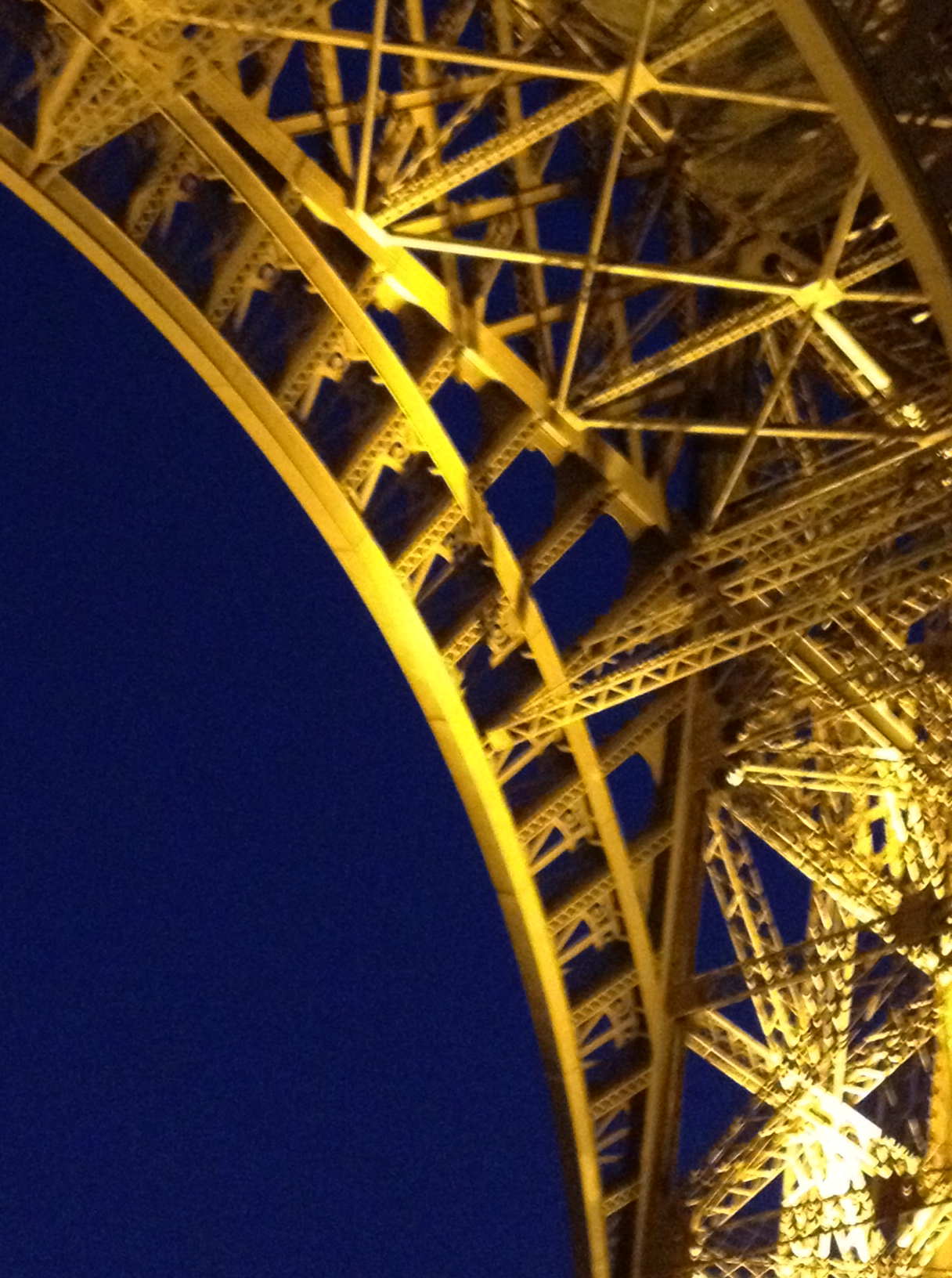
A bit of the Eiffel Tower
I am nearly through the throes of jet lag and my inner anthropologist has an observation or two about the altered state that occurs when one wakes up in Paris and goes to sleep in Kenosha.
When 36 hours pass in a 24-hour daylight cycle, the human body (my human body) experiences shock and awe. A soul cannot travel nearly as fast as a body in a modern airplane; that’s why they call it jet lag. The jet does not lag. The soul doddles as a good soul should while the body flings through space in a pressurized aluminum tube. The soul lags (note: my inner anthropologist is a scientist and is dubious about using the word “soul.” He wants you to know that “soul” is my translation of his term, “consciousness”).
Jet lag is like being inside a bubble. There are great benefits to being inside the bubble. For instance, the world is wonderfully distorted. Nothing is normal when sifted through a soapy haze. The bubble is the overlap of dream space and the everyday. From inside the bubble, people move too fast. Or, they move too slowly. The words people speak are garbled and generally bounce off the bubble. Checking out of a grocery store is like a scene in a sci-fi movie. Sense-making is impossible but the surrender to no-sense is sweet and oddly comforting. To release the necessity to understand, the need to recognize, rationalize, explain, or connect even the simplest of thought-dots is liberating. In the bubble, a sigh is the only appropriate response.
From the bubble, there is nothing to be done but to watch the time river roll. Jet lag bubble consciousness makes things somehow more simplistic; complexity is not possible from a jet lag haze. Inside the bubble, life routines that were unconscious prior to traveling are startling and new; they are like gestures from a previous incarnation. For example, this morning, doing the dishes, my hands knew what to do yet I was fascinated with the odd process. I was both doer and witness. Doing the dishes was known and new all in the same instant. The bubble, so my inner anthropologist claims, is a paradox: it dulls the thinking but sharpens the simple moments. It opens the senses. Prior to doing the dishes, watching the sunrise through the fog, I listened with fascination to the wind shake the dew through the high leaves in the trees. It was gorgeous; nature’s rainstick.
Within the bubble, sleep is a constant tug like an undertow. It pulls time into slow motion. It creates a liminal space, a not-here-and-not-there space. It creates a “now” space with a single simple imperative: stay awake for a few more hours.
Stay awake. I like the metaphor: to stay awake amidst the pull to dullness; ultimately it is the gift of the bubble. It is a reminder not to sleepwalk through life, to stay alert to the simple moments. Stay awake or your life becomes like a television running an endless cycle of sitcoms. Dullness is a choice. My inner anthropologist just rolled his eyes. It’s more extravagance on my part; apparently “choice,” like “soul” is not an appropriate scientific term.
Filed under: Random, Seeing, Truly Powerful People | Tagged: consciousness, jet lag, presence, soul | Leave a comment »

Something else from the archives.
It is the day before we fly to the Netherlands. We started the day early with a long walk, coffee, and a chat about everything but our prodigious to-do list. We’ve learned that it makes a huge difference to our day if we start slow. It makes a difference if we make a conscious choice about where we place our focus in the day.
For years I rose early and read something that inspired me. I read sacred texts, philosophers, artists, seekers, children’s books,…, anything that pulled my mind from my to-do list and grounded me in things that seemed more important to give my thought space. It was a form of meditation. I learned early on that my readings influenced what I saw during the day and, so, influenced my experiences; I interpreted my life according to my meditation instead of my to-dos. I opened to experiences instead of predetermining how I should feel about the list.
Now, after so many years, I have developed an automatic response to the flotsam that might catch my attention. When some clutter catches my attention I say to myself, “I don’t want that to occupy my mind.” And, like a cloud, it evaporates. I want to keep my thought channels clear. I want my thoughts focused on attention to and appreciation of the moment, creative processes, or noodling with cool ideas – and not snagged on the news of the day. Thought channels are like arteries and too much gunk will jam the flow. Gunk is a great source of depression. Last year I went on a news moratorium when I started my walk-about and found that I had a lot more thought space without the news-cycle-chatter. I learned that without turning on the news or opening a paper I heard everything worth knowing. I learned that I had no need for the endless cycle of breaking news to be well informed; 24 hour news is like bad cholesterol. It is an addiction. It is a false high. I learned the necessity of questioning what I was plugging in to (what I was plugging into my mind).
Knowing what you don’t want clogging your mind necessitates becoming clear about what you do want occupying your thought. Thought requires a focus and focus is a choice. Mostly, my answer is no thought. I want silence. I want presence and presence requires almost no interpretation.
Filed under: Awakening, Energy, Navel Gazing, Truly Powerful People | Tagged: consciousness, meditation, quiet mind | Leave a comment »

From my archives. I call this painting, “Alki.”
Alan and I talked today. We are planning our upcoming Summit in Holland in June. Our conversations are always as wide-ranging as they are deep dives into sense making and soul. There seems to be no horizon that we won’t step towards, no secret passage that we won’t explore. This has been true since the moment we met. We’ve always been verdant collaborators. We joked that someday clients will hire us just to listen to how our minds spark each other. And, given our conversation today, we’d be worth every penny. We are both in the business of facilitating perceptual shifts and transformation so we do it for each other. Our planning sessions are a festival of insight upon insight, shift within shift. Together, we are innovation squared.
Recently, I shared a short TED talk by neurologist V.S. Ramachandran about mirror neurons and how deeply and concretely we are connected despite our belief/experience that we are separate. It came up again for me because during our call Alan and I discussed the waves of far-reaching impact that any simple action or word generates. Paul Barnes used to say to young actors, “Never underestimate the power you have to influence another person’s life.” Most of us are unaware of the impact that we have on lives that we never directly touch. For instance, I have had great teachers in my life and I carry their work forward in every word I write and every group I facilitate. My teachers will never know the many lives they touched and continue to touch. And, neither will I. And, neither will you. The best we can do is know that our actions matter, our thoughts matter, our intentions matter. We are more powerful than we understand.
No one lives in a vacuum. No one creates without influences. No one has a purely original thought. In fact, if you grasp what V.S. Ramachandran is addressing, no one thinks or feels independently of others. We are not as isolated or as separate as we believe ourselves to be. We have to work at separation. We are, each of us, continually co-creating (to use Alan’s term) our world in every moment of every day. What might you see if you stopped and pondered the implications of co-creation, if you took a moment and considered that you are not merely a bobber in an ocean but, in fact, are the ocean? How might you read the news of the day or address your dreams if you understood that you were a participant, a dynamic part, a burning point for the ancestors, a sender of ripples through space and time, and not simply walking this path all alone?
Filed under: Awakening, Body, Edges, Language, Perspective, Possibility, Seeing, Story, Transcendence, Truly Powerful People | Tagged: connectivity, consciousness, innovation, insight, interconnectivity, transformation, unity | Leave a comment »



 Seeker, Learner, Leader, Creator…You.
 The Direction of Intention