


It’s rapidly becoming folklore week at The Direction of Intention. I blame The Brothers Grimm for inciting a deeper dive into their collection of ancient tales. I somehow missed – or forgot – that the moral of the folk tales is to honor your commitments. Take responsibility for your actions. The stories are driven by transactions-gone-awry. The daughter makes a deal with Rumpelstiltskin: she will give him her first child if he will save her and spin straw into gold.
In another tale, The Pied Piper is hired by the people of Hamelin to save the town from an infestation of rats. He plays his magical flute leading the rats to the river where they drown. Since the town is no longer overrun with rats the leaders decide there is no reason to honor their commitment. They refuse to pay the piper. The Piper once again plays his magic flute and leads the town’s children away. The children are never to be seen again.
Honest dealing. Gratitude. Consequences of actions and choices. Morality tales are told – and have been told across cultures and generations – to instill in the young and affirm in the old the necessity of a moral center. When the moral center collapses, the consequences are far worse than imagined.
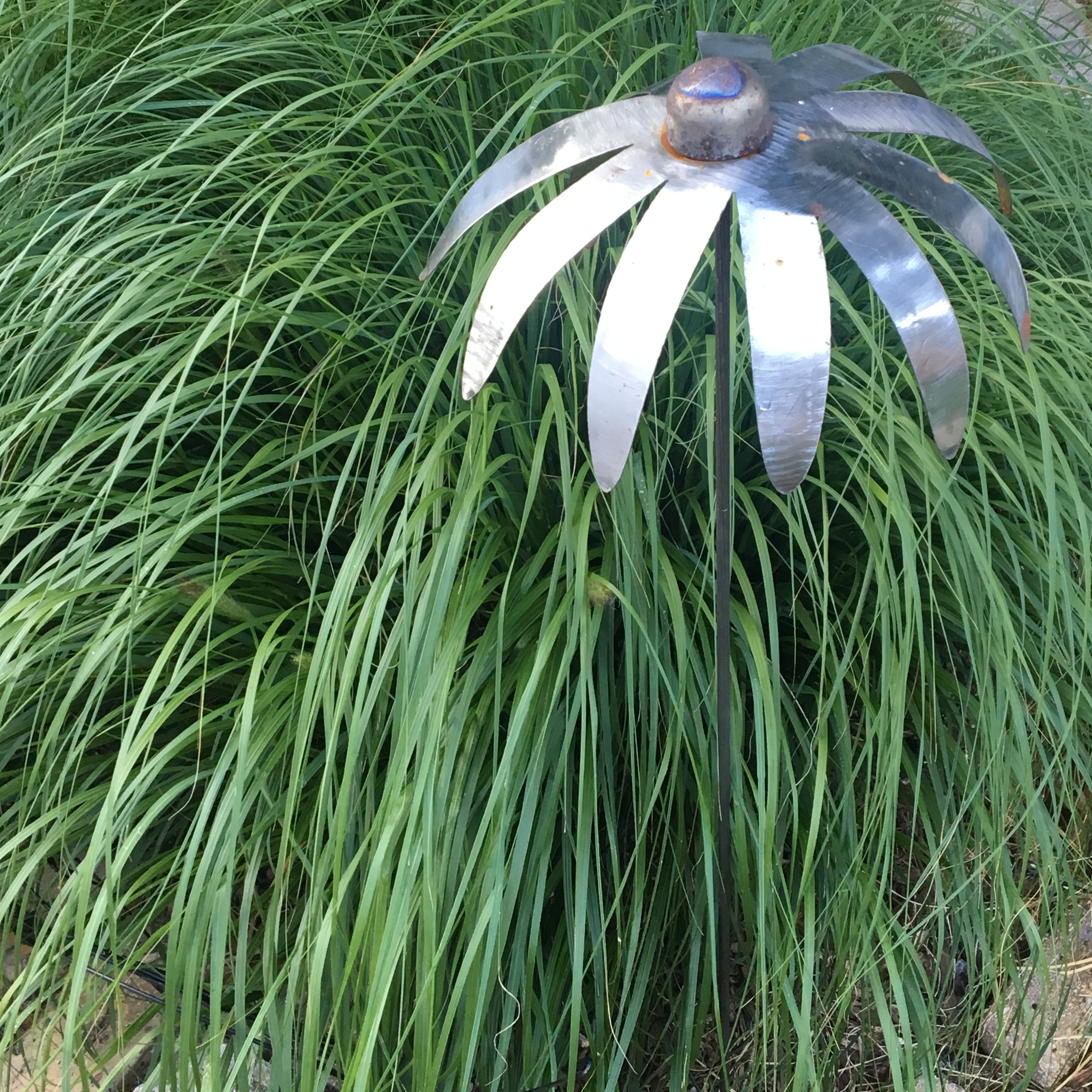
We’ve placed a coneflower sculpture in the garden. We can see it while doing dishes, looking out of our kitchen window. I’ve always loved our little coneflower but in the past month I’ve grown to appreciate it as a reminder, a daily nudge to stand closer to love than I do to fear. Coneflowers are symbols of resilience and strength.
The collapse of decency. The disregard for morality. So many toxic and ill-intended transactions swirling around us. It is only a matter of time before the Piper demands payment. Folklore meets the news of the day.
The coneflower reminds me that this too shall pass. Resilience. Out of the now-inevitable loss-of-our-children will someday arise a renewed commitment to responsibility to the common good. A moral center, after all, is nothing other than attentiveness and concern for the needs of others, and a dedication to ourselves to walk in this world with integrity decency, fairness, and an internal compass – reinforced by the stories and symbols we’ve inherited – that serve as constant companions showing us the way.
Kerri’s albums are available on iTunes and streaming on Pandora
read Kerri’s blogpost about THE CONEFLOWER

likesharecommentsupportsubscribe…thankyou.

Filed under: KS Friday, Language, Metaphor, Story | Tagged: artistry, choices, coneflower, consequences, david robinson, davidrobinsoncreative.com, decency, folklore, integrity, Kerri Sherwood, kerri sherwood itunes, kerrianddavid.com, kerrisherwood.com, morality, Pied Piper, resilience, responsibility, story, strength, studio melange, The Brothers Grimm, the melange, transaction | 1 Comment »





 The Direction of Intention