Feel The Dope Slap [on Not So Flawed Wednesday]

This morning I awoke agitated. Restless. I’m blaming my dreams. I know I had tons of dreams last night but I can’t remember a single one. I find it useful to blame my restlessness on something as slippery as an unremembered dream. It prevents any significant self-reflection or responsibility for my unease.

I just popped Rob on the head for diminishing his own work. He’s a prolific and gifted playwright and referred to his latest piece as “…another corpse being thrown on a mass grave of scripts.” After I sent the email-head-pop I admitted to myself that I was actually ALSO popping myself on the head. I used his head as a proxy. Popping other people on the head is also useful for avoiding any significant self-reflection. Although I admitted to myself that my head deserved a good slap, I successfully transferred the impact to Rob. No further self-reflection needed! I’ll wait for Rob to write me back with a return dope-slap. He’s a great friend and I deserve nothing less. Really, I deserve a good slap but I refuse to slap myself. That would require taking responsibility for my actions and my indulgent restlessness is getting in the way.

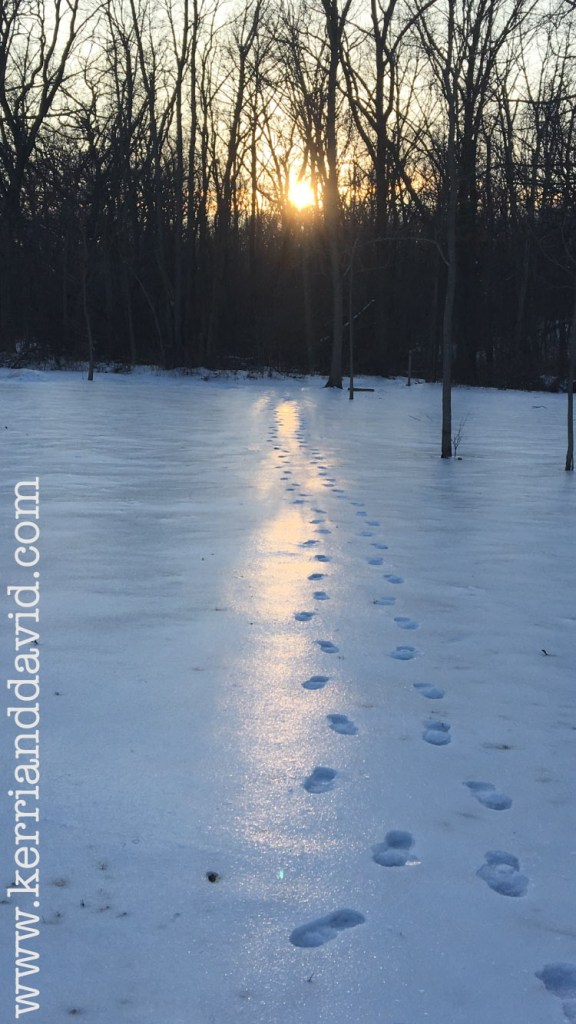
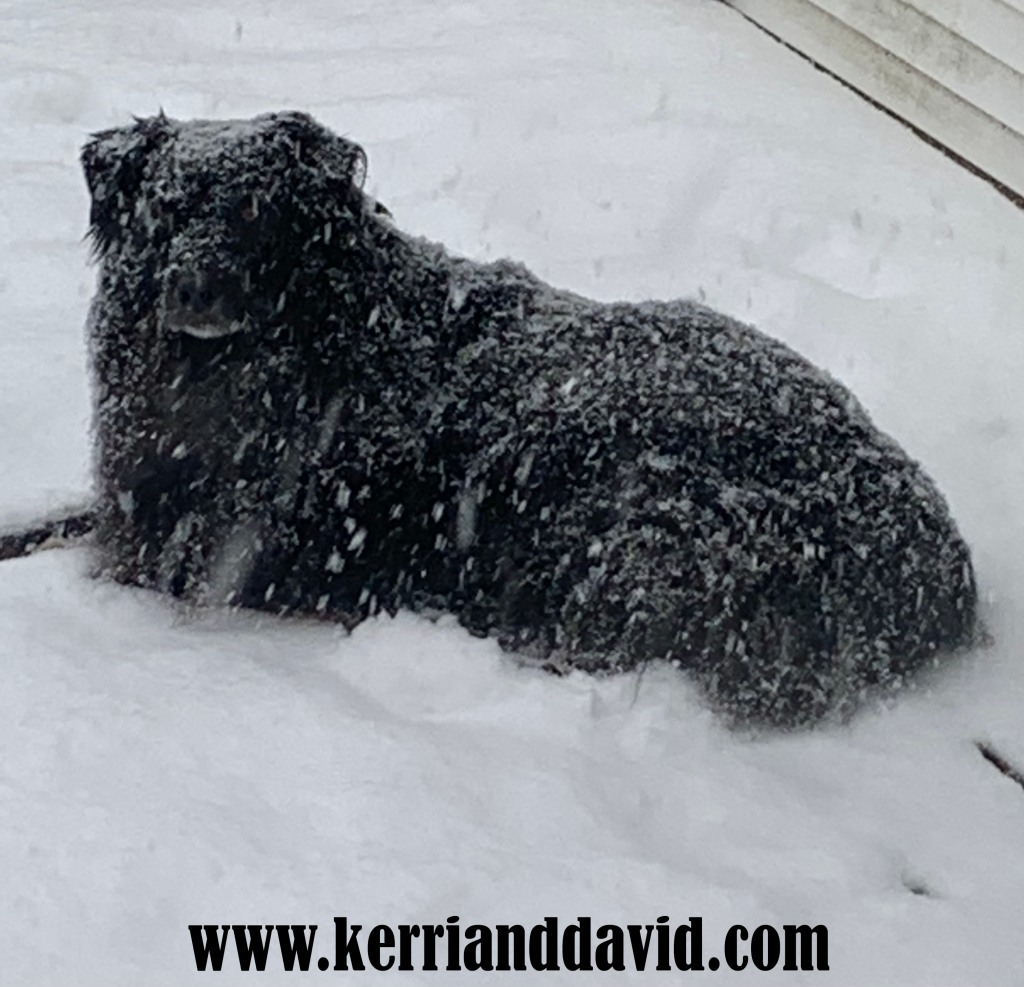
I’ve known for years that Dogga is a master teacher. Among his many lessons is contentment. And, what constitutes contentment is unique to each individual. For instance, most folks want to find a nice beach to lay on. Not Dogga! His nirvana is found in a deep pile of snow. He’s never happier than when the temperature plummets and the white stuff falls. He can linger for hours on the snowy deck in blissful satisfaction, doing nothing more than appreciating his moment. His teaching method is gentle. Unlike me, he eschews head slaps. He lives his peace, affording me the opportunity to emulate it or not.

The other thing I appreciate about Dogga’s lessons: he has absolutely no investment in how long it might take for me to learn. He is not concerned about whether or not I ever learn his lesson of contentment. His job is to make the offer. He is not concerned at all with the reception.

Perhaps the cure to what currently ails me is a few moments sitting with Dogga in the snow. I think I’ll invite Rob. It’s the least I could do after using his head to slap mine.

read Kerri’s blogpost about SNOWDOG
Root Into The Worth [on KS Friday]

As Tom Mck used to say, “There are only three people in the United States qualified to review plays and none of them live in Stockton, CA.” His point: it’s best not to read your reviews but, if you must, don’t invest in what you find there. Good or bad, the review has little to say about the work of the artist and everything to say about the mind of the reviewer.

To be an artist is to be vulnerable. Vulnerability is an especially complex skill to master when the work of an artist is an open invitation for commentary.

The worst play I’ve ever seen got a standing ovation the night I saw it. Some of the best work I’ve ever done drew little or no audience. I directed a play that regularly had half the audience storm out of the theatre in anger while the other half was on its feet cheering; which half should I believe?

Many years ago I directed a play. One of my leading ladies had a family friend who was the theatre reviewer for the local paper. After opening night, my actress’ fine performance started to twist and sour. It was a mystery to me how her good work could go so bad. Later I learned that she was taking notes from the family friend. She lost herself in the cloudy opinion of an other and her performance suffered for it. She suffered for it.

Artists – not unlike everyone else – like to be liked. Most wait tables or teach lessons so they can pursue the thing they love. I use the word “love” purposefully. Most are regularly asked to give away their love/work for free on the empty promise of “exposure.” As Kerri says, “It’s hard to pay your rent with exposure.” It’s very, very easy for an artist to feel undervalued in a world where money defines value – while constantly being asked to perform for free. It makes being-liked an especially dangerous value-default.

Some of the greatest artists I’ve known lived marginal financial lives; financial success evaded them – but they knew without doubt the single secret that kept their work vital all of their lives: they alone were the judge of whether or not their work was good. They alone knew the pure driver of their pursuit. They knew the real danger of an artist’s life is to lose the purity of their artistic driver in the swamps of “being liked” or getting good reviews. They worked hard to stay centered and avoid becoming dancing bears at the circus.

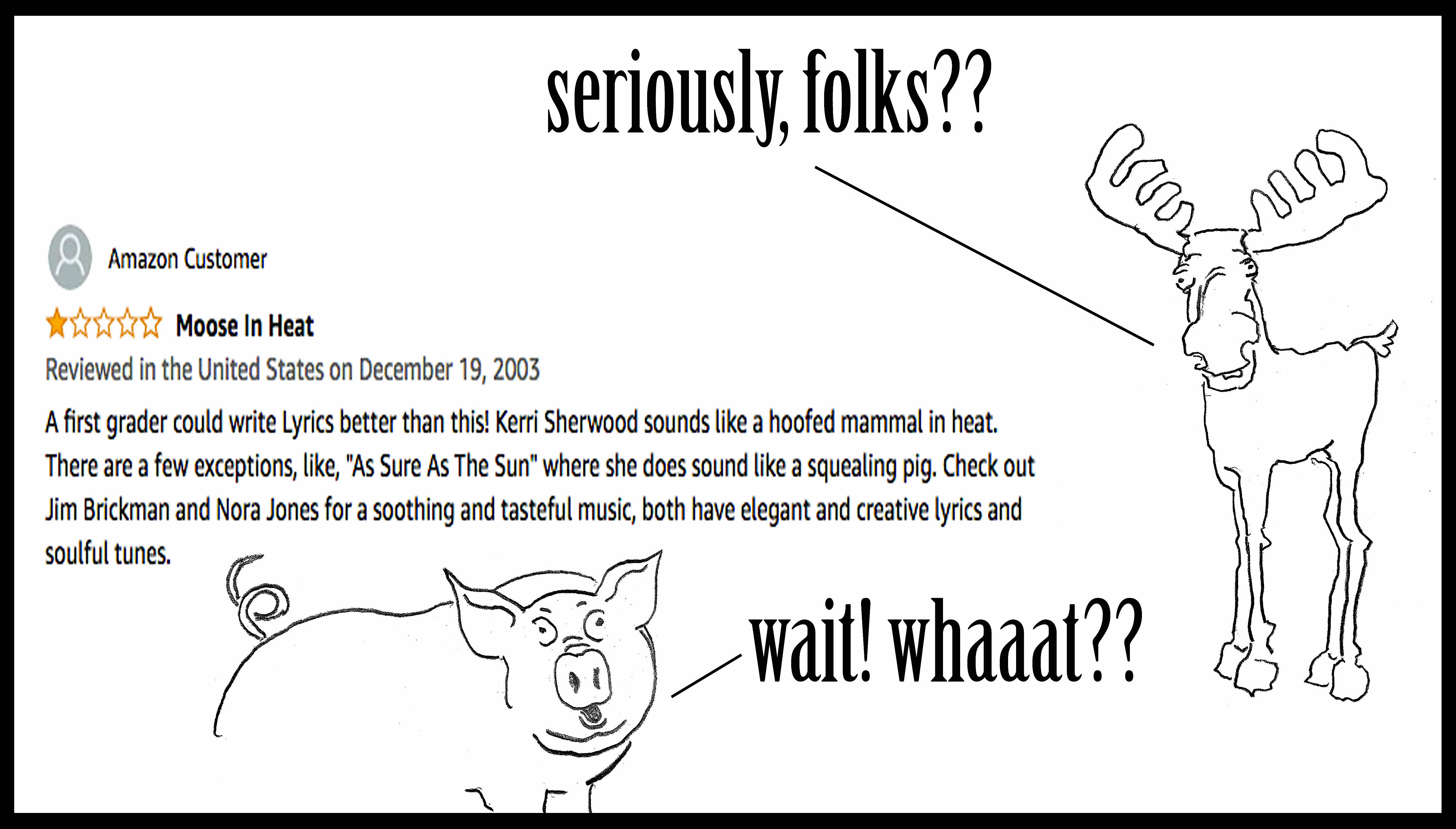
It was Tom’s greater point: only you – the artist -will know if your work is good or not, if you’ve truly found and pushed your edge or discovered new territory. You will know when your work is shallow. No accolade can change that. You will also know when your work is exceptional. No criticism can change that. Its best to root into the worth of your pursuit, to grow and learn, rather than gorge on the ever-abundant-opinions of others. Good or bad. Moose or pig.

read Kerri’s blog post on MOOSE IN HEAT

all of kerri’s albums are available on iTunes & on Pandora

Turn Around And Look [on KS Friday]

When we were at the other end of life, Roger and I often discussed the “bodies” of artists’ work. The overview of their lifetime of work and what it revealed. We speculated about what our bodies of work might someday reveal. He is, and always has been, singular, a director of plays, certain of his path. His body of work would be – and has become – the plays he’s directed and the actors that he’s instructed. It’s an impressive body of work. I am, as Horatio calls me, a polymath. My body of work has never been certain. As Roger knew with clarity the destination of his path, I knew with curiosity that I would be a wanderer. The path was and continues to be my destination.

In other words, I’m all over the map. It’s visible in my paintings. I dare anyone to make linear sense of my resume.

Tom Mck hired me because, in his words, I was a “Johnny Appleseed.” When he was old, he told me that he turned me loose in the schools to see what I’d stir up and also what I’d plant. It was one of my favorite “jobs” because it came without a description. I followed the fires. I found the need. I brought art and stories to hearts and minds grown arid from the pursuit of dusty answers.

Tom was a brilliant theatre artist and teacher. His body of work was immense. I was surprised, at the end of his life, when he told me that he rarely thought of the plays he’d directed. He believed his best work, the work that he most loved and defined him – his real body of work – was at the very beginning of his teaching career. He was assigned a 2nd grade class and had no idea what to do with them. So, his curriculum was to invent stories with them. They traveled the world as pirates, went on safari, designed and priced supply lists and mapped routes. Math and history and geography. For weeks they prepared for a day of being blind. What would they need to do to spend an entire day safely learning what it was to be without sight? Curiosity and discovery. Empathy. Inner and outer worlds. He ignited and followed their imaginations. Tom was a polymath, too. He was a Johnny Appleseed.

Today marks Kerri and my 156th week of consecutive posts. 3 years, 5 days a week. My wife is a poet and composer and pianist and teacher and singer/songwriter and recording artist and business owner and photographer and designer. A polymath. After breakfast each morning, we write. It occurred to me recently that my body of work, when all is said and done, will be my posts. I’ve directed many plays, performed many plays, written some really bad plays and a few good ones, consulted with corporations, performed stories at conferences and with symphonies, painted and shown paintings, written children’s books, taught and facilitated workshops and dug ditches and delivered warm bread to grocery stores. I started an experiential learning school, a diversity and inclusion training company, and coached people from all over the world. All of my wandering has provided a rich field of experiences to pull from, to ponder and reflect.

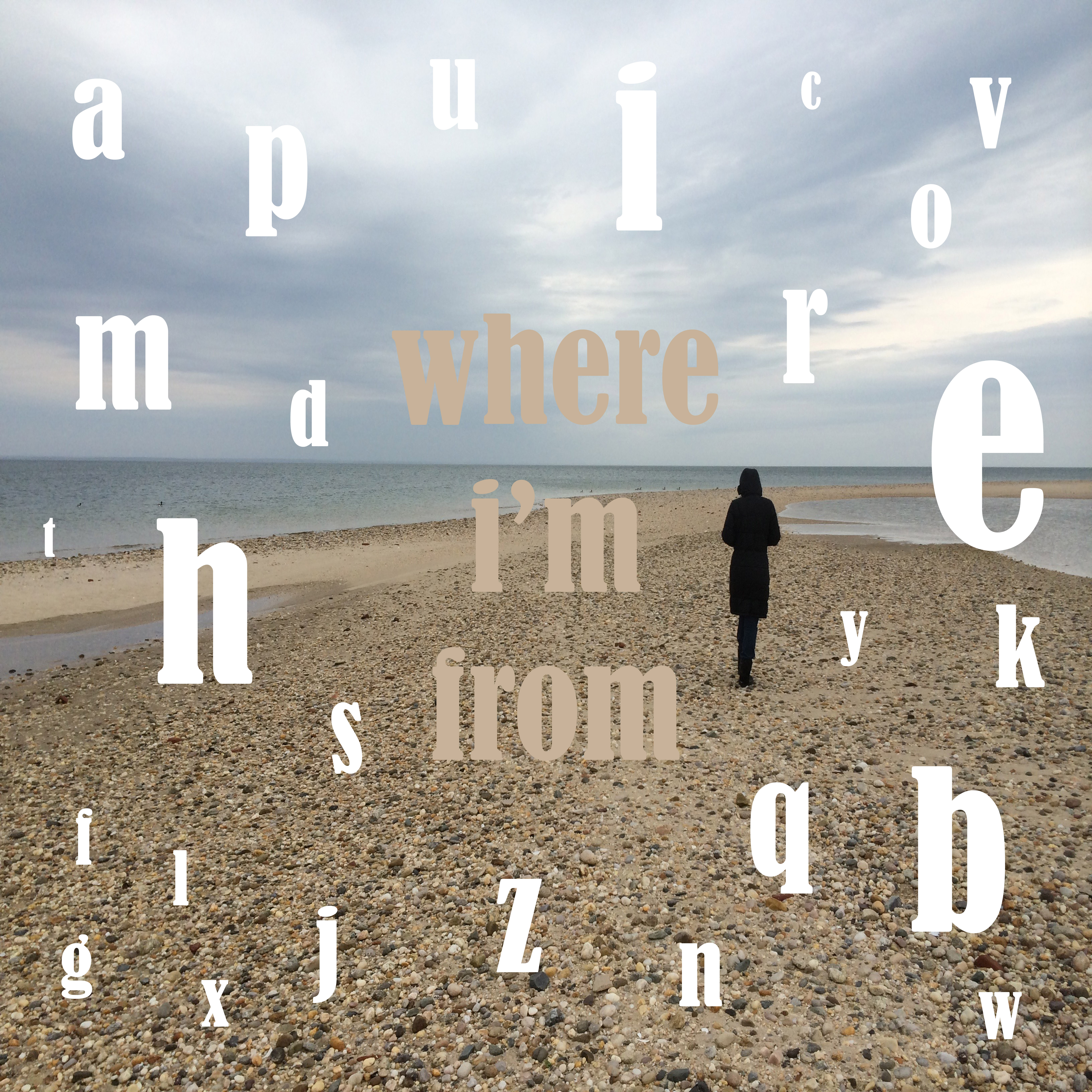
Sometimes (more times than I care to count) I ask myself, “How did I get here?” These days, in the pandemic era, I have plenty of time to look back on my road, on my body of work. “How” is a question that can only be answered after the fact. ‘How do we do it?” tops my list of most useless questions. How did I get here? What is my body of work? I turn around and look where I’ve traveled, where I’m from, and write myself into coherence.

where i’m from/blueprint for my soul is available on iTunes

read Kerri’s post about WHERE I’M FROM

where i’m from/blueprint for my soul ©️ 1997 kerri sherwood

Stand At The Intersection

2mayyoubepeace-jpegI find myself once again standing at an intersection of seemingly unrelated conversations and experiences and am in awe of the common thread.

Yesterday was Ash Wednesday. The imposition of the ashes is a reminder of mortality: we came from dust and to dust we will return. Last night I watched the ritual from the choir loft. It is new to me and beautiful – a lifelong fascination of mine – to witness the power of people gathering to participate in their rites of transformation. Life made vibrant through the realization of its limits.

After a long hiatus, this week I picked up my art discussions with Horatio. He is wise and I have sorely missed my conversations with him. During my Seattle years we often met downtown for coffee and talked about all things artistic. We’d compare notes, challenge assumptions, share inspirations, complain about obstacles, wax poetic, and laugh at the fears and foibles of life on an artist’s path. A few days ago we scheduled a call and picked up our chat as if no time had elapsed. He is an accomplished visual artist and filmmaker and told me that finishing a drawing (or film) always feels insignificant, anti-climactic. “There is no such thing as completion,” he said. “The product always feels empty. Doing the work is vibrant and alive. The life is in the process!” Horatio told me that he disappears when he goes into the studio. I know that feeling well. It is not an experience of losing your self, it is the experience of transcending your self. It is a ritual of transformation

This morning I read in our local newspaper that the University of Wisconsin, Parkside (the campus in our town) launched an initiative to inspire peace through the arts called “PeaceWorks.” They were inspired by this quote from Eleanor Roosevelt: “It isn’t enough to talk about peace. One must believe in it. And, it isn’t enough to believe in it, one must work at it.” I read that there will be over 20 artistic events from all disciplines that deal in one way or another with peace – or the absence of peace. Peace is likely to be found when a community gathers to participate (not just witness) in the transcendence of self. There are few things like the arts that can facilitate that.

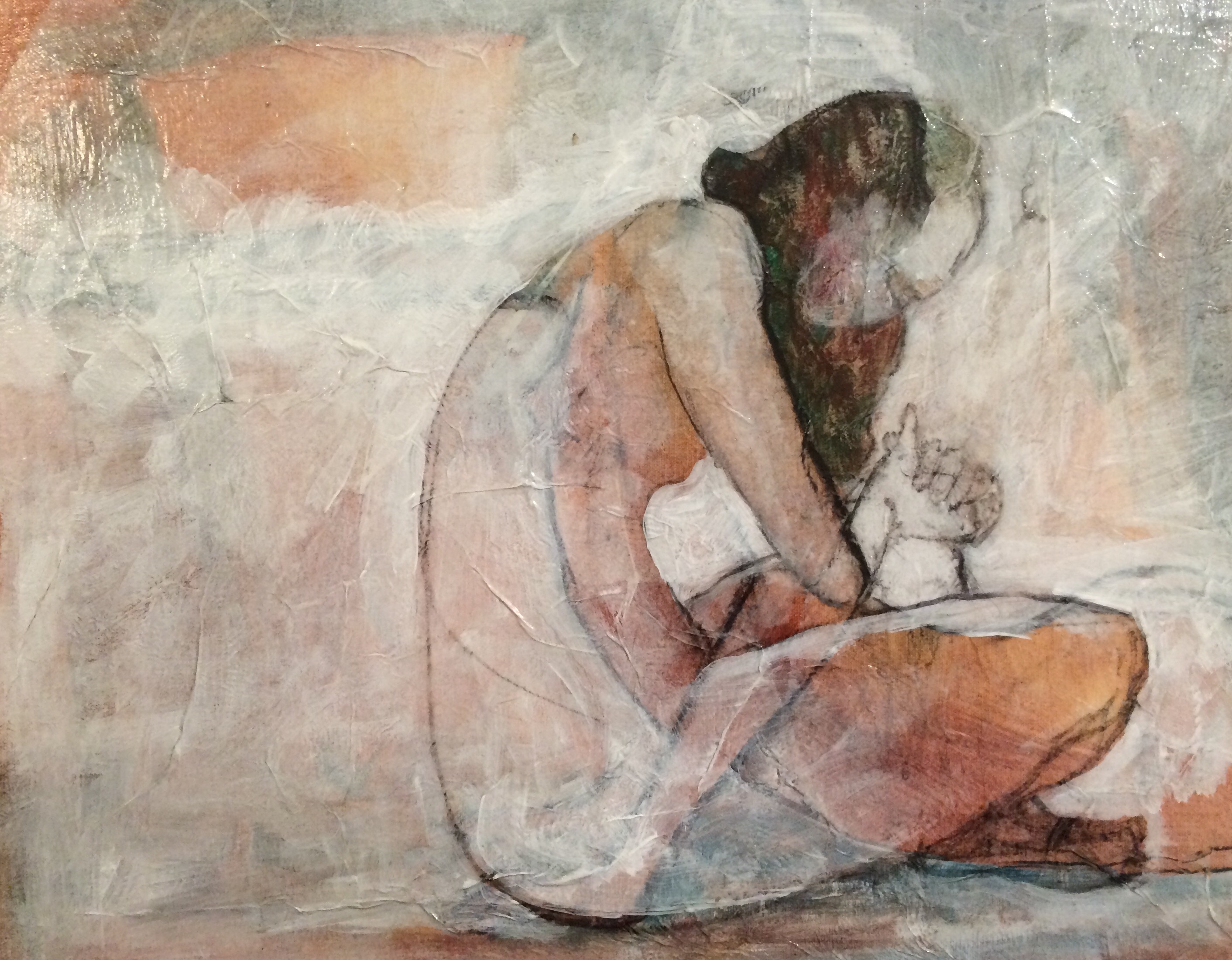
One of the latest paintings from The Yoga Series

One of the latest paintings from my Yoga Series

The ride is limited. The achievements of this life are of little importance if the process (the moment) is missed. Peace, inner or outer, like all high ideals, begins with an intention and is usually possible when, looping back to the beginning, we realize that this ride of life is finite and precious.


Save

Save