Pick Up Your Ordinary

From Kerri and my travels: a photo essay about what our feet have seen

From Kerri and my travels: a photo essay about what our feet have seen

I continue to process all of the amazing events and experiences from the past few weeks working abroad. They have jiggled loose an old thought-bubble and I’ve been pondering it since it bobbed to the surface.

The old thought-bubble is a tenet that comes from improvisational theatre: put down your clever and pick up your ordinary. I’ve used this tenet in any number of facilitations and coaching relationships. The basic idea is this: any attempt at being clever actually diminishes personal power and inhibits the capacity to be present. Trying to be clever focuses the eye inside and robs a performer or presenter of the only thing that really matters: relationship in the moment.

Dig a bit deeper and the real wealth of the tenet shows itself. We rarely recognize our true gift because we think everyone possesses it. We miss our unique gift because we think it’s ordinary. We mistake our gift for something common and therefore not of great value. In truth, what we brand as ordinary (how we see the world) is our most unique, most potent and powerful gift. So, to put down your clever and pick up your ordinary is to value your unique point of view. It is to honor yourself and how you see the world and also affords you the capacity to be seen as you are, not as you think you need to be seen. To pick up your ordinary is to become accessible.

Trying to be clever is actually an attempt at trying to be something we are not – or someone we are not. It is to hide, put on a mask, or pretend.

Ordinary reveals; clever obscures. Ordinary facilitates flow. Clever needs to control. Attempts at being clever are manufactured moments. Experts need to be clever, they need to whip up a straw man and call it substance. Clever is always an ego need – in fact, clever is nothing more than a plea for approval. It is a thirst for adulation. Clever needs center stage. Ordinary shares the stage. Clever needs to claim territory. Ordinary expands horizons. Ordinary is accessible. Clever is protected, aloof, and closed.

All of this is old news. It was in the old thought-bubble. Just behind it came a few new little trailer bubbles. Clever is oriented on what it gets (adoration, attention, acclamation). Ordinary is oriented according to what it brings: a unique point of view in service to a relationship. Ordinary is a form of potlatch: give what you have; give away your wealth as the road to increase. Clever comes from a universe of lack. Ordinary comes from an abundant life. It is a paradox. Unique is found in the ordinary. New vision comes when we cease trying to say something new and simply offer our unique, one-of-a-kind perspective. The beauty is in what we see.

title_pageGo here to get my latest book, The Seer: The Mind of the Entrepreneur, Artist, Visionary, Seeker, Learner, Leader, Creator…You.

Or, go here for hard copies and Kindle.

What Do You Value?

One of the windows by Max Ingrand at Saint Pierre de Montmarte

One of the windows by Max Ingrand at Saint Pierre de Montmarte

What has value? What has merit?

Or, here’s a better question: What is value? What is merit?

During our travels I looked at a lot of art and architecture from across the centuries and across many different cultures. There is a very old church, Saint Pierre of Montmarte, one of the oldest in Paris, seated adjacent to Sacre Coeur high on the hill overlooking the city. This ancient church has been outfitted with stained glass windows, designed by Max Ingrand, that I can only describe as cubist. The collision of ancient church and modern window is breathtaking and perfect. The windows were so beautiful (to me) that they brought tears to my eyes. It was hard for me to leave the church as I was so taken by the windows yet I was also aware of the number of people moving through that were not impacted at all. Later, I entered Sacre Coeur and felt nothing. To me, it was impressive, impersonal, and left me cold – yet I watched others catch their breath with its scope and grandeur. They were moved to tears.

Is value purely personal and subjective?

I remember listening to a recorded lecture by Joseph Campbell. He said that you could tell what a society valued by the buildings constructed in the city center. For centuries, churches occupied the village center. Financial institutions occupy our village/value center. Is value an agreement? Is it a focal point of worship? Take a gander at the titles in the local bookstore and you will find that money, morality, spirituality, and success are odd bedfellows. Is a good life richly lived demarcated by the size of a bank account? Tourists in the distant future will visit the holy sites occupying our village center and read placards about what we valued.

Near Sacre Coeur is the cemetery at Montmartre. We descended the hill to the cemetery and walked the paths through the monuments and graves. They fascinate me. They are essences, value statements distilled to a thick concentrate of marble and stone. There are angels and gargoyles, draped figures in repose and riders of the apocalypse. There are statements: loving father, devoted mother. There are roles: composer, writer, soldier, painter, baker, philosopher, politician. The famous are interred next to the ordinary. In a cemetery, all lives are even. Standing amidst the graves I see lives lived, dreams dreamed and realized or unrealized, and I wonder what each person valued during their allotment of days, and what they valued on the very last day.

Value is relative and passing? An extraordinary moment, when conscious, is valuable.

This is from Rumi: Spirit is so mixed with the visible world that giver, gift, and beneficiary are one thing. You are the grace raining down; the grace is you.

Value is grace? You? What surrounds you?

Go here to get my latest book, The Seer: The Mind of the Entrepreneur, Artist, Visionary, title_pageSeeker, Learner, Leader, Creator…You.

Embrace The Bubble

A bit of the Eiffel Tower

A bit of the Eiffel Tower

I am nearly through the throes of jet lag and my inner anthropologist has an observation or two about the altered state that occurs when one wakes up in Paris and goes to sleep in Kenosha.

When 36 hours pass in a 24-hour daylight cycle, the human body (my human body) experiences shock and awe. A soul cannot travel nearly as fast as a body in a modern airplane; that’s why they call it jet lag. The jet does not lag. The soul doddles as a good soul should while the body flings through space in a pressurized aluminum tube. The soul lags (note: my inner anthropologist is a scientist and is dubious about using the word “soul.” He wants you to know that “soul” is my translation of his term, “consciousness”).

Jet lag is like being inside a bubble. There are great benefits to being inside the bubble. For instance, the world is wonderfully distorted. Nothing is normal when sifted through a soapy haze. The bubble is the overlap of dream space and the everyday. From inside the bubble, people move too fast. Or, they move too slowly. The words people speak are garbled and generally bounce off the bubble. Checking out of a grocery store is like a scene in a sci-fi movie. Sense-making is impossible but the surrender to no-sense is sweet and oddly comforting. To release the necessity to understand, the need to recognize, rationalize, explain, or connect even the simplest of thought-dots is liberating. In the bubble, a sigh is the only appropriate response.

From the bubble, there is nothing to be done but to watch the time river roll. Jet lag bubble consciousness makes things somehow more simplistic; complexity is not possible from a jet lag haze. Inside the bubble, life routines that were unconscious prior to traveling are startling and new; they are like gestures from a previous incarnation. For example, this morning, doing the dishes, my hands knew what to do yet I was fascinated with the odd process. I was both doer and witness. Doing the dishes was known and new all in the same instant. The bubble, so my inner anthropologist claims, is a paradox: it dulls the thinking but sharpens the simple moments. It opens the senses. Prior to doing the dishes, watching the sunrise through the fog, I listened with fascination to the wind shake the dew through the high leaves in the trees. It was gorgeous; nature’s rainstick.

Within the bubble, sleep is a constant tug like an undertow. It pulls time into slow motion. It creates a liminal space, a not-here-and-not-there space. It creates a “now” space with a single simple imperative: stay awake for a few more hours.

Stay awake. I like the metaphor: to stay awake amidst the pull to dullness; ultimately it is the gift of the bubble. It is a reminder not to sleepwalk through life, to stay alert to the simple moments. Stay awake or your life becomes like a television running an endless cycle of sitcoms. Dullness is a choice. My inner anthropologist just rolled his eyes. It’s more extravagance on my part; apparently “choice,” like “soul” is not an appropriate scientific term.

Go here to get my latest book, The Seer: The Mind of the Entrepreneur, Artist, Visionary, title_pageSeeker, Learner, Leader, Creator…You.

Or, go here for hard copies.

Locate Your Self

title_pageHere’s a short excerpt from my book, The Seer, dealing with the dance between investments, limitations, and the roles we play in life. This conversation is a kind of coaching session and is happening via online chat:

Me:…All week I’ve asked myself, “why?” Why the dramatic shift in experience from role to role? I’m a bit shocked to realize that I play many, many roles each day. In each role I want something and what I want is different depending upon the people I am with. I realized that my roles are not about me in isolation – and what do I mean by that? I mean that I define my role by how I define the relationship I am in at the moment. For instance, in my workshop, I assumed the role of “guide” and I wanted to lead the young people to some new insights that might help them create their businesses. In my conversation with my parents, in the role of “son,” I wanted them to be pleased with my work. I wanted to share and I wanted their approval. So, my role is defined by relationship and in each different relationship I tell a specific story based on what I want or need. I’ve “cast” myself in these little mini-stories. Or to use your term, “role” is the way I “locate” myself in the story.

Virgil: And how does this knowledge help you with your questions about business?

Me: The first thing that occurs to me is that I have the capacity to locate myself in a different way if I don’t like the role I’m playing. I can change how I locate myself. Also, there is a dance with the words “limitation” and “investment.” I took notes all week and realized that I was using the verb “to invest” over and over again to describe my experience of different roles. So, for instance, during my dinner with my friend Bruce I invested in helping him. I wanted Bruce to know that I cared about his challenges. Then, I watched Bruce invest in being the wine expert. It was his way of caring for me and demonstrating his expertise. I began to see my investments as keys to discerning my limitations. In some roles I’ve invested in the idea that I can’t do something or that I’m not good at something. In some roles I diminish myself; my limitations are investments in being small.

Virgil: Just a caution: as you explore further the dance between investment and limitation, remember to practice suspending your judgment. Remember: you are having experiences first so you can see how you make meaning and begin to choose how you make meaning.

Me: Thank you. It’s a good reminder. I was beating myself up every time I     realized I was investing in being small.

Virgil: We tell ourselves stories. We locate ourselves within the stories. In fact, that is the next recognition: you locate yourself within your story. We do it physically (like your description of choosing the table in the restaurant); we do it through the roles we assume – specifically our assumptions of how we need to play our roles, what is ours to do, etc. Locating is simply a way of establishing comfort. We sort to the known. If you judge how you locate yourself, you miss the opportunity to change how you locate yourself.

Me: Right. Judgment blinds me to the choices I am making.

Virgil: Judgment is always a version of the “things are happening to me” story. In fact, judgment is a way of locating: it is the warning signal when we step too close to discomfort. When I judge myself and say, “I’m an idiot,” I’m actually locating myself, pulling myself back into my comfort zone. When I judge others, “They are idiots,” I’m locating myself in a higher status position. The action of diminishing “them” elevates me back into a comfortable status position. Thus, suspending your judgments removes the easy step back to comfort and allows you to stand in “not knowing” and see what is there beyond what you think is there.

Go here to get my latest book, The Seer: The Mind of the Entrepreneur, Artist, Visionary, Seeker, Learner, Leader, Creator…You.

Or, go here for hard copies.

Clear The Channel

Something else from the archives.

Something else from the archives.

It is the day before we fly to the Netherlands. We started the day early with a long walk, coffee, and a chat about everything but our prodigious to-do list. We’ve learned that it makes a huge difference to our day if we start slow. It makes a difference if we make a conscious choice about where we place our focus in the day.

For years I rose early and read something that inspired me. I read sacred texts, philosophers, artists, seekers, children’s books,…, anything that pulled my mind from my to-do list and grounded me in things that seemed more important to give my thought space. It was a form of meditation. I learned early on that my readings influenced what I saw during the day and, so, influenced my experiences; I interpreted my life according to my meditation instead of my to-dos. I opened to experiences instead of predetermining how I should feel about the list.

Now, after so many years, I have developed an automatic response to the flotsam that might catch my attention. When some clutter catches my attention I say to myself, “I don’t want that to occupy my mind.” And, like a cloud, it evaporates. I want to keep my thought channels clear. I want my thoughts focused on attention to and appreciation of the moment, creative processes, or noodling with cool ideas – and not snagged on the news of the day. Thought channels are like arteries and too much gunk will jam the flow. Gunk is a great source of depression. Last year I went on a news moratorium when I started my walk-about and found that I had a lot more thought space without the news-cycle-chatter. I learned that without turning on the news or opening a paper I heard everything worth knowing. I learned that I  had no need for the endless cycle of breaking news to be well informed; 24 hour news is like bad cholesterol. It is an addiction. It is a false high. I learned the necessity of questioning what I was plugging in to (what I was plugging into my mind).

Knowing what you don’t want clogging your mind necessitates becoming clear about what you do want occupying your thought. Thought requires a focus and focus is a choice. Mostly, my answer is no thought. I want silence. I want presence and presence requires almost no interpretation.

Go here to get my latest book, The Seer: The Mind of the Entrepreneur, Artist, Visionary, title_pageSeeker, Learner, Leader, Creator…You.

Go here for hard copies.


Choose Your Path

A watercolor I call, "House On Fire." It's an unusual piece for me...

A watercolor I call, “House On Fire.” It’s an unusual piece for me…

I am still unpacking from my move. My sketchbooks and journals have been bound in plastic wrap since I hauled them across the country and then brought them into the house from the Budget truck in October. I cut the wrap this morning because I was looking for a sketch to give as a gift and during my hunt I found an old work journal. It was a gold mine!

I’m preparing to facilitate a workshop on The Art of Team and the notes I found were from a team I worked with a few years ago. This organization had a history of abusive leadership. There was a serious lack of trust within the group. It was a classic case of “everyone else is to blame and nothing is my fault.” Everything was territory that needed to be guarded and protected, especially personal value. Their individual worth as human beings was always in question.

Here are notes from our world-class conversation. This is what the team discovered as it waded into the swamp of its dysfunction:

The path of power splits, there is a fork in the road of power:

One path leads to the creation of power with others.

The other path leads to power over others; a path of taking from others.

The fork is defined by where each individual seeks their worth:

Seeking your worth based on others responses will take you down the path of needing power over others.

Finding your worth within yourself will open your way to creating power with others.

Here’s the point: it is impossible to change the group dynamic and create a cohesive team until you change yourself. Every dysfunction in a team can be traced back to this root.

In this sense, people never have problems, they have patterns (This is the first recognition from my book, The Seer):

Seeking your worth from others is a pattern.

Finding your worth within yourself is a pattern.

Seeking your worth from others patterns you to orient according to what you get from others.

Finding your worth within yourself patterns you to orient according to what you bring to others.

If you desire a functional team, cease seeking to solve your problem (seeking your worth in others eyes) and begin establishing a new pattern (find your worth within yourself).

Go here to get my latest book, The Seer: The Mind of the Entrepreneur, Artist, Visionary, title_pageSeeker, Learner, Leader, Creator…You.
Or, go here for hard copies.


Give Time.

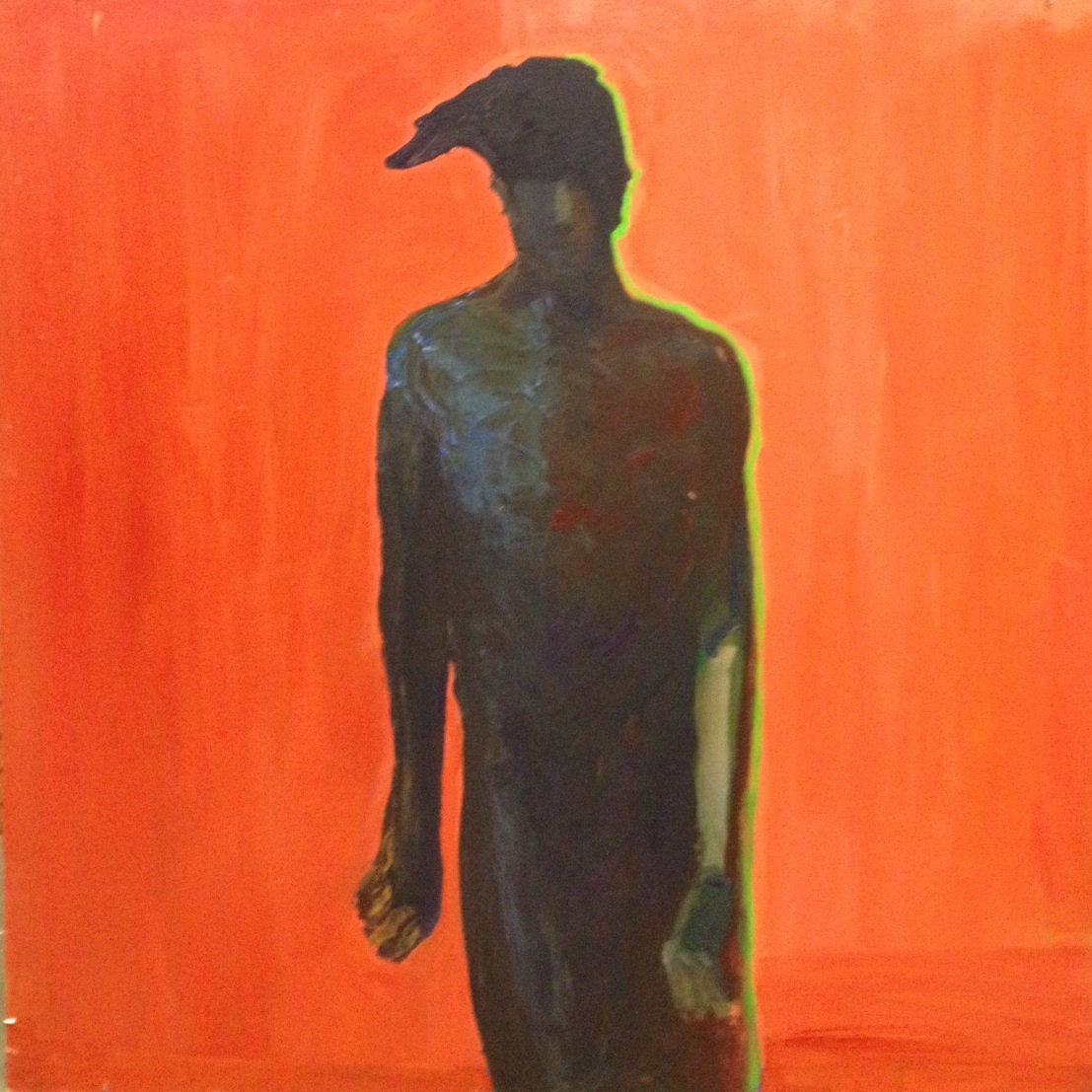
Here's a watercolor study for a larger painting that has yet to happen.

Here’s a watercolor study for a larger painting that has yet to happen.

She said, “I can’t do it because it takes too much time.” I didn’t respond. I didn’t validate her inability to do what she said she desired to do. I waited. “There’s only so much time in a day!” she exclaimed.

“That true. That will always be true,” I responded. I didn’t say it but I’ve noticed that it is usually the things we say that we desire to do that get short shrift. Spaciousness takes time. So does relationship. So does physical health, mental health and a spiritual practice. It all takes time. I’ve coached a legion of people who’ve set up art spaces in their homes and then avoided them like the plague. Their excuse for establishing the physical location but fleeing from what they might do in it: it takes too much time.

She was silent and I could tell that she was caught in her web of justifications. She was swirling in a reasoning-eddy called, “I have no choice.”

“Listen to the language you use,” I said, seeing her distress. She wrinkled her brow.

“Everything takes your time. It’s like life is a pickpocket stealing your precious time and you never have enough. You are divided against yourself. Who decides where your time goes if not you? You lack because you pretend that you have no control over your time. Choose to do it or choose not to do it. It’s in your language.”

She was quiet for a moment and then said, “It seems too easy to just change the way I talk about things.”

I smiled. “I know but imagine who you might be if, instead of life taking all your time, you started talking about where you choose to give your time. If life takes your time, then you are a victim. If you own where you give your time, then you are a creator. The actions of your day might look the same but who you are within them will be radically different. A whole world of possibilities would become visible if you realized that no one else is in control of your time. Where do you choose to give your time?”

Go here to get my latest book, The Seer: The Mind of the Entrepreneur, Artist, Visionary, title_pageSeeker, Learner, Leader, Creator…You.
Or, go here for hard copies and Kindle.


Have A Chat With Erling

Kerri with her dad.

Kerri with her dad.

It seems as if the theme for the week is lost conversations. It occurred to me that, after writing yesterday’s post, there is, in my life, another conversation that I wish I could have but never will. And, because I never will have the actual conversation, I am reaching into the void and having another form of dialogue.

I wear on my right wrist, wrapped three times to form a bracelet, a pull chain for a light fixture that I found on a workbench. Kerri wears on her left wrist, wrapped three times, the rest of the chain. I found the chain during our first trip to Florida. We were visiting Kerri’s mom in an assisted living facility and, in the evenings, cleaning out her parent’s home. Kerri’s dad, Erling Arnson, died a year before we met, and she’s often said to me, “I wish you could have known my dad.”

I found the chain on Erling’s workbench. He was a watchmaker and a jeweler. He worked with his hands, rebuilt cars, machined new parts for things, and was the master of a quick fix. He liked to build things. He liked to tinker. You can tell much about a person by the way they keep their space and I spent a long time standing at Erling’s workbench. It had been mostly picked apart, scavenged, but the organizing principle was still in tact. He liked to re-purpose things. He liked to make things out of things; every bolt and scrap was filled with potential. I could feel (and understand) the simple joy of creation apparent at his bench.

When I saw the chain (discarded by the scavengers) I knew it would be a way for Kerri and I to bring her dad forward with us. We secured the chains on our wrists and because it is there, I think about Erling everyday. I wonder what I might have learned from him. I like to tinker, too. I like to make things.

Me at Erling's resting place.

Me at Erling’s resting place.

On the second anniversary of his death, Kerri said, “Daddy will show up, today. I don’t know how, but he will.” A few minutes later the faucet in the kitchen broke. Evidently Erling had a wicked sense of humor. As I replaced the faucet (the first faucet replacement of my life), a lengthy affair requiring a call to the neighbor for tools, I felt a deep sense of patience. I remember my grandfather telling me that a person can figure anything out if they just take the time to do it. “You don’t need to know how, you just need to give yourself the time to figure it out.”

Kerri was on the phone with her mom when I finished the job. I was feigning machismo, peacocking my plumbing prowess. Kerri’s mom said, “I think he passed Erling’s test.” She smiled and I thought, “Thanks for the help, Erling. Now, how do I fix the plaster on the ceiling?” His response: I don’t know. But, let’s figure it out.

title_pageGo here to get my latest book, The Seer: The Mind of the Entrepreneur, Artist, Visionary, Seeker, Learner, Leader, Creator…You.

Or, go here for hard copies and Kindle.

Have The Conversation

A painting I did twenty years ago of my dad. I call him Columbus.

A painting I did twenty years ago of my dad. I call him Columbus.

When Bob died I wrote his wife, Ruby, a note saying that I’d give anything to have another conversation with Bob. Just one more conversation.

When Jim wrote to tell me of Doug’s passing, we had an email exchange.

I signed off the email with this phrase: “Yet another conversation I will never have….” Jim answered with a warm reminiscence of Doug, a recounting of their meeting as young teachers, watching Doug navigate and ultimately heal the psychological wounds from war. Jim signed off with this thought:

War is not just hell.  It is eternal hell.  Particularly for those with first hand experience. Why the race continues to tolerate it may be the greatest mystery. Another conversation I will never have with Doug.

I remember in vivid detail the last conversation I had with Tom. He was already sliding into the hell of his dementia and knew it. He desperately wanted to tell me a story, something that was vitally important for me to know though he did not know why. I sat attentive in his small cabin home as he told me the story of the lost boy, a story that together we’d spent years developing into a play. I’d heard the story a thousand times and he no longer remembered. He forgot everything but the imperative to tell me the story, to transmit the history to me. So we enacted the ritual as our final conversation.

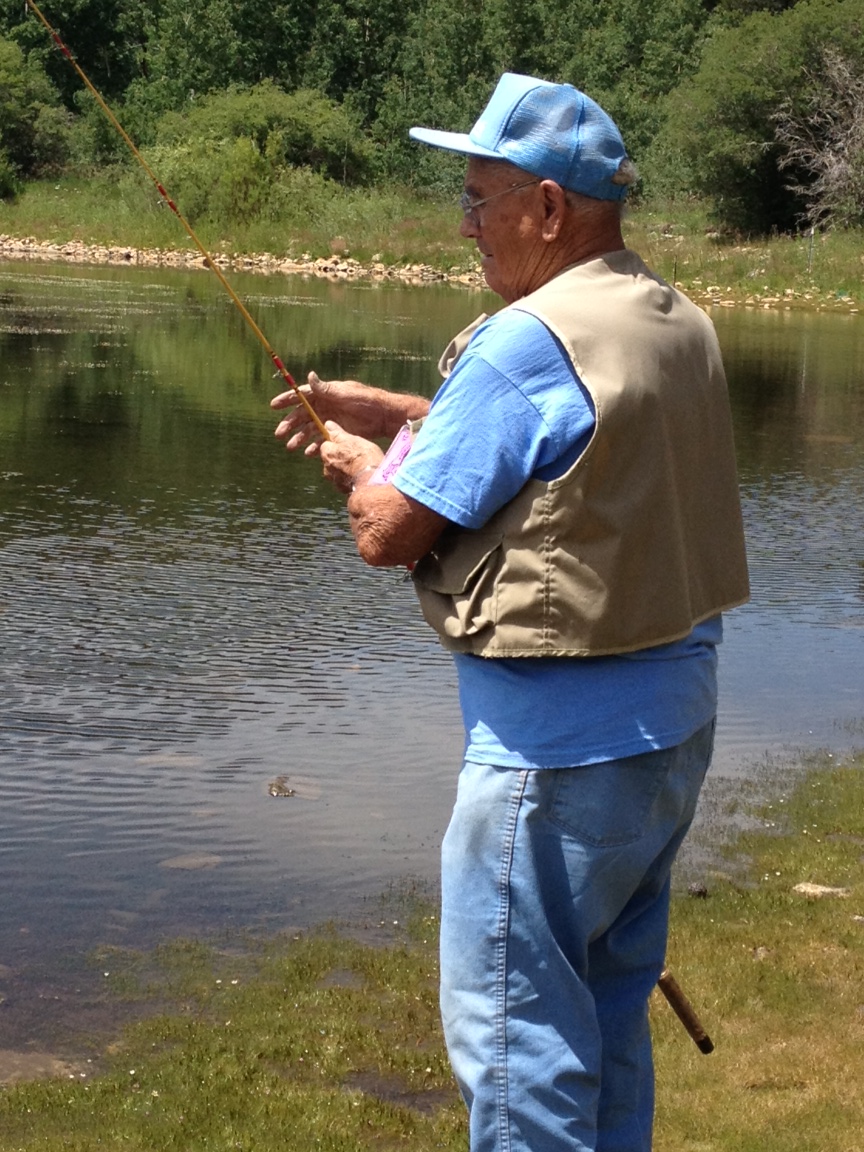
Columbus fishing at his 80th birthday celebration.

Columbus fishing at his 80th birthday celebration.

Many years ago I traveled home to spend time with my dad. I wanted to know who he was and felt as if I’d missed it, as if I didn’t really know the person behind the role. He was generous and vulnerable and spent three days with me answering all my questions, sharing the inner sanctum of his thought and being. It was the greatest gift I have ever been given and, at the same time, the greatest gift I have given myself: I asked if he would spend time with me.

One of the things I learned during those days with my dad is that there will always be the yearning for one more conversation. There is no bottom to the magic and mystery of the people that we love and who give order and richness to our world. This year I am learning that although there will always be the yearning for just one more conversation, there will of necessity be a last exchange. And, because that is an inescapable truth, there is nothing more important on this earth than to take the time, make the space, to ask, “How are you doing? What’s happening in your world?”

title_pageGo here to get my latest book, The Seer: The Mind of the Entrepreneur, Artist, Visionary, Seeker, Learner, Leader, Creator…You.

Or, go here for hard copies and Kindle.


Share A Poem

An old painting from my archives. This is "Hermes."

An old painting from my archives. This is “Hermes.”

One day, out of the blue, Doug came out of his office, stood at the door to my office and asked me to follow him. Doug was a bull in a china shop, gruff on the best of days, and his request was more of a command than an invitation. He’d spent his early life in the military, did two tours in Vietnam, and a piece of him was still fighting that war; the rigor, structure and discipline he’d acquired as a soldier was still saving his life. I’d worked with him long enough to know that he was soft to the center. Doug was a big heart wrapped in pit bull clothes.

I followed him back to his office and he asked me to close the door, a sign that usually meant battle was to ensue. I closed the door and sat opposite his desk, curious that the lights were off. The dim room was illuminated by a single thin window partially obscured by a bookcase. He sat. He took a deep breath and looked around as if he was worried that others might be listening, and said, “I want to show you something.” He took another breath, slid open the bottom desk drawer, and pulled out a book so worn and deteriorated that it was barely recognizable as a book. I knew immediately what it was and caught me breath. “I want you to see this,” he said. I gently held the tattered brittle pages and read the first poem in the book and, as I read it, Doug recited it. Tears came to my eyes.

I’d heard the story of the book many times. Doug told the story when he was in pain, when one of his students was self-destructing or when he was once again standing at the edge of his own personal abyss, a place that was never far away. He told me the story each time he was trying to find a shred of humanity in his very dark world.

When Doug was on his way to his first tour in Vietnam, he was not yet 18 years old, he was angry and alcoholic, and for reasons he could never explain, he stopped in an airport bookshop and bought a book of The World’s 100 Greatest Poets. When telling the story, Doug would say, “I’d never read a poem. I hated poetry! I was nearly illiterate! But I bought that book and stuffed it in my bag.” He told me that the guys in his platoon teased him the first night he brought out the book of poetry and read it. Initially he read the poems aloud to bother his mates. They’d shout and throw stuff at him. Every night he read poems aloud. Soon, after the horrors of the day, after the fears of being killed or having killed, they asked him to read poems to them. They had favorites. They made requests. They talked about what the poems meant. They asked him to find a good poem to send to their loved ones at home. Over the year, Doug learned to recite by heart each one of those poems.

Doug told me that poetry saved his life. The book saved his humanity. That day in his office we spent nearly an hour reading poems to each other; each poem had a story, a memory. He told me that people don’t understand the reason for art, the necessity of poetry. “It’s not a luxury,” he roared, “it’s the goddamn center.” He carefully placed the book back in the drawer and pushed it closed. I thanked him for sharing it and he waved me off. The moment had passed; he closed the drawer on his sharing, too. It was too much.

That day was nearly twenty years ago.

Doug Durham

Doug Durham

Jim sent me news that Doug passed away this week. The last time I saw Doug he showed up at my apartment in Seattle just as he’d showed up at my office door: out of the blue. He sat in my living room for fifteen minutes, fidgeting, unable to sit still. “I just wanted to see you!” he trumpeted. “I wanted you to see that things are good with me!” He was deciding whether or not to open that metaphoric desk drawer. He had something to share or say but had not yet decided whether it was the right time. He had cancer even then but was on top of it.

“Well!” he announced, standing, “it was good to see you.” I asked him what he wasn’t saying and he gave me the “be careful” look. He wasn’t ready and I knew better than to push him. “Stay in touch.” I said, as he climbed into his big red truck. “You know better than that!” he smiled, waved, and drove away.

Go here to get my latest book, The Seer: The Mind of the Entrepreneur, Artist, Visionary, title_pageSeeker, Learner, Leader, Creator…You.

Or, Go here for hard copies.