Give Yourself Some Advice (3)

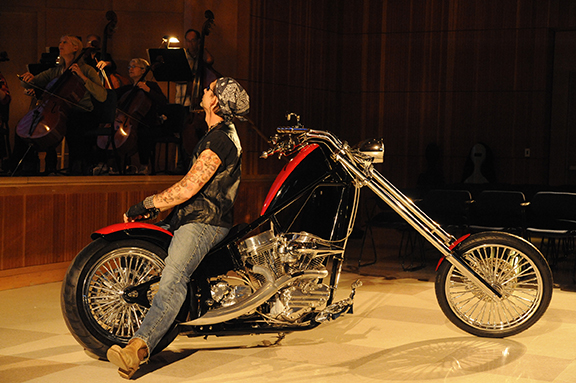
A younger version of myself rehearsing for The Creatures of Prometheus. The tats are fake!

A younger version of me rehearsing for The Creatures of Prometheus with The Portland Chamber Orchestra. The tattoos are fake!

[continued from GIVE YOURSELF SOME ADVICE (2)]

Here’s the third and final section of Horatio’s Advice To Myself. He sent it to me in an email last week. Horatio is one of my dear companions in art and artistry and I was so moved by his words that I asked him if I might post his thoughts. Were I still teaching young artists, this would be required reading:

Do not make work that attempts to control others. That is only advertising or propaganda and sustains no one. Make work that connects to others. That is sustaining. 

Do not make work that exalts yourself alone. That separates you from others.

Walking is good for you. Eating and sleeping are good for you. Loving is good for you. All those things sustain and heal you. Make your work like those other things. That kind of work is good for you, and for everyone.

Bragging is not good for you, or for anyone.

Never work in order to be famous or get rich. Never confuse your work with either one of those false goals, even though either or both may come your way.

Fame and riches are burdens and require a whole set of tools and abilities not at all related to the work that may have brought you fame and riches. No one but a very small minority of the rich and famous and a few visionary souls who are not rich or famous understand this. It may be the greatest false idol of human self-fulfillment of all time.

Time is the only asset that really matters. Value and prioritize it. You also need enough food and shelter, which usually means money. But enough is enough. That’s all that matters.

Having enough money for food and shelter is a necessity of doing good work. You have no choice but to figure something out. There are many paths. 

You will make bad choices. Learn from them. Forgive yourself so you can make other choices. Keep pursuing the real work.

You will waste effort and time. You will do work you don’t like. Everyone does. Try again.

All good work contains a discovery, something necessary for human life, even if it’s only that you need to drink water. 

All good work shows how we are all human, both you and your audience, that you connect, that you are the same.

All good work shows that it matters that we are all the same.

[to learn more about Horatio’s films or to read the complete Advice, visit www.Fidalgofilms.com]

Go here to get my latest book, The Seer: The Mind of the Entrepreneur, Artist, Visionary, title_pageSeeker, Learner, Leader, Creator…You.

Go here for hard copies.


Give Yourself Some Advice

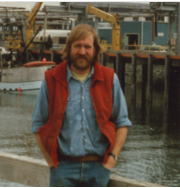
Horatio as a young man

Horatio as a young man

A few days ago I received an email from Horatio. He is an amazing filmmaker and gifted visual artist. We’ve wiled hours and days away talking about art and acting. He’s a treasure. His email was advice that he wrote to himself, the artist (what a great idea!) and with his permission, over the next three days, I will share it in segments. If you are impatient and want to read ahead, visit his blog or take a gander at his work at www.fidalgofilms.com. Here’s his email with the first portion of his Advice To Myself:

The evening after screening The Bath at Taos Shortz Film Festival in March, 2014, a very adept interviewer with the wonderful name Tamara Stackpoole (straight from Downton Abbey or Jane Austen?) asked if I had any advice to emerging filmmakers. My answer, as I recall:

“Let your teachers go. Just tell your own truth. Learn the craft – setup and payoff, three-act structure, and so on – and learn it well. But then let it go and tell your own truth, your vision. You’ll know it when you see it.”

When I woke the next morning, I realized that I had a lot more to say, and that it amounted to advice to myself. It follows:

You only can control yourself, which means your choices. You cannot control anything else.

Choose ethically, you will regret anything else.

The foundation of ethics is to respect others. Treat others as you wish to be treated. Be humble. Pride is the foundation of all the deadly sins, according to Dante and his mentor Virgil.

Your work is the essential ingredient of your life, an expression of your choices, your ethics. 

Connection to others is the essential mechanism of ethics.

A reciprocal connection of human to human (parent/child, student/teacher, artist/audience, friend/friend, or lover/lover) is the basic means to give yourself to others and to receive from them, to further yourself and others.

You will always be learning and practicing that kind of connection. You will never be finished. 

[to be continued]

Prompted by Horatio’s inspiration, I’ve started writing my version of Advice To Myself. It’s a great exercise and amounts to yanking the blankets on what matters to you. It begs the question: what will be your legacy? What might you write to yourself?

Go here to get my latest book, The Seer: The Mind of the Entrepreneur, Artist, Visionary, title_pageSeeker, Learner, Leader, Creator…You.

Or, go here for hard copies.

Let’s Dance

from my cartoon series, FLUB

from my cartoon series, FLUB

[This is a response to my dear friend who believes he will someday be worthy to call himself “artist.”]:

There is a trap that every artist must negotiate: the mistaken notion that “artist” is something you achieve. “Artist” is something that you are (and every child is an artist, wouldn’t you agree?). Art is an exploration of life. Some of the greatest artists in history had no training and no experience. They, like you, enjoy playing with various colors and never followed a textbook or a guideline because art doesn’t happen in textbooks and the only guideline that ultimately matters is in the heart of each individual artist. Art is an exploration. It is a relationship with the mystery.  It is not a prescription. There isn’t A WAY to do it. There is your way. And my way.

Art is an engagement with something intangible and if it is life giving to you, that is all that matters. It gives you life and you bring it to life and that dance of giving and bringing life is the work of the artist. The viewer will never see what you see because they do not have your eyes or your life experience or your heart. They will see what they see and interpret it according to their life-filters. Some people will love your work, some will hate it, most will be indifferent – and that has nothing to do with you. You can’t (nor should you) determine what they see. A painting or photograph is like a doorway: the viewer can step through or not. They can choose to engage or not to engage and you have no power over what they  do or see or feel or think. And, it is vital that you understand that because the notion that you can control what they think is the very thing that leads you to believe that you must pass some credibility test to be deemed and artist. When a viewer engages with a work of art they cease to be a viewer and themselves become an artist. Engagement with art is never passive; it is creative. They enter their own dance of creation. They become creators. Yours is to offer the doorway, not to push people through it.

In truth, the shadow side for the artist in trying to control what other people think is that they give away the essential thing: what they think. Why assign to other people the responsibility for your identity as “artist.” If they like your work then you are an artist? If they hate your work then you are not? You can either serve your heart (art) or please other people but you cannot do both.

I’ve coached a legion of people who set up great studio space for themselves and then never go into it. People are great at creating separation from what they want. They can get close to it (set up the studio) but fear stepping into it (picking up the paint brush) because the act of making art is the act of releasing control. It is to offer without condition. It can be a scary thing to give voice to what you see. It is vulnerable to show your heart to the world. It is only scary until you own it and get out of the trap of valuing other people’s point of view over your own.

Another form of separation is to say, “I will be an artist when I sell my work.” Selling your work does not make you an artist. Making art is what makes you an artist. Acceptance does not make you an artist. Making art is what makes you an artist. 10,000 hours in the studio will make you better and better (meaning freer and freer to express) but it will not make you an artist. You are an artist in the first hour and an artist in the 10,000th hour because you are exploring your relationship with life. You might have better mastery of the tools in the 10,000th hour but “master of tool” and “artist” are two distinctly different things. The  artist uses the tool, the tool does not define the artist.

You have the courage to go to your studio and get lost in an exploration of life through image and color. You lose all sense of time because your relationship with the mystery is pure. And, in the end of the day, who cares if anyone sees you as an “artist;” who cares if you see yourself as an “artist.” All that matters is that you enter that sacred studio place and open yourself to the mystery and say, “Let’s dance.”

Go here to get my latest book, The Seer: The Mind of the Entrepreneur, Artist, Visionary, title_pageSeeker, Learner, Leader, Creator…You.

Or, go here for hard copies and Kindle (Amazon)

Step On The Stage

My performance with the Portland Chamber Orchestra of "The Creatures of Prometheus. I wrote and performed the piece for PCO.

My performance with the Portland Chamber Orchestra of “The Creatures of Prometheus.” I wrote and performed the piece for PCO.

Craig is laughing at me and with good reason. Through a post he asked a simple question about people building boxes around themselves. He issued a singular challenge: to apply what I found in his post to my writing. I’ve had more ideas and random ruminations than I know what to do with; he opened a big can. Before I let it go, I want to wade into the last part of his question: when did I know to create my stage?

Craig positioned a stage (showing up) as the polar opposite of a box (hiding) so I read his question as asking when I decided to show up. I’ve learned that a stage can be a strategy for hiding, too, so “showing up” means much more than just being visible.

Many actors get on the literal stage because they are seeking appreciation or approval from the audience. When anyone mounts a stage, either literal or metaphoric, to seek approval, they split themselves. By definition, they must hide their intention (to seek approval) and in so doing, give away their power and potential. Young teachers often pass through a growth phase in which they seek the approval of their students; they want to be liked and their need for appreciation neutralizes their capacity to teach. Ironically, in both cases (actors and teachers), the moment they cease splitting their intention they become great at what they do and their respective audiences can’t help but appreciate them. That’s the way power works.

Several years ago I was working with a corporate client who was upset because he felt uncomfortable with what he’d learned from my workshop. I told him that I could either serve him or please him but I could not do both. I understood that my job was to help him grow and that necessarily required discomfort. If he wanted to be pleased he needed to hire someone else.

I hid for years. I split myself for decades. My dear friend Roger once said that one day in his middle 30’s he realized that he was no longer becoming someone. He was someone. Everyone navigates the “becoming.” It is a necessary and vital growth phase and is often filled with fears of inauthenticity and split intentions; everyone wants to be appreciated and everyone sacrifices their primary intention in a mad dash for approval until one day, if they are lucky, they realize the only approval they need is their own. My revelation came when I was preparing to go on stage to perform. I realized that I was steeling myself against the audience (preparing to hide). I was assuming that they were going to judge me, which is a form of approval seeking. It was like a cold slap. I’d never had a bad experience with an audience. I’d only ever experienced appreciation and support and wondered why I was steeling myself against the very people I was there to serve. My need for approval dropped like a stone. I went on stage, perhaps for the first time in my life, present and powerful. I didn’t need anything from them. I was bringing life and my gifts to them and that was all that was required. My whole world flipped. No armor. No mask. No need other than to offer my gift on that day to that specific group. Whether or not they accepted my offer could no longer be my concern.

I’ve since learned that discomfort is a very valuable thing. It is present anytime learning and growing is happening. In fact, if there is no discomfort, there’s no learning. And that is the plaque nailed to my stage.

Go here to get my latest book, The Seer: The Mind of the Entrepreneur, Artist, Visionary, title_pageSeeker, Learner, Leader, Creator…You.

Go here for hard copies (Amazon;-)

Take The One Action

a work in progress. I'll call it "Salutation"

a work in progress. I’ll call it “Salutation”

It is true that, at the end of the day, we are our own best obstacle. Nothing is better at blocking meaningful action toward a dream than our personal story of doubt and fear. It comes in many forms, like, “Who am I to think that…,” or “If I only had some time I’d…,” or “If I only knew how to start, I’d….”

Lately, I’m fascinated with a specific form of the best-personal-obstacle canon: why do we take any action EXCEPT the one action that matters. For instance, I hear often statements like this: “I want to be a writer, but….” Anything following the statement of desire is a self-generated obstacle. There’s not enough time. No one will like what I write. Fill in the blank. The single action that matters is to write. Sit down and write. That is how one becomes a writer. And, if the writing happens everyday, one will become a better and better writer. Anything else is a well-placed, self-generated obstacle.

The question is, “Why do we need our obstacles?” What does placing a boulder in the road do for us? There is an obvious answer: it keeps us from the scary prospect of fulfilling our dreams. Fulfilling a dream requires showing up and expressing a personal truth. Personal truth is, well, personal, and will always meet resistance because there are billions of personal truths walking around out there.

The refusal to take the single-action-that-matters applies to the everyday. How many times have you swam in a pool of overwhelm rather than pick up the phone and make the call that you know you need to make? Once, when I ran a theatre company, I knew I needed to fire an employee but I didn’t want to do it. She was a nice person. She wasn’t doing her job. We had countless meetings discussing why she wasn’t taking the one single action that mattered (doing her job). And, so, I didn’t take the one single action that mattered (letting her go). When I finally mustered the courage to fire her, she thanked me. She wanted to do something else with her life but didn’t have the courage. When I fired her, I pushed her out of the nest. I became the circumstance that pushed her into the one action that mattered.

I think that’s the point of not taking the one action that will actually matter. We allow circumstance to decide for us. We delay until the bill collector comes or until the boss fires us or until we are sitting in a rocking chair telling the story of why we never had time to write. If only….

Go here to get my latest book, The Seer: The Mind of the Entrepreneur, Artist, Visionary, title_pageSeeker, Learner, Leader, Creator…You.

Go here for hard copies

Take The Train

Screen Shot 2014-02-04 at 4.47.26 PMIt’s Friday night and we’re on the train from Chicago. We’ve just spent a great day wandering through the Art Institute with my brother, the professor. He’s in town doing portfolio reviews for potential graduate design students. There’s nothing better than going through an art museum with a man who’s spent his career teaching aspiring artists. I admire him and treasure the rare days that we get to spend together. I learn something new each time we have the opportunity wander and talk.

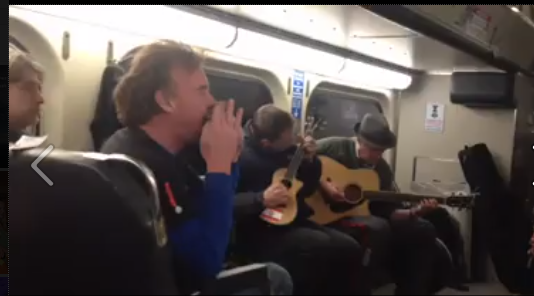
Our train car is slowly populated by people carrying musical instrument cases. There are guitars and banjos and penny whistles and contraptions that I do not recognize. They get on the train at various stops but it seems our car is the rendezvous spot. A woman named Kate joins them. She sits across the aisle and tells us that she is the singer of the group. They gather once a month and head north to Kenosha (our town) to play Irish music at a place called Pete’s. “Best fish fry in town,” Kate says as she offers us chocolate. We are now part of the family.

Just then, the man sitting in the seat adjacent to us opens his case and pulls out a banjo. A man sitting next to him asks, “Is it time?”  Banjo man nods and others pull their guitars and harmonicas and whistles from cases and pockets. A man with a penny whistle starts to play and banjo man picks up the tune. The guitars join. They know Kerri is a musician and Kate says to her, “We take requests.” They want Kerri to sing with them.

The train car is transformed into an Irish music jam session. Commuters tap their feet and applaud. A backpack filled with beer appears in the aisle. The conductor walks in and smiles. He was hoping the musicians would be on the train tonight. He accepts a chocolate, refuses a beer (“I’m on duty!”), and banters with banjo man. They seem like old friends though their entire relationship transpires on Friday night train rides to Kenosha. Banjo man invites the conductor to Pete’s and the conductor asks if they’ll still be playing at 1am when he’s off work. This is a ritual that they perform each trip. “Someday!” they both agree, knowing that it is not likely to happen. It would spoil the magic of their once monthly encounters.

By the time we reach our stop, the end of the line, perfect strangers are laughing together, sharing stories, clapping with Kate and the boys, sharing chocolate and beer, and feeling that their random choice of train car was not so random after all. The week of toil and work is transformed. I hear a man say to his seatmate, “It was a good week, I think,” and I wonder what he might have said had the musicians not opened their cases. I wonder if he’d have acknowledged the presence of his seatmate had the musicians chosen another car. Sometimes we miss the simple miracles, the seemingly small moments in which huge events occur. When was the last time in the harsh anonymity of an urban world that you put down your smart phone, turned to a perfect stranger, shared a chocolate, smiled and told them about your week? It seems so small but is in truth profound for a stranger to reach a hand across the chasm and say, “It’s nice to meet you.”

This is the power of the arts and our general inability to recognize the profound in the small moment is one reason why we misunderstand the purpose of the arts. People go to war because they cannot find a way to reach across the chasm and touch the humanity of their earth-mate. A car full of commuters went home less lonely on Friday night and a few were swept by the music into a place called Pete’s where they ate some fish fry, drank some dark beer, and celebrated nothing more than being fully alive.

Go here to get my latest book, The Seer: The Mind of the Entrepreneur, Artist, Visionary, title_pageSeeker, Learner, Leader, Creator…You.

For hard copies, go here.

Listen To The Lake

I’m learning the many moods of Lake Michigan. It seems that each day it has an entirely different character. One day it is angry and steely grey with waves crashing against the shore like an ocean. One day it is as still as a Zen meditation. Regardless of the Lake’s mood, I am drawn to the shore to engage with it. Today I closed my eyes to feel the autumn sun radiate off the surface. “Don’t get used to this,” it whispered, gentle waves lapping the shore. “I know better,” I replied and smiled. The Lake is fickle. So am I.

With each new mood comes a dramatically different color palette that ranges through greens to turquoise to the deep purples. Sometimes the color is soothing, sometimes it is electrifying, and sometimes it is an assault. I’ve come to believe that the Lake’s color functions like a mask: it sometimes reveals the Lake’s mood and sometimes obscures it. Sometimes the Lake invites people to play and sometimes like the witch in a children’s book coerces people into a trap. The Lake teaches both faith and wariness.

Standing by the Lake I am reminded of something that I read many years ago. We are mostly monotheistic so we carry the expectation that we, like our god, have a single identity and are plagued by many moods. That is not true the world over. Cultures (like the ancient Greeks) that worship many gods have no such expectation. They allow that they have as many identities as the gods they worship. Their gods are forces of nature and they recognize that those forces are alive and expressing through them. The wind, the thunder, the quaking earth, the changing seasons, the rain, the fertile fields,…, are forces personified. Their moods, their emotions, are akin to being possessed by a god-spirit. Love is a possession. Inspiration is a visit with a Muse. They need to pay attention to their relationship with these forces (they have a relationship with these forces), to stay in the good graces of the fickle gods.

I’ve decided that the Lake is one of the old gods and I need to pay attention to my relationship with it. I like the notion that it has the power to inspire me, possess me, frustrate me, and fill me with laughter. I know its sister, the north wind, has the power to refresh me or chill me to the bone and, of course, the driver of the sun chariot graces me with warmth and music.

For a humorous look at the wonderful world of innovation and new ventures, check out my new comic strip Fl!p and the gang at Fl!p Comics.

Be A Ray

[continued from Step Into The Dot]

Our shorthand, “step into the dot,” has a companion phrase: be a ray. It comes from Kerri’s son, Craig. A few years ago, when Kerri was in a particularly dark period, Craig told her that she needed to get out of her yuck cycle. He told her that, instead of spinning in her eddy, she needed to be a ray. She needed to choose to shine.

Choosing to shine begins with stepping into the dot. Remember that “to step into the dot” is to step into the present. It is to move forward in life with all the lessons but leaving the self-imposed limitations behind. The reason to step into the dot is that an opportunity becomes available from the dot that is available nowhere else. The opportunity is to shine.

A few weeks ago we got a puppy (it is more true to say that the puppy got us). It’s been a very long time since I had a dog and I forgot how much a dog wants to please. Our dog, Tripper, (a multi-faceted name: 1) from “road trip,” 2) he’s an Australian shepherd and is very good at tripping me and, 3) he is a trip as in acid trip. Zounds.) wants to belong. He wants to know how he fits into the pack. He wants to understand his world, know the rules of the pack, and he thrives on attention and positive strokes. In this way people are not so different from puppies: they want to belong. They want to know how they fit into the pack. For people, fitting in to the pack has a lot to do with the gifts they bring. People ask, “What’s my purpose?” People want a life driven by their unique purpose. When they fulfill their purpose, people thrive.

The great thing about “purpose” is that it is impossible to fulfill a purpose in a vacuum. It is impossible to fulfill a purpose without the participation of other people. Givers need receivers. Purpose is never fulfilled without impacting the lives of others. We cannot fulfill ourselves without fulfilling others. To serve others is to serve your self and vice versa. It’s a feedback loop. When we finally see beyond our personal story fog, it’s possible to see that the whole gig, all of life, is a service opportunity.

That’s what you can see from the dot. Connectivity. You see the interrelationship of gift giving and receiving. You see that every moment is an opportunity to bring your best game, to fulfill your gift. When you step into the dot, when you step out of the story fog and into the present, everything looks like an opportunity to shine. Thanks to Craig, Kerri and I have a shorthand phrase for seizing opportunity to shine. We say, “Be A Ray.”

Begin With Yourself

[continued from Don’t Give It Away]

I was going to move on to Skip’s next question but found myself meditating on yesterday’s question: What does it mean to give your power away? I wrote about HOW people give away their power but didn’t really address the question: What does it mean to give away your power? I thought about the question all night and this morning I went back to the beginning. I revisited the first 5 posts I wrote in this “truly powerful people” series. This the beginning of the very first post written 3 years ago:

Truly powerful people are dedicated to inspiring true power in others.

It goes like this: empowered people empower others.

When I wrote those words I understood – as I still understand – personal power as an aspect of relationship, something created between people. The phrase, “…give away your power” implies that power is something possessed. You have it or you don’t. If it can be given away then it can be acquired. It cannot. Power is like artistry. It is generated from a way of being. Were I to write those words today I would add this:

Empowered people empower others and thereby empower themselves.

It is a circle, a feedback loop.

So, I need to clarify my statement: giving away power is actually not possible because power is not a possession. Power is an energy that can be magnified or weakened. It is possible to drain power from a relationship, to reduce it, to shrink it, to deny it, to fear it, or to diminish it. And since power is magnified or diminished in the space between people, when “giving away power,” all are diminished.

Each of us has a relationship with our self. If you doubt me simply listen to the conversations inside your head. Who are you talking to? Who is talking? Who is listening? For the sake of simplicity, let’s just say that no one….is one. No one is unified. Singular. We are split into different roles (this split is what it means to be driven out of the Garden of Eden – it’s a metaphor of becoming separated from your self), and one of those roles really likes to judge. Listen to the phrases you say to yourself: “I’m good enough/not good enough.” We like ourselves. We dislike ourselves. Who does the liking? Who does the disliking? The point is that you are in a relationship with yourself.

The process of empowering the self is the same process as empowering others. Empowerment begins when we cease attempting to get power from others and create it within ourselves. Sometimes seeking power from others looks like seeking approval, sometimes that looks like seeking attention, often it looks like trying to control. It sounds odd, doesn’t it? Why would you need to seek attention from your self? How often have you said the phrase, “I didn’t listen to myself?” How often have you invested in your self-doubts? When you withhold your voice, you are controlling your self. When you attach to the notion that you should be more like others, you are negating your self. All of these are examples of “giving away your power.” And, to be more accurate, it is impossible to give away your power but it is infinitely possible to give away OUR power. We are all in this together.

[…to be continued]

For a humorous look at the wonderful world of innovation and new ventures, check out my new comic strip Fl!p and the gang at Fl!p Comics.

Don’t Give It Away

[Continued from Paddle Two Rivers]

Following his questions about 1) variability in actor performances/entrepreneur pitches and 2) the fragmenting nature of poor leadership on a team, Skip’s next question referred to this phrase from my post, Step Onto The Field:

Entrepreneurs, like actors, are more likely to meet success when they cease giving away their power and show up as they are.

He asked a question that lives at the center of much of the work I do with artists and clients: What does it mean to give away your power? He wrote, “… it’s like each sentence in this piece [this post] needs a story.”

I laughed because the flipside of this particular question is the reason I started writing in the first place. Three years ago I was working with a corporate team and they asked, “What does it mean to be powerful?” The notion that we explored that day is that power is something that you create with others. No one is powerful by them self. Great teams empower each member. Great leaders empower their community. Individuals become powerful when they offer their gift in service to their world. They empower. Power is created between people.Power is an aspect of relationship. Power is something you bring to a relationship, not something you get from it.

The word power is tricky because we most often associate it with power-over. The idea of having “power over others” is a misnomer because power over others is not really power. It is control. It diminishes. It takes from. These two concepts, 1) power is created with others (and therefore, expansive) and, 2) control diminishes, is what is necessary to explore Skip’s question. How do people give away their power?

If you are telling yourself a story of “I can’t…,” you are controlling/diminishing your potential. You’ve given away your power.

When you think someone else is responsible for your happiness, you’ve given away your power. You are seeking something from another person that you can only find in yourself. You are looking for what you can get. What would life look like if you believed the responsibility for creating your happiness what yours? Happiness follows. It is something you bring.

If you are invested in comparisons with others, you’ve given away your power. In a comparison the other person will always be the standard – and you can’t be them. Power returns when you bring yourself to the game without squeezing yourself into someone else’s identity. Power returns when you are the standard for your self.

If you bite the apple of perfection, you’ve given away your power. Perfection is subjective. Whose standard of perfection are you trying to meet? Most perfectionists will claim that they are the keepers of their own standard but betray themselves when someone criticizes their work. They are invested in the accolades of others. Generally, notions of perfection are really strategies of control. The rule of power-over works the same within an individual as it does within a country or an organization. Wielding the sword of perfection over yourself can only happen if you are already divided.

Another control strategy is to tell your self a false story, like: “I’m not an artist until my paintings sell.” False. Artists make art. The selling of art does not legitimize the artist. Selling is something else entirely. According to this silly scenario, poor Vincent Van Gogh was never an artist in his lifetime. False stories are great tools for justifying the relinquishing of power.

There are many variations on the theme – all apply equally to entrepreneurs, artists, plumbers, CEO’s, and tooth fairies. The general rule is this: you give away your power when you diminish yourself (I can’t), assign responsibility for your feeling to others (I have to, I should do), float through life looking for what life owes you (I’m entitled), or otherwise try and control your potential (how will I look if…). If you’ve eaten from any of the above orchards – and we all have – tell me the story and I will forward it to Skip. He’s correct: each sentence in this blog thread deserves a story.

[to be continued]

For a humorous look at the wonderful world of innovation and new ventures, check out my new comic strip Fl!p and the gang at Fl!p Comics.