What Do You Value?

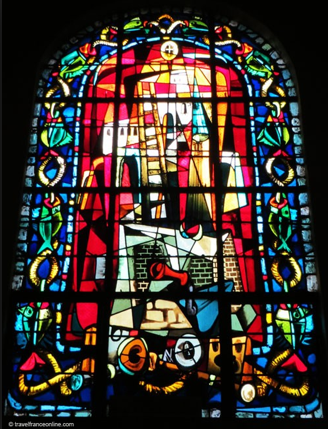
One of the windows by Max Ingrand at Saint Pierre de Montmarte

One of the windows by Max Ingrand at Saint Pierre de Montmarte

What has value? What has merit?

Or, here’s a better question: What is value? What is merit?

During our travels I looked at a lot of art and architecture from across the centuries and across many different cultures. There is a very old church, Saint Pierre of Montmarte, one of the oldest in Paris, seated adjacent to Sacre Coeur high on the hill overlooking the city. This ancient church has been outfitted with stained glass windows, designed by Max Ingrand, that I can only describe as cubist. The collision of ancient church and modern window is breathtaking and perfect. The windows were so beautiful (to me) that they brought tears to my eyes. It was hard for me to leave the church as I was so taken by the windows yet I was also aware of the number of people moving through that were not impacted at all. Later, I entered Sacre Coeur and felt nothing. To me, it was impressive, impersonal, and left me cold – yet I watched others catch their breath with its scope and grandeur. They were moved to tears.

Is value purely personal and subjective?

I remember listening to a recorded lecture by Joseph Campbell. He said that you could tell what a society valued by the buildings constructed in the city center. For centuries, churches occupied the village center. Financial institutions occupy our village/value center. Is value an agreement? Is it a focal point of worship? Take a gander at the titles in the local bookstore and you will find that money, morality, spirituality, and success are odd bedfellows. Is a good life richly lived demarcated by the size of a bank account? Tourists in the distant future will visit the holy sites occupying our village center and read placards about what we valued.

Near Sacre Coeur is the cemetery at Montmartre. We descended the hill to the cemetery and walked the paths through the monuments and graves. They fascinate me. They are essences, value statements distilled to a thick concentrate of marble and stone. There are angels and gargoyles, draped figures in repose and riders of the apocalypse. There are statements: loving father, devoted mother. There are roles: composer, writer, soldier, painter, baker, philosopher, politician. The famous are interred next to the ordinary. In a cemetery, all lives are even. Standing amidst the graves I see lives lived, dreams dreamed and realized or unrealized, and I wonder what each person valued during their allotment of days, and what they valued on the very last day.

Value is relative and passing? An extraordinary moment, when conscious, is valuable.

This is from Rumi: Spirit is so mixed with the visible world that giver, gift, and beneficiary are one thing. You are the grace raining down; the grace is you.

Value is grace? You? What surrounds you?

Go here to get my latest book, The Seer: The Mind of the Entrepreneur, Artist, Visionary, title_pageSeeker, Learner, Leader, Creator…You.

Have The Conversation

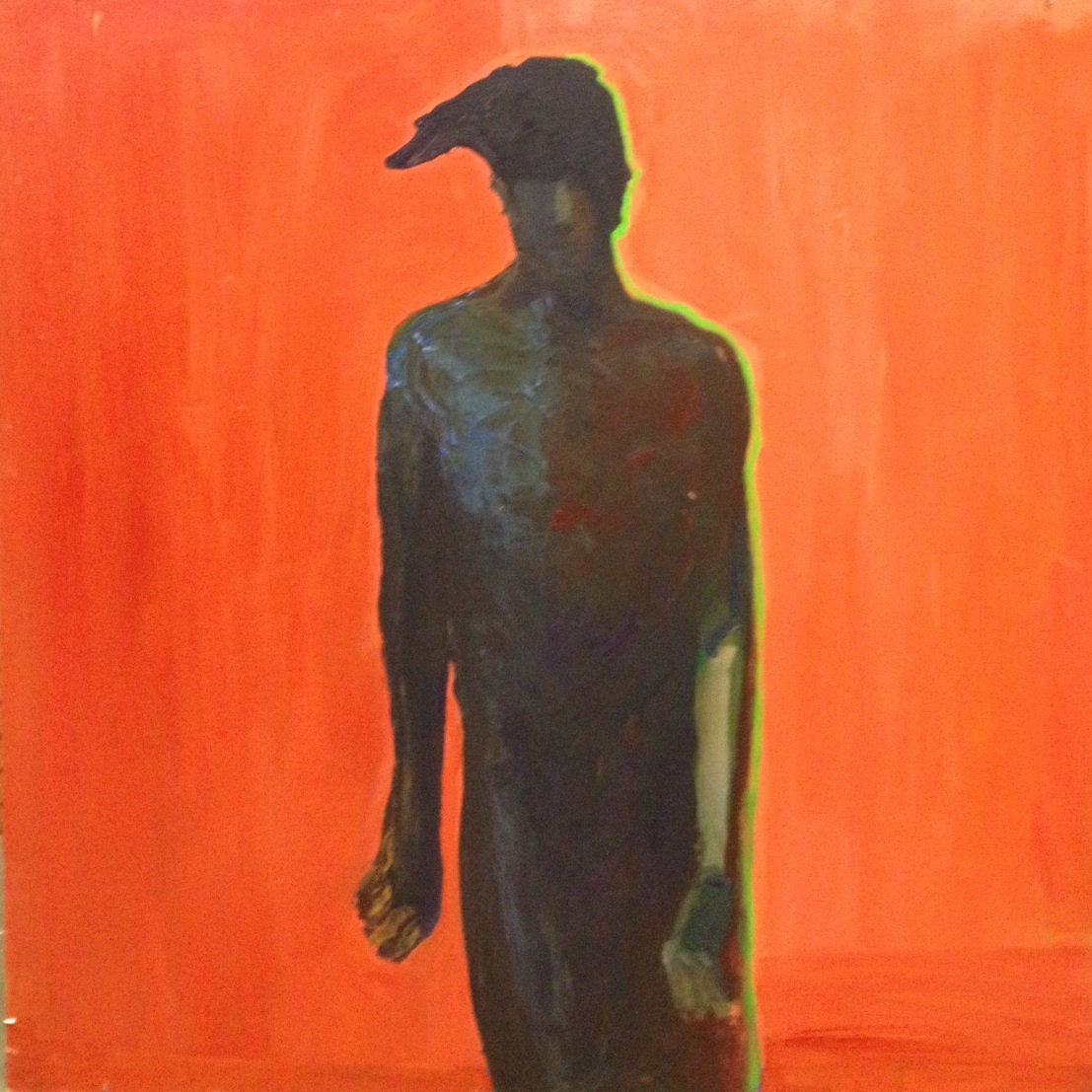
A painting I did twenty years ago of my dad. I call him Columbus.

A painting I did twenty years ago of my dad. I call him Columbus.

When Bob died I wrote his wife, Ruby, a note saying that I’d give anything to have another conversation with Bob. Just one more conversation.

When Jim wrote to tell me of Doug’s passing, we had an email exchange.

I signed off the email with this phrase: “Yet another conversation I will never have….” Jim answered with a warm reminiscence of Doug, a recounting of their meeting as young teachers, watching Doug navigate and ultimately heal the psychological wounds from war. Jim signed off with this thought:

War is not just hell.  It is eternal hell.  Particularly for those with first hand experience. Why the race continues to tolerate it may be the greatest mystery. Another conversation I will never have with Doug.

I remember in vivid detail the last conversation I had with Tom. He was already sliding into the hell of his dementia and knew it. He desperately wanted to tell me a story, something that was vitally important for me to know though he did not know why. I sat attentive in his small cabin home as he told me the story of the lost boy, a story that together we’d spent years developing into a play. I’d heard the story a thousand times and he no longer remembered. He forgot everything but the imperative to tell me the story, to transmit the history to me. So we enacted the ritual as our final conversation.

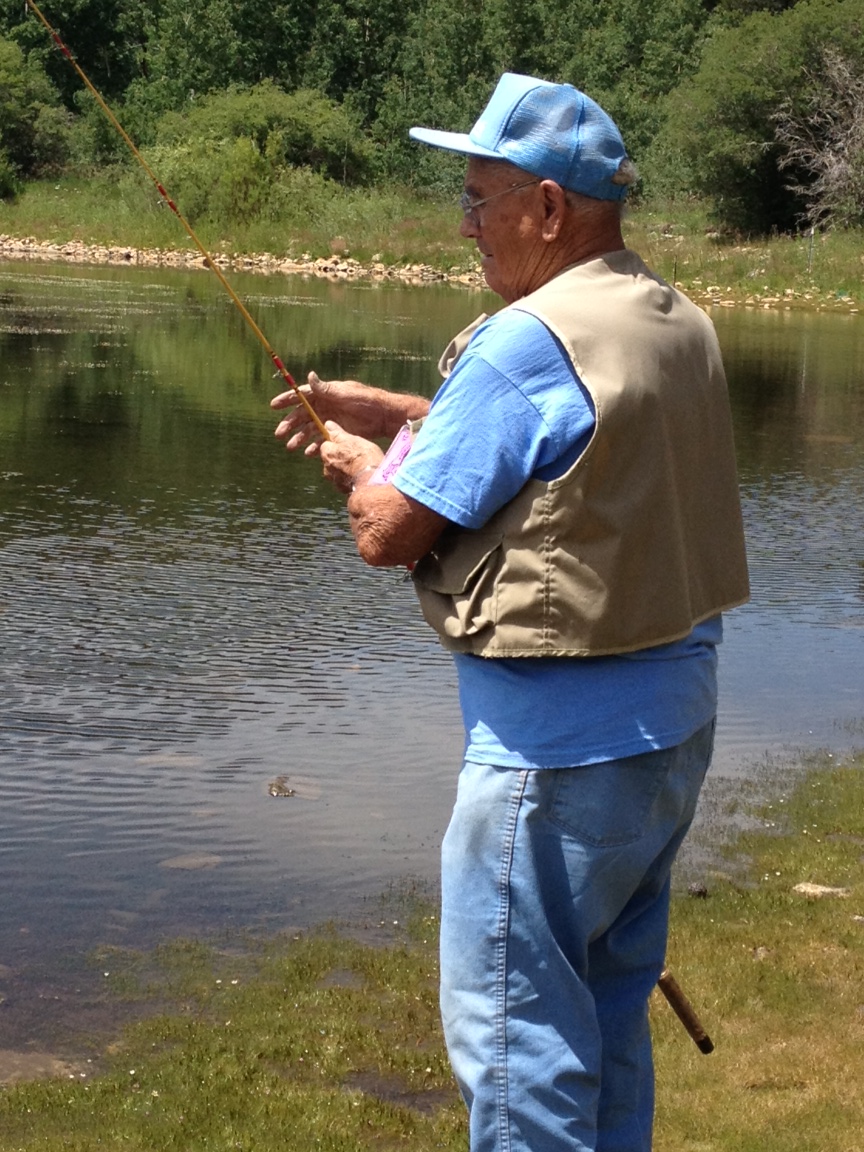
Columbus fishing at his 80th birthday celebration.

Columbus fishing at his 80th birthday celebration.

Many years ago I traveled home to spend time with my dad. I wanted to know who he was and felt as if I’d missed it, as if I didn’t really know the person behind the role. He was generous and vulnerable and spent three days with me answering all my questions, sharing the inner sanctum of his thought and being. It was the greatest gift I have ever been given and, at the same time, the greatest gift I have given myself: I asked if he would spend time with me.

One of the things I learned during those days with my dad is that there will always be the yearning for one more conversation. There is no bottom to the magic and mystery of the people that we love and who give order and richness to our world. This year I am learning that although there will always be the yearning for just one more conversation, there will of necessity be a last exchange. And, because that is an inescapable truth, there is nothing more important on this earth than to take the time, make the space, to ask, “How are you doing? What’s happening in your world?”

title_pageGo here to get my latest book, The Seer: The Mind of the Entrepreneur, Artist, Visionary, Seeker, Learner, Leader, Creator…You.

Or, go here for hard copies and Kindle.


Share A Poem

An old painting from my archives. This is "Hermes."

An old painting from my archives. This is “Hermes.”

One day, out of the blue, Doug came out of his office, stood at the door to my office and asked me to follow him. Doug was a bull in a china shop, gruff on the best of days, and his request was more of a command than an invitation. He’d spent his early life in the military, did two tours in Vietnam, and a piece of him was still fighting that war; the rigor, structure and discipline he’d acquired as a soldier was still saving his life. I’d worked with him long enough to know that he was soft to the center. Doug was a big heart wrapped in pit bull clothes.

I followed him back to his office and he asked me to close the door, a sign that usually meant battle was to ensue. I closed the door and sat opposite his desk, curious that the lights were off. The dim room was illuminated by a single thin window partially obscured by a bookcase. He sat. He took a deep breath and looked around as if he was worried that others might be listening, and said, “I want to show you something.” He took another breath, slid open the bottom desk drawer, and pulled out a book so worn and deteriorated that it was barely recognizable as a book. I knew immediately what it was and caught me breath. “I want you to see this,” he said. I gently held the tattered brittle pages and read the first poem in the book and, as I read it, Doug recited it. Tears came to my eyes.

I’d heard the story of the book many times. Doug told the story when he was in pain, when one of his students was self-destructing or when he was once again standing at the edge of his own personal abyss, a place that was never far away. He told me the story each time he was trying to find a shred of humanity in his very dark world.

When Doug was on his way to his first tour in Vietnam, he was not yet 18 years old, he was angry and alcoholic, and for reasons he could never explain, he stopped in an airport bookshop and bought a book of The World’s 100 Greatest Poets. When telling the story, Doug would say, “I’d never read a poem. I hated poetry! I was nearly illiterate! But I bought that book and stuffed it in my bag.” He told me that the guys in his platoon teased him the first night he brought out the book of poetry and read it. Initially he read the poems aloud to bother his mates. They’d shout and throw stuff at him. Every night he read poems aloud. Soon, after the horrors of the day, after the fears of being killed or having killed, they asked him to read poems to them. They had favorites. They made requests. They talked about what the poems meant. They asked him to find a good poem to send to their loved ones at home. Over the year, Doug learned to recite by heart each one of those poems.

Doug told me that poetry saved his life. The book saved his humanity. That day in his office we spent nearly an hour reading poems to each other; each poem had a story, a memory. He told me that people don’t understand the reason for art, the necessity of poetry. “It’s not a luxury,” he roared, “it’s the goddamn center.” He carefully placed the book back in the drawer and pushed it closed. I thanked him for sharing it and he waved me off. The moment had passed; he closed the drawer on his sharing, too. It was too much.

That day was nearly twenty years ago.

Doug Durham

Doug Durham

Jim sent me news that Doug passed away this week. The last time I saw Doug he showed up at my apartment in Seattle just as he’d showed up at my office door: out of the blue. He sat in my living room for fifteen minutes, fidgeting, unable to sit still. “I just wanted to see you!” he trumpeted. “I wanted you to see that things are good with me!” He was deciding whether or not to open that metaphoric desk drawer. He had something to share or say but had not yet decided whether it was the right time. He had cancer even then but was on top of it.

“Well!” he announced, standing, “it was good to see you.” I asked him what he wasn’t saying and he gave me the “be careful” look. He wasn’t ready and I knew better than to push him. “Stay in touch.” I said, as he climbed into his big red truck. “You know better than that!” he smiled, waved, and drove away.

Go here to get my latest book, The Seer: The Mind of the Entrepreneur, Artist, Visionary, title_pageSeeker, Learner, Leader, Creator…You.

Or, Go here for hard copies.


Join The Story

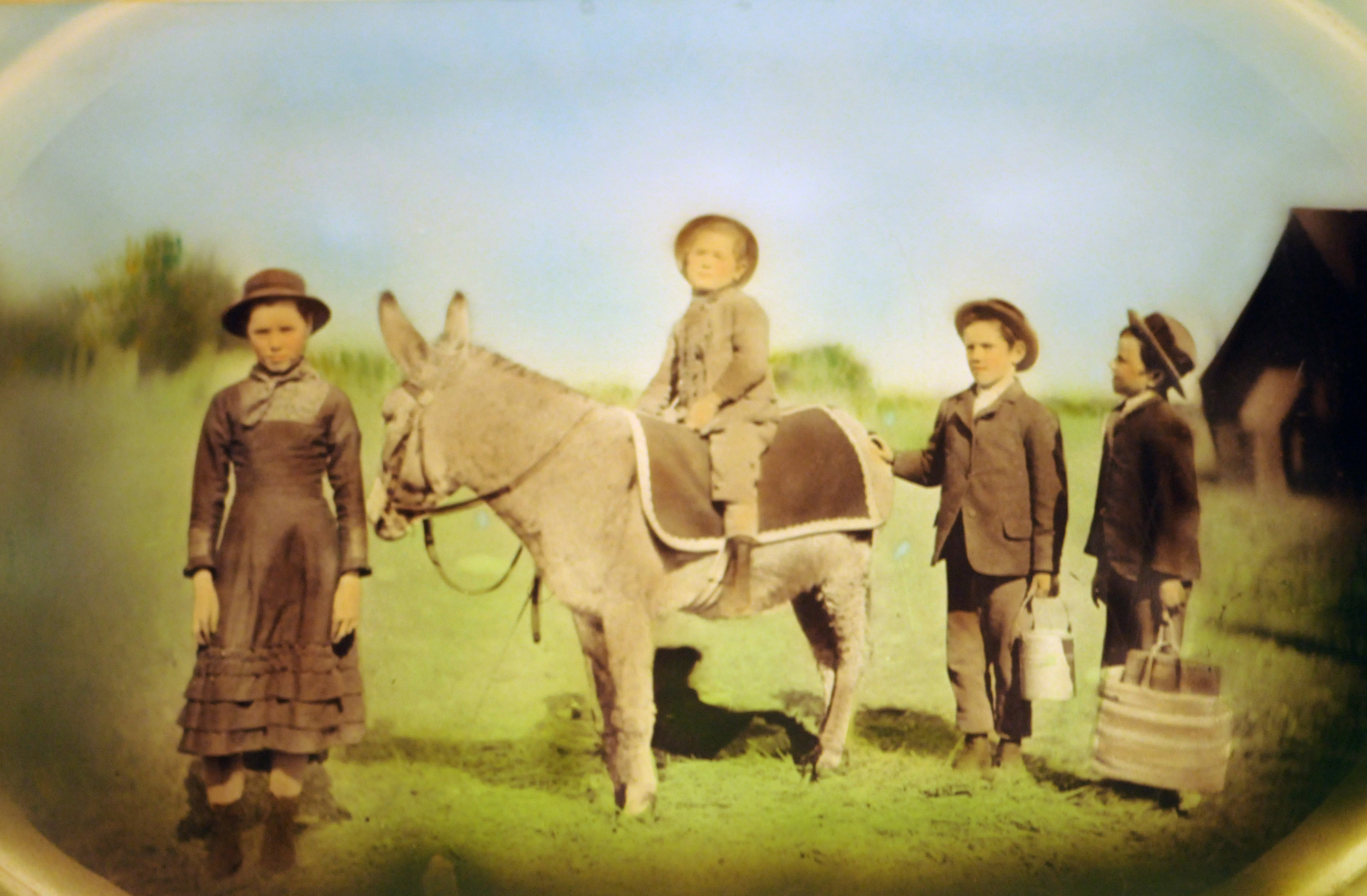
Johnny is sitting on a mule named Old Abe. This was taken a few months before he died.

Johnny is sitting on a mule named Old Abe. This was taken a few months before he died.

Yesterday I finished the final edit/redraft of The Lost Boy. It is a play I began years ago based on interviews with Tom. Late one night while I was visiting him at the ranch, he asked me to help him. “Do what?” I asked. He shrugged his shoulders. He didn’t know. He felt that he had an obligation to an ancestor, his great grandmother, Isabelle, and he felt as if he’d not yet met his obligation. In 1885, Isabelle had a son that died. His name was Johnny and he was only ten years old. Isabelle carefully packed a trunk with all of Johnny’s worldly possessions, she wrote notes, and when no one was looking, she hid the trunk in the walls of the ranch house. She told no one. Tom found the trunk 100 years later.

We decided that his obligation was to tell Johnny’s story. We decided that Isabelle wanted to somehow keep the memory of her son alive but her method was a mystery since she told no one about the trunk. Tom shared the trunk with school children and historical societies but somehow felt as if he had yet to fulfill his obligation to Isabelle. Our idea was to create a play. I would interview Tom and write the piece. He would perform it. Along the way a terrific band, Mom’s Chili Boys, composed and compiled music from era.

We had a play with music. We’d solved the mystery of why Isabelle plastered the trunk into the walls. We made a few attempts at doing workshop performances but the piece always stalled or something unforeseen blocked our path. During a living room read/play through, it became apparent that we missed our window. Tom was slipping into dementia and got lost during the read through. He was no longer capable of performing the play. We stopped. We let the play sit dormant.

During Tom’s decline I rewrote the play so I might tell his story. The Chili Boys were my allies and my rock of encouragement and support. They played the music at performances and told the story in a condensed version and gathered some good feedback. Once, we tried to organize another run at doing the play and it hit a wall of resistance. So, it sat for a few years in the projects-that-could-have-been pile.

When Tom passed this fall it was as if the universe that was so dedicated to blocking our path finally said, “Now.” The Chili’s have new music and it is gorgeous. In doing the rewrite I was gob smacked to realize that Tom had to pass before the play would be complete. He wondered how he might honor his obligation to Isabelle and the answer was something he never knew: he had to ask for help, not to share the story but to enter it. As it turns out, The Lost Boy is not about Johnny or Isabelle. It is about how Tom found his way home.

Go here to get my latest book, The Seer: The Mind of the Entrepreneur, Artist, Visionary, title_pageSeeker, Learner, Leader, Creator…You.

Or, go here for hard copies.


Smile In Secret

Taking the Sealy for a  test drive.

Taking the Sealy for a test drive.

I never had children so there are certain ritual passages that I’ve never experienced. In my life I’ve ushered a legion of other people’s children through various thresholds so it was surprising how Craig’s Facebook post today struck me. I saw him just last week. We had a late night dinner in Nashville, Indiana and I spent much of the evening secretly smiling. He was different. He’d made the passage and was standing firmly in his independence.

In his post today he wrote, “ And with that final, I’m officially a college senior.”

His passage, like all worthy passages, did not come easily. Nothing worthwhile ever does.

Last August, I helped him move to a new university. We packed the truck and drove out of state. Together, along with Josh, we carried his enormous couch and all the other stuff in the truck into Craig’s first-ever apartment. We helped him set things up and then he needed Kerri and me to go. He needed to be on his own. He needed to step into the unknown places and get lost.

Over the year I was witness to how he got lost, met a multitude of fears and frustrations head on, and how he stood in the fire with all of it. It shouldn’t have surprised me that it transformed him. I know how transformation works and yet this time I was somehow too close to fully see.

Over the year I’ve talked with Craig through the night and into the wee hours about socialism and the difference between a plan A and a plan B. We talked about sarcasm and life without having to push other people under water to feel powerful. We’ve talked about true power. We celebrated Thanksgiving and Christmas. On a freezing cold day in December we tromped through a farm and picked out a Christmas tree that I dubbed Satan because the needles were like daggers. I’m still finding those needles in my socks. We smoked cigars and he made a mixed drink for me called something I can’t remember (a testament to the potency of the concoction); it was awful. We laughed and drank it anyway.

I learned to play Apples to Apples when he came home for a surprise visit. We sat around the table into the wee hours with Pierre and Kirsten and Josh and laughed about anything and everything.

He inspired a week of posts when he asked me a single question and I suspect it will not be the last time.

Last week when he met us for dinner at Uncle Bill and Aunt Linda’s house in the woods of Indiana, I couldn’t believe the chatty, funny, informed, strategic, considerate man sitting across the table was the same boy I drove to college in August.

Craig’s post came on the day after I lost one of my champions: Bob. He was a man who made his own destiny and I think Craig will do the same. I wished that the new college senior had met the man who ushered me through so many of my life’s passages. They are cut from the same cloth. I wanted to write Craig and tell him, “You have no idea how many people are cheering for you.” I wanted to welcome him to the other side.

Go here to get my latest book, The Seer: The Mind of the Entrepreneur, Artist, Visionary,title_page Seeker, Learner, Leader, Creator…You.

Go here for hard copies.


Hide The Horse

from my archives. This one is called 'Angels At The Well.'

from my archives. This one is called ‘Angels At The Well.’

I first learned this story prompt from Rick Stone at The Storywork Institute: I come from a people who (fill in the blank), and from them I learned (fill in the blank).

Rick’s story prompt was with me when I awoke this morning because I’ve lately been thinking about my grandma Sue. Kerri and I just started rehearsals on our Back To Center concert series and for some reason Grandma Sue has been present when we rehearse. She passed away several years ago and I adored her. She was small in body but big in spirit. Over the weekend my mother said of her mother, “She took everything in stride and adapted to whatever came her way.” Grandma Sue did not resist her lot in life, she made the most of it. She had fun. She created fun.

I’ve been rolling over and over in my mind a specific story about her that happened before my time on this planet. The shorthand goes like this: the glue factory was coming for an old horse that lived in the pasture next to her house. She knew the truck was coming so she hid the horse in her kitchen.

I grew up playing in her house. I know her kitchen. What makes the story miraculous to me is that 1) her kitchen was teeny and 2) you had to climb some stairs to get from the back door into her kitchen. This tiny woman managed to get an old horse through her back door, make a right hand turn, and climb some very narrow stairs. And then she “hid” it from the owner and the glue factory search team.

I do not doubt the truth of this story for a moment and if you knew my Grandma Sue you would not doubt it either. She was a champion for the underdog, a lover of the small moment, a believer in the extraordinary in the ordinary. She lived from her heart and not her need to make sense. What do you do if the sweet old horse next door is in imminent danger? Anything you can.

This morning, as I awoke, I was again thinking of my Grandma Sue and Rick Stone’s prompt came to me. I smiled because I come from a people who act on what they believe- against all odds. And from them I learned moxie and perseverance.

Go here to get my latest book, The Seer: The Mind of the Entrepreneur, Artist, Visionary, title_pageSeeker, Learner, Leader, Creator…You.

Or, Go here for hard copies.

Give Yourself Some Advice (2)

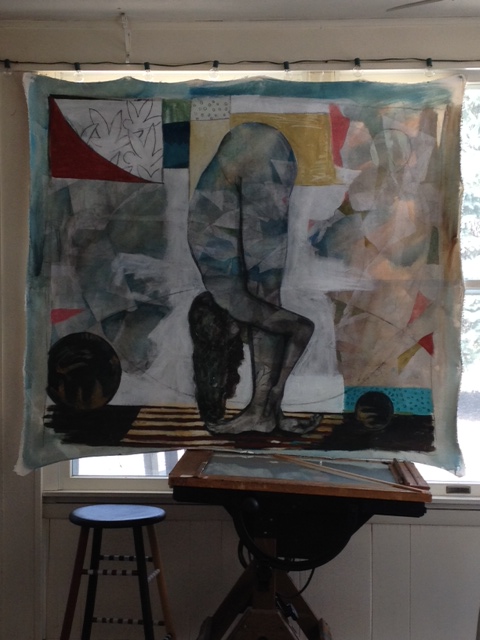
Finishing a painting is really about having a conversation with yourself. This one is talking!

Finishing a painting is really about having a conversation with yourself. This one is talking!

[continued from Give Yourself Some Advice]

Here’s the next bit of an email Horatio sent to me with his Advice To Myself. He wrote it following a question from a reporter about advice he’d give to emerging filmmakers. I am particularly fond of this section as many of my teachers, mentors, and guides are now passing away and I am revisiting what is mine to add to this “ancient conversation.” Here is the next section of Horatio’s advice to himself (for the full text, visit his blog at www.fidalgofilms.com):

Respect the boundaries of others; do not seek to control anyone else. You can only control your own choices.

Learn and honor with absolute integrity your own boundaries so that others may not try to control you or your work. Unfortunately, this is usually only learned through a certain amount of trial and error. 

Learning to trust is an art, and absolutely necessary. Learn to trust yourself first. Learn to trust others.

Always respect the tradition of your work, its ancient human conversation.

Connect to tradition, to all your teachers and your teachers’ teachers. Give yourself to it so that it can give to you and to your work. Honor it with rigor and doubt, with hours and hours of study and practice.

Then let your teachers go, follow the path that you understand as truth. You will know it when you see it. It will be your part of the ancient conversation. Likely, you will find that parts of one or two of your teachers have become part of you.

If you do not let your teachers go, your part of the ancient conversation will not be yours, but rather what you think other people want you to add to the conversation. That is not from you and only clogs up the conversation.

[to be continued]

Horatio asks great questions: What is the tradition that you carry forward? I follow the line of Tom and Marcia McKenzie, who learned from DeMarcus Brown, who learned from Eva Le Gallienne, who learned from…. What teachers/teaching do you need to let go?

Go here to get my latest book, The Seer: The Mind of the Entrepreneur, Artist, Visionary, title_pageSeeker, Learner, Leader, Creator…You.

Or, go here for hard copies (Amazon)


Give Yourself Some Advice

Horatio as a young man

Horatio as a young man

A few days ago I received an email from Horatio. He is an amazing filmmaker and gifted visual artist. We’ve wiled hours and days away talking about art and acting. He’s a treasure. His email was advice that he wrote to himself, the artist (what a great idea!) and with his permission, over the next three days, I will share it in segments. If you are impatient and want to read ahead, visit his blog or take a gander at his work at www.fidalgofilms.com. Here’s his email with the first portion of his Advice To Myself:

The evening after screening The Bath at Taos Shortz Film Festival in March, 2014, a very adept interviewer with the wonderful name Tamara Stackpoole (straight from Downton Abbey or Jane Austen?) asked if I had any advice to emerging filmmakers. My answer, as I recall:

“Let your teachers go. Just tell your own truth. Learn the craft – setup and payoff, three-act structure, and so on – and learn it well. But then let it go and tell your own truth, your vision. You’ll know it when you see it.”

When I woke the next morning, I realized that I had a lot more to say, and that it amounted to advice to myself. It follows:

You only can control yourself, which means your choices. You cannot control anything else.

Choose ethically, you will regret anything else.

The foundation of ethics is to respect others. Treat others as you wish to be treated. Be humble. Pride is the foundation of all the deadly sins, according to Dante and his mentor Virgil.

Your work is the essential ingredient of your life, an expression of your choices, your ethics. 

Connection to others is the essential mechanism of ethics.

A reciprocal connection of human to human (parent/child, student/teacher, artist/audience, friend/friend, or lover/lover) is the basic means to give yourself to others and to receive from them, to further yourself and others.

You will always be learning and practicing that kind of connection. You will never be finished. 

[to be continued]

Prompted by Horatio’s inspiration, I’ve started writing my version of Advice To Myself. It’s a great exercise and amounts to yanking the blankets on what matters to you. It begs the question: what will be your legacy? What might you write to yourself?

Go here to get my latest book, The Seer: The Mind of the Entrepreneur, Artist, Visionary, title_pageSeeker, Learner, Leader, Creator…You.

Or, go here for hard copies.

Return To Life

Tripper-dog-dog-dog listens to birds

Tripper-dog-dog-dog listens to birds

I’m writing this from the choir loft. It’s gorgeous outside and I wonder what I’m doing inside on such a beautiful morning. Kerri is playing the organ for an early morning service. I’ve decided – just this moment – that the organ is an instrument for the dark days of winter. It is heavy and fills your belly like good hearty stew. Birdsong is the music of spring.

Before coming here this morning I was hanging out in the back yard with Tripper-dog-dog-dog. We were watching birds. We were listening to their worship service. He is mystified by them. They are a relatively recent discovery for him. He cocks his head sideways as he stares at them as if to say, “What the heck!” Then he looks to me to see if I’m having the same revelation. I say, “Pretty incredible, huh!” He nods in agreement (no exaggeration. really. no really).

My conversation with the stained glass window continues. The three panels of the window are, of course, the nativity on the left, the crucifixion on the right, and the resurrection in the center panel. It is the largest image. The focal point. The return to life is the center and perhaps this is the meta-point of my window conversation. Many years ago in a class on ritual and life cycles, the instructor said that each one of us would die and be reborn 12 times in the course of our lives. These mini deaths and rebirths were preparation for the main event. Energy does not die, it changes form.

The window is a perfect cycle of the seasons. Throughout the winter the window and I have been talking about the return to life. We’ve talked about birth and rebirth. We’ve talked about pilgrimages. Every life is a pilgrimage. There are long stretches of walking, rich with discovery, sometimes with achy legs and exhaustion. There are days of rest. There are arrivals and departures. Sometimes the weather is fair and sometimes not. The bad weather days make better stories; protagonists need obstacles to move things forward. Flow rarely requires lengthy recounting. Sunrise and sunset are, of course, our daily birth and death cycle, a solar pilgrimage!

Birth and rebirth is the mirror image of death and resurrection and, of course, this is the season of things coming back to life. Both are progressions, movement through the cycle of life. This cycle, punctuated by my first Wisconsin winter, is especially pronounced for me. Three weeks ago we were knee deep in snow. I can see and feel the return of life, the warmth of the sun’s return.

One year ago I was wandering, in the exhaustion phase of my pilgrimage, dropping the old knapsack; it was too heavy to carry any longer. I enacted and presided over one of my mini deaths. This morning I breathed in the cool air and watched the worship of birds. Nests are being built and I am enjoying the sweetness of life’s return.

Go here to get my latest book, The Seer: The Mind of the Entrepreneur, Artist, Visionary, title_pageSeeker, Learner, Leader, Creator…You.

Or, go here for hard copies.

Spin A Web

from the Yoga series by David Robinson

from the Yoga series by David Robinson

Quinn’s study smelled of cigarettes and books. There was always a red felt tip pen and a yellow pad for note taking or for his latest composition. Quinn didn’t type and I doubt that he ever touched a computer. He had to feel the pen move across the paper. He was a sports writer though, in truth, he was more a poet philosopher. For Quinn, sports were a path to illumination. He filled his articles with haiku, analogies to chaos theory, Michael Murphy, and George Leonard.

One day while sitting in his study, talking about athletic achievement and success, he said, “You have to cultivate your serendipity.” What a terrific phrase! Serendipity is one of those paradoxical words that imply both coincidence and destiny. So, according to Quinn’s coupling of “cultivate” with “serendipity,” we must either promote coincidences or encourage destiny. Or both.

I responded, “So, in other words, the harder you work, the luckier you get.”

“It’s more than that,” he said. “It’s much more than that. Of course you have to do your work. But you also have to share your work. You have to show up, be visible, ask lots of questions, and seek the masters in your field. You have to show what you don’t know. In fact, you have to operate from what you don’t know. There’s always a better way to make a shot or shoot a basket. To cultivate your serendipity is to never stop learning, never stop improving, never assume that you’ve got it.” He paused and then said, “What you don’t know can be an obstacle or it can be connective tissue.”

Quinn watched me take it in. I knew we were talking about more than athletic achievement. He was trying to help me. At the time, I was an accomplished introvert and was wrestling mightily with sharing my work. I had no problem painting the paintings but telling galleries about my work seemed an utter impossibility. Sharing meant I would have to talk to people. It meant I’d have to say, “This is my work and it is good work.” It meant claiming my gift beyond the thoughts and opinions of others. Quinn was teeming with blarney and always seemed at ease in a crowd though I knew even then that we shared a similar demon. He doubted his gift. He recognized my struggle because it was his struggle.

After a moment he lit a cigarette, blew the smoke and continued, “It’s like spinning a web – and the silk, the connectivity, is spun from seeking what you have yet to learn. The more you share your gift, the more you ask others what they see, the more people know about your gift, the higher the odds that a path to success will open. You have to spin the web.” I nodded my head, taking it in. I remember being daunted by what he was telling me. He leaned back in his chair, his eyes filled with mirth, and said, “Success is really about letting yourself learn; always learn.”

I nodded and stared at the floor. He took a drag on his cigarette and as he blew the smoke he added, “No one does this alone.”

Go here to get my latest book, The Seer: The Mind of the Entrepreneur, Artist, Visionary, title_pageSeeker, Learner, Leader, Creator…You.

Go here for hard copies