Make It So

Pasta. Meat sauce. Warm Bread. Wine.

Pasta. Arugula salad. Wine.

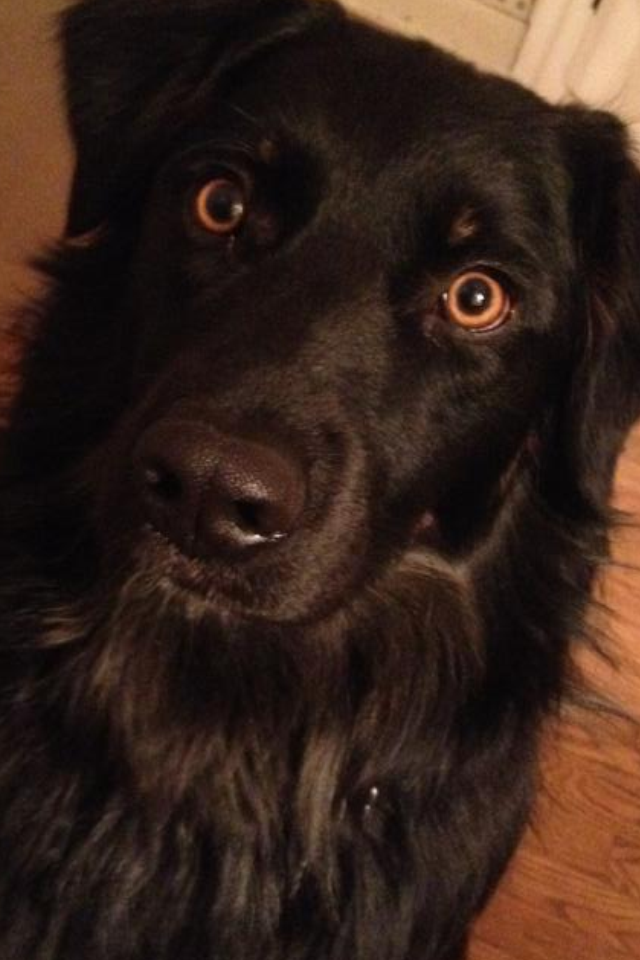
Tripper Dog-Dog-Dog knows the world through his nose. He sniffs everything. It is not uncommon after we finish a meal to come face-to-muzzle with a scent-curious Dog-Dog. Lately, as the objects of his sniffer, we’re given to staring into his amber eyes and offering the menu, saying something like, “Pasta. Arugula salad. Red wine,” or “English muffin. Peanut butter with black cherry jam. Banana. Coffee.” Satisfied with our description, he moves on to the next smell-enticing investigation.

I delight in our Dog-Dog food reports. They’ve become commonplace and matter of fact; “Chocolate chip cookie. Espresso.” Our reports never contain qualifiers, so, for instance, we never say, “A great chocolate chip cookie. Delicious espresso.” We provide the minimum, the noun.

Our Dog-Dog reports have rekindled an age-old fascination of mine: the power of words, specifically, the enormous power of the labels we attach to our experiences.

Language is a sword that cuts both ways. It can liberate and it can imprison. The difference is in how it is used. Language is the primary tool we use to make meaning. Big magic happens the day a person realizes that meaning is not something that is found, rather, it is something that is given and it is given the moment we apply a word-label to an experience. Nothing is good/bad, hard/easy until our label makes it so.

Applying a label to an experience is an act of creation. It is not passive. Take note of the word-judgments you apply to yourself or to others. For a week make a game of flipping them over and applying the label “beautiful” to where you usually apply a judgment. So, for instance, instead of, “I am fat,” why not say to your self, “I am beautiful.” Both are labels. One imprisons while the other liberates. The difference is a single word.

The label determines the possibilities we see (or don’t see). In a past life I used to facilitate organizational change and I came understand that my role was to help my clients ask better questions (use different language). They always came to the table with a “how” question: how do we change without feeling any discomfort? Response: what might you see if you stopped pre-labeling what you might feel as “discomfort?”

The mantra: have the experience first, make meaning second. And then, recognize the great capacity and opportunity you have to make meaning. Why not make a better meaning? Why not take a step and let it be a step merely?

Try this: do the Dog-Dog and, for one week, eliminate the qualifiers so that nothing is good or bad or right or wrong. It just is because you choose to make it so.

Do What Is Most Natural

IMG_0817The snows have come. The temperatures are grindingly low. Sitting at my desk, staring out the window at the world’s hibernation, I had a few thoughts about transformation. Actually, just before coming to the desk I flipped open the Bibles of Mankind for my random-thought-of-the-day. Today I landed on the Tao and specifically, this line: “By a transformation they live. By another transformation they die.”

In our births and our deaths we are all experts at transformation. In fact, in our progression through the many bodies we will in habit, the many phases we will navigate during the span of our singular life, we need not think about transformation or try to achieve it. Transformation is what we do. It happens. Track the progression of any life from infant to old age and you will witness a remarkable transformation.

I’ve just completed the first full cycle of seasons in my new home. Because it is all new to me, I’ve had the eyes to see the nuances, the profound changes in the trees, the lake, the rhythms of life including the migrations of geese. Nothing is normal (yet) so everything is special and alive. The cycle of the seasons, like the continual movement through the long body of life, is an ever-present transformation. The seasons do not try to transform; they are transformation.

People think they need to intend transformation. We seem to think we need to work at it to achieve it and somehow do not transform if we don’t marshal the process. Consciousness, like the body and the cycles of the seasons, transforms whether we intend it our not. That is the nature of consciousness. That is the natural movement of awareness.

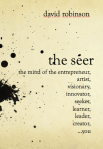
title_pageGo here to buy hard copies (and Kindle) of my latest book: The Seer: The Mind of the Entrepreneur, Artist, Visionary, Innovator, Seeker, Learner, Leader, Creator,…You.

'Dancing In The Front Yard' by David Robinson

‘Dancing In The Front Yard’ by David Robinson

Go here to get posters and prints of my paintings.

Let Yourself Dance

'Dancing In The Front Yard' by David Robinson

My painting, ‘Dancing In The Front Yard’

It is the season of the light’s return. The Equinox is only a few days away. The dark days bode of new light. It is the literal, solar-lunar cycle-dance of rebirth, the return of the sun.

The great theatre artist, Jim Edmondson, spoke of all life as a dance of giving and receiving. To give and receive are energies similar to the tides or the intake and exhale of breath. The dance requires both giving and receiving and, in truth, they are not separate but are one action, one continuous connected cycle as is chaos and order, birth and death, winter and summer, boredom and breakthrough.

All stories lead back to this dance, this source of light’s disappearance and return. Frodo wrestles with the pull of the ring, Orpheus descends into darkness to bring Eurydice back to the light, a too-early-death affords a healthy heart and new life to a stranger, a baby is born and down the hall Hospice is called, lost love leads to new love, we wrestle with our limitations and someday transcend them (or not); we dance the dance every day because, in truth, we never know what the day brings and learn that this life sparkles when with clear intention we bring our light to the day. What else?

With all of our talk of transformation and renewal, we pretend that the dance is something new, something we must intend, when it is a dance as old as time and as ordinary and extraordinary as the sun setting and rising again. It is new when we pay attention and greet each day as a new step in a very old dance, a new opportunity to give and receive. To live fully, to transform, requires nothing more than to pay attention and let yourself dance.

title_pageGo here to buy hard copies (and Kindle) of my latest book: The Seer: The Mind of the Entrepreneur, Artist, Visionary, Innovator, Seeker, Learner, Leader, Creator,…You.

Johnny crop copyJoin the campaign to fund my play, The Lost Boy


Learn To Swim

from my children's book on how to play, PLAY 2 PLAY

from my children’s book on how to play, PLAY 2 PLAY

Hoodie tells me that he is sarcastic by nature but I don’t believe it. I’ve spent a lot of time in nature and I find no sarcasm there. I also understand much about human nature and know that sarcasm is not a native plant; it is invasive. It is introduced into fertile, unknowing soil.

Sarcasm is the tool of the drowning man. It is an act of desperation to push others under the water in order to elevate the self. I’ve walked many paths and worked with many powerful and not-so-powerful people. There is a rule on the stage that applies: the king never needs to act powerful because the king is powerful. Those who need to demonstrate power have none. As Quinn used to tell me, if someone has to tell you that they’re important, they really aren’t. Sarcasm is a form of importance-telling. Powerful people create power with others. Power is a creative act. It is a communal act. They have no need to diminish or reduce others because they recognize that reduction also reduces. People who must reduce others are not powerful; they’ve confused control with power. They want to be king. They want to be seen as king. But, they do not believe they are king. Sarcasm is a form of perception control.

No one is by nature sarcastic. Sarcasm is learned in batting cages, at dinner tables, and on the field of play. Sarcasm is a mask. It is a place to hide smallness. It is passed down generationally. Masks both conceal and reveal and while it might feel good to pull others under the waves, it also reveals a non-swimmer. It is habit. It is learned.

Hoodie is not by nature sarcastic. Hoodie is a swimmer. He has the stuff of kings. He also tells me that his nature is to give comfort, to help others. He will one day realize, after he transcends his habit of drowning, that his nature to lift others is the center of his power place. Sarcasm separates him, reduces him, as do all forms of self-diminishment/control. Sarcasm is a lonely planet. Power is always a movement toward others. It is generative, as is all of nature.

title_pageGo here to buy hard copies (and Kindle) of my latest book: The Seer: The Mind of the Entrepreneur, Artist, Visionary, Innovator, Seeker, Learner, Leader, Creator,…You.

Go here to support my kickstarter campaign for The Lost BoyDSC_1196 copy


Look Up And See

Another painting from my archive. Today I call this, "The Other Side Of Yearning."

Another painting from my archive. Today I call this, “The Other Side Of Yearning.”

The fire in the fire pit was waning. The party was over and everyone had gone. We sat staring into the small flames, quiet, exhausted from the day yet exhilarated from the amazing people and conversations that filled our evening. It was a cloudless night sky and I sat back into my chair and lost myself in the stars.

Once, many years ago, I went to Kitt Peak Observatory outside of Tucson and spent a long evening looking into deep space. I saw stars and star clusters, asteroids, black holes and ice fields. We ended the evening looking towards Andromeda, the nearest galaxy to ours; it was so distant that its stars appeared to me as a mist, a shadow that shimmered. I was overcome with emotion that night. I’ve never felt so small and yet so undeniably connected. I was a universe within a universe within a universe. I was nothing and everything.

As I sat last night in my chair looking at the little points of light in the sky, I thought about all the things that seem so insurmountable on this earth. There are economies of exclusion, wars and markets that depend upon wars to prosper, slavery and drought and poverty, there are broken lives, broken hearts, and broken dreams. There are closed hearts and closed minds. There are people killing people over conflicting definitions of god. There are so many tug-of-wars over possessions and power and resources and boundaries that, from ground level, appear vital, real and important. But the moment you gaze into the night sky, the moment you place yourself in the context of the enormity, the moment you recognize the paradox of existence, the smallness of separation and the infinity of connection, you see how mechanical and rote most of our dramas really are. They are mostly made up. They are patterns of our creation. They are, each and every one, built upon the ultimate cop-out answer: we do it this way because we’ve always done things this way.

Once, in high school, I was at science camp in the mountains on the night of a meteor shower. We lay on blankets in a meadow oohing and aahing at the dance of stars happening in the heavens. I remember being awed. I remember thinking that the only real purpose people serve is to make up stories about the things we can’t explain. We are witnesses to miracles everyday and because we must somehow contain it, we reduce it. That night I understood that all belief systems were just that: systems. They are mechanisms to help us contain what we cannot comprehend. We need them to function, to orient ourselves in infinite space but forget that we invent them. In the face of the sheer magnitude of our existence, we reduce ourselves, too, and forget that what blinks at us in the night sky, is a force, an energy that transforms, and we are an expression of that force. We are part of it. Our role may be to witness, to appreciate, to interpret, to sense make, but mostly, gazing into the sky, I think our role is to recognize ourselves in it. If we are capable of losing ourselves in the stars we are equally capable of finding ourselves in the enormity of it all.

Go here to get my latest book, The Seer: The Mind of the Entrepreneur, Artist, Visionary, title_pageSeeker, Learner, Leader, Creator…You.

Or, go here for hard copies and Kindle.


Smile In Secret

Taking the Sealy for a  test drive.

Taking the Sealy for a test drive.

I never had children so there are certain ritual passages that I’ve never experienced. In my life I’ve ushered a legion of other people’s children through various thresholds so it was surprising how Craig’s Facebook post today struck me. I saw him just last week. We had a late night dinner in Nashville, Indiana and I spent much of the evening secretly smiling. He was different. He’d made the passage and was standing firmly in his independence.

In his post today he wrote, “ And with that final, I’m officially a college senior.”

His passage, like all worthy passages, did not come easily. Nothing worthwhile ever does.

Last August, I helped him move to a new university. We packed the truck and drove out of state. Together, along with Josh, we carried his enormous couch and all the other stuff in the truck into Craig’s first-ever apartment. We helped him set things up and then he needed Kerri and me to go. He needed to be on his own. He needed to step into the unknown places and get lost.

Over the year I was witness to how he got lost, met a multitude of fears and frustrations head on, and how he stood in the fire with all of it. It shouldn’t have surprised me that it transformed him. I know how transformation works and yet this time I was somehow too close to fully see.

Over the year I’ve talked with Craig through the night and into the wee hours about socialism and the difference between a plan A and a plan B. We talked about sarcasm and life without having to push other people under water to feel powerful. We’ve talked about true power. We celebrated Thanksgiving and Christmas. On a freezing cold day in December we tromped through a farm and picked out a Christmas tree that I dubbed Satan because the needles were like daggers. I’m still finding those needles in my socks. We smoked cigars and he made a mixed drink for me called something I can’t remember (a testament to the potency of the concoction); it was awful. We laughed and drank it anyway.

I learned to play Apples to Apples when he came home for a surprise visit. We sat around the table into the wee hours with Pierre and Kirsten and Josh and laughed about anything and everything.

He inspired a week of posts when he asked me a single question and I suspect it will not be the last time.

Last week when he met us for dinner at Uncle Bill and Aunt Linda’s house in the woods of Indiana, I couldn’t believe the chatty, funny, informed, strategic, considerate man sitting across the table was the same boy I drove to college in August.

Craig’s post came on the day after I lost one of my champions: Bob. He was a man who made his own destiny and I think Craig will do the same. I wished that the new college senior had met the man who ushered me through so many of my life’s passages. They are cut from the same cloth. I wanted to write Craig and tell him, “You have no idea how many people are cheering for you.” I wanted to welcome him to the other side.

Go here to get my latest book, The Seer: The Mind of the Entrepreneur, Artist, Visionary,title_page Seeker, Learner, Leader, Creator…You.
Go here for hard copies.


Bang On Stuff

from Lucy & The Waterfox by David Robinson

from Lucy & The Waterfox by David Robinson

John said, “The real challenge is how to help people across the ‘I can’t’ line.” What a great phrase! I imagined myself drawing a line in the sand while my imaginary inner-voice shouted, “Don’t step over this line!”

“Everyone has an “I can’t” line.” John added, “The challenge is never the external stuff. It’s the stuff in our heads that stop us.” Too true!

John is a terrific drummer and extraordinary teacher. He told me that many people come to the drums from the place of, “I can’t” and his job is to hold their hand as they cross the threshold. “Of course they can,” he said, “they just need to know it.”

“How do you do it?” I asked. “How do you help them know it?”

“I have them bang on stuff and I bang on stuff with them.” He smiled.

In other words, gets them to experiment and play. When experimenting, there is no line between can or can’t. It’s a unified space called, “Let’s see!” In play, there is no need for achievement or expertise; there is only play. Bang on stuff and see what happens: it is a great definition for artistry. It is beginner’s mind.

In Austin Kleon’s latest book, Show Your Work, he suggests that we be intentional amateurs. He writes, “Amateurs are not afraid to make mistakes or look ridiculous in public. They’re in love, so they don’t hesitate to do work that others think of as silly or just plain stupid.”

If you desire to step across the “I can’t” line, embrace your inner amateur. Work for the love of your work and not the need to impress or “do it right.” Bang on stuff. Make messes. As Skip says, “Put a stake in the ground and then test it.” Pull on the chain. Walk through the door. Ask questions. Try a new technique. Invent a new technique.

In a bizarre and beautiful chapter in my life I was given a full ride scholarship for a masters degree in costuming. I’d never touched a sewing machine and was a danger to myself and others when trying to cut things with adult scissors. “Why not!” I said to myself and I went for a year. After turning in my first assignment in costume construction, the professor hugged my muslin mess to her breast and laughed, saying, “In the history of garments there have only been 7 possibilities (shirt, pants, skirt, etc.) and you have just created the 8th!” I didn’t know what I could or could not do so I did anything. It was fun. I had no “I can’t line.

John reminded me that the world’s first drum was (and is) a heart. “Everyone’s a drummer,” he said. “The day you can’t drum is the day you are dead.”

Go here to get my latest book, The Seer: The Mind of the Entrepreneur, Artist, Visionary, title_pageSeeker, Learner, Leader, Creator…You.

Go here for hard copies.


Serve Life

Untitled by David Robinson

Untitled by David Robinson

I’m writing language for a website. In the past my website reinventions felt like an exercise of the same old cereal in a new marketing box. This time it’s different. I am a new cereal and I’m not certain that I want a box. It makes a difficult task of telling people what I do when I’m fully invested in container resistance. As I wrangled deep into the night with clever but remarkably meaningless marketing language, I had two mini-epiphanies:

1) Last year, unlike the captain of the Titanic, I sailed my ship directly at an iceberg so that it would sink. I sank the ship with all of the fine china, the gold bars and diamonds in the safe, the furniture, the clothes and fine food. It all went to the bottom of the ocean. I wanted off the ship so why would I now build for myself a new ship? I didn’t bob around in my raft in the vast ocean spearing tuna and catching rainwater so that I might someday step back on to the bridge and do it all over again. What, exactly, am I building?

2) I have tried my whole life to squeeze myself into too small of a box (as, I suspect, all of you have, too). I have worn the jacket of coach, of facilitator, of teacher, of director, of actor and waiter and painter. I am none of these and all of these. I have made websites complete with testimonials and classes, nice pictures and e-books, workshops and retreats. The process of building a site is a two-agenda process: first, locate yourself in space and time for other people so that they might find you and, second, orient yourself toward other people’s concern so they might know why they should seek you. In other words, 1) this is where I am and, 2) this is what I provide. The pronoun is “I.”

What, exactly, do I provide? I am not a plumber or a pizza maker. Every marketing person I’ve ever known has advised me to brand myself. Brand myself as what? Brands are made up. A year ago on New Year’s eve, tarot woman told me that she didn’t see a career for me. Rather, she saw lots of expression. “Brand that!” I thought to myself. Last night I reasoned, “I am not a brand.” Neither can I reduce what I do to a pithy phrase or clever visual. That’s precisely why I sought an iceberg and sank the ship!

I’m an artist (a painter and performer) and I write. I like to write a lot. At the center of all that I do is…disruption or change or spirituality or transformation, words that sound great but what do they mean on the concrete, day-to-day experience of living. I deal in heart, intuition, and soul. Great. I hold people’s hands and walk with them into their dreams. I dive with them into their past so they might let go of their story and sit solidly in their present. I help them unbuckle the weight belt of their story so they might surface for air. Brand that.

To ask, “What do I provide?” is to ask the wrong question. This question will always lead to too tight boxes.

Joe sent me some links: short films of Stephen Jenkinson (The Meaning of Death and Making Humans). Stephen Jenkinson says that humans are made, not born. He speaks eloquently about the necessity of dying to our childhood – which means recognizing that our short lives are limited. That’s the recognition necessary to grow up. We can only really fulfill our gifts when we understand the necessity to serve life, not our life. We end. Life continues. Martin Prechtel writes of his community’s male passage rituals; young men learn that they can only serve their community when they recognize their mortality. The passage ritual is meant to bring them to the realization that they are finite. Only then can they understand the imperative to serve something greater than themselves: life. Tonight in the Taize service, Pastor Tom read a passage about losing yourself to find yourself. It is the same concept wrapped in biblical clothes.

Here’s what I want to say on my site: when you are willing to stop trying to save your life and ready to start giving it, call me. No box necessary.

Go here to get my latest book, The Seer: The Mind of the Entrepreneur, Artist, Visionary, title_pageSeeker, Learner, Leader, Creator…You.
Go here for hard copies (amazon)

Eat Well

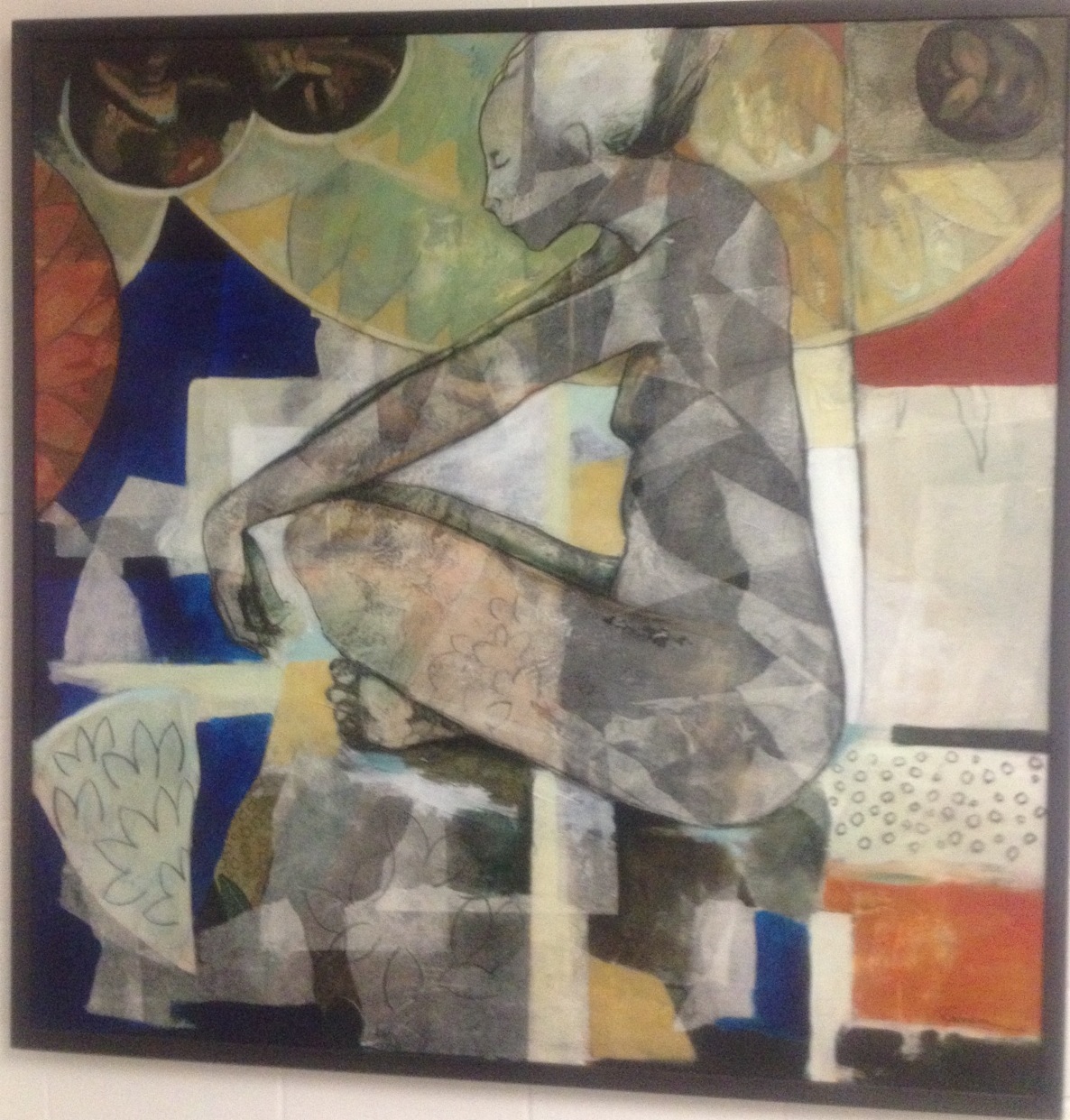
"Lovers," a work in progress by David Robinson

“Lovers,” a work in progress by David Robinson

[continued from LOOK BEYOND THE BOX]

I’m looping back to Craig’s questions concerning boxes and stages. I think the next question to wade into is about what I see from my stage and when did I know to create my stage.

This is the view from my stage. It may sound bleak at first but stay with me:

Yesterday I had the opportunity to travel into Chicago and work for a couple of hours with Skip’s class at the Illinois Institute of Technology. They are budding entrepreneurs. There’s lots of energy in the world today bubbling around this word, “entrepreneur.” Accelerators and incubators are popping up everywhere. We are now a society gorging on new technology; since we are modeled on the Rome of the Caesars we have little patience for digestion (it takes time) so we prefer to vomit what we just consumed to make room for the next course. We are living at the time of an idea feeding frenzy and mind blowing technological advances. Folks with resources but few ideas are hungry to link up with folks with ideas and no resources. Everyone is insatiably hungry. No amount of gorging will satisfy the hunger.

In our world of rabid consumption, nutrition isn’t necessarily a high priority. I mean that literally and metaphorically. For evidence, look at what the networks call “news.” Long ago we realized that entertainment is more profitable than reporting so reporting is now entertainment. It matters little if there is substance to the story so long as people consume it. More evidence: one of my favorite rants of the past decade came from Dane, a neighbor, who was sitting on his stoop eating a bag of potato chips. He called me over to look at the ingredients listed on the package. High on the list, in fact the second ingredient listed, was sugar. Dane screamed, “There’s more sugar than salt in my chips!” He fumed, “I’ve been reading the ingredient lists on everything and there’s sugar in everything. It’s more important to get us hooked than to feed us anything of substance!” Of course, the punch line to the story is that he ranted with his mouth full of chips. Another bit of evidence: I stopped counting the times I’ve heard a politician say, “We have to weigh our interests against our values.” You can find a variation of this statement in the news of the day everyday. You can find an example of it in your life each day, too. How do you weigh your interests against your values?

This consumption/nutrition question is the epicenter of confusion for lots of people. It is the reason many boxes and stages are constructed.

Most people that I work with are seeking greater meaning. They want a richer experience of life. They want to fulfill their potential. In the midst of their consumption of time, they feel consumed. They have little time to breathe. They have little capacity to develop deep, meaningful relationships. They are finding that their stuff doesn’t fill the void. They are finding that their achievements are hollow unless they serve the real needs of others. They always find that what they seek is something that they’ve had all along: relationships.

There is no magic to sustenance. Slow down and enjoy your meal: literally and metaphorically. Slow down and make the meal: literally and metaphorically. Slow down and make the meal from food that hasn’t been processed: literally and metaphorically. Care for the soil and you will grow healthy food: literally and metaphorically. This requires slowing down. All of these are about the relationship you have with your world. All rich relationships require lingering and the riches are always in the relationship. Always.

Substance is always about a relationship. Relationship can’t be consumed; it must be entered and/or engaged. Tend the relationships, especially the relationship you have with yourself. In this way, the box or stage you construct will be built from self love and self love is the wellspring of love for others.

I see riches in the relationships all around me and a species (homo sapiens) trying to remember what it means to eat from the tree of life.

[to be continued]

Go here to get my latest book, The Seer: The Mind of the Entrepreneur, Artist, Visionary, title_pageSeeker, Learner, Leader, Creator…You.

Go here to get a hard copy (it’s Amazon)

Look Beyond The Box

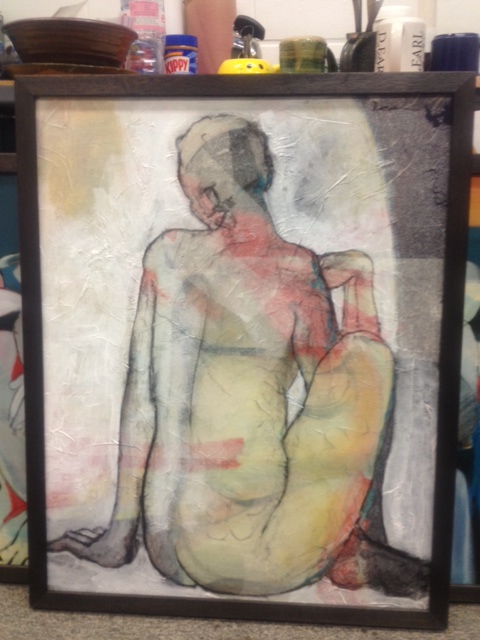
one of my paintings (untitled) from the Yoga series

one of my paintings (untitled) from the Yoga series

[continued from SEE THE BOX]

Craig’s question is bigger than a single post can accommodate. He’s both reflecting and asking several questions about the boxes people construct around themselves, about building personal “stages” and what becomes visible to us when we open ourselves to life without editor or inhibition. He’s asking deep river questions about the assumptions we make when we look at others through the lens of our own experience. He asked about what I see from my stage and when did I know to create my stage. And, here’s the kicker question, “When was the last time you stepped up and saw something you didn’t know was there?”

I want to start with the last question first because I believe it colors all of the other questions. At this point in my life, there isn’t a day that passes that I don’t see something surprising or new. I know that sounds like a superficial dodge until you consider that it wasn’t always the case. Like everyone else, I was schooled in a long series of mistaken notions: 1) that people need to know where they are going before they go there, 2) people need to know what they are doing before they do it, 3) knowing is something that happens in the head, and 4) that truth is singular and knowable; believers in right/wrong paradigms are especially fond of this point.

It took a few years (okay, decades) to realize that “knowing” is a process and not an arrival platform and, therefore, no body knows. People build boxes around themselves because they think they must know what is unknowable. People build boxes around themselves because they think they must look a certain way or think what others want them to think. People build boxes around themselves in an attempt to control what they can never control. No one really knows where they are going (well, everyone knows where they are going but dying is an existential question – a topic for another post). No one knows what tomorrow will bring. As Marshall McLuhan wrote, people step into the future with their eyes in the rearview mirror. We make sense of today through yesterday’s eyes so we can only “know” what happened, not what will happen. The day before September 11, 2001 people walked into airports to greet their friends and relatives at the gate. And then, the very next day, like millions of people, I sat in front of a television and watched a plane fly into the World Trade Center. That day I understood that what I thought I knew was basically useless.

Each of us has, at one time or another, had a personal September 11th. People learn. They grow. They have experiences and then make meaning of their experiences. People change. Life is a moving target. At one point in my life I started my own school within a school. It was experiential and filled with filmmaking and theatre and performance art. At the beginning of that era of my life I thought I would run that school until I the day I died. Three years later, I was done with my exploration in education and I surrendered my cushy tenured position and ran for the air of uncertainty. People story themselves according to inner imperatives through lenses of past experiences. The idea that we are primarily rational and reasonable is…not rational or reasonable.

At some point, when you cease thinking you know stuff, your eyes open. You see beyond what you think. Everything is surprising beyond the dull-wit of thinking. Thinking (a language-based activity) will always be an abstraction. Put a word on something and you delude yourself into thinking that you “know” what it is. This is especially heinous when applied to other people. People build boxes around themselves because of the words placed on them or the words they place on themselves.

Mostly, people build stages for the exact same reason. Saying, “I’m not going to be influenced by others; I’m going to act independent of others” is also a delusion constructed from notions of “knowing” or trying to determine how others will see you. Most stages are constructed from the desire to control. Sometimes the biggest box looks like a stage.

When you no longer need to know anything, you see surprising things everywhere you look.

[to be continued]

Go here to get my latest book, The Seer: The Mind of the Entrepreneur, Artist, Visionary, title_pageSeeker, Learner, Leader, Creator…You.

Go here for hard copies (it’s Amazon, don’t be afraid;-)