Meet The Shadow

SHADOW[I bumbled into an old bit of writing and reworked it a bit; an old post becomes new]

“The artist’s vocation is to send light into the human heart.” George Sand

The first of the Four Noble Truths of Buddhism is that all of life is suffering. In this context the predicament of the artist is no different than that of a plumber or a president though I’ve yet to find a plumber who considers suffering necessary to his or her vocation. With artists, suffering seems to be a prerequisite. Why do artists think they need to suffer or believe that suffering unlocks the door to their artistry?

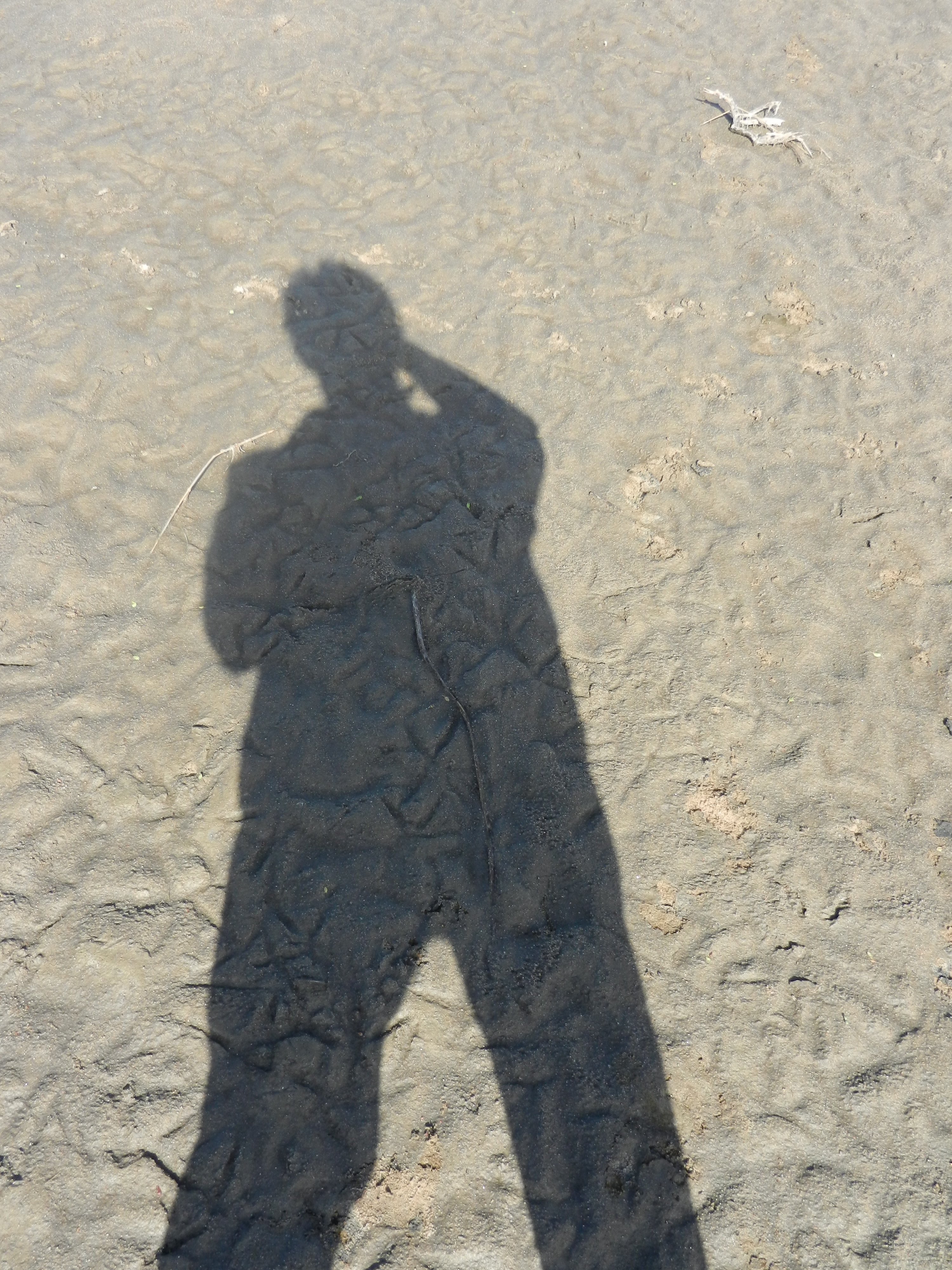
The healers in Bali are mostly artists and they believe their healing powers come after a wound. Suffering, they believe, the wound, opens them to a greater perception; it opens them to new powers. Suffering helps them walk into and get comfortable with their shadow. They learn to cease resisting their shadow and to make peace with it.

As a nation we do not easily walk into our shadow. One of the roles of “artist” is to go where others choose not to go. A walk into the shadow may be uncomfortable but it is equally as liberating. An artist is supposed to see what others cannot and sometimes that is painful. An artist may act as a bridge between worlds of perception, living on the edge of the village, traveling into the netherworlds to retrieve a truth or a lost soul. This at times may be solitary or scary but it is always transforming. An artist rarely “fits” the social norms – and sometimes that is disconcerting – but always serves the health and growth of the pack.

Artists walk into the shadow of their tribe and return with greater vision, insight, and guidance.

I love shadows – literally and metaphorically. Most stories are about people walking into their fears and fears always lurk in the shadows. Shadow work leads to an inevitable realization: you create the fear because you are the teller of the story. Recognizing that you are the teller of your own story, the interpreter of your experience, is great for releasing shadows. The walk through the shadow lands always leads to the heart and, at the end of it all, isn’t that what artistry (or life) is all about?

Go here to get my latest book, The Seer: The Mind of the Entrepreneur, Artist, Visionary, title_pageSeeker, Learner, Leader, Creator…You.
Remember Your Trick

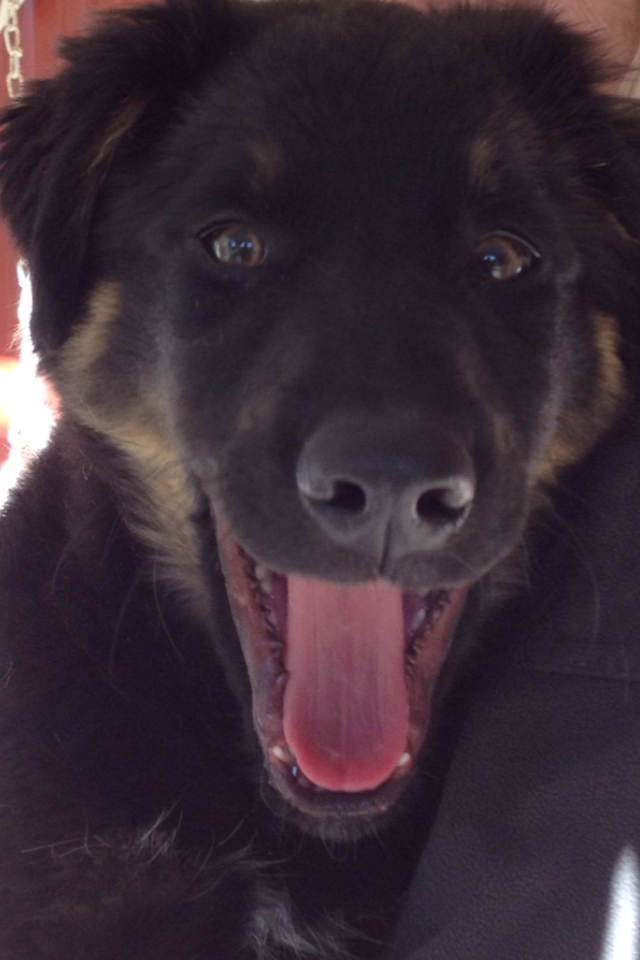
Tennessee TripperDog-Dog-Dog

Tennessee TripperDog-Dog-Dog

The newspaper is using words like “biting” or “frigid” to describe our current temperatures. My favorite was this morning’s weather paradox: sunny and bitter. Sunny and bitter sounds like an umbrella drink I might order at a Tiki bar or a perhaps a comedy team. If I had twins I’d name them Sunny and Bitter.

After standing on the deck for several minutes, making sure that the arctic winds blowing off the lake had subsided, Tripper-dog-dog-dog and I took a walk. Certain that we would not be cut in half by the wind, braving the sunny-bitter paradox, we high stepped through the snow drifts, stretching our faces to reach the sun. It was glorious. It was not as advertised: sunny, not bitter.

It had been more than a few days since we could venture out and Tennessee Tripper-dog-dog-dog was eating the baseboards, chewing on cabinets, and pacing from door to door. We’ve been teaching him tricks to keep him occupied but he’s a fast learner and mostly bored with “stay” and “shake” and “roll over.” When I realized that I was pacing door to door with dog-dog-dog I knew that advanced cabin fever was setting in and we needed to run (he runs and I watch but it sounds better if I use the royal we. I like making you imagine that I am fit and running through the arctic snow with the dog-dog).

As I stood in the field, face to the sun, watching him romp and run, I had one of those moments that I am certain will appear in the slide deck that will move through my mind’s eye at the moment of my death. All of my stories dropped away; all of my senses flung wide open. There was the cold air and the warm sun and the sound of Trip leaping and playing in the deep snow. There was the sound of ice clacking in the lake, squirrels cursing in the treetops.  I had no past and no place to be. I had no cares or desires to distract me. I was present. I was there, fully alive.

I think Tripper sees those moments. The Dog Whisperer tells us that dogs are energy sensors and I’m convinced Trip sees my aura. During my moment of presence, he stopped his romp and we stared at each other. If he could talk, he’d have said, “Finally! I was beginning to doubt that you’d ever get this trick. Want a cookie?” I smiled and as if to prove a point, Tripper-dog-dog-dog sat as if by command. His eyes glistened, saying to me, “I remember my trick, will you remember yours?”

Go here to get my latest book, The Seer: The Mind of the Entrepreneur, Artist, Visionary, title_pageSeeker, Learner, Leader, Creator…You.

Get hard copies here.

Step

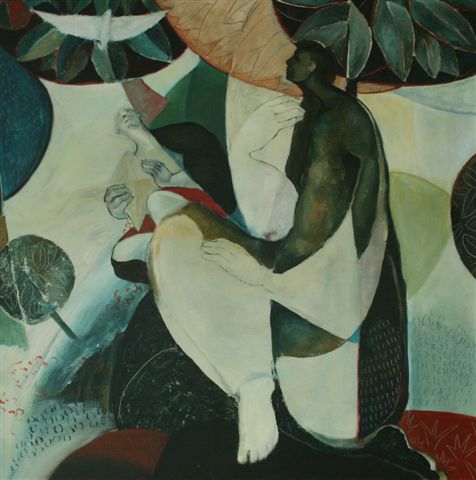
'Hope and Prayer' by David Robinson

‘Hope and Prayer’ by David Robinson

I’m in a “life is funny” phase. It is as if the universe is hammering me with this theme: you do not need to see the big picture. You do not need to see the plan or even have a plan. You simply need to take the next step that you see. The next step need not make sense.

Do you remember the scene in one of the Indiana Jones films when Indiana has to take a step that looks as if he was going to step off a cliff and fall into the abyss? What he sees is in direct opposition to what he knows he needs to do. How often does life send us that conundrum! He saw an abyss but knew he needed to take a step anyway. He stepped and an invisible path became visible.

Take the step BECAUSE it does not make sense.

On Sunday, Pastor Tom asked his congregation, “Is your faith by default or by choice?” He told the story of the Roman nobleman whose son was dying. None of the doctors of the day could help the boy so in an act of desperation, the man walked two days to find the magician/healer named Jesus. As Pastor Tom said, this Roman nobleman had the best healthcare plan available and nothing was working; in the absence of science he turned to faith. Of course, we know the rest of the story: the magician/healer told the nobleman to go home. He told him that his son would live. Remember, it was a two-day walk so the question is this: during those two days walking home, did the man have faith or did he want to have faith? In other words, did he need proof to have faith? Did he rush home to see if the magic worked? When he arrived home and found his son alive and well, did he cancel his healthcare policy? What would you do in a similar situation?

Take the step BECAUSE sense-making has nothing to do with it.

Last week Diane wrote a great comment about “knowing” from my previous post, Stand With Hope. She wrote, “…it makes me think about the definition of knowing. I am seeing that, for me, it is not about knowing an answer (like I know that 4 x 4 = 16), but knowing my self and being present with what is happening, and trusting the inner impulse to respond and act. I think this is standing in hope, but for me hope is uncertain faith. But then, when I’m short on faith, I guess I can hope to have hope.”

Take the next step BECAUSE you trust your inner impulse to guide you.

In other words, step because if feels right. Sense-making is a function of the brain. Stepping while uncertain is a matter for the heart. Sense-making is something that always happens after the fact. The next step need never make sense. It does need to make heart.

Take the next step BECAUSE it is what you must do.

Go here to get my latest book, The Seer: The Mind of the Entrepreneur, Artist, Visionary, title_pageSeeker, Learner, Leader, Creator…You.

For hard copies, go here

Roll Up Your Sleeves

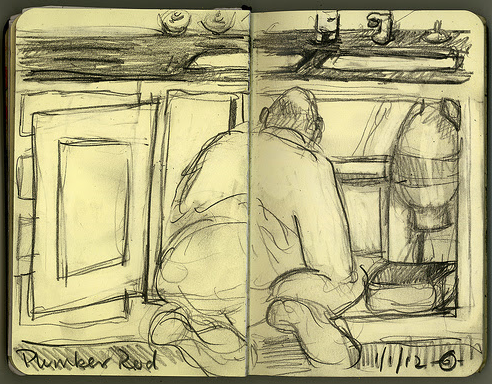
"Plumber" by Marcia Milner-Brage

“Plumber” by Marcia Milner-Brage

I’ve never owned a house so I’m not much of a repairman. I don’t come with tools or know-how. So, when the bathroom sink plumbing failed yesterday, I was contemplative, which is to say, not much use. I watched Kerri roll up her sleeves and get to work. She crawled under the sink, swore like a sailor, and pulled apart the offending pipes. I ran to fetch tools, paper towels, buckets, and anything else that she needed. I became the plumbing equivalent of a sous-chef.

All the little rubber rings (a technical term, I’m sure) in the pipe joints failed. I like to think that after many years of fine service they simply decided to retire and since they started their careers together they retired together. It was a group retirement without prior notice.

Since we’d entirely deconstructed the fittings, we decided to replace everything so we went to the hardware store, stood in an aisle and consulted with a man who knew less about plumbing than I did. Kerri rolled up her sleeves, swore like a sailor (the unhelpful man fled), and she began pulling parts off the rack until she’d discovered what she needed for reconstruction.

Like true plumbers we had coffee and delayed the inevitable descent beneath the sink. After a healthy interval, since all the heavy lifting and brainwork was already done, I did the deed. Following the example modeled for me, I rolled up my sleeves, swore like a sailor (though my repertoire of words was less imaginative than Kerri’s), and crawled under the sink. Like a control tower helping a passenger land the plane after the pilot passes out, Kerri talked me through the assembly. I was triumphant when the pipes did what pipes are supposed to do, when no water dribbled to the bathroom floor, when the sink was once again open for business.

In my work and my life I rarely experience a sense of real completion. It’s the reason I like to do dishes: there’s a clear beginning, middle, and end. Right now I’m trying to find ways of getting my book into the world and I’ve run through what I know to do. I’ve exhausted my first level of ideas. I realized that the challenge is a lot like plumbing. At the beginning, contemplation is not very useful. Asking the question, “How will I do it?” is necessary but needs to come somewhere in the middle of the process. And, “how” is never a definitive answer, it is a good guess at a next step. “How” never reveals itself until after the job is done.

I work with lots of people and the number one block to meaningful action is the question, “How?” Yesterday in the role of plumber’s apprentice, I learned what I teach: the answer to “how” is this: pull things apart, put your hands in the muck, swear like a sailor, see what’s there, ask for help, know when help is or is not useful, look at the pieces, run and get buckets because there will most likely be a mess. Then, take another step based on what you find.

Go here to get my latest book, The Seer: The Mind of the Entrepreneur, Artist, Visionary, title_pageSeeker, Learner, Leader, Creator…You.

For hard copies, go here.

Sit With Sadness

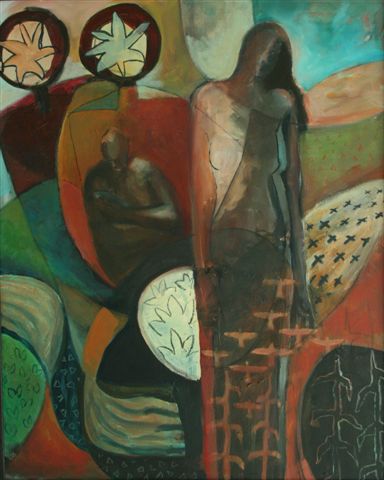
Demeter by David Robinson

Demeter by David Robinson

I awoke this morning deeply, profoundly sad. It is unusual for me to emerge from sleep with sadness; I’m generally a happy person. It was the brand of sadness that has no attachment to a reason. I was earth-sad. I’ve learned that when I come into possession of a sacred sadness, I need to pay careful attention to it rather than struggle to find a way out. It will inevitably illuminate something important if I sit with it, feel it to my bones, honor it, and listen.

I brought sadness with me when swam out of my dreams and broke the surface of consciousness. It was as if I was pulling a drowning man from the ocean floor to the surface; he was heavy and I was exhausted by the effort. I gasped for breath when I broke the surface and I can only imagine that my companion, sadness, gasped, too. I lay in bed. He sat with me. Our breathing calmed. Both of us were quiet. I wanted to say, “What?” but I know better than to force the conversation. Sadness talks when sadness is ready.

Khalil Gibran wrote that, “Sadness is but a wall between two gardens.” In his Letters To A Young Poet, Rainer Maria Rilke advises, “Go into yourself. Search for the reason that bids you write: find out whether it is spreading its roots in the deepest places of your heart, acknowledge to yourself whether you would have to die if it were denied to you to write. This above all – ask yourself in the stillest hour of the night: must I write?” If the answer is yes, Rilke advises the young poet to build his life according to this necessity.

I believe everyone has an inner imperative. For some it looks like having a family. For some it is tending a garden. Some need to travel. Some people need to seek spirit. It’s hard to explain a drive that must either be satisfied or kill you – especially when that drive looks like an art form. What must you do or die? What inner necessity transcends physical comfort or safety or security or measures of success? Twice in my life I denied myself my artistry in an attempt to have a normal “career” and twice I nearly died (not metaphorically). Of course, on the up side, following an inner imperative makes you bullet proof. Social norms wad like wet tissue paper in the face of do-or-die necessity. Fear has no footing when the alternative to acting on the imperative is to die.

I’ve known since I was a small child my answer to Rilke’s question. After a long silence, Sadness looked at me this morning and said, “Well?  Are you ready to redesign your garden?”

Go here to get my latest book, The Seer: The Mind of the Entrepreneur, Artist, Visionary, title_pageSeeker, Learner, Leader, Creator…You.

Or go here for hard copies.

Step Into The Storm

Canopy by David Robinson

Canopy by David Robinson

We took a walk at midnight last night. It was snowing hard. For a while we watched the storm from the comfort of our living room but the swirling snow was like a siren’s song; it was too beautiful not to sail into it. We put up a sham resistance for a few moments and then surrendered. Piling on layers of clothes, we strapped on boots and hats and gloves and stepped into the storm.

The snow was blowing so hard that it stung our faces so we laughed and pulled our scarves up to our eyes. We looked like winter bandits or strange band of arctic Bedouins.

Drifts formed and sparkled in the streetlights. More than once we stopped to admire the sweeping forms, nature’s sculpture. We high stepped through the drifts, stood still and listened to the wind through the trees, turned our backs to the blowing snow and let the wind push us toward home. An hour later we stepped back into the house, grateful for the warmth and chattering about our adventure.

I remember these words from another lifetime: I’d rather be alive than comfortable. A midnight walk in the snow seems like such a small thing, but as we stepped into the flurry I was aware that our choice to take a walk was the choice to engage rather than merely witness.  So much of my life has been lost in the decision to witness instead of getting cold and messy and uncomfortable. Isn’t it too easy to turn on the television and watch life happen or complain about how things are run while refusing to participate in the process of running things? I’ve learned that it is much more fun to play than to watch the game. Sometimes the game is grimy and you get hurt but that is the cost of playing.

I’m watching an organization wrangle with growth and change. As always happens in a change process, there comes a moment when the people involved have to decide whether they want to sit in the warmth of the house or step toward the siren’s song and get messy, cold and grow. They can’t have both. Life is like that.  There is a certain satisfaction to looking out the front window of your life but there’s nothing to compare with stepping into the night, holding hands and being part of the snowfall.

Go here to get my latest book, The Seer: The Mind of the Entrepreneur, Artist, Visionary, title_pageSeeker, Learner, Leader, Creator…You.

Go here for hard copies


Take The Train

Screen Shot 2014-02-04 at 4.47.26 PMIt’s Friday night and we’re on the train from Chicago. We’ve just spent a great day wandering through the Art Institute with my brother, the professor. He’s in town doing portfolio reviews for potential graduate design students. There’s nothing better than going through an art museum with a man who’s spent his career teaching aspiring artists. I admire him and treasure the rare days that we get to spend together. I learn something new each time we have the opportunity wander and talk.

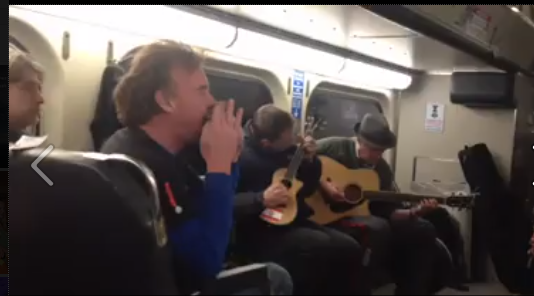
Our train car is slowly populated by people carrying musical instrument cases. There are guitars and banjos and penny whistles and contraptions that I do not recognize. They get on the train at various stops but it seems our car is the rendezvous spot. A woman named Kate joins them. She sits across the aisle and tells us that she is the singer of the group. They gather once a month and head north to Kenosha (our town) to play Irish music at a place called Pete’s. “Best fish fry in town,” Kate says as she offers us chocolate. We are now part of the family.

Just then, the man sitting in the seat adjacent to us opens his case and pulls out a banjo. A man sitting next to him asks, “Is it time?”  Banjo man nods and others pull their guitars and harmonicas and whistles from cases and pockets. A man with a penny whistle starts to play and banjo man picks up the tune. The guitars join. They know Kerri is a musician and Kate says to her, “We take requests.” They want Kerri to sing with them.

The train car is transformed into an Irish music jam session. Commuters tap their feet and applaud. A backpack filled with beer appears in the aisle. The conductor walks in and smiles. He was hoping the musicians would be on the train tonight. He accepts a chocolate, refuses a beer (“I’m on duty!”), and banters with banjo man. They seem like old friends though their entire relationship transpires on Friday night train rides to Kenosha. Banjo man invites the conductor to Pete’s and the conductor asks if they’ll still be playing at 1am when he’s off work. This is a ritual that they perform each trip. “Someday!” they both agree, knowing that it is not likely to happen. It would spoil the magic of their once monthly encounters.

By the time we reach our stop, the end of the line, perfect strangers are laughing together, sharing stories, clapping with Kate and the boys, sharing chocolate and beer, and feeling that their random choice of train car was not so random after all. The week of toil and work is transformed. I hear a man say to his seatmate, “It was a good week, I think,” and I wonder what he might have said had the musicians not opened their cases. I wonder if he’d have acknowledged the presence of his seatmate had the musicians chosen another car. Sometimes we miss the simple miracles, the seemingly small moments in which huge events occur. When was the last time in the harsh anonymity of an urban world that you put down your smart phone, turned to a perfect stranger, shared a chocolate, smiled and told them about your week? It seems so small but is in truth profound for a stranger to reach a hand across the chasm and say, “It’s nice to meet you.”

This is the power of the arts and our general inability to recognize the profound in the small moment is one reason why we misunderstand the purpose of the arts. People go to war because they cannot find a way to reach across the chasm and touch the humanity of their earth-mate. A car full of commuters went home less lonely on Friday night and a few were swept by the music into a place called Pete’s where they ate some fish fry, drank some dark beer, and celebrated nothing more than being fully alive.

Go here to get my latest book, The Seer: The Mind of the Entrepreneur, Artist, Visionary, title_pageSeeker, Learner, Leader, Creator…You.

For hard copies, go here.

Take The Time

Marc Chagall  'America Windows'

Marc Chagall ‘America Windows’

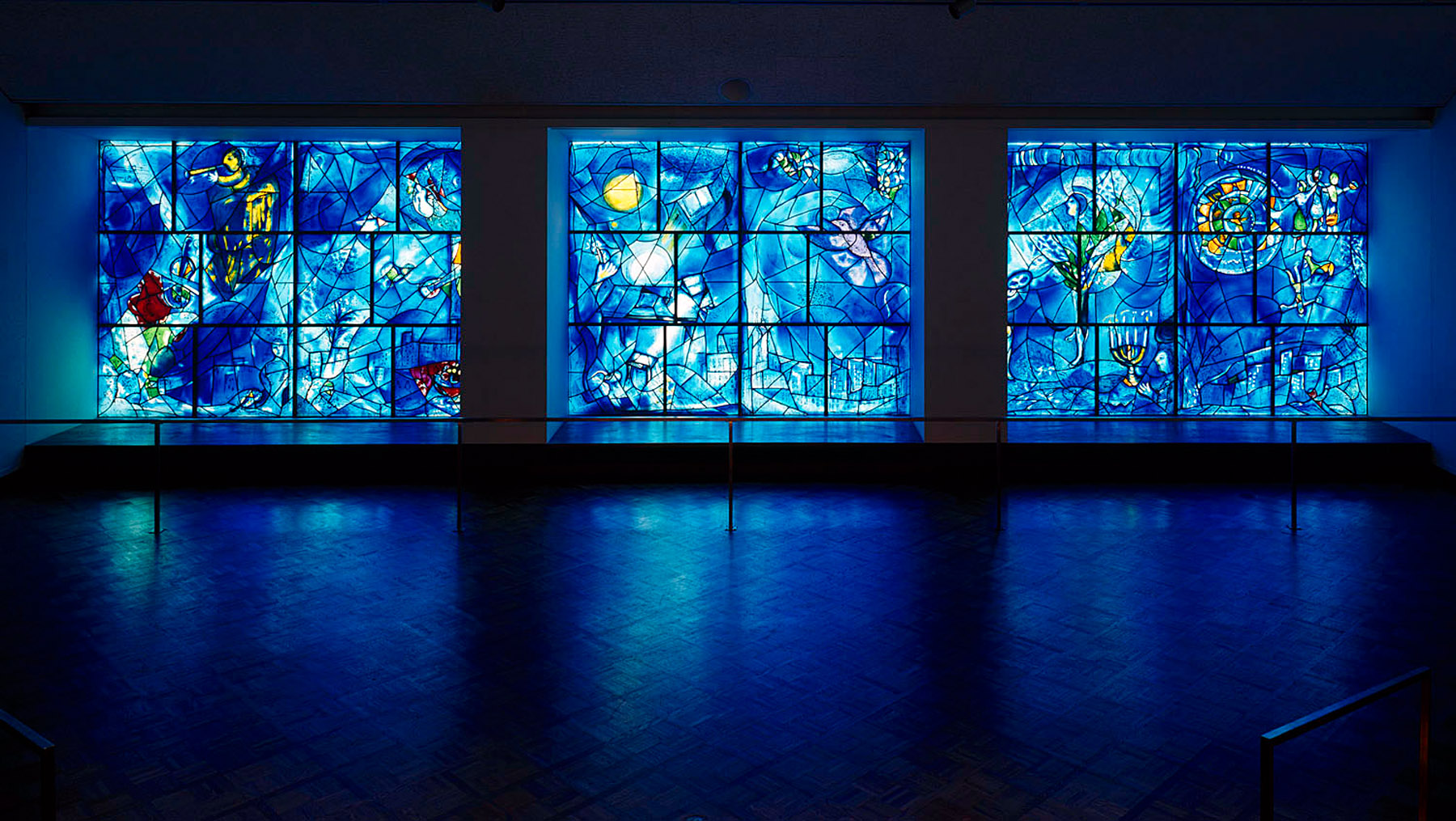
I finally saw Marc Chagall’s ‘America Window.’ It’s at the Art Institute of Chicago and has long been on my must-experience list. It’s a long list! Unlike most bucket lists, my list cannot be contained in a bucket and I have no illusion that I will experience everything on the list before I die. It’s not possible to experience everything on my list in a single lifetime. I keep my list to remind myself that my life is both finite and that this life holds more miracles than any single life-bucket can contain. Finite lifespan nests within the infinite awe.

The Window provided me with an extraordinary perspective flip. When first approaching it I thought, “How spare!” It was breathtaking in color but seemed narratively sparse, like a Mark Rothko instead of a Marc Chagall. And then I stepped closer and the story of the Window began to emerge. An entire world opened for me. The longer I looked the more I saw. The more I saw the more I wanted to look. It was as if I was at first hypnotized and then drawn into the world of the Window. When I finally decided to leave, I walked several paces away and turned back for one more look. The world that had at first seemed spare was now too full to comprehend. I was seeing beyond my thinking.

What a great metaphor for the process of stepping into presence! It’s a process of moving from the conceptual to an experience. Our thinking, our relationship with language, requires us to generalize and a generality is always an abstraction. It is made up. For instance, right now, looking out my window, I see many “trees” and, in truth, I’m not seeing them at all. I’m seeing the abstract concept “tree” that I attach to many, many unique forms. I’m seeing what I expect to see. If I take the time to go outside and touch, smell and feel them, I see that each “tree” is vastly different than all the others. No two forms are ever the same. They are vastly different than my expectation. It is not until we take the time to move beyond our words that we regain our capacity to see.

Chagall, like all great artists, knew this. He knew that people need help seeing and that seeing is vastly different than looking. Vital life, dare I say the rich meaning of life, is available when we learn to see beyond our abstractions. Vital life (the infinite) dances in front of us all of the time. It is the role of the artist to help us move beyond our expectation and engage with the dance. The Window reminded me that sometimes we need only take the time to open our eyes and see.

Go here to get my latest book, The Seer: The Mind of the Entrepreneur, Artist, Visionary, title_pageSeeker, Learner, Leader, Creator…You.

For hard copies, go here