Walk With Me

Tom and me a long time ago.

Tom and me a long time ago.

Sometimes it is the smallest thing that smacks you.

Recently I reread one of my favorite books, A Prayer For Owen Meany by John Irving. In the book, the narrator of the story suffers a loss. He tells us that we lose people in pieces, not all at once. During holidays, birth dates, passing a favorite place, and the loss happens all over again, again and again.

Today I was editing The Lost Boy script. Originally, the script was a transcript from interviews with Tom intended for Tom to perform. It was filled with quotation marks – he quoted lots of people. His story is populated with some fantastic characters. After his death I rewrote the play for two actors so that I might tell the story but I didn’t clean up the punctuation. I translated the transcription. I shaped scenes within the stories he told. As I worked on the edits today, I was suddenly struck dumb by the quotation marks. They were Tom’s. They were his exact quotes; they were no longer appropriate to the rewrites. As I erased the quotations I lost him all over again. Each erasure took a little bit more of him away.

And…it’s a paradox. The erasure also brought him closer to me. Tom used to say that the stories of his kin where more than just stories, they were alive. He could not walk the ranch land without his ancestors walking with him. He told me that he knew who he was because he knew who they were. As I removed the quotes from the script the stories were no longer Tom’s, they became mine to tell. His story and mine became one, single tale. I realized that I cannot tell this story without Tom telling it with me. Like him, I know who I am because I know who he was. I couldn’t ask for better company to walk this story with me.

title_pageGo here to buy hard copies (and Kindle) of my latest book: The Seer: The Mind of the Entrepreneur, Artist, Visionary, Innovator, Seeker, Learner, Leader, Creator,…You.

The PoetFor posters, prints, bags, stuff with images of my paintings, go here.


Hear The Voices

photo-2This is the most unusual rehearsal process I’ve ever navigated.

First, I wrote the play and in preparing to perform it, I’m discovering it anew as if someone else wrote it. There have been brilliant and funny moments when I ask myself, I wonder why he wrote that? The good news is that I remember whom to ask.

Second, the play was originally meant for Tom to perform and since the story is Tom’s family narrative, I wanted the language and syntax to be Tom’s. In development, I recorded hours of conversation with him. Much of the first draft was a transcription so that I might capture word-for-word his language choices and speech patterns. Those structures survived the several rewrites that happened after Tom’s death. In preparing to perform the play I’m wrestling with the language. I’m wrestling with his language. It is almost as if I am discovering my own speech patterns and syntax – in telling Tom’s story I’m finding it necessary to tell it my way, not his. Essentially, as is true in all good storytelling, I am finding myself, my voice, through his story.

Tom and me a long time ago.

Tom and me a long time ago.

Finally, the music is a character in the play and the musicians, Mom’s Chili Boys, are madly rehearsing in California while the actors (Kerri and I) are rehearsing in Wisconsin. The internet is a beautiful thing as, each day, we pass notes, record voices, email questions; we will only be together in the same room 3 days before the first performance. We’re essentially workshopping the play from two locations. It is akin to rehearsing a symphony in parts and the parts only come together in the final day. They get to experience the whole symphony, the fullness of their music as played through all of the voices, only in the final hour. And that will be true of this play.

Each day I rehearse and I hear Tom’s voice in my head, telling me the stories that comprise the play. I am reminded that, whether artist or audience, art is a living thing. It is a relationship and ultimately that relationship is with your self.

title_pageGo here to buy hard copies (and Kindle) of my latest book: The Seer: The Mind of the Entrepreneur, Artist, Visionary, Innovator, Seeker, Learner, Leader, Creator,…You.

For all digital versions, go here (Leanpub)

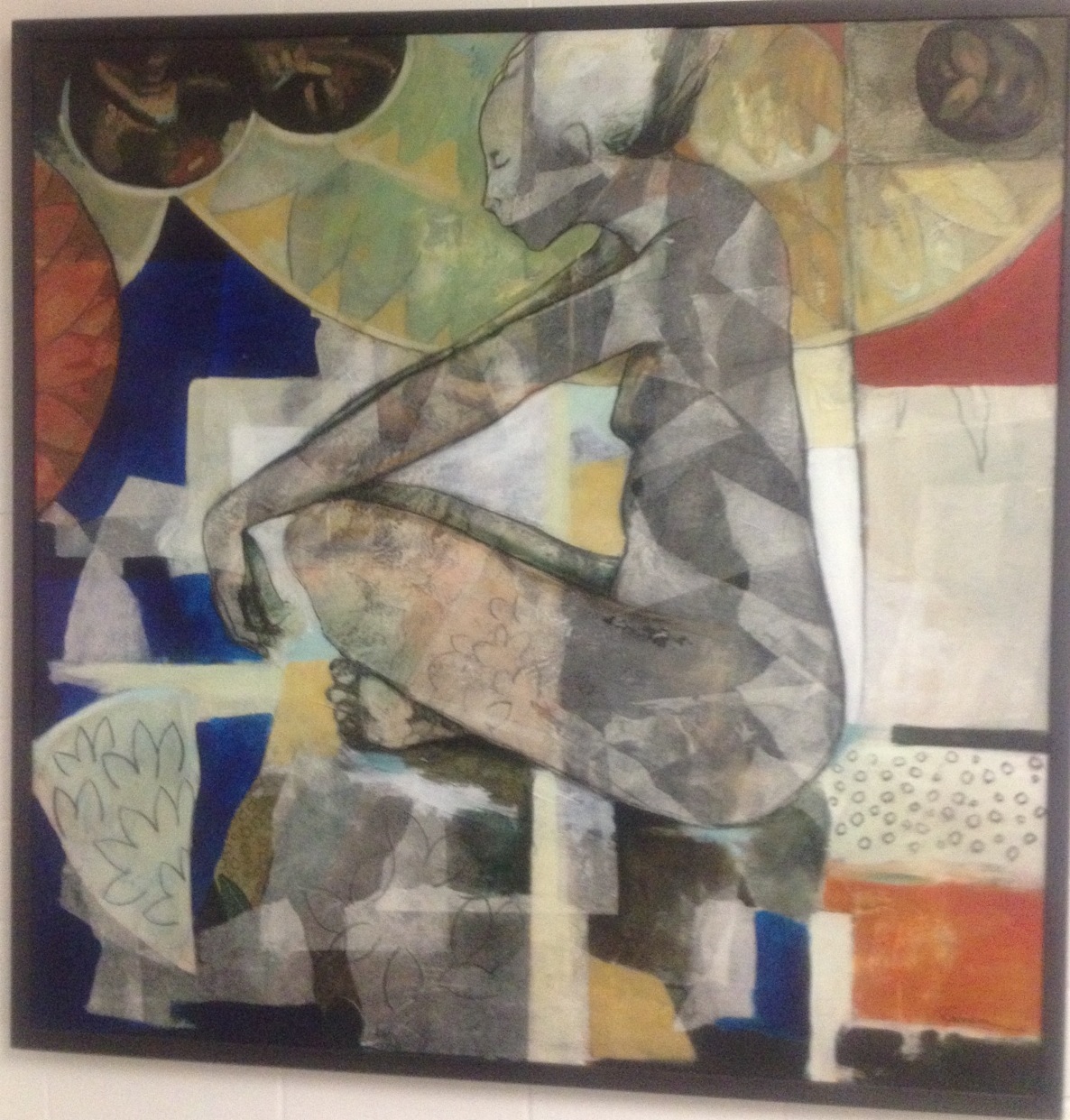
Untitled by David Robinson

Untitled by David Robinson

Go here for fine art prints of my paintings.

Move Your Words

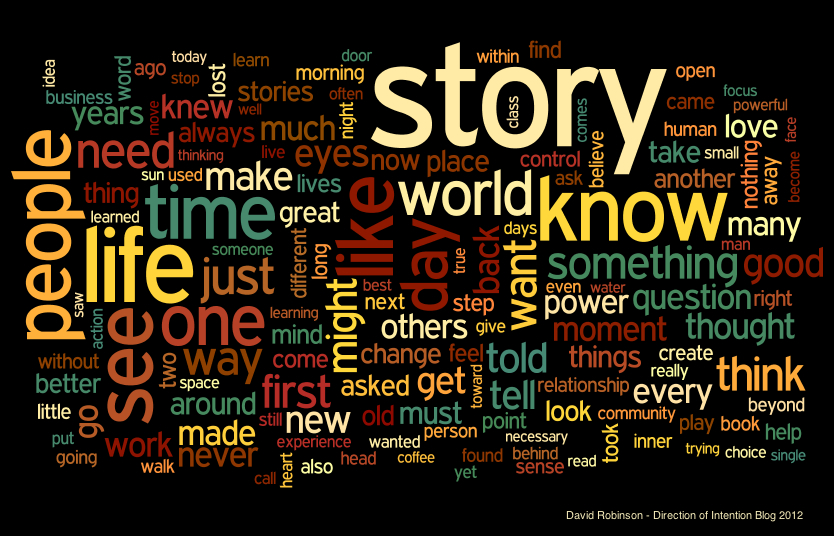
My friend, Mark, made this Wordle of my blog

My friend, Mark, made this Wordle of my blog

I am working with words again today but in another aspect entirely. Now that The Lost Boy has the minimum funding necessary for a production I am working on the play in earnest. Tripper Dog-Dog-Dog cocks his head and wrinkles his brow in wonderment as I talk to myself or dance the words. Sometimes he confuses my work method as an invitation to play and he leaps, catching the cuff of my shirt and pulls me to the ground. “Not now!” I cry out as Dog-Dog stretches my sleeve so that it might fit a giant (a side note: Dog-Dog has altered all of my shirts – he regularly mistakes my work for play. If I do not roll them, my shirt sleeves look as if I am small child wearing an adult extra-large).

I am a kinesthetic learner and realized years ago that working on a script was easier and more productive if I moved or danced the words as I worked with them. To borrow a phrase from a lost friend, my years at school were “fresh hell” because sitting in a desk was painful, it hampered my learning. If I want to have an insight or gain an understanding of something, the best thing for me to do is take a walk. If I move it, I can break down a script in no time. I can memorize anything if I can physicalize the intentions. For me, language, word use, and sense-making are a physical affair.

It is a physical affair for everyone. Try to speak without breathing (an impossibility); breath is movement. Speech is physical. For a real laugh, try to communicate without gesturing. Limit your movements and you will inhibit your capacity to communicate. For more fun, Google the latest statistic about how much of our communication is really non-verbal (we primarily read body language; listening to what is being said is a distant second). The deep mastery of a storyteller is found, not in the words, but the punctuation of a moment: the turn of the head, the intake of breath, the smallest of gesture, the connection made through the eyes; the fire of imagination is fanned when the storyteller, no matter how subtle, dances the story.

Last night I was reminded again of the power of language – the real kinesthetic of it. B is disturbed by the violence and darkness she sees in the world and asked, “How do we push back on it.” I challenged her verb. When we choose our language we also choose a “metaphor path”. Language choices come with images and images are not passive. They define what we see. They define the available options. They are a root for movement. To push back is a verb of resistance. It is counter force, a choice of aggression. “Why push against what you don’t want?” I asked. “Why not put your energy, effort, and imagination into creating what you actually want?”

To push. To create. Which verb will move you?

title_pageGo here to buy hard copies (and Kindle) of my latest book: The Seer: The Mind of the Entrepreneur, Artist, Visionary, Innovator, Seeker, Learner, Leader, Creator,…You.

The PoetFor fine art prints of my paintings, go here.

Get Back On And Ride

Guess what. I'm doing it.

Guess what? I’m doing it.

It is universally true that we must fail to learn. In fact, as absolutes and paradoxes go, the single universal lesson that we must learn is that there is no such thing as failure. To unlearn is, in fact, also to learn. Everything is a step forward when failure is out of the equation. I fell off my bike more than once before I learned to balance and ride. I made some terrifically ugly colors as I learned to paint. That is the nature of learning.

Over the past decade I’ve tried more than once to produce my play, The Lost Boy. And, like learning to ride a bike, I’ve fallen off with each attempt. The latest tumble came with a failed Kickstarter attempt. Sitting on the curb, my metaphoric bike akimbo, I asked, “What is it about this play?” It will not leave me alone and yet it has been more than difficult to produce. And, as it does, the learning followed the fall. And there is nothing to be done but get back up and ride.

And, as is also true, when you decide that you are going to do something, the way opens (note: that does not mean that there are no challenges). When we didn’t meet our Kickstarter goal, I had the option to let it go forever or, I had to decide that I was going to produce this play with bake sales, lemonade stands, or any other whacky idea that would get me to opening night. This play will not leave me alone and, as I learned in the fall, I will not leave it alone. The decision was already made and I needed the failed campaign to see it.

And the way opened. The University of the Pacific decided to donate the theatre and to help with some marketing through alumni networks. I laughed when, given their generous donation, I made my new budget. The amount I need (bare bones) to get to opening night is almost identical to the amount pledged in the failed campaign. So, taking what I’ve learned, I’ve mounted a new campaign and asked the previous pledgers to pledge again. And, since I adore paradoxes and don’t really believe in absolutes, I’m passing this link out in every way possible. Nothing is for sure – except that I will do this play in February in California.

The lesson, of course, is to ask for help and ask again (something I was not good at doing in the first campaign). The other lesson is this: a play that will not let you go is worth doing and it is worth doing whatever it takes to give it life. So help me give it life. Here’s the new Kickstarter campaign. Please support it if you can by pledging or passing the link out through your networks.

I don’t mind falling off my bike again because now I know that I will simply dust myself off and get back on to ride. Join me in California in February for the world premiere of The Lost Boy.

title_pageGo here to buy hard copies (and Kindle) of my latest book: The Seer: The Mind of the Entrepreneur, Artist, Visionary, Innovator, Seeker, Learner, Leader, Creator,…You.

Guess what. I'm doing it.

And, in case you missed it, here’s the link to the new The Lost Boy Kickstarter campaign

Open The Box

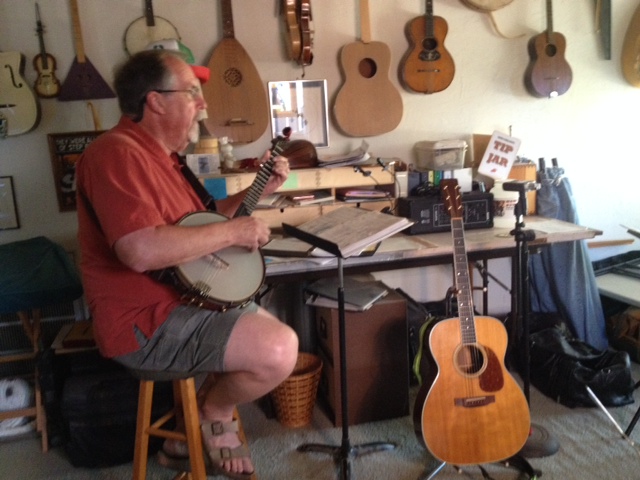
JIm Marsh of the band, Mom's Chili Boys, tuning up for rehearsal.

JIm Marsh of the band, Mom’s Chili Boys, tuning up for rehearsal.

It is often the simplest of actions that rock the world. I had one of those moments yesterday. It was a threshold moment. Its power took me by surprise. It changed me and all I did was open a box.

We flew to California to work on a play. I’ve worked on dozens of plays and performance pieces in my life but this one is special because it’s not an abstraction. It’s not a made-up story. I’ve lived it and lived with it for nearly a decade. The event, the catalyst of the play was the discovery of a box, a time capsule plastered into the walls of a ranch house over 130 years ago. Tom found the box. It held the possessions of an ancestor, a small boy who died in 1885. The boy’s mother, Isabelle, put his clothes and toys in a small trunk, wrote notes, some brief anecdotes about the boy, and then hid the box in the walls of the house.

Nearly ten years ago, we began creating the play when, late one night during a visit to the ranch, Tom asked me to help him. He asked, “What am I supposed to do with this box?” At first, much of the body of the play amounted to organized transcription. During each visit I recorded hours of conversation with Tom, hours of late night storytelling, and then flew home and transcribed the recordings. I wanted to catch the cadence of Tom’s vocal patterns. I wanted to catch the rhythms of his extraordinary voice and gift of storytelling. The play was his to perform; my work was simply to craft it, to draw a clear story-path for him to follow. The play, a one-man show, was ready for production when Tom’s health failed. He died a year ago.

During Tom’s decline I rewrote the play so that I might narrate the story and added another character to the piece. The Chili Boys had a battery of new music for the play so we gathered in Stockton to integrate the new music with the new text.

When we arrived in California, we visited Tom’s widow, Marcia. She gave us the trunk so we might photograph the clothes, toys, and notes. I’d seen the artifacts many, many times. Tom and I wiled away many nights unpacking the box and reading the notes, talking about his family stories. When our rehearsals were finished, sitting with Kerri and Jim moments before driving back to the airport for our return flight, we decided to open the trunk. Kerri had never seen the artifacts. As I lifted the lid, as I opened the trunk, I realized it was the first time; Tom had always opened the box. Tom had always reached inside, removed the shoes, the tattered coat, the hobby horse, the diary that contained the tracking notes of a fever that killed the boy. This boy was not fiction. Tom would say, “Look at this. Look at what she wrote on this.”

I opened the lid, for the first time, reaching inside, pulling out the shoes, the jumping jack, saying, “Do you see this? Someone must have made it for Johnny. And here, this is the notebook that Isabelle kept of Johnny’s fever. Look at what she wrote.”

DSC_1196 copyInvest in THE LOST BOY. See our kickstarter campaign



title_pageGo here to buy hard copies (and Kindle) of my latest book: The Seer: The Mind of the Entrepreneur, Artist, Visionary, Innovator, Seeker, Learner, Leader, Creator,…You.