Carry Your Story

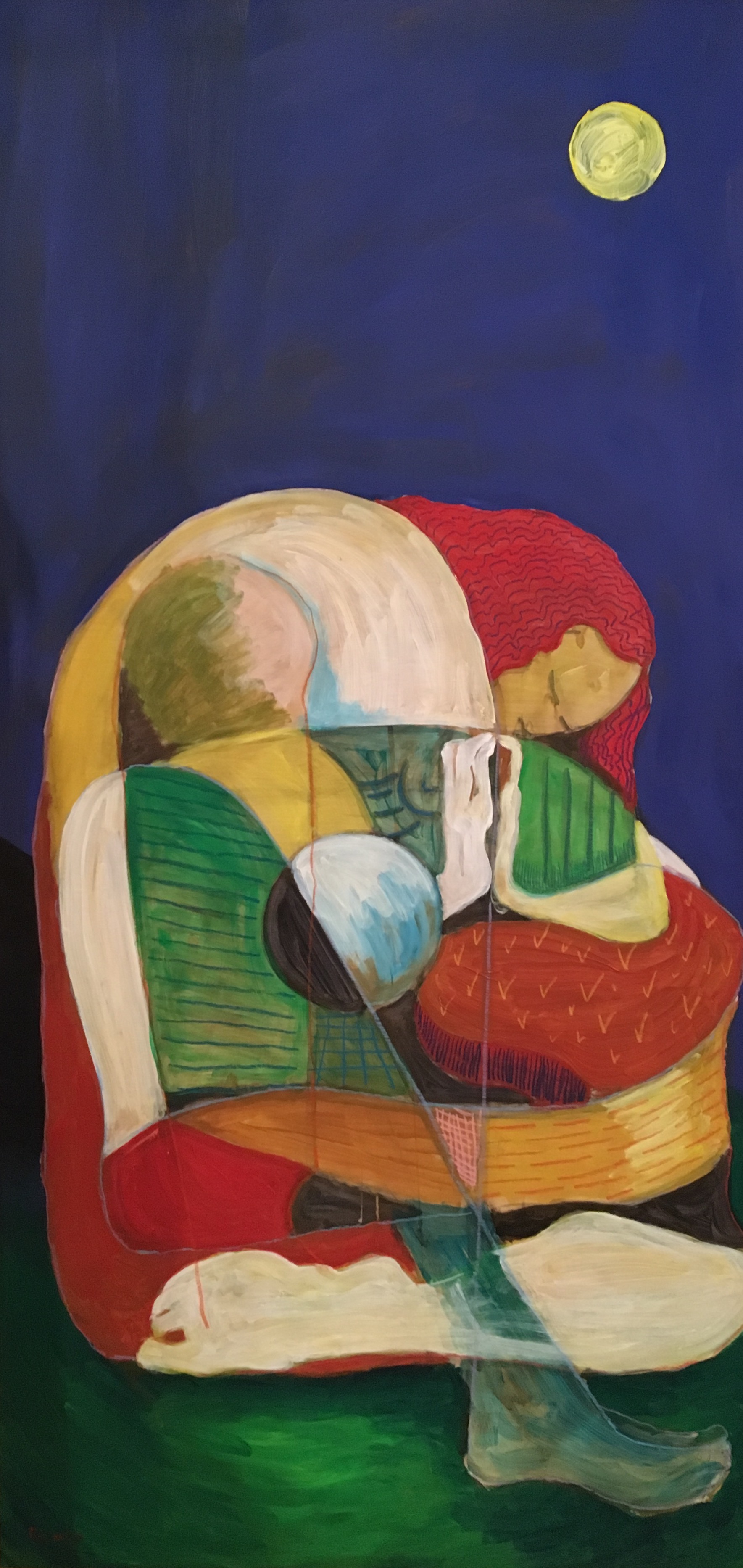
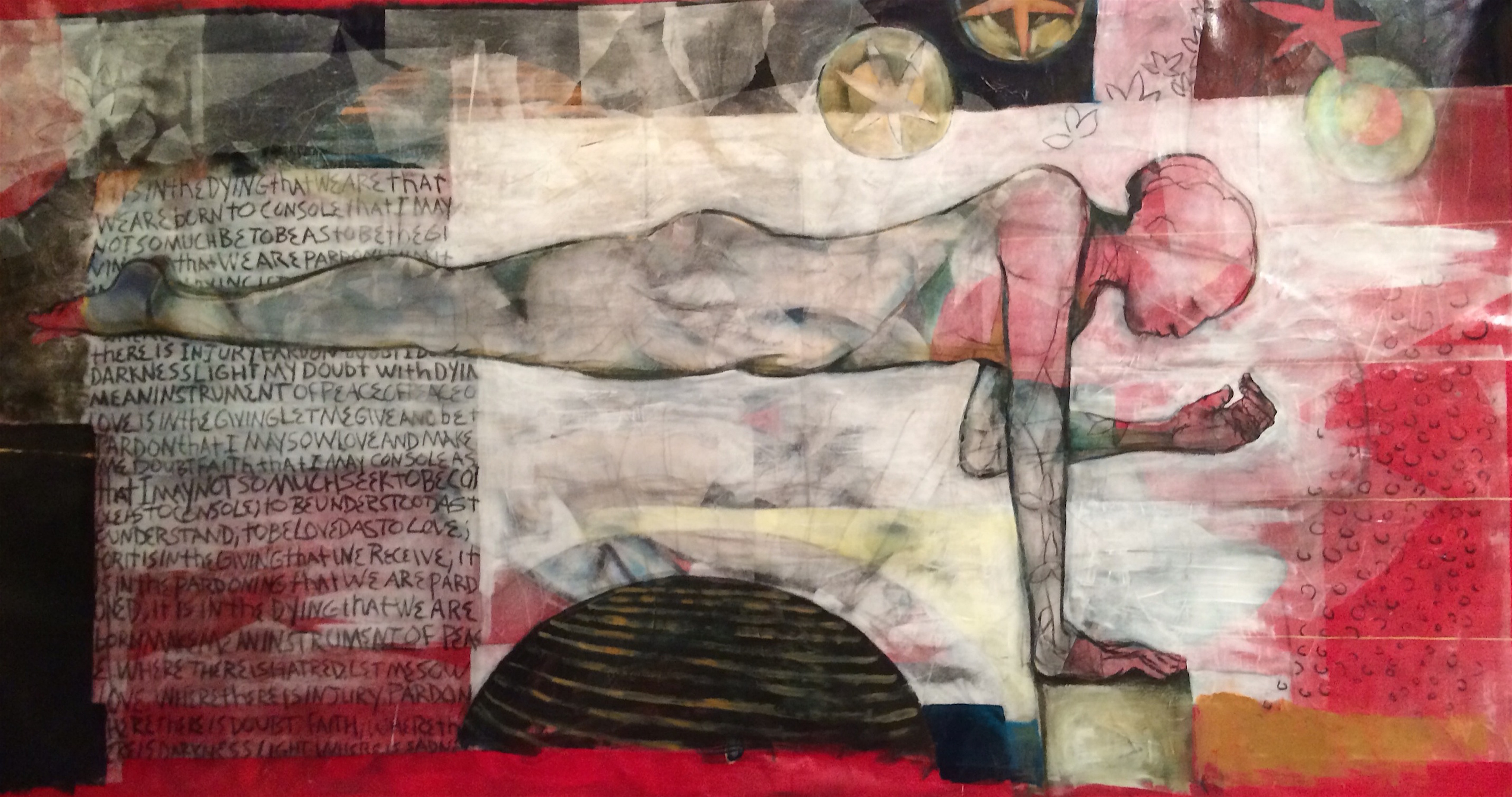
I call this painting, "Canopy"

I call this painting, “Canopy”

Since writing my post yesterday I’ve been rolling around in my mind the image from this quote from Deepak Chopra’s book, Life After Death: “Every former self you have left behind is a ghost. Your body is no longer the body of a child. Your thoughts, desires, fears, and hopes have changed. It would be terrible to walk around with all your dead selves holding on.”

All day I’ve been looking at people as if they are walking around with all of their dead selves hanging on. And, technically, we are. We define our present moment through the eyes of the past. I suppose the number of ghosts we carry depends upon the definition we carry about ourselves.

Definitions are stories. Thoughts, desires, fears and hopes are contained in the form of a story. Any thought you have is actually a form of storytelling. When we worry if this will happen or that, we are telling a story. When we tell our friends about being stuck in a traffic jam, we are telling a story. When we say, “This is who I am,” we are telling a story. When we say, “That is who they are,” we are telling a story. In a week, my family will gather to memorialize my grandfather; we will tell his story.

I’ve found in many parables and myths that an inner monologue (the story you tell yourself) acts like a fog. It obscures the present. For instance, in the Sisyphus tale, Sisyphus goes to the underworld and watches the souls of the newly departed cross the river Styx. Each soul thinks it is alone even though they are with many others; they cannot see the others through the curtain of their ego story. To enter the great “I am” they must first stop telling a story of separation.

Stories obscure.

We carry our stories forward. That is a legacy. Carrying a story forward is how we connect to our ancestry. Jean Houston once used an image that I like: we are the burning point of the ancestral line. We carry the story-torch forward. Like the Olympic flame our fire was ignited by a spark that stretches back eons. And through us, this flame will reach far into the future. We burn now. This story-torch, the family story, is the root story. It illuminates us.

Stories enlighten.

In both cases, obscuring and illuminating, stories can be heavy to carry. Or, they can be light. It may not be so terrible to walk around with your dead selves holding on if your dead selves tell a story love and connection, a story of hope and aspiration, a story of yearning and possibility. If illumination is the act of transcending your story, a step toward illumination certainly includes a story of love, and usefulness, and a deep appreciation of the ordinary moments that we story to fill our extraordinary days.

title_pageGo here for my latest book


Story Your Life

title_pageI’ve received a few questions this week about life stories and rather than blather…here’s another snippet from my book, The Seer:

Stories often deal with the collision that arises when learned patterns blind us to our natural impulses. Living according to what we “should do” or “should think” inevitably collides with what we desire to do and this provides a hot crucible for growth. When Virgil asked me to practice “not knowing” he was poking a hole in my story of “should do” so that I might once again hear what I intuitively knew to be true. Stories show us how to get out of our own way. As Virgil recently wrote:

Virgil: You are at one time the source of your yearning and your greatest obstacle. What you think that you should do IS the obstacle to your desire.

In my latest chat with Virgil I told him of my revelations about ‘not knowing what I DO know,’ about my memory of my client, and how I convinced her that she didn’t need me and could do the work by herself. I wrote:

Me: At the time I really needed the money. I needed the business! And I spent that morning convincing a potential client that she didn’t need me. It’s the story of my life!

He responded:

Virgil: Oh, you are dangerously close to the third recognition.

I decided I needed to stop being careful with how I said things to Virgil. I’d just learned that my language mattered so I might as well write what I was thinking:

Me: Well, maybe you should tell me before I trip over something and hurt myself. You must have an answer or two in there somewhere…

Virgil: I’m woefully low on answers but I do have a question for you: What did you mean when you wrote: It’s the story of my life?

Me: I don’t know. It was just a phrase, an attempt at humor.

Virgil: What if it’s not just a phrase?

Me: You mean that convincing people that they don’t need my services is the story of my life? That is why my business crashed?

Virgil: No. I’m not inferring, interpreting or implying anything. You used this phrase: It is the story of my life. I’m asking you to consider that this is more than a flippant phrase. Are you aware of the story of your life?

I was getting angry again. And I was beginning to recognize that my anger was a pattern that flared when I felt lost. I get angry when I am driving and miss my turn or can’t find where I’m going. I wanted a map. I wanted Virgil to be my personal GPS and tell me where to go. Where were we going with this? Sometimes I can’t help my sarcasm:

Me: You mean I only get one story?

Virgil: Your story is not something you get. Remember, your language matters. Choose your words more carefully and you might see the third recognition before you trip over it. Connect the dots. Tripping over it will not hurt you. It’s the choice to be blind that causes your pain.

Go here to get my latest book, The Seer: The Mind of the Entrepreneur, Artist, Visionary, Seeker, Learner, Leader, Creator…You.

Go here for hard copies.


Have The Conversation

A painting I did twenty years ago of my dad. I call him Columbus.

A painting I did twenty years ago of my dad. I call him Columbus.

When Bob died I wrote his wife, Ruby, a note saying that I’d give anything to have another conversation with Bob. Just one more conversation.

When Jim wrote to tell me of Doug’s passing, we had an email exchange.

I signed off the email with this phrase: “Yet another conversation I will never have….” Jim answered with a warm reminiscence of Doug, a recounting of their meeting as young teachers, watching Doug navigate and ultimately heal the psychological wounds from war. Jim signed off with this thought:

War is not just hell.  It is eternal hell.  Particularly for those with first hand experience. Why the race continues to tolerate it may be the greatest mystery. Another conversation I will never have with Doug.

I remember in vivid detail the last conversation I had with Tom. He was already sliding into the hell of his dementia and knew it. He desperately wanted to tell me a story, something that was vitally important for me to know though he did not know why. I sat attentive in his small cabin home as he told me the story of the lost boy, a story that together we’d spent years developing into a play. I’d heard the story a thousand times and he no longer remembered. He forgot everything but the imperative to tell me the story, to transmit the history to me. So we enacted the ritual as our final conversation.

Columbus fishing at his 80th birthday celebration.

Columbus fishing at his 80th birthday celebration.

Many years ago I traveled home to spend time with my dad. I wanted to know who he was and felt as if I’d missed it, as if I didn’t really know the person behind the role. He was generous and vulnerable and spent three days with me answering all my questions, sharing the inner sanctum of his thought and being. It was the greatest gift I have ever been given and, at the same time, the greatest gift I have given myself: I asked if he would spend time with me.

One of the things I learned during those days with my dad is that there will always be the yearning for one more conversation. There is no bottom to the magic and mystery of the people that we love and who give order and richness to our world. This year I am learning that although there will always be the yearning for just one more conversation, there will of necessity be a last exchange. And, because that is an inescapable truth, there is nothing more important on this earth than to take the time, make the space, to ask, “How are you doing? What’s happening in your world?”

title_pageGo here to get my latest book, The Seer: The Mind of the Entrepreneur, Artist, Visionary, Seeker, Learner, Leader, Creator…You.

Or, go here for hard copies and Kindle.


Join The Story

Johnny is sitting on a mule named Old Abe. This was taken a few months before he died.

Johnny is sitting on a mule named Old Abe. This was taken a few months before he died.

Yesterday I finished the final edit/redraft of The Lost Boy. It is a play I began years ago based on interviews with Tom. Late one night while I was visiting him at the ranch, he asked me to help him. “Do what?” I asked. He shrugged his shoulders. He didn’t know. He felt that he had an obligation to an ancestor, his great grandmother, Isabelle, and he felt as if he’d not yet met his obligation. In 1885, Isabelle had a son that died. His name was Johnny and he was only ten years old. Isabelle carefully packed a trunk with all of Johnny’s worldly possessions, she wrote notes, and when no one was looking, she hid the trunk in the walls of the ranch house. She told no one. Tom found the trunk 100 years later.

We decided that his obligation was to tell Johnny’s story. We decided that Isabelle wanted to somehow keep the memory of her son alive but her method was a mystery since she told no one about the trunk. Tom shared the trunk with school children and historical societies but somehow felt as if he had yet to fulfill his obligation to Isabelle. Our idea was to create a play. I would interview Tom and write the piece. He would perform it. Along the way a terrific band, Mom’s Chili Boys, composed and compiled music from era.

We had a play with music. We’d solved the mystery of why Isabelle plastered the trunk into the walls. We made a few attempts at doing workshop performances but the piece always stalled or something unforeseen blocked our path. During a living room read/play through, it became apparent that we missed our window. Tom was slipping into dementia and got lost during the read through. He was no longer capable of performing the play. We stopped. We let the play sit dormant.

During Tom’s decline I rewrote the play so I might tell his story. The Chili Boys were my allies and my rock of encouragement and support. They played the music at performances and told the story in a condensed version and gathered some good feedback. Once, we tried to organize another run at doing the play and it hit a wall of resistance. So, it sat for a few years in the projects-that-could-have-been pile.

When Tom passed this fall it was as if the universe that was so dedicated to blocking our path finally said, “Now.” The Chili’s have new music and it is gorgeous. In doing the rewrite I was gob smacked to realize that Tom had to pass before the play would be complete. He wondered how he might honor his obligation to Isabelle and the answer was something he never knew: he had to ask for help, not to share the story but to enter it. As it turns out, The Lost Boy is not about Johnny or Isabelle. It is about how Tom found his way home.

Go here to get my latest book, The Seer: The Mind of the Entrepreneur, Artist, Visionary, title_pageSeeker, Learner, Leader, Creator…You.

Or, go here for hard copies.


Tell The Story

"...and for everything which is natural which is infinite which is yes..." e.e. cummings

“…and for everything
which is natural which is infinite which is yes…” e.e. cummings

Three hundred and sixty six days ago I met Kerri. What I thought was going to be a casual meeting, the beginning of a new friendship, was much more than I anticipated though I didn’t really understand the scope and depth of our relationship until three hundred and sixty five days ago. On that day, exactly one year ago, I went with her to experience a Taize service. Taize is a meditation service and she was guiding the music. I sat with her during the Taize and, in a single moment, on a specific word of the Lord’s Prayer, we had an experience so potent, so mystical that a year later I still am unable to explain or comprehend it. Our lives changed in an instant. The moment was so powerful that we sat in the church for hours after the service. We couldn’t move. We couldn’t leave that space.

Yesterday, we both cleared our calendars and spent the day telling the story of our year. Our telling was not for reminiscence. It was not like a new year’s review of things past. It was not a measure of how far we’d come. It was elemental. It was the kind of telling that communities used to tell when they renewed themselves. It was the kind of telling people used to do to define themselves. It was story as a sacramental act. We visited the fire and the transformation, the earth and the necessity of rooting, the water and the miracle of flow, and the wind of inspiration and ancestry. We generated by regeneration.

So, I offer this as an exercise: give yourself a gift, take some time, and tell the story of everything you experienced on this earth, in this life, over the past three hundred and sixty five days. Visit the awe, the disappointment, the hurt, the joy, the boredom, the loss, the discovery, the exhaustion, the wonder, and anything else that affirms your life as unique and gorgeous. No one else walked the path you walked. No one else can or will walk the path you walk. See it. You’ll be amazed.

Go here to get my latest book, The Seer: The Mind of the Entrepreneur, Artist, Visionary, title_pageSeeker, Learner, Leader, Creator…You.

Or, go here for hard copies.


Know What Matters

A day with Beaky

A day with Beaky

When you leave Florida driving north there is a stretch of highway in Georgia that is littered with billboards advertising everything from the adult superstore to the second coming. The spectrum is as breathtaking as it is comical.

I’ve driven this stretch three times during the past several months and each time I wonder what an archeologist from some distant future might deduce about us if this stretch of highway was the only remaining fragment of evidence of our culture. A few years ago I spent a day in Herculaneum, the other city buried with Pompeii on the day that Vesuvius erupted. Like Pompeii, it was remarkably well preserved. We have so much writing from that time, we have eyewitness accounts, we have museums stuffed with artifacts and art. While I walked the streets of Herculaneum on that hot summer day, I read about the social norms, the exercise practices, food preparation, infrastructure, and what we assume a normal day was like. I also read, based on the placement of the bodies, what that most unusual day, the day the world ended, must have been like. There was a timeline of events. All the while I couldn’t help but wonder if our study of their culture could only reach the superficial, the top layer, the economics. We can sort through the garbage and garner much about daily practices. To study is not the same as knowing. What we know is minute when compared to what we do not know. The timeline told me little of the terror. It told me nothing of the love. The economic statistics told me less than the plaster cast of the old couple huddled together, arms wrapped around each other on their final day.

I recently watched a short TED talk by Ric Elias who was on the plane that a few years ago landed in the Hudson River. He talked about his thoughts as the plane went down, what he learned about life when he faced his death. He was surprised that there was no fear in dying but there was great sadness for all the things he would miss, all the relationships he would leave behind. He learned from that experience that the only thing in his life that mattered was being a good father. He also decided to clear all the toxic relationships and never again participate in negative energy. He said that he gave up being right. I thought of him as I drove the billboard gauntlet a few days ago. The archeologist from the distant future would glean much about our economics and ponder our obvious confusion. She would write studies useful for the tourists that would travel halfway around the world to visit the site of a once thriving community. The tourists would walk the stretch of ancient freeway, gape at the billboards and speculate about our addictions. But they would know nothing of the people who everyday drove that stretch of road with their families, or about people, like me, who drove more than a thousand miles to spend a day or two with a 93 year old woman named Beaky who can tell a story better than almost anyone I’ve ever known.

Go here to get my latest book, The Seer: The Mind of the Entrepreneur, Artist, Visionary, title_pageSeeker, Learner, Leader, Creator…You.

Go here for hard copies.


Love Yourself Better

this one is from the archives. I painted this 10 years ago.

this one is from the archives. I painted this 10 years ago.

He said, “The current goal is to love myself better.” And then he added, “Not so much a goal but something that needs teaching from our own mind.” His statement begs a great question, an ages old question: Can the mind teach itself? Really, the question is can the mind see itself clearly enough to teach itself?  Or, the question within the question: Can the mind teach itself to love itself? I scribbled the questions in my notebook and beneath them I wrote, “Is love teachable? Is love reachable through the mind, especially self-love?

We’d been chatting for a while and had covered a lot of territory, from Monte Blanc pens to typewriters to soap use around the world, clean water, the difference between good and bad scotch, the shapes of the 50 states and how they might influence personal identity and we’d somehow wandered into the epicenter: self-love.

His statement nailed the universal dilemma perfectly. It was a declaration of separation. The self watching and wanting more for the self. The separation is in the language: to love myself better. I don’t know anyone who hasn’t made this statement. Which part of the self will better love the other part of the self? Which part of the mind will teach the other to love?

It is where myth meets the everyday. Every human being who has walked the earth has wrangled with separation and the yearning for self-love (re-connection to self, unity). The human journey is a walk from separation (birth, if you want to take it literally) to reunification (death). The story lives in mythologies the world round. If we were still willing to read our mythologies (religions) metaphorically, we’d see it. For instance, being expelled from the Garden of Eden for eating from the tree of knowledge is the story the ancients told of the experience of separation. The inevitable bite of apple from the tree of knowledge brought duality consciousness: male/female, us/them, mine/yours, haves/have-nots, me/you. Separation. The rest of the story, not often told, is how, through out the rest of our lives, we seek the Garden where there lives a second tree: the tree of everlasting life (unity). We journey from knowledge (separation) to everlasting life (reconnection). The death need not be literal. To die to the self is necessary to experience the SELF.

Here’s the great paradox: loving another person is an act of self-love. The path to self-love is found when we serve something bigger than our selves. Think about it: the movement is always from separation to joining, from isolation to connectivity. The obvious question is, “Connectivity to what?”

Self-love is not found when the mind teaches the mind but when the mind gets out of the way of the heart. The love is always there. Love is never missing. Self-love reveals itself when the definition of self grows beyond our own skin. According to our latest neurological science, we experience ourselves as separate because we dull ourselves to our fundamental connectedness to others. In other words, we cultivate a story of isolation and then set about the real work of our lives: to see beyond what we think.

And then he said, “You know what else I just realized?”

“What’s that?” I asked.

“I just landed myself in a blog post.”

Yep.

Go here to get my latest book, The Seer: The Mind of the Entrepreneur, Artist, Visionary, title_pageSeeker, Learner, Leader, Creator…You.

Or, go here for hard copies.

Be A Team

can you see the team boosting the child? I have many of these and will soon begin intentionally pursuing this form

can you see the team boosting the child? I have many of these and will soon begin intentionally pursuing this form

Many years ago Judy gave me a book by African writer Malidoma Some. He wrote that, in the village where he grew up, there were no locks on the doors. In fact, there were no doors. The people of the community respected the possessions and privacy of others. Locks were not necessary. The community cared for the health of its members so its members cared for the health of the community. From his point of view, a society that needs locks on the doors is a sick society. Locks are sign of communal breakdown.

I’ve been thinking much about sickness and the need for locks as I prepare to do a workshop for organizations about effective teams. I’ve done too many of these workshops not to recognize that the need to build teams is a sure sign of an unhealthy community. In Malidoma Some’s community, people were aware of and acted from a consideration of the health of the whole. Loyalty begets loyalty. “Acting for the good of the whole” is a great working definition for a team. It’s all you need to know to nurture great teams: make sure everyone in the organization, from the top to the bottom, is caring for the health of all the members. Make sure the choices are made for the good of the whole.

An organization that needs to team build is like a society that needs locks: most organizational systems support a philosophy of “every man and woman for themselves” while the executive suite needs cooperation and compliance to get the job done. No amount of team building can transcend compensation for individual merit. Once, a CEO asked me, “How do I get them to do what I want them to do?”

The short answer: you don’t.

A healthy team, just like a healthy community, requires no leveraging to act. It requires no policing. A team is a not a “thing.” A team is a relationship and just like a sports team or a theatre troupe, everyone needs to feel safe to really bring their game. They have to know the team cares for them as much as they care for the team. Many years ago, while sitting in a jury pool, the judge asked us, “Why do people resent being called to serve?” A lovely older woman raised her hand and replied, “The government offices are inaccessible and unhelpful when I need information or support. Why should I be happy to serve a system that wants nothing to do with me until it needs my money or someone to sit on a jury.” The rest of the jury pool applauded. When loyalty is a two-way street, teams form naturally. When loyalty is a given, people quite naturally offer their service to something greater than themselves.

There are a few other elementary things necessary for the relationship known as, “team,” like a common story (a common center) and a clear intention, but they are not possible when the metaphoric doors need locks. “Team” is something we are, not something we build or do.

Go here to get my latest book, The Seer: The Mind of the Entrepreneur, Artist, Visionary, title_pageSeeker, Learner, Leader, Creator…You.

Or, go here for hard copies.


Shift The Frame

another of my illustrations for Lucy & The Waterfox

another of my illustrations for Lucy & The Waterfox

I’ve been sitting in my fair share of waiting rooms, coffee houses, and gathering spaces lately and so I’ve been eavesdropping on conversations. Who knew there were so many problems in the world! Based on my public space sample you’d think that things were dire. The news of the day concurs with the casual coffee shop discourse. Problems abound. Wars rage, resources dwindle, political leaders squabble, corporations pillage, siblings rival, and people cut each other off in traffic! As my friend Albert used to say, “Good heavens! Just drop the bomb, already!” With so much devoted suffering, so much impending doom, ill intent and disaster anticipation, it’s a wonder we can sleep or step out of our houses in the morning.

Why is this the story we tell? We talk about life as if it was happening to us, as if we play no role in making things happen. I used to make it my practice to count the acts of kindness I saw each day and compare them with my count of acts of cruelty. There was never a day when the cruelty outpaced the kindness. For every example of road rage there were 20 instances of road generosity. In fact, in my count, the acts of kindness so far outstripped the cruelty that it became ridiculous to keep the count. We are far more kind than cruel, far more capable than inept, far more connected than detached, yet our narrative reverses the order. We tell a story of separation, of dog-eat-dog, of the inability to cooperate.

Many years ago the good folks at Disney conducted a study and found that when people had a bad experience at Disneyland they’d tell on average 18 other people. If they had a positive experience at the park they’d tell 3 people. That’s a significant imbalance. We seem reticent to share our joys and adept at sharing our fears.

It’s as if we are addicted to conflict and, well, we are. We delight in defining ourselves by our problems. It’s a pattern. More, it’s a story imperative. We are, after all, storytelling beings. We never cease storying ourselves through our inner monologues and outer dialogues. We justify. We defend. We interpret. In general, stories – lived and scripted – are driven by conflict; conflict moves the story forward. Stories are made meaningful by overcoming the forces of opposition. Our lives are made meaningful by the metaphoric mountains we climb. We mistakenly define a good life as the absence of conflict. Conflict is necessary; it is our relationship to conflict that keeps us hooked on the drama like so much sugar.

There is a significant threshold, a passage into health and power that happens in a life when the narrative changes from, “things happen to me,” to a story of, “I make things happen.” Conflict is present in both story frames. In the frame of, “things happen to me,” conflict is an oppositional wind. In the frame of, “I make things happen,” conflict is fuel, we no longer are at the mercy of the forces but in alignment with them. The metaphoric wind is at our back moving us forward.

When we make this story frame shift, we no longer need the drama; we no longer seek to fix things. We see a different set of options. Literally, we see a different set of possibilities. We create and live from a different pattern. We see choices instead of victimization. We see active participation, conflict as challenge, engagement, and opportunity.

The, “I make things happen story,” necessitates responsibility: wars can’t just happen, resources can’t just dwindle, political leaders just can’t squabble, corporations can’t just pillage. We would tell a story of “we,” and take the step into maturity that the story of, “things happen to me,” obscures.

Go here to get my latest book, The Seer: The Mind of the Entrepreneur, Artist, Visionary, title_pageSeeker, Learner, Leader, Creator…You

Or, go here for hard copies (Amazon)

Honor The Split

after hurricane Katrina I was invited to write an illustrate a children's book. There is only one copy: the original went to a child displaced by the storm. This is the first plate. The book is called 'Peri Winkle Rabbit Was Lost.'

After hurricane Katrina I was invited to write and illustrate a children’s book. There is only one copy: the original went to a child displaced by the storm. This is the first plate. The book is called ‘Peri Winkle Rabbit Was Lost.’

Another of the revelations that tumbled through my mind yesterday concerned “splits.” I’ve written often about split intentions, a concept that the fabulous Viv McWaters encapsulated for me when she offered the Chinese proverb: Chase two rabbits and both will get away. Much of my organizational, educational and creative coaching life has been in service to clients who come to me when they have split their intention and are watching both their rabbits escape. I helped them unify their intention and, therefore, clarify their pursuit.

The dark side of the moon that I rarely talk about (and that came clear to me yesterday) is the necessity of a split intention at certain points in a process that make growth possible. The best example is the split that happens within a caterpillar’s body once it cocoons. The encoding for “butterfly” activates, the caterpillar’s body reads it as a cancer, and a battle ensues. A split occurs: to remain a caterpillar or to become a butterfly. Old systems do not easily let go so the caterpillar’s body fights and nearly defeats the inner butterfly intention. However, the resistance makes the butterfly code grow stronger and it fights back. This back-and-forth inner debate progresses until finally the caterpillar’s body collapses into mush (in story cycles, this “mush phase” is the step into the unknown). The mush slowly takes on a new shape and a new identity emerges. The final necessary battle is the newly formed butterfly’s struggle to exit the cocoon. Help a butterfly out of the cocoon and you will kill it; the final struggle is necessary for the wings to grow strong.

This necessary split plays out in humans, too. All change (all stories) begin when the main character (you) are knocked off balance by an event or an inner imperative. This is the moment of a necessary split intention: do I stay or do I go. After being knocked off balance we do the same thing that the caterpillar’s body does: we run to safety and grab onto what we know. We fight off the necessity of change, denying the imperative, grasping for the feeling of security we no longer possess. This is a necessary phase! This debate, running to the safety of home and hiding – and then walking to the edge of our known world and staring at the horizon – and running back home again, creates heat. It gets energy moving. This back and forth, this inner split intention is necessary. It makes the imperative grow impossible to ignore. It is the process necessary for the main character (you) to understand that what was once secure is now suffocating. The discomfort of the unknown becomes more attractive than the safety of the known because of this inner split, this tug-of-war. When, like the caterpillars body, everything goes to mush and there is no way to go back, the only way forward is to step into the present moment without form or identity. Letting go of the known, stepping into the unknown, is the beginning of reunifying the split. Stepping into the unknown is a commitment to a single rabbit to chase.

The split creates the heat necessary for change. At the right moment in every life story, just as in the caterpillar’s transformation, a split intention is essential. To rush through this phase is just as devastating as trying to help the butterfly out of the cocoon. Trying to eliminate the discomfort too soon is a sure way to stay split and ultimately kill the transformation.

Go here to get my latest book, The Seer: The Mind of the Entrepreneur, Artist, Visionary, title_pageSeeker, Learner, Leader, Creator…You.

Or, go here for hard copies (Amazon)