A Pretty Good List [David’s blog on Two Artists Tuesday]

Two years ago the ice-maker in our fridge stopped working. Our informal poll of fellow fridge owners has confirmed what we suspected: the ice-maker is always the first thing to go. And, since a repair of the ice-maker would actually cost more than the original price of the refrigerator, we have gone old-school and make our ice in trays. Sometimes, when we’re feeling really outlandish, we buy our ice in bags.

This is not a terrible inconvenience. I do not have to go down to the lake in winter and saw out blocks of ice nor do I have to haul the blocks uphill to the ice house and cover them with sawdust. The refrigerator is still capable of making ice; it just requires some participation on our part. And, it couldn’t be easier since we have running water piped directly into the house! From the magic spigot at the sink, I pour the water into the plastic tray and work on my balancing skills as I carry the water-filled tray to the freezer. In about an hour the water is transformed. Ice!

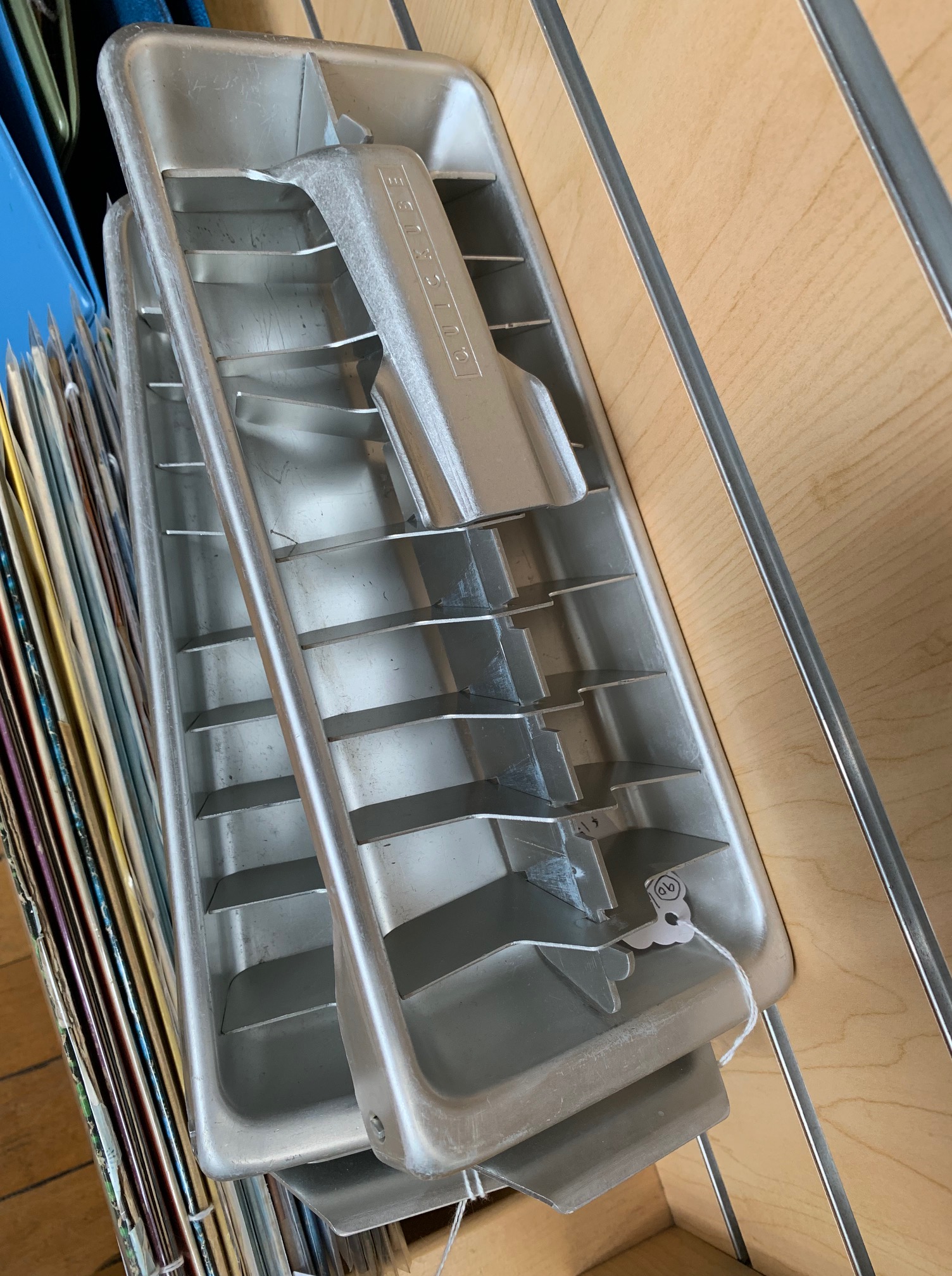
On a recent foray into an antique store we came across the metal ice-cube-trays used by our parents from the time prior to plastics. Kerri chimed, “I remember those from when I was growing up!” and, always the musician, starting making the symphony of sounds produced when the metal handle lifts, cracks and separates the cubes before dumping them into the bowl. She spun her musical rendition into a rhythmic wonder complete with an ice-tray dance. I know deep inside she was working on the lyrics and, had we not been in public, I would have been audience to a completely imagined, fully composed ice-cube-tray-song.

So, topping my list of gratitudes for the day: I saw the inception of an ice-cube song borne of a childhood memory. There was also an enthusiastic spontaneous ice-tray-dance that made me laugh out loud . I have water that comes directly into my house, and a cold box that is capable of making ice if I want it. I do not have to go down to the lake to cut and haul ice as my ancestors did. All-in-all, it’s a pretty good list!

read Kerri’s blogpost about ICE CUBE TRAYS

subscribe. like. share. support. comment. thank you!

Do Good Work [on Two Artists Tuesday]

As a purveyor of story, I’ve regularly explained away the large mound of dirt in our front yard as either the tunnel-sign of an enormous gopher or an ancient burial mound. Neither story had sticking power but I had to say something about the mountainous mess left behind after the crew dug a moat to fix our broken water line.

Kerri and I visited the mound daily and asked each other the same question: what are we going to do? The paperwork for the repair mentioned our responsibility for possibly doing “light landscaping” after the repair. With weeds wildly growing atop the burial mound, snaking their way through the chunks of concrete and asphalt, an answer to our question became pressing. Our neighbor, the landscaper, wheezed every time he looked our way. “We have to do something,” she said, marching inside and picking up the phone.

These are a few of the responses to her initial appeal to the company that dug the hole and made the mound: It will eventually settle. It can’t be that bad. It’s not our responsibility.

These are a few of Kerri’s replies to their responses: It is that bad. It will never settle. It’s your responsibility.

Initially they thought it was a smart move to send someone out to see the mound that was not so bad and would eventually settle. I’m certain they sent someone as a gesture, a token visit to demonstrate their concern, to quiet the complaint of the customer. The guy that came took one look and said, “This is a mess. We did this?”

A few days later a dump truck appeared, followed by a large scraper. They took away the mound. They smoothed the scar with a layer of new top soil. They scattered new grass seed. They covered it all with protective hay. We were shocked. We expected mound removal and nothing more.

Kerri and I visited the new hay-covered flat land front yard. Gopher and burial mound tales suddenly a thing of the past. She texted the story of the mound disappearance to Dan, our new-grass advisor and renowned-lawn-master. He wrote, “It’s nice to find people who want to do good work, who want to take responsibility for their work.” True. So true.

“I can’t believe it’s gone,” she said and smiled. “The squeaky wheel…”

Clapping imaginary dirt from my hands, feigning boy bravado, strutting with mock accomplishment, “Well. What’ll we take care of next?” I asked.

read Kerri’s blog post on HAYNETS

Add To The Story [on Not So Flawed Wednesday]

Our water theme continues though, instead of pipes breaking, surprise waterfalls in the basement, or spontaneous fountains in the front yard, we’re dancing on the other side of the theme. What was broken or compromised is slowly, as we can afford it, being fixed or replaced. And, as metaphors go, I welcome what this implies.

It is our very own kintsugi. Golden repair – or in our case – copper repair.

“…treating breakage and repair as part of the history…rather than something to disguise.” We’ve consciously created our home to be a keeper of stories: the driftwood that adorns our mantel, the rock cairns stacked by the plants, the chairs in our sunroom… all tell a story. A walk on a special beach. A mountain top. The day the car broke down in Minnesota. Adventure. Routine. Accident. Surprise.

We have a series of old suitcases stacked in our dining room. They are our “special boxes.” Each is filled with momentos of our life together. Concert ticket stubs, birthday cards, notes, old calendars, the bits chain from Pa’s workbench that we once wore as bracelets… Our story fodder. Connective tissue to our shared history.

The copper that Mike-the-plumber has installed in key locations around the house serve as connective tissue to the era of water. Our house is a special box, too. It’s nearly 100 years old so we are a chapter in its story, stewards merely. The copper repair is a visual keepsake, a golden repair from a time when the old pipes and fittings, having done good work, let us know with no uncertainty that they were retiring.

We love this house. We love being stewards to its story. We love that it is the keeper of our story. And, lately, we especially love being on this side of the water era, putting all the pieces back together again, adding to our entwined history, with undisguised copper-gold.

read Kerri’s blogpost about COPPER PIPES

Consider The Donkey [on Not So Flawed Wednesday]

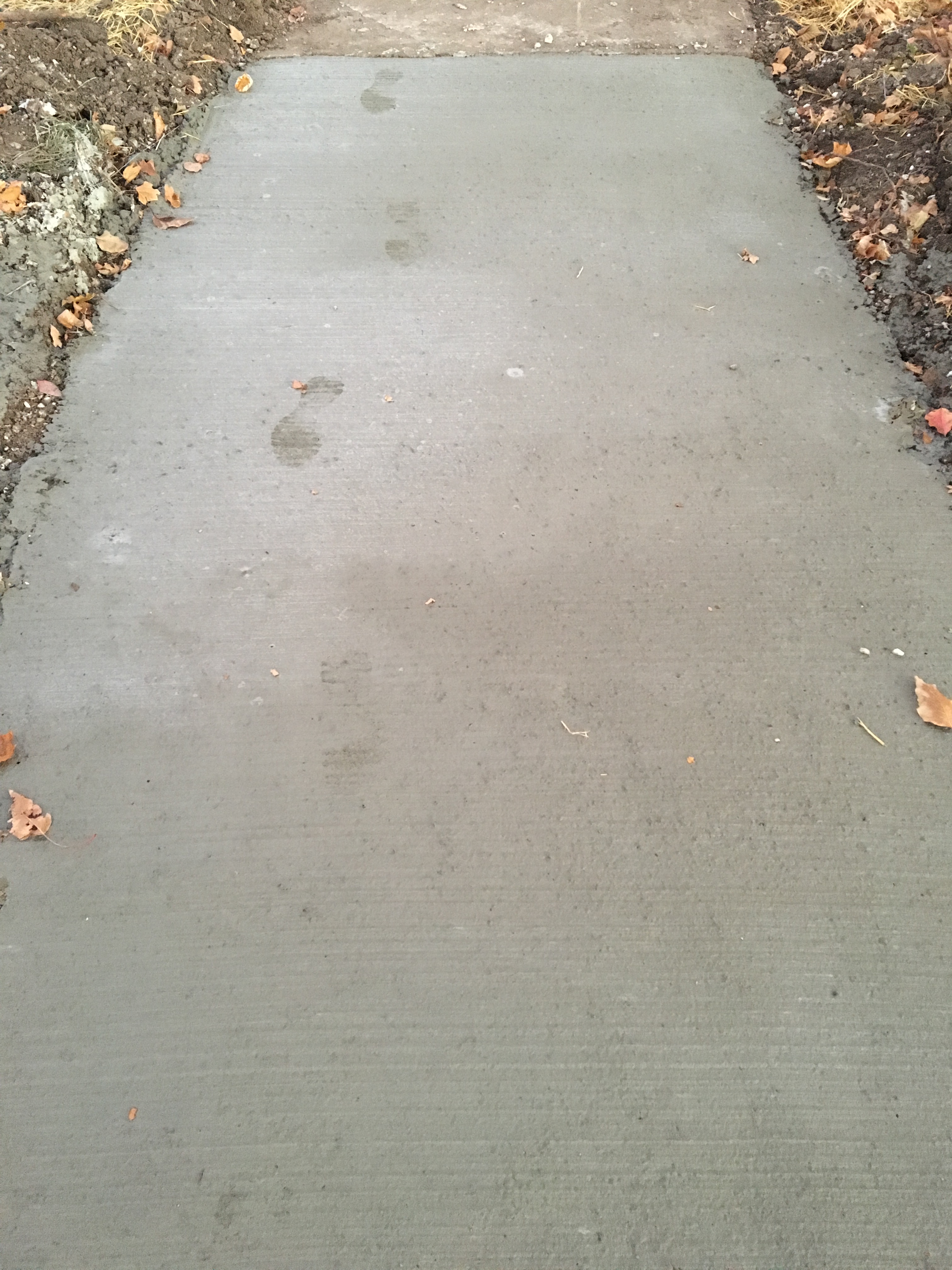
What you can’t see are the barriers and signs on either side of the wet cement declaring, “Sidewalk Closed!” I took a break from work, came down the stairs and Kerri said, “Some a**hole just walked across the wet cement.”

When the waterline to the house broke, when the process of fixing it became complex, when the heavy machinery arrived and the crew size doubled, when the guys from the city arrived to observe and inspect, the first thing the big machinery did, before digging the very-deep-moat, was to break out the sidewalk. And then they broke out the sidewalk to the porch. And then they trenched. And then they drilled a hole through the foundation of the house. That’s when the new pipe was installed. Those guys worked into the night. They were stalwart and steady.

The next day dawned and we saw in the light of day the destruction the fix caused.

Our front yard looks like a giant gopher dug a tunnel from the house to the street. We’ve considered finding a giant inflatable gopher but rejected it as “over-the-top.” Sometimes we have standards. A giant gopher is a step too far. The theory beneath the inflatable gopher is sound: if you can’t do anything about it, lean into it. We put a round-a-bout sign in the backyard when it became apparent that our dog was a secret velodrome maker and nothing we could do would stop his capacity to carve circles. It helped that he almost always circles in the same direction so the sign makes some sense. To us.

“We’re those people,” Kerri said, hands on hips, surveying the front yard damage. The grass is gone. Straw and mud are our new normal. “We look like a stable,” she said.

“Maybe this is the moment to get that donkey you’ve always wanted,” I replied. She really does want a donkey but the timing of my suggestion must have been off. She huffed, gave me the evil eye, and went inside. I counted to ten before following. Sometimes my brilliant suggestions take a few moments to penetrate and it’s best if I’m absent during the revelation.

The footprints across the concrete was too much to bear. That little patch of temporary concrete was the only new and unblemished area of the front yard. It’s as if our giant sore thumb had a nice and newly polished nail. The cement-stepper made certain that the destruction was complete: blemish, blemish everywhere. Giant gopher, old (donkey-less) stable, with a touch of marred cement.

The new permanent cement will come in the spring. “We’ll put up better barriers,” I said.

“We’ll sit out there with big sticks and a bad attitude,” Kerri replied.

Our reputation is certain to grow. “We really are those people,” I smiled. The evil eye – twice in a few short minutes – wiped the grin off my face. “I think I’ll go back to work,” I said and headed up the stairs, saying, “Think about the donkey.” Sometimes it takes a few minutes and a little prompting for the brilliant penny to drop.

read Kerri’s blog post about WET CEMENT