Delight In Delight

Dog-Dog throwing down the gauntlet!

Dog-Dog throwing down the gauntlet!

Tripper Dog-Dog-Dog has taught me a game. The rules are simple: I pick up a stick. He rushes me and snatches the stick from my hands. I exclaim, “Hey, that’s my stick!” (saying my line was the hardest part for him to teach me). And then I give chase. We have a small pond in our back yard and it makes a perfect track for running in circles. The game becomes more fun when I reverse directions and force Dog-Dog evasive maneuvers. Sometimes he drops the stick so that I will pick it up so that he will be able to snatch it from my hands so that I will exclaim, “Hey! That’s my stick,” and the game begins anew. The game ends when I can no longer breathe.

I’m not sure which of us loves it more. I find myself laughing uncontrollably at the look he gets in his eyes, the combination of intensity and glee. He delights in the pure pleasure of the chase. I delight in his delight.

During these bitter cold days, when I am dedicated to warmth and staying inside, he has a specific bounce and shirt nip technique that is the equivalent of throwing down a gauntlet. I know he wants to play THE GAME – not some namby-pamby indoor game, but the real thing. He is insistent and persistent – which has become another game: I pretend that I don’t understand to escalate his insistence. When he is near to outrage at the dull wit of his master, I feign a revelation. His relief is palpable. His excitement is unbridled, bouncing at the back door as I slowly (another game) pull on my coat and gloves.

Dog-Dog is helping me see life simply. Many things that used to seem so complicated now look to me like infinite games (see James Carse’s terrific book, Finite and Infinite Games). There is abundant joy everywhere if the game is recognized as a game, if playing the game well is more important than winning. If the game is not recognized, if winning is all that matters (a finite game), there will be serious faces, an existential tug-of-war, loads of stress, and dis-ease. “Hey, that’s my stick!” but with deep investments in stick ownership and control.

Each day that Dog-Dog tugs my sleeve, throws down the gauntlet, and bounds outside, I find myself bounding outside, too. I find that I am laughing before we start, before the stick is snatched from my hands. If the mark of a good life is the capacity to run for the love of running, the sheer joy of the pursuit, then I am blessed with a master teacher who believes that the best way, the only way to learn is in the doing: play to play.


title_pageGo here to buy hard copies (and Kindle) of my latest book: The Seer: The Mind of the Entrepreneur, Artist, Visionary, Innovator, Seeker, Learner, Leader, Creator,…You.

Or, go here for all digital forms of The Seer.
The PoetGo here for posters and prints of my paintings.

Dance With Sherry

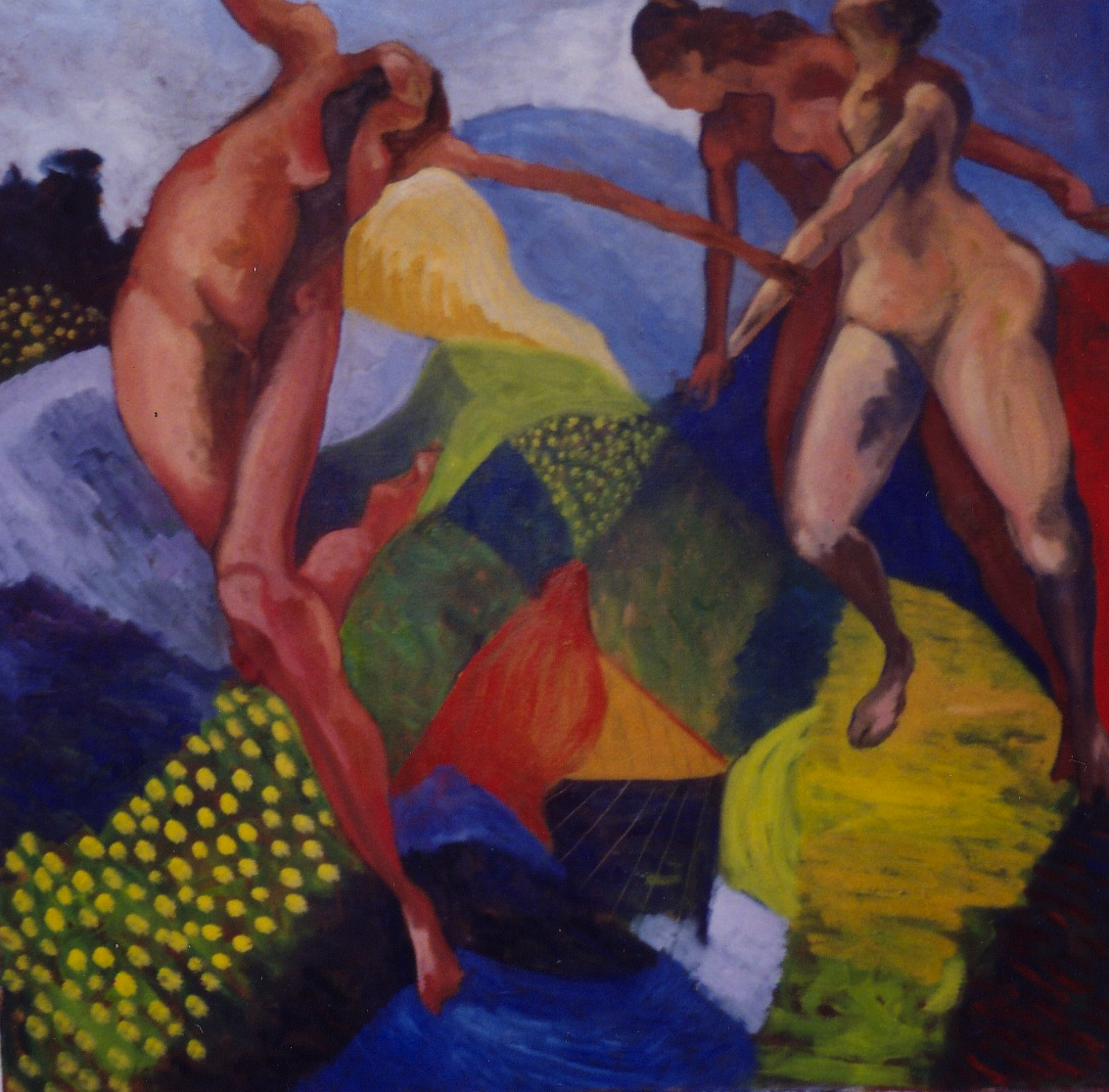
A painting from the archives. I call it 'Revelry!'

A painting from the archives. I call it ‘Revelry!’

Sherry was killed in a car wreck many years ago. It was ironic. She had a severe food allergy and was pronounced dead more times than she could count. Every time she went out to eat she rolled the dice. And, because she had been back and forth over that dark line so many times, she never took a day (or a meal) for granted. Death walked with her so she was awash in the appreciation of life. Sherry never missed an opportunity to laugh or dance or shock people. She was a one-person party and her enthusiasm was infectious.

She was a true friend and a colleague and took the plunge with me when I wanted to start a communications academy (teaching core curriculum through experiential processes; with students we made movies, plays, performance art pieces, poetry slams and ran businesses. It was not only a blast but hugely successful. We created things as opposed to studied things. The only trouble I ever had was getting the students to go home). Initially, the academy was a risk but she was quick to throw herself into the chaos and brought her friend Linda kicking and screaming with her. Both were extraordinary English teachers looking for a better way to teach. We were like adventurers in the wilds of education, blowing up old models and exploring new territory. It would be impossible to do today; innovators are nailed to the floor by the standardized master-tests that they must serve.

The last time I saw her she said, “This is the last time you’ll ever see me!” She had a Cheshire grin and I protested, “Why? Are you planning on avoiding me!” She leaned in so no one else might hear and said, “I doubt I’ll be alive when you come back.” I told her not to be stupid but, as usual, she was right. She also asked me to not come back for her funeral. “Let this be our goodbye,” she said.

Kerri and I have been cleaning out the house, purging years and years of boxes, clothes, and…stuff. We are making space for new things. Each load that goes out the door is matched by an opportunity or insight that flows in. Not only are we cleaning out but we are reaching back in time and visiting old friends and extraordinary moments. More than once we’ve sat to share photographs or letters, “This is what I used to look like,” or, “Remember I told you about my friend…., this is us 20 years ago.” For some reason, Sherry has been with me today. I have no photos of her and no letters but I have terrific memories. I’ve been meditating on joy all day and she was the embodiment of joy. She was the queen of mischief and bold leaps of faith. “Life is never sure!” she’d giggle. “You only have today so dance it or get off the floor!” she’d shout, punching me, her Cheshire grin breaking across her face before erupting in gales of laughter.

title_pageGo here to buy hard copies (and Kindle) of my latest book: The Seer: The Mind of the Entrepreneur, Artist, Visionary, Innovator, Seeker, Learner, Leader, Creator,…You.


Yoga.MeditationGo here for fine art prints (and other stuff) of my paintings.

Love The Game

Dog-Dog-Dog in the joy of the pursuit

Dog-Dog-Dog in the joy of the pursuit

Tripper Dog-Dog-Dog likes to chase bumblebees. He snaps at them in an attempt to catch them. He never catches them but that does not deter his endless attempts or the glee of his pursuit. He loves the chase. He loves it.

Tripper Dog-Dog-Dog also loves to be chased. He only requires something to carry, something to claim that makes the chase necessary. Any stick will do. I walk to the center of the yard, pick up the most available stick, he takes it from my hand and races away. My job is to give chase (as I pursue the Dog-Dog, I say again and again, “Give me my stick!” as if the stick was mine. Such is the power and grace of the human imagination!) Wild-eyed and joyful, he races around the yard at Mach speed, a bumblebee to my snapping dog. I never catch him but that does not deter the glee of my pursuit.

Dog-Dog is teaching me the secret to a joyful life. It is simple: love the chase. It is the glee of the pursuit. As James Carse wrote in Finite and Infinite Games, the point of the game is not to win but to continue the play. The point is to become a better and better player. In an infinite game, winning is not an outcome, it is a way of being. The point is to love playing.

I am grateful that Tripper Dog-Dog-Dog leaps for bees that are nearly impossible to catch. I am grateful that Tripper Dog-Dog-Dog runs from me even though he knows I will never catch him. When I am too tired to continue the chase, he drops the stick and circles back to where I stand huffing and puffing, ready to give him a few pets. His entire body wags with delight. His eyes shine with the thrill of the game and I laugh at his unbridled enthusiasm. He teaches me without using a single word. When I’ve caught my breath, I’ve learned to say, “Hey! Where’s my stick!” Picking any twig from the ground, he snatches it from my hand and we are off and running.

title_pageGo here to buy hard copies (and Kindle) of my latest book: The Seer: The Mind of the Entrepreneur, Artist, Visionary, Innovator, Seeker, Learner, Leader, Creator,…You.

Yoga.ForwardFoldGo here for Fine Art prints of my paintings

Tap Your Wellspring

photoThe winning phrase of the week is “Wellspring of jubilation.” It came as a wish, “May you always drink from the wellspring of jubilation.” What a great image!

A wellspring is no ordinary spring. It is a source, a beginning point. The phrase made me ask more than a few good questions. For instance, how would I live my life if I was sourced from a wellspring of jubilation? Or, a more useful question: what is my wellspring? Where do I draw inspiration?

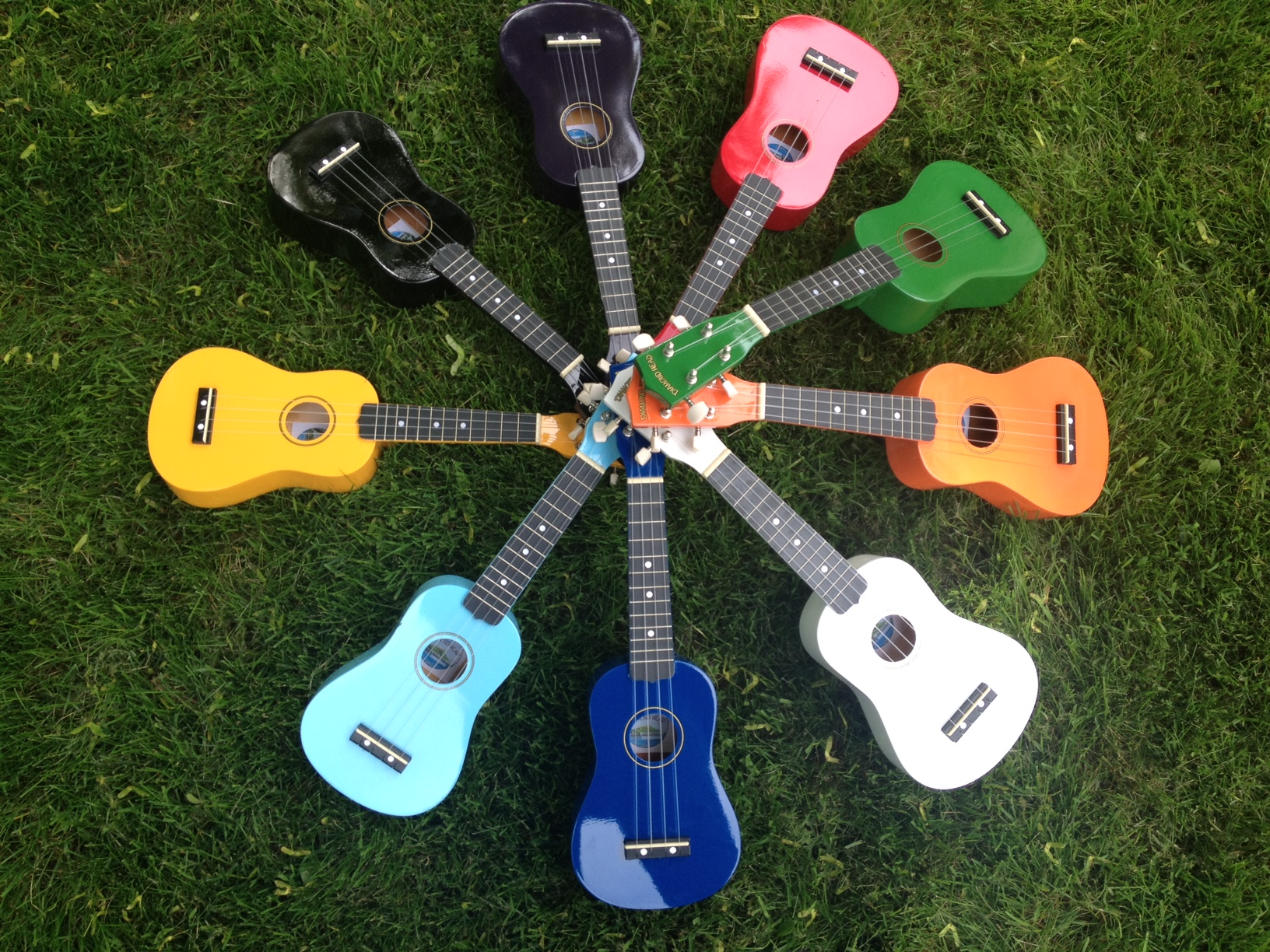
Last night on our back deck we held ukulele band practice. We are rank beginners but we played our notes with gusto whether they were right or wrong. We laughed. We sang so loud that a neighbor down the street got on her bike to seek the source of the music. What is the source of the music?

Jay brought a travel guitar to the ukulele practice to lend to Helen. Helen is petite and wants to play the guitar but is having a hard time finding one small enough for her hands. After the ukulele practice, Kerri held the guitar and played a few chords for Helen and the chords morphed into an old John Denver song. All the women began to sing. The sun was setting, the women were softly singing, and Helen’s face was beaming. She’d found a guitar that she could play. The moment was pure and stopped me in my tracks. It is a gorgeous moment when desire meets potential and possibility is born. This moment was a drink from the wellspring of jubilation. It filled me.

Jubilation is rejoicing. It is celebration and sometimes celebration is quiet. Sometimes rejoicing is a song whispered with friends as the light of day passes from pastel to gray. As I listened to their song, as I watched the faces of the singers, I decided that the wellspring of jubilation is everywhere. I am capable of being in my wellspring all the time. It is not location specific. The source of all things that inspire me is not a place: it is an orientation to my life. It is the simple act of paying attention; seeing the moment, participating in the ordinary that is extraordinary and knowing beyond doubt that the extraordinary is everywhere.

The extraordinary is happening all of the time. The question is not, “Where is it?” The question is, “Can you see it?”

title_pageGo here to buy hard copies (and Kindle) of my latest book: The Seer: The Mind of the Entrepreneur, Artist, Visionary, Innovator, Seeker, Learner, Leader, Creator,…You.

Go here to get fine art prints of my paintingsEmbrace

Give Joy

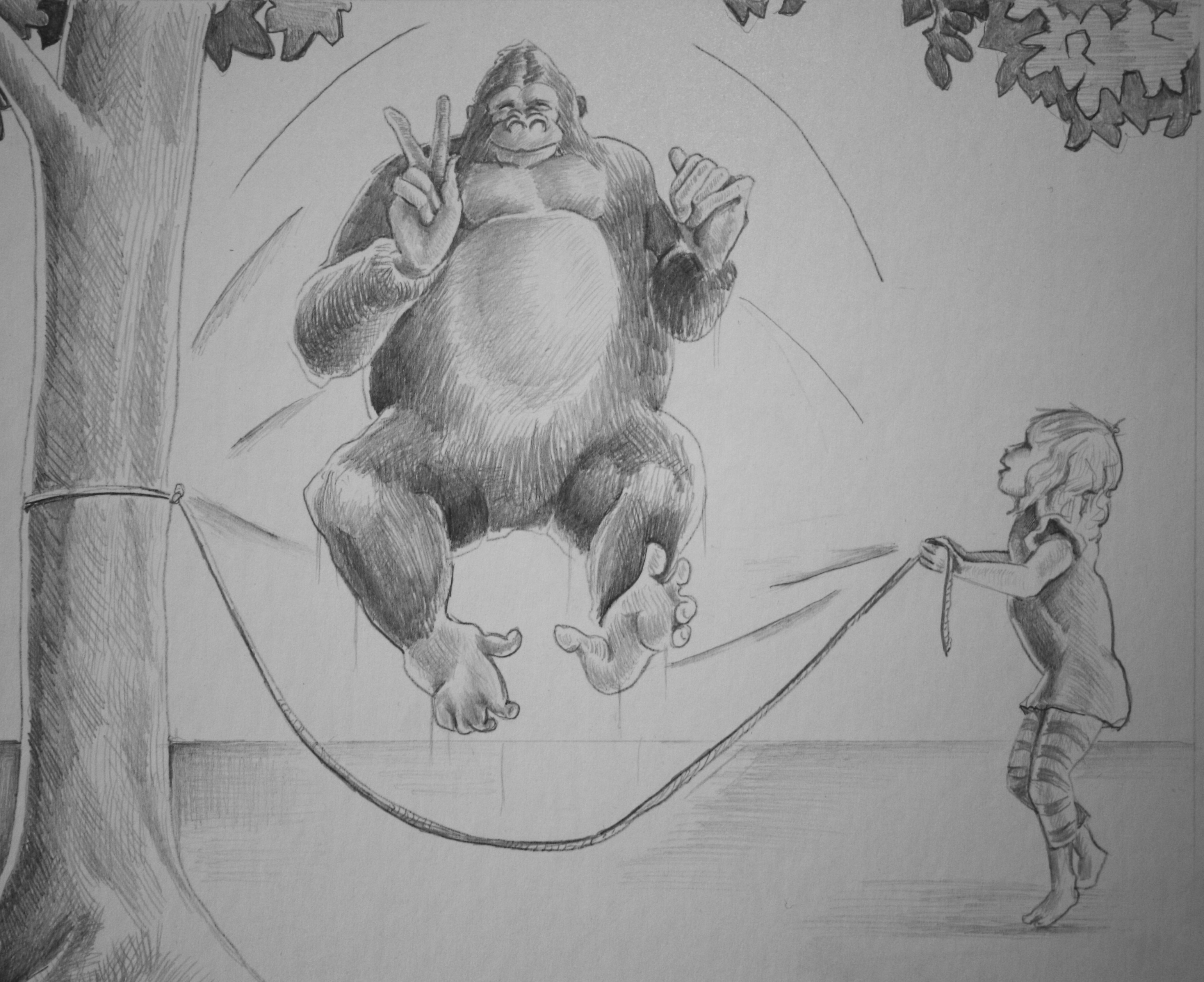
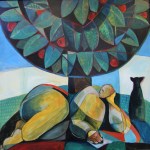
This is an illustration from my as yet unpublished children's book, Play To Play.

This is an illustration from my as yet unpublished children’s book, Play To Play.

The question was, “What gives you joy?” People responded with things like, “family,” “the sunrise,” and “community.” Someone offered, “Other people’s laughter gives me joy.” There were nods of agreement all around.

It is hard for me to hear a question like, “What gives you joy?” and not think of Viktor Frankel. As a young Jewish man in Nazi Germany, he somehow survived years in a concentration camp. He emerged believing that, other than sheer chance, the line that divided the survivors from those who perished was a capacity to give meaning to life – as opposed to seeking meaning from life. He noted that the prisoners who sought meaning from the experience perished. Those who made meaning from the experience were more apt to live another day; they storied hope instead of looked for it.

Viktor Frankel famously wrote that, “Happiness ensues.” Happiness follows. It is not something sought. It is not found on the outside. Happiness is a response. It comes from within. We bring happiness to a moment. We do not get happiness from the moment.

Joy is like happiness. As I listened to the responses to the question about joy, I thought about the language of “seeking” and “ensuing.” In the English language it is hard not to create a paradigm of separation. We rely heavily on our nouns. Things are distinct. Dissimilar. “It” is found outside; “it” is located inside. “I give meaning” versus “I get meaning.” Give. Get. Either way, within or without, there is a line of division; “it” cannot be in both places. I wondered if the experience of joy and happiness (or sadness and grief, for that matter) are co-creations. I wondered if the language of us/them, within/without actually obscured the other option: we seek it and it ensues because we engage life. We open and life opens. Joy, like happiness, is generated in the relationship space, the space between, and in the relationship space there is no separation. Your actions and my responses are intimately connected. Where is the line between my action and the impact it creates?

After the conversation about joy, Kristi talked about being empathic. She said, “I can feel other people’s pain and then I carry it.” Earlier in the week, Kerri and I had the same conversation. She told me that she wanted to learn how not to take on other people’s stuff. I told her about the time I sought a teacher named Anna Christensen who showed me how to feel but not take on other people’s pain. “We are all empathic to various degrees,” Anna said. “Most people, to survive, need to numb their capacity for feeling. It’s necessary for most people because they need to know where they end and other people begin. They need the illusion of the individual. But, that comes with a cost; it creates the terrible experience of aloneness,” she added.

If other people’s laughter gives joy, and we can universally agree that is true, then my laughter and your laughter give joy to others. Isn’t it really just that simple?

Go here to get my latest book, The Seer: The Mind of the Entrepreneur, Artist, Visionary, title_pageSeeker, Learner, Leader, Creator…You.

Go here for hard copies.

Be The Source

660. Join me in inspiring truly powerful people. Each day I will add a new thought, story or idea to support your quest and mine.

While preparing a new curriculum this morning, I reviewed work from the past and came across this phrase, something I wrote 4 years ago: In our language usage we often say, “_______ gives me joy.” So, for instance, “Painting gives me joy.” This phrasing leads us to believe that the joy is in the painting and you are the recipient of the joy. It leads us to believe that these “things” like joy, happiness, and contentment are external gems, separate from us, something we must seek to find.

Joy, happiness, and contentment are not things, not nouns. The painting does not give you joy, you bring the joy to the experience of painting. The capacity for joy is in you and ignites within you when you put yourself into a generative relationship. As I too often quote Viktor Frankel, “Happiness ensues.” Happiness and joy are not something you seek (separate from you), they are qualities that follow (originating from within you); joy is movement; a feeling is a verb. You are the source not the recipient.

I realize that I am writing a lot lately about the power of language to shape our perception. At present I am in a coffee shop and I just heard the barista tell her coworker that this upcoming year she will learn to say “no.” The couple at the table next to me are having an intense conversation and I just heard, “That’s just the way I am!” followed by, “Why can’t you be happy?” These are stories and the language is not incidental. It matters if you define yourself as separate from you joy. It matters if you believe that you are separate from your creativity or that you must do something to “deserve” happiness. If you define yourself as separate you will live separate from your powers of happiness, joy and contentment. You will think you need to seek them from others. You will define yourself as fundamentally powerless because you will orient yourself toward what you get from experiences instead of recognizing your infinite capacity to bring power to your life, to be power and vibrantly alive. Be the source of dynamic movement instead of a chaser of nouns. It matters.

Truly Powerful People (467)

467.
Join me in inspiring truly powerful people. Each day I will add a new thought, story or idea to support your quest and mine.

Saul-the-Chi-Lantern turned his back to us. He settled, ready to start the form. We readied ourselves to follow. Just as he was about to take the first step he stopped, turned and said, “A lot of marriages would be saved if only the man knew what color of toilet paper to buy.” It was either a Zen koan or a fragment of his internal monologue and either way we fell on the floor laughing.

“No really,” he continued, as if we weren’t howling. “There’s a right kind of tissue, a right color of Kleenex box and men seem completely oblivious to this fact. It causes a lot of strife!” And then he turned back to the beginning position as if he’d said nothing. We wiped the tears of laughter from our eyes. Wondering what just happened, we followed him into the form. Our hearts were light, our concentration was easy and I suspect we learned to stop being so serious in our approach to our Tai Chi. We certainly found a flow and rode a current when we started from laughter instead of knitting our brows and thinking our way through.

One of my great lessons from Bali was that the sacred is filled with laughter. The holy is ripe with giggling and joy. In addition to reverence, prayer, sermon, hymn, (such heavy words) humor, play, fun, and frolic are forms of worship. The gods might have a better sense of humor if we did. There’d be less road rage. Men would not wear ties and take themselves so seriously. We might not need a 24-hour entertainment-cycle-disguised-as-news to keep us occupied. Of this I am certain: we’d have a better flow of chi.