A Very Real Question [David’s blog on Merely A Thought Monday]

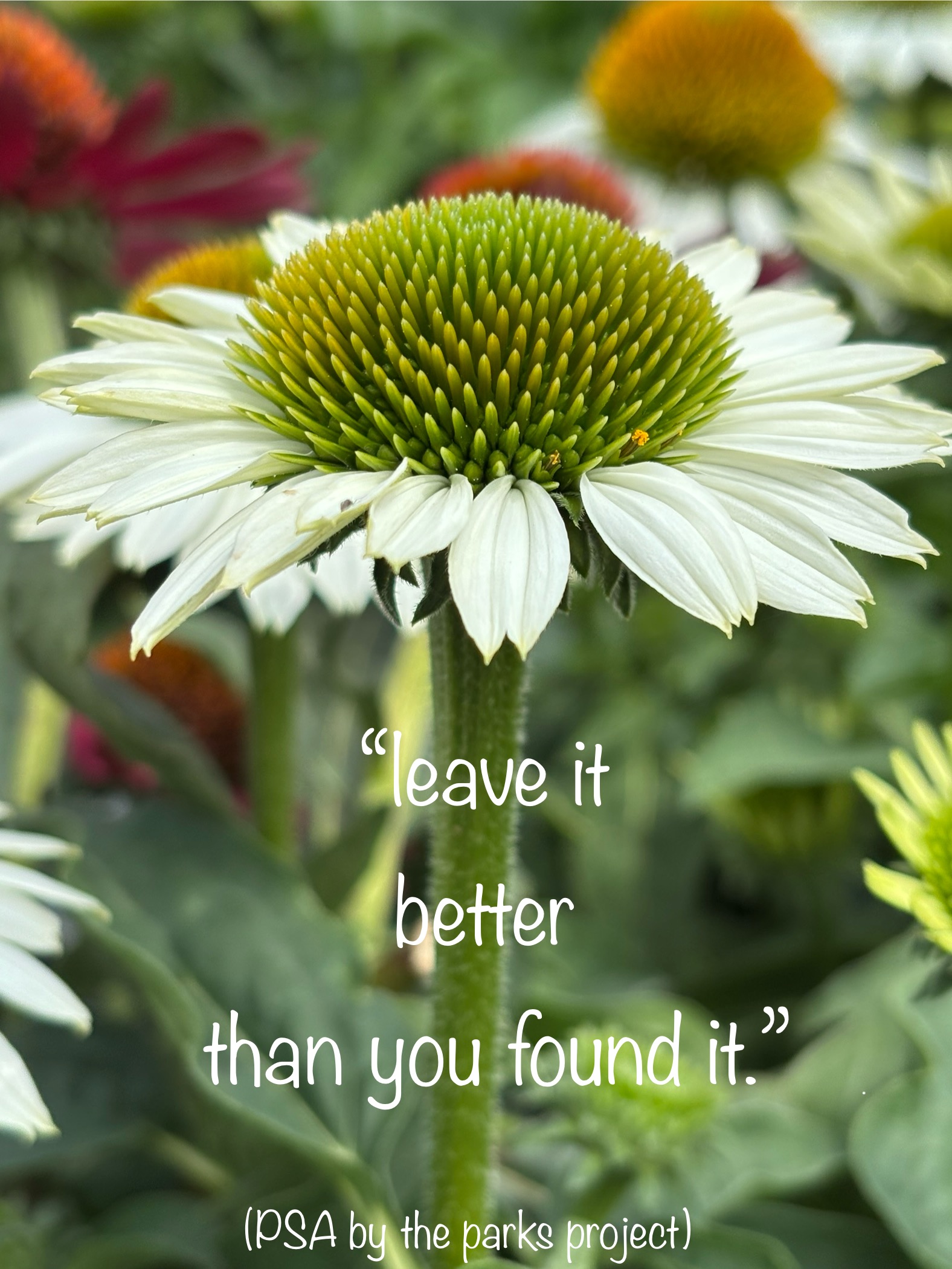
In the hiker/outdoor community there is a fundamental principle articulated in two similar mantras: First, “Leave no trace”. Second, “Leave it better than you found it”. Tom used to say it this way: “Take care of your own trash; don’t leave it for other people to deal with.” He was speaking about more than plastic bottles and candy bar wrappers. All variations of the theme are good rules to live by.

We are merely visitors to this planet. We do not own it or control it. Ours is to care for it and leave it better for those who follow. Ideally that is what it means to live in community: care for others, care for the environment. Consider the long and short-term impact of our actions. We are stewards.

Consciousness of impact. Acting with care and intention to “leave it better than we found it” requires a simple fundamental skill: the capacity to address what is actual, to discern between what is real and what is blind-belief.

This is what is actual:

“Ten of the eleven U.S. recessions between 1953 and 2020 began under Republican presidents. Of these, the most statistically significant differences are in real GDP growth, unemployment rate change, stock market annual return, and job creation rate.” Wikipedia: US Economic Performance by Presidential Party.

The operative word in the wiki post is “real”. Real numbers. Real growth. Real job creation. Real science.

Our current leadership (I use the term loosely) on every front is waging a war against what is real. It is the reason US Bureau of Labor Statistics (BLS) commissioner Erika McEntarfer was just fired; she reported real employment numbers and the sitting republican president, rather than deal with the actual impact of his real policy failures, killed the messenger.

With stock market losses, free-falling jobs creation rate, a shrinking economy, a historic shift of wealth from the poorest to the already morbidly wealthy, the tariff tsunami about to hit…in only six months the bustling economy that the republicans inherited from the previous democratic president, called the Envy of the World, is rapidly disintegrating.

In the real world it would seem prudent to buckle up for yet another recession engineered by a republican president, eleven of twelve. This one bodes to be a whopper. It does not take long for trash to foul an ecosystem.

Not only will this republican administration not leave the nation better than they found it, in their war against what is real they seem singularly dedicated to looting it with nary a concern for those who will follow. Like all republican administrations in the past 80 years, they will leave the messy trash from their gluttonous party for others to clean up.

We are now faced with a very real and sobering question: will our democracy survive this reckless trashing?

read Kerri’s blogpost about LEAVE IT BETTER

likesharesupportcommentthankyou

Pioneers [David’s blog on KS Friday]

Never in my wildest dreams did the younger version of me imagine that I would someday research fun facts about wildflowers. But, because Kerri has a camera attached to her right hand and because we walk trails surrounded by meadows and because we use many of Kerri’s photos as prompts for our Melange, wildflowers and not-so-wild flowers have caught my attention.

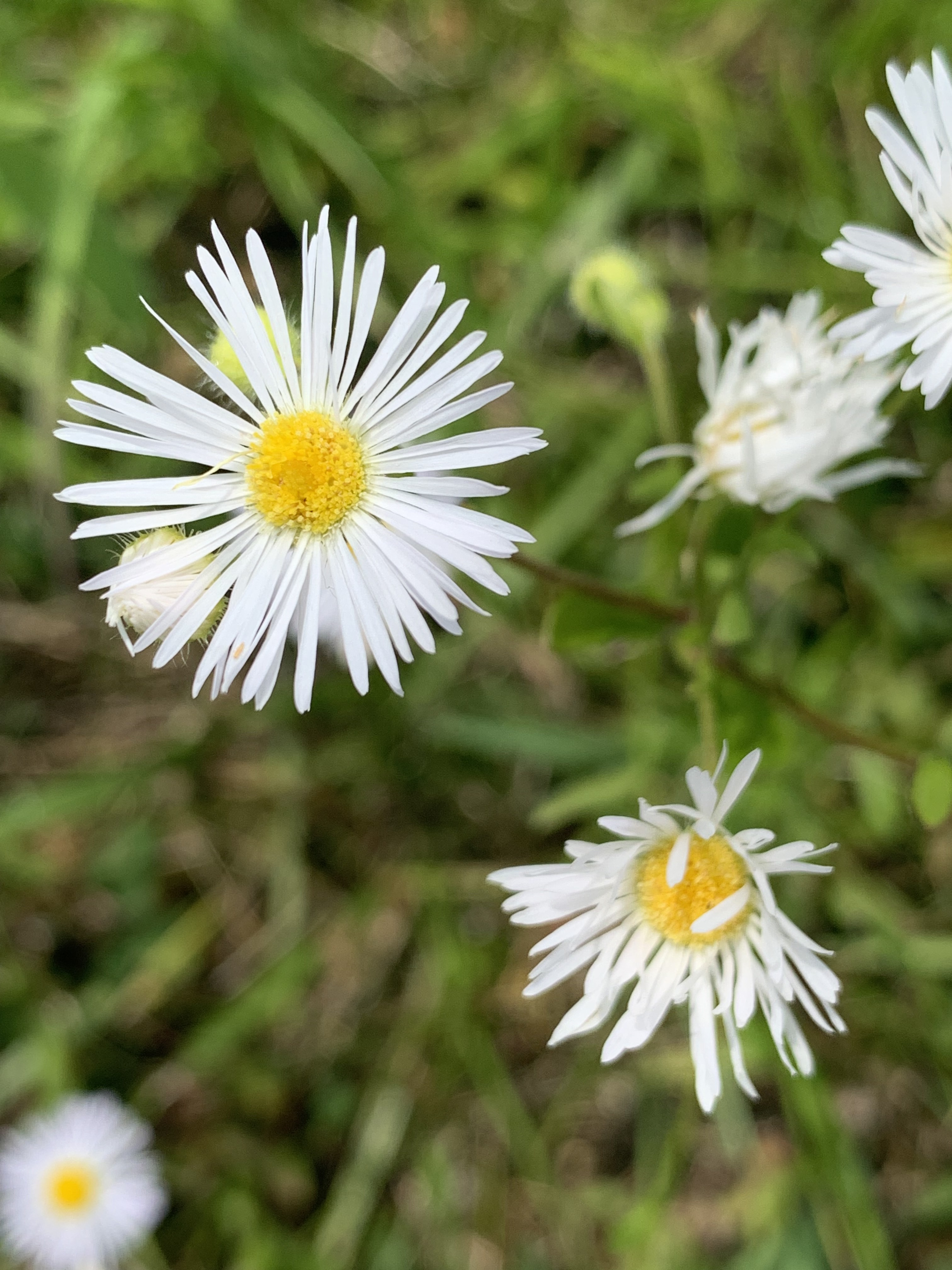
Inevitably, one tidbit of information captures my imagination and today’s tidbit about Daisy Fleabane is this: it’s considered a pioneer species which means it is among the first plants to move into an area that has been disturbed – by natural disasters like fire or man-made like plowing or construction. They improve the ecosystem by accumulating nutrients and breaking up compacted soil, opening the way for other less hardy species to follow. Sub tidbit: because they are the first, some people treat pioneer species as weeds, invaders.

It is never easy to be the first. Ask Rosa Parks or Jackie Robinson.

Ask Barack. Ask Kamala.

People who know what they are doing, people attempting to restore health to devastated ecosystems, purposefully introduce pioneer species into a devastated landscape. They know the value of the pioneer in preparing the foundation for healing, breaking up hard-packed-minds and closed-angry-hearts. They know the necessity of the first, of the pioneer, to rehabilitate and nurture a healthy, unified ecosystem.

Ask Joe.

Grateful on the album AS IT IS © 2004 Kerri Sherwood

Kerri’s albums are available on iTunes and streaming on Pandora and iHeart Radio

Bonus and fitting for new beginnings. This is the song Kerri wrote and performed for our wedding. It makes me cry every time I hear it:

And Now © 2015 Kerri Sherwood

read Kerri’s blogpost about DAISY FLEABANE

like. share. support. subscribe. comment…thank you.

React [on Two Artist’s Tuesday]

The answer is herbicide. That blue coloring sprayed on stumps and shards of stumps along our path is meant to prevent the invasive species from sending up new shoots. Eliminating the invasive species so the native plants might someday make a comeback is the point. It only looks like total plant decimation with performance-art-blue dotting the eradicated forest. It is, in actuality, rejuvenation.

We met a couple walking the path. They were bird watchers and thrilled about the rejuvenation project. They explained how the work would allow the river to return to its natural course. The invasive plants were choking the waterway. With the removal of the invasive plants, the wildlife, like the plants, might have a renaissance. They assured us we’d see the difference when spring returned.

When I lived in the pacific northwest, there was deep concern about the salmon. Damming the rivers interrupted the natural cycle of the salmon’s return to spawn and the entire ecosystem was suffering because of it. Salmon are considered a “keystone” species; without the keystone, the ecosystem falls apart.

As we walked our loop I wondered how the invasive plants were introduced and how long had it taken for the invaders to choke the native plants? What prompted the preserve to act now?

Most likely, the invasive plants were introduced unknowingly by people. We cultivate land. We “utilize” nature as a resource. We study. We explore. We develop. We trade. We migrate. We are a force of nature. We walk well tended paths constructed for our ease and enjoyment. Sometimes conscious and sometimes unconscious of our impact.

I had a great conversation with a forest ranger about the re-introduction of wolves into Yellowstone. The thought of “managing” nature has always struck me as paradoxical. We eradicated the wolves and then felt the impact. We re-introduced the wolves to try and correct the mistake before the ecosystem collapsed, and set off another chain reaction of unintended consequences that required further intervention. It’s like prescribing a drug to manage the side effects of a medication.

As we walked I wondered if the concept of natural balance is just too hard for us to grok. We generally don’t realize that interdependence applies to us, too. We believe we are nature’s managers rather than part of the chain. That prevents us from seeing ourselves as invasive, responsible, reactive.

We manage. And sometimes that looks like forest-performance-art-devastation with accents of green-shade-blue.

read Kerri’s blogpost about HERBICIDE