Look Up

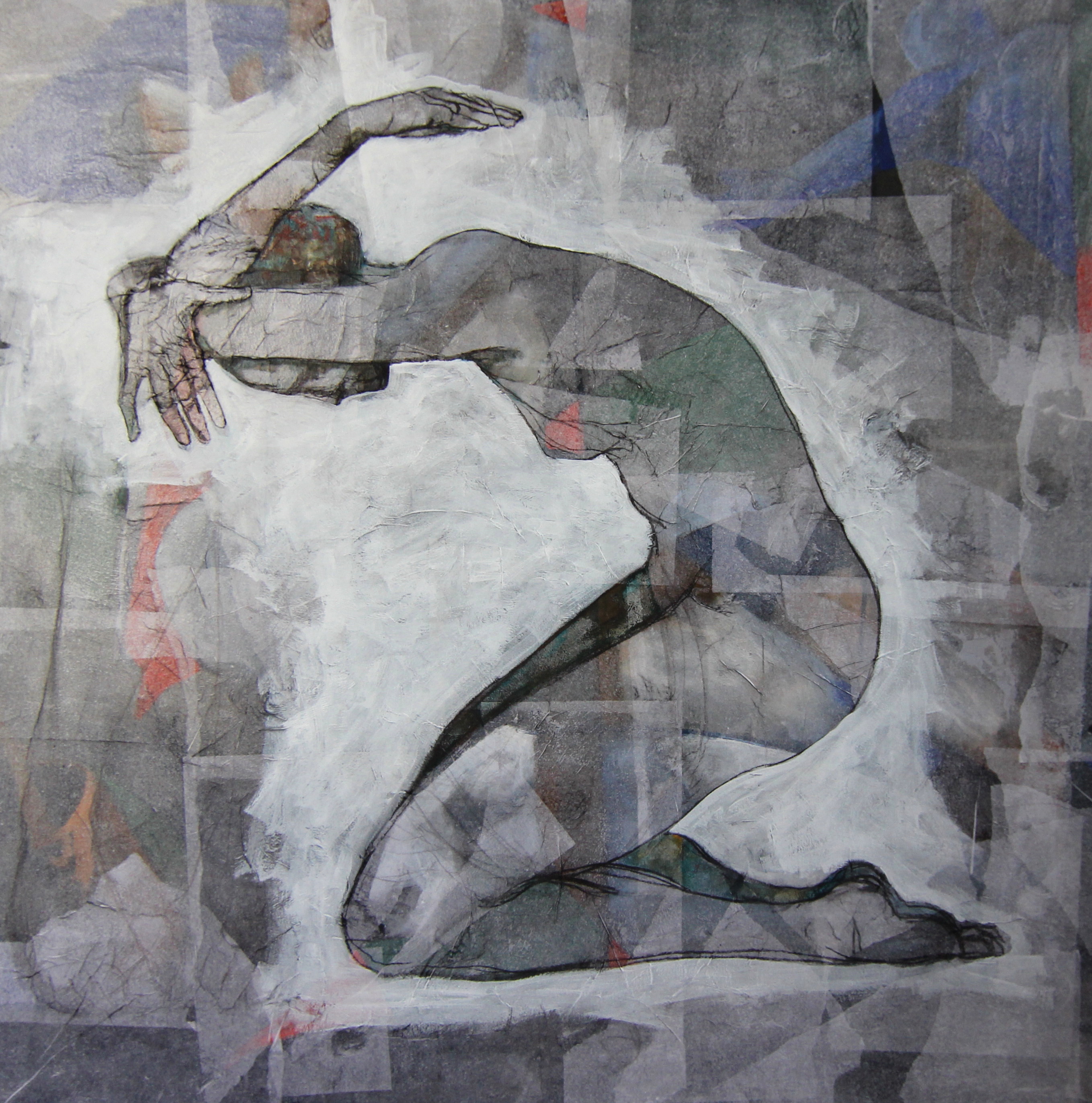
Eve, by David Robinson

Eve, by David Robinson

The nights have been bitter cold and clear. The cold always seems to make the stars sharp like crystals. Standing on the back deck, looking at the stars, I remembered a conversation I had years ago. I was working with students and we strayed into a discussion of human beings connection to the stars. It was cosmology in a nutshell.

Here was the gist of the conversation: something happened to human consciousness when they (we) understood that our patterns of life on earth were (are) oriented to happenings in the sky. For instance, our impulse to worship is intimately connected to the solstice and equinox: the disappearance and return of the light. Our migration habits, planting habits, daily rising-and-shining habits are relative to the movement of the sun. The tides in the ocean and the waters in our body are responsive to the pull of the moon. With the awareness, we crossed a line from chaos to order, from unconsciousness to consciousness. There was a relationship, a pattern, a belonging, a participation. There was something bigger.

During that same period in my life I also worked with a group of inner city students who had never seen the stars. It was a revelation for me. For them, there was no sense of relationship, there was no “something bigger.” There was a load of anger and existential separation.

This holiday season, I was struck by two things: 1) how many times I had conversations with people, glued to their televisions, who are frightened and feeling helpless by the happenings in the world, and 2) how many casual family photos crossed my path featuring a gathering of individuals, alone together, faces to smart phones. Everyone was looking down.

Standing on the back deck on a dark and starry night, wrapped against the cold, I wonder what some distant teacher in the future will tell his or her students about what happened to human consciousness when they (we) ceased looking up.

title_pageGo here to buy hard copies (and Kindle) of my latest book: The Seer: The Mind of the Entrepreneur, Artist, Visionary, Innovator, Seeker, Learner, Leader, Creator,…You.

Yoga Series 7Go here for prints of my paintings

Take A Look At Strider

802. Join me in inspiring truly powerful people. Each day I will add a new thought, story or idea to support your quest and mine.

He was formidable walking down the hill toward the waterfront. Wrapped in a grey blanket that made him look like a Jedi knight he took bold confident strides. He was a paradox: homeless and determined, aimless and intentional. People parted and opened a path for him even before they could see him. They felt him coming. He was a force.

For a moment I felt as if I was watching two worlds overlap. His grey blanket-cape swirling through a crowd of reserved business-casual wear. He was the most alive person on the street and the most fearsome. He was striding beyond the rules. He didn’t care if he was hit by a car or ran over a tourist. He didn’t care and the freedom of not caring was dangerous. I could see the message in his pace: no one cared for him so why should he care for anyone. He was experiencing the worst punishment a tribe can deliver: he was cast out. He did not belong.

I knew he had no destination because I recognized the force that drove him. He wanted his life to be different. He wanted a break, an opportunity, anything that looked like hope. And there was none in sight. He was pissed at his life choices. All he could do in this moment was walk and walk fast, hard, and determined and burn off the fury. It would either make him feel the vibrancy of his life or exhaust him and either way he would emerge from his walk in another mindset. He would find hope or fatigue and sleep. He would live another day.

As I watched him descend the hill, knowing that he would simply turn and walk right back up again only to descend one more time – a modern day Sisyphus – I also realized that the folks in business-casual were probably doing the same thing only with less awareness but with a modicum of hope. Someone cared about their actions. Someone cared that they showed up. They had a place to go. The strider did not.

Last night, I had yet another conversation about the need to create community and connectivity – this time with a maker of software. My fascination with this conversation began nearly 15 years ago in school with the ongoing ever-present conversation about creating community. I hear it in one form or another almost everyday. Here in a metro area of almost 2 million people we feel the need to create community and that can only be true because we do not experience it beyond the superficial. A community cares for the health and well being of all of its members. A community does not place the interests of the few above the values of the whole.

I have been walking since January AND I have places to go. If I do not show up at Carol’s before midnight I get a text. Judy checks in with me. Horatio and Arnie want to know how I am doing. Megan reminds me to eat and throughout the day tugs on the lifeline to see if I will tug back. I am loved. I have been meditating on this thing called home that has evaded me or that I have avoided (I don’t know which) and the strider shook my meditation like a snow globe. I think I will find home because I am determined to create it. I wonder if any of us will ever really know a greater community? The man in the cape swirled down the hill and people parted, they glanced but mostly did not give him a second look. Outcasts are ordinary. Not belonging to something bigger is an everyday occurrence. Do you feel it?

Cooperate

714. Join me in inspiring truly powerful people. Each day I will add a new thought, story or idea to support your quest and mine.

During my drive from Champaign to Omaha, just after sunset, it began to snow. There was a swirling wind and in a matter of moments it was a white out. The road was mostly invisible. Cars immediately fell in line behind cars. Trucks slowed and set a careful pace. People cooperated without debate, without knowledge of the other drivers’ political affiliation, gender, race or sexual orientation. We needed each other. There was no power game or status imperative. All the silly illusions fell away. We needed each other and we did what came naturally. We cooperated.

There is a collision of two great thoughts that I appreciate. The first comes from my friend Roger, a director of plays and studier of humans; he once told me that denial was one of the strongest human impulses. The second thought comes for E.O. Wilson (I’ve rattled this off more than a few times) who said that the strongest human impulse is to belong. Combine the two thoughts and you get an amazing collision of impulses: a species called humans that need to belong to each other but deny it. This contradictory impulse makes possible The Gap or Old Navy; can you deny that you shop at a chain store to express your individuality as a way to belong? I can only imagine that the Martians are having a hey-day studying us.

And then the illusion drops, the second strongest impulse retreats and only the first remains. We need each other. We drive into a white out. The hurricane wipes our city off the map, the earthquake knocks our houses off their foundations. We pull together, put down our need to be right, and line up to help. We see our belonging. We see this thing called “”the common cause,” namely, survival.

The question, then, is obvious: do we need to wait until we’ve exhausted our fuel supply, depleted our aquifers, or warmed our globe before we suspend our denial and see this thing called “the common cause?” More and more contemporary science is finding that we have it all wrong: survival is not something achieved by the fittest; survival is a cooperative art.

Show Up

707. Join me in inspiring truly powerful people. Each day I will add a new thought, story or idea to support your quest and mine

“The one thing that you have that nobody else has is you. Your voice, your mind, your story, your vision. So write and draw and build and play and dance and live as only you can.” Neil Gaiman

The clichés are ubiquitous: fingerprints and snowflakes, each of us is unique in the universe. There will never be another like you and if you’ve ever looked through a telescope into the universe you will recognize how profound a recognition that is. The universe is vast and you are unique in it. You are vast.

The paradox of our uniqueness, of course, is that we want to fit in. As E.O. Wilson suggests, the strongest human impulse is to belong. The question becomes do you need to sacrifice something essential to fit into someone else’s idea or is bringing to life your unique perspective the very thing that will make you belong?

I recently heard a speech and the speaker was making a case for self-love. She spoke of the myriad of opposing opinions she’s heard and sometimes entertained about who she should be. Like most of us, she spent many years trying to conform herself to those conflicting ideas – other people’s ideas of who she should be. Aesop wrote a fable about that and the moral was clear: you will lose it all if you don’t listen to yourself. No one has the capacity to love you like yourself. When you come upon your idea of who and what you want to be, and strive for that, there is no conflict or sacrifice. You will fulfill it all when you listen to yourself. This, too, was the speaker’s conclusion.

To me, the shorthand is to orient your life according to what you bring to it and not according to what you get from it. Show up as you know yourself to be not as anyone expects you to be. Let yourself be seen as who you are: unique in all the universe.