Carry Your Story

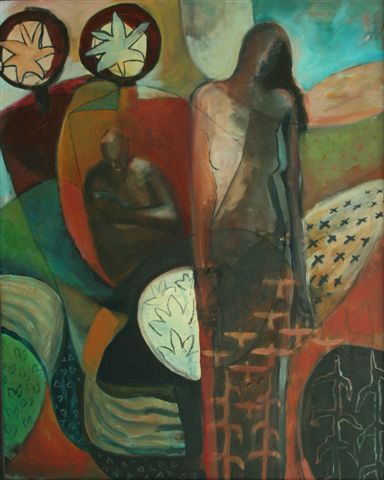
I call this painting, "Canopy"

I call this painting, “Canopy”

Since writing my post yesterday I’ve been rolling around in my mind the image from this quote from Deepak Chopra’s book, Life After Death: “Every former self you have left behind is a ghost. Your body is no longer the body of a child. Your thoughts, desires, fears, and hopes have changed. It would be terrible to walk around with all your dead selves holding on.”

All day I’ve been looking at people as if they are walking around with all of their dead selves hanging on. And, technically, we are. We define our present moment through the eyes of the past. I suppose the number of ghosts we carry depends upon the definition we carry about ourselves.

Definitions are stories. Thoughts, desires, fears and hopes are contained in the form of a story. Any thought you have is actually a form of storytelling. When we worry if this will happen or that, we are telling a story. When we tell our friends about being stuck in a traffic jam, we are telling a story. When we say, “This is who I am,” we are telling a story. When we say, “That is who they are,” we are telling a story. In a week, my family will gather to memorialize my grandfather; we will tell his story.

I’ve found in many parables and myths that an inner monologue (the story you tell yourself) acts like a fog. It obscures the present. For instance, in the Sisyphus tale, Sisyphus goes to the underworld and watches the souls of the newly departed cross the river Styx. Each soul thinks it is alone even though they are with many others; they cannot see the others through the curtain of their ego story. To enter the great “I am” they must first stop telling a story of separation.

Stories obscure.

We carry our stories forward. That is a legacy. Carrying a story forward is how we connect to our ancestry. Jean Houston once used an image that I like: we are the burning point of the ancestral line. We carry the story-torch forward. Like the Olympic flame our fire was ignited by a spark that stretches back eons. And through us, this flame will reach far into the future. We burn now. This story-torch, the family story, is the root story. It illuminates us.

Stories enlighten.

In both cases, obscuring and illuminating, stories can be heavy to carry. Or, they can be light. It may not be so terrible to walk around with your dead selves holding on if your dead selves tell a story love and connection, a story of hope and aspiration, a story of yearning and possibility. If illumination is the act of transcending your story, a step toward illumination certainly includes a story of love, and usefulness, and a deep appreciation of the ordinary moments that we story to fill our extraordinary days.

title_pageGo here for my latest book


Leave Your Ghost

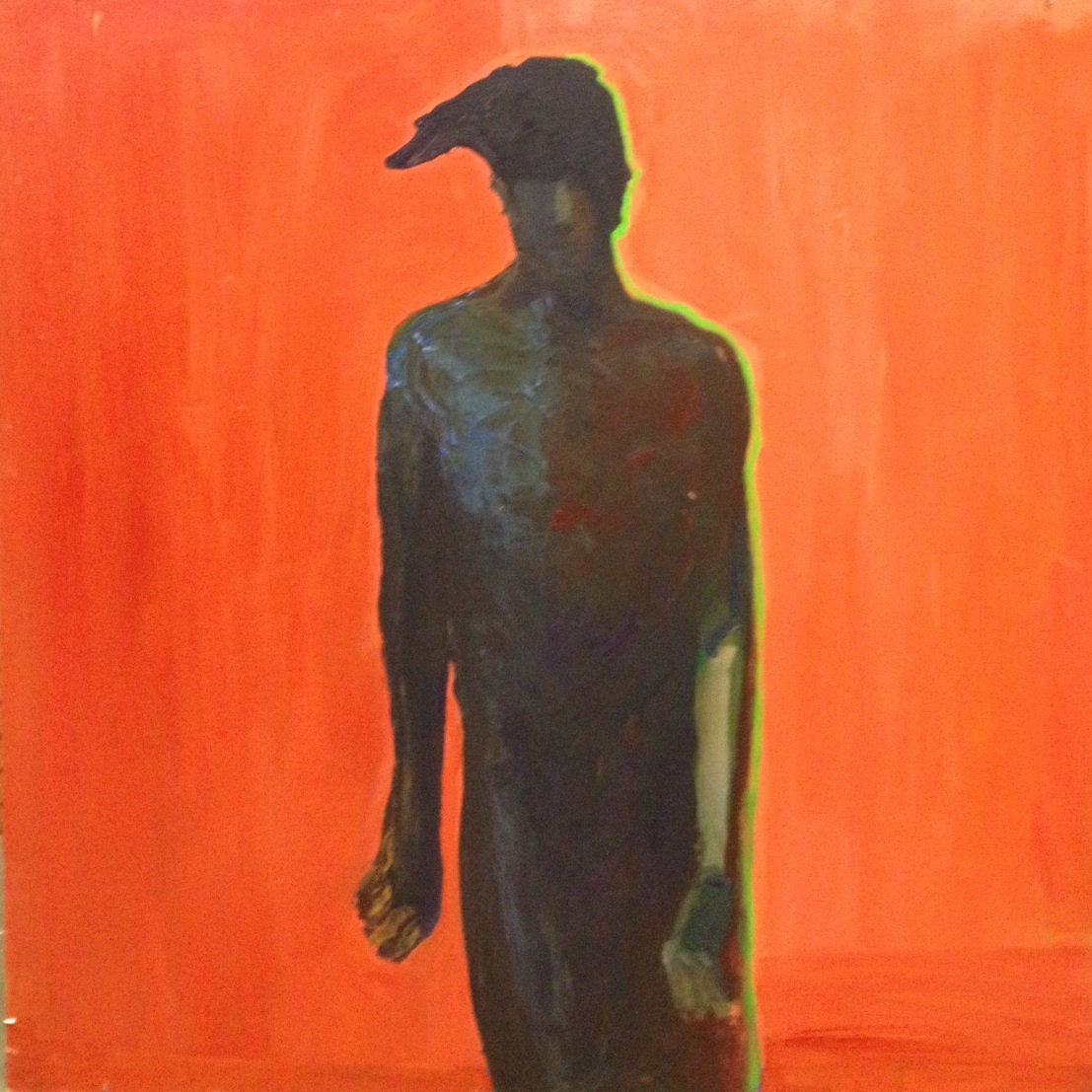
from the archives. I call this painting "Demeter."

from the archives. I call this painting “Demeter.”

As Alan said, this year for me is a year of departures. First Tom, then Kathy, Bob, and Doug passed; mentors all. Earlier this month Casey, who lived a long season and once told me that heaven didn’t want him and hell wouldn’t have him, finally found his way out of this life and into his proper place in the mystery.

When I was a boy my favorite book was an old college text of my father’s on comparative religions. It was moldering on a shelf in the basement with other long forgotten books. Finding it was like uncovering buried treasure. I fell into it, reading and rereading it. Among other things, it helped me understand that religion was not fact but a cultural expression of universal experiences. Human beings have to deal with the enormity of existence (who am I?), birth (where do I come from), death (where am I going?), and everything in between (what’s my purpose?). Human beings deal with the enormity of existence like they deal with everything in life: they story it.

Since there has been so many significant departures this year I’ve been doing some reading about death and dying. Lately, I’m reading Deepak Chopra’s book, Life After Death. He weaves the book around a parable of a young woman who must confront Death. The woman seeks the help of rishi, a wise contemplative who lives in the forest. In one of my favorite sections of the parable, the rishi introduces the young woman to ghosts. The first is a toddler; the second is young girl. The woman soon recognizes that the ghosts are her past; they are the phantoms of various stages of her own life. The rishi tells her, “Every former self you have left behind is a ghost. Your body is no longer the body of a child. Your thoughts, desires, fears, and hopes have changed. It would be terrible to walk around with all your dead selves holding on.”

He teaches her that death has been with her every moment of her life. “You have survived thousands of deaths every day as your old thoughts, your old cells, your old emotions, and even your old identity passed away. Everyone is living in the afterlife right now. What is there to fear and doubt?”

title_pageGo here for my latest book

Go here for fine art prints of my paintings.

Story Your Life

title_pageI’ve received a few questions this week about life stories and rather than blather…here’s another snippet from my book, The Seer:

Stories often deal with the collision that arises when learned patterns blind us to our natural impulses. Living according to what we “should do” or “should think” inevitably collides with what we desire to do and this provides a hot crucible for growth. When Virgil asked me to practice “not knowing” he was poking a hole in my story of “should do” so that I might once again hear what I intuitively knew to be true. Stories show us how to get out of our own way. As Virgil recently wrote:

Virgil: You are at one time the source of your yearning and your greatest obstacle. What you think that you should do IS the obstacle to your desire.

In my latest chat with Virgil I told him of my revelations about ‘not knowing what I DO know,’ about my memory of my client, and how I convinced her that she didn’t need me and could do the work by herself. I wrote:

Me: At the time I really needed the money. I needed the business! And I spent that morning convincing a potential client that she didn’t need me. It’s the story of my life!

He responded:

Virgil: Oh, you are dangerously close to the third recognition.

I decided I needed to stop being careful with how I said things to Virgil. I’d just learned that my language mattered so I might as well write what I was thinking:

Me: Well, maybe you should tell me before I trip over something and hurt myself. You must have an answer or two in there somewhere…

Virgil: I’m woefully low on answers but I do have a question for you: What did you mean when you wrote: It’s the story of my life?

Me: I don’t know. It was just a phrase, an attempt at humor.

Virgil: What if it’s not just a phrase?

Me: You mean that convincing people that they don’t need my services is the story of my life? That is why my business crashed?

Virgil: No. I’m not inferring, interpreting or implying anything. You used this phrase: It is the story of my life. I’m asking you to consider that this is more than a flippant phrase. Are you aware of the story of your life?

I was getting angry again. And I was beginning to recognize that my anger was a pattern that flared when I felt lost. I get angry when I am driving and miss my turn or can’t find where I’m going. I wanted a map. I wanted Virgil to be my personal GPS and tell me where to go. Where were we going with this? Sometimes I can’t help my sarcasm:

Me: You mean I only get one story?

Virgil: Your story is not something you get. Remember, your language matters. Choose your words more carefully and you might see the third recognition before you trip over it. Connect the dots. Tripping over it will not hurt you. It’s the choice to be blind that causes your pain.

Go here to get my latest book, The Seer: The Mind of the Entrepreneur, Artist, Visionary, Seeker, Learner, Leader, Creator…You.
Go here for hard copies.


Have The Conversation

A painting I did twenty years ago of my dad. I call him Columbus.

A painting I did twenty years ago of my dad. I call him Columbus.

When Bob died I wrote his wife, Ruby, a note saying that I’d give anything to have another conversation with Bob. Just one more conversation.

When Jim wrote to tell me of Doug’s passing, we had an email exchange.

I signed off the email with this phrase: “Yet another conversation I will never have….” Jim answered with a warm reminiscence of Doug, a recounting of their meeting as young teachers, watching Doug navigate and ultimately heal the psychological wounds from war. Jim signed off with this thought:

War is not just hell.  It is eternal hell.  Particularly for those with first hand experience. Why the race continues to tolerate it may be the greatest mystery. Another conversation I will never have with Doug.

I remember in vivid detail the last conversation I had with Tom. He was already sliding into the hell of his dementia and knew it. He desperately wanted to tell me a story, something that was vitally important for me to know though he did not know why. I sat attentive in his small cabin home as he told me the story of the lost boy, a story that together we’d spent years developing into a play. I’d heard the story a thousand times and he no longer remembered. He forgot everything but the imperative to tell me the story, to transmit the history to me. So we enacted the ritual as our final conversation.

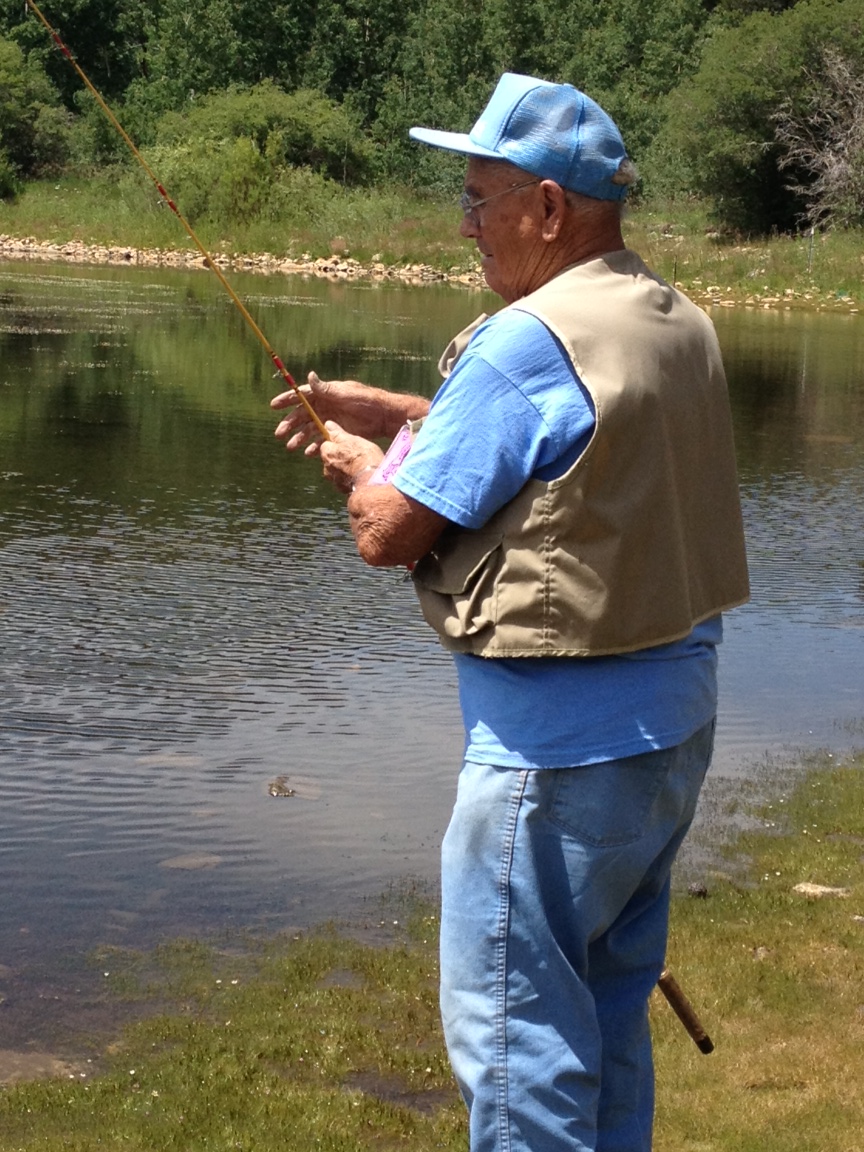
Columbus fishing at his 80th birthday celebration.

Columbus fishing at his 80th birthday celebration.

Many years ago I traveled home to spend time with my dad. I wanted to know who he was and felt as if I’d missed it, as if I didn’t really know the person behind the role. He was generous and vulnerable and spent three days with me answering all my questions, sharing the inner sanctum of his thought and being. It was the greatest gift I have ever been given and, at the same time, the greatest gift I have given myself: I asked if he would spend time with me.

One of the things I learned during those days with my dad is that there will always be the yearning for one more conversation. There is no bottom to the magic and mystery of the people that we love and who give order and richness to our world. This year I am learning that although there will always be the yearning for just one more conversation, there will of necessity be a last exchange. And, because that is an inescapable truth, there is nothing more important on this earth than to take the time, make the space, to ask, “How are you doing? What’s happening in your world?”

title_pageGo here to get my latest book, The Seer: The Mind of the Entrepreneur, Artist, Visionary, Seeker, Learner, Leader, Creator…You.

Or, go here for hard copies and Kindle.


Share A Poem

An old painting from my archives. This is "Hermes."

An old painting from my archives. This is “Hermes.”

One day, out of the blue, Doug came out of his office, stood at the door to my office and asked me to follow him. Doug was a bull in a china shop, gruff on the best of days, and his request was more of a command than an invitation. He’d spent his early life in the military, did two tours in Vietnam, and a piece of him was still fighting that war; the rigor, structure and discipline he’d acquired as a soldier was still saving his life. I’d worked with him long enough to know that he was soft to the center. Doug was a big heart wrapped in pit bull clothes.

I followed him back to his office and he asked me to close the door, a sign that usually meant battle was to ensue. I closed the door and sat opposite his desk, curious that the lights were off. The dim room was illuminated by a single thin window partially obscured by a bookcase. He sat. He took a deep breath and looked around as if he was worried that others might be listening, and said, “I want to show you something.” He took another breath, slid open the bottom desk drawer, and pulled out a book so worn and deteriorated that it was barely recognizable as a book. I knew immediately what it was and caught me breath. “I want you to see this,” he said. I gently held the tattered brittle pages and read the first poem in the book and, as I read it, Doug recited it. Tears came to my eyes.

I’d heard the story of the book many times. Doug told the story when he was in pain, when one of his students was self-destructing or when he was once again standing at the edge of his own personal abyss, a place that was never far away. He told me the story each time he was trying to find a shred of humanity in his very dark world.

When Doug was on his way to his first tour in Vietnam, he was not yet 18 years old, he was angry and alcoholic, and for reasons he could never explain, he stopped in an airport bookshop and bought a book of The World’s 100 Greatest Poets. When telling the story, Doug would say, “I’d never read a poem. I hated poetry! I was nearly illiterate! But I bought that book and stuffed it in my bag.” He told me that the guys in his platoon teased him the first night he brought out the book of poetry and read it. Initially he read the poems aloud to bother his mates. They’d shout and throw stuff at him. Every night he read poems aloud. Soon, after the horrors of the day, after the fears of being killed or having killed, they asked him to read poems to them. They had favorites. They made requests. They talked about what the poems meant. They asked him to find a good poem to send to their loved ones at home. Over the year, Doug learned to recite by heart each one of those poems.

Doug told me that poetry saved his life. The book saved his humanity. That day in his office we spent nearly an hour reading poems to each other; each poem had a story, a memory. He told me that people don’t understand the reason for art, the necessity of poetry. “It’s not a luxury,” he roared, “it’s the goddamn center.” He carefully placed the book back in the drawer and pushed it closed. I thanked him for sharing it and he waved me off. The moment had passed; he closed the drawer on his sharing, too. It was too much.

That day was nearly twenty years ago.

Doug Durham

Doug Durham

Jim sent me news that Doug passed away this week. The last time I saw Doug he showed up at my apartment in Seattle just as he’d showed up at my office door: out of the blue. He sat in my living room for fifteen minutes, fidgeting, unable to sit still. “I just wanted to see you!” he trumpeted. “I wanted you to see that things are good with me!” He was deciding whether or not to open that metaphoric desk drawer. He had something to share or say but had not yet decided whether it was the right time. He had cancer even then but was on top of it.

“Well!” he announced, standing, “it was good to see you.” I asked him what he wasn’t saying and he gave me the “be careful” look. He wasn’t ready and I knew better than to push him. “Stay in touch.” I said, as he climbed into his big red truck. “You know better than that!” he smiled, waved, and drove away.

Go here to get my latest book, The Seer: The Mind of the Entrepreneur, Artist, Visionary, title_pageSeeker, Learner, Leader, Creator…You.

Or, Go here for hard copies.


Remember The Fire

this is the first painting in a triptych I did for The Creatures Of Prometheus, a performance I did with The Portland Chamber Orchestra. special kudos to Jen and Brad for housing these enormous paintings for me.

This is the first painting in a triptych I did for The Creatures Of Prometheus, a performance I did with The Portland Chamber Orchestra. Special kudos to Jen and Brad for housing these enormous paintings for me.

With the spring the storms have come. Brilliant blinding flashes of lightning followed by thunder that rolls and rolls for minutes without ceasing. Joseph Campbell once posited that the voice of the thunder was humankind’s first experience of the godhead; as I listen now to the sky roil and rumble, watching Tripper-Dog-Dog-Dog look for a safe place to hide, I am grateful to be inside protected from the god’s displeasure.

Last week I learned that the phrase, “blinding flash of lightning” was more than poetry. Kerri and I were taking our usual late night stroll. There were distant rumbles of thunder, but nothing close or threatening. The crack and flash seemed to come from nowhere. I ducked. Kerri screamed. It felt like we were inside the lightning rather than beneath it. The ground rumbled in concert with the sky. For blocks around us, car alarms whooped and beeped like Chicken Little. I imagined the cars were as taken by surprise as Kerri and I. For several moments after the flash, I was literally blind.

We were already running when sight returned, we laughed and squealed and kept our heads down as if that would make a difference. It seemed as if the storm was far distant one moment and on top of us the next. The sky spit hail. It rained for a moment. And, as suddenly as it was on us, it was gone. We stood still in the wake of the storms departure. I wondered if I’d imagined it except the parked cars were still sounding their alarms.

Once, when I was in high school, I hiked with a friend to the top of a peak. We were above the timber line and although I knew enough to be off the mountain top before the afternoon storms rolled over the divide, the thunder clouds came fast and we were caught in a powerful storm in a meadow just beneath the peak. It seemed as if we were literally inside the cloud as the lightning made the hair on my head stand on end. We wedged ourselves in a sitting fetal position between some boulders, and reflexively closed our eyes and covered our heads. Each flash sent a jolt of fear through me. I’ve rarely been as frightened or exhilarated as I was that day. The storm roared over the mountain top and descended into the valley. It was gone as fast as it came. It was awesome.

In one of the versions of the Prometheus story, Zeus charges Prometheus with the task of creating creatures for the sole purpose of worshipping the gods. Zeus wants the new creatures to be crude and stupid. Prometheus, instead, creates something beautiful and smart: humans. From clay, he sculpts a female and male form. Knowing that Zeus will never give life to his beautiful creatures, Prometheus steals the immortal fire, the lightning, and sparks the human hearts to life. To punish Prometheus, to keep his beautiful creatures from knowing their own beauty, Zeus introduces them to warfare, both the internal and external variety; he makes them doubt. He infuses them with fear. He makes it easy for them to focus on their ugliness so that they might misdirect their awesome power and forget the creative fire burning in their hearts.

Go here to get my latest book, The Seer: The Mind of the Entrepreneur, Artist, Visionary, title_pageSeeker, Learner, Leader, Creator…You.

Go here for hard copies.

Give Joy

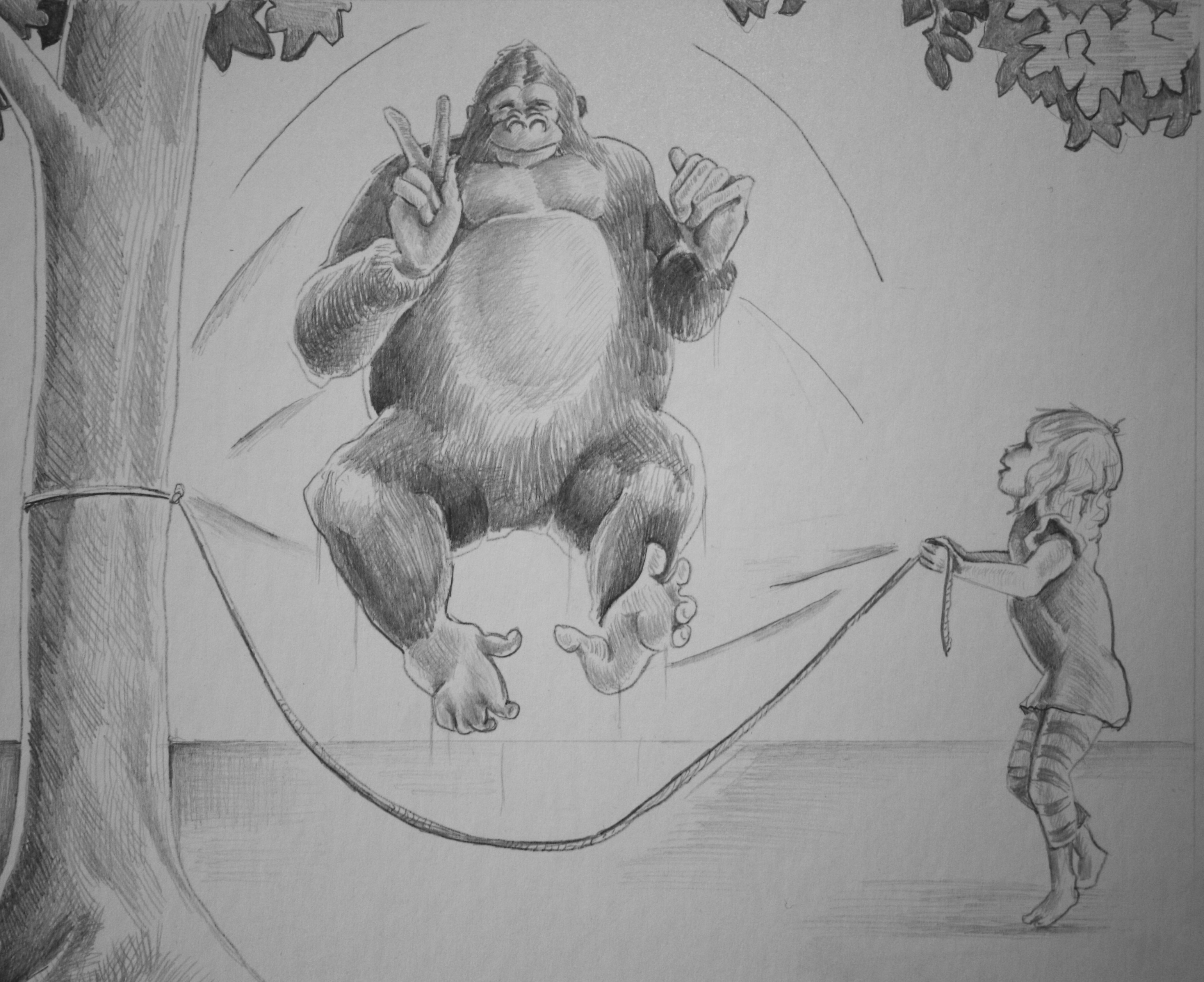
This is an illustration from my as yet unpublished children's book, Play To Play.

This is an illustration from my as yet unpublished children’s book, Play To Play.

The question was, “What gives you joy?” People responded with things like, “family,” “the sunrise,” and “community.” Someone offered, “Other people’s laughter gives me joy.” There were nods of agreement all around.

It is hard for me to hear a question like, “What gives you joy?” and not think of Viktor Frankel. As a young Jewish man in Nazi Germany, he somehow survived years in a concentration camp. He emerged believing that, other than sheer chance, the line that divided the survivors from those who perished was a capacity to give meaning to life – as opposed to seeking meaning from life. He noted that the prisoners who sought meaning from the experience perished. Those who made meaning from the experience were more apt to live another day; they storied hope instead of looked for it.

Viktor Frankel famously wrote that, “Happiness ensues.” Happiness follows. It is not something sought. It is not found on the outside. Happiness is a response. It comes from within. We bring happiness to a moment. We do not get happiness from the moment.

Joy is like happiness. As I listened to the responses to the question about joy, I thought about the language of “seeking” and “ensuing.” In the English language it is hard not to create a paradigm of separation. We rely heavily on our nouns. Things are distinct. Dissimilar. “It” is found outside; “it” is located inside. “I give meaning” versus “I get meaning.” Give. Get. Either way, within or without, there is a line of division; “it” cannot be in both places. I wondered if the experience of joy and happiness (or sadness and grief, for that matter) are co-creations. I wondered if the language of us/them, within/without actually obscured the other option: we seek it and it ensues because we engage life. We open and life opens. Joy, like happiness, is generated in the relationship space, the space between, and in the relationship space there is no separation. Your actions and my responses are intimately connected. Where is the line between my action and the impact it creates?

After the conversation about joy, Kristi talked about being empathic. She said, “I can feel other people’s pain and then I carry it.” Earlier in the week, Kerri and I had the same conversation. She told me that she wanted to learn how not to take on other people’s stuff. I told her about the time I sought a teacher named Anna Christensen who showed me how to feel but not take on other people’s pain. “We are all empathic to various degrees,” Anna said. “Most people, to survive, need to numb their capacity for feeling. It’s necessary for most people because they need to know where they end and other people begin. They need the illusion of the individual. But, that comes with a cost; it creates the terrible experience of aloneness,” she added.

If other people’s laughter gives joy, and we can universally agree that is true, then my laughter and your laughter give joy to others. Isn’t it really just that simple?

Go here to get my latest book, The Seer: The Mind of the Entrepreneur, Artist, Visionary, title_pageSeeker, Learner, Leader, Creator…You.

Go here for hard copies.

Join The Story

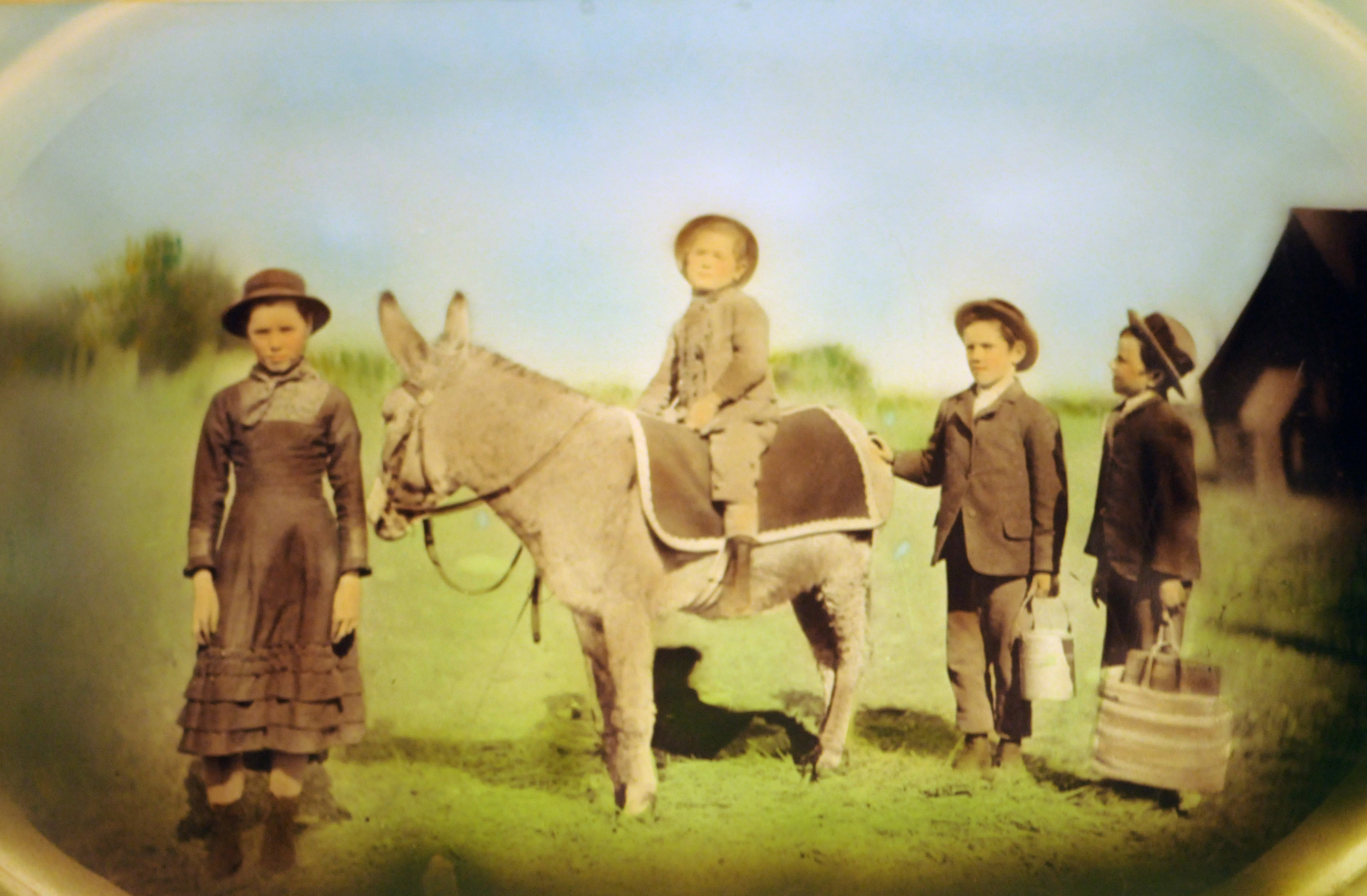
Johnny is sitting on a mule named Old Abe. This was taken a few months before he died.

Johnny is sitting on a mule named Old Abe. This was taken a few months before he died.

Yesterday I finished the final edit/redraft of The Lost Boy. It is a play I began years ago based on interviews with Tom. Late one night while I was visiting him at the ranch, he asked me to help him. “Do what?” I asked. He shrugged his shoulders. He didn’t know. He felt that he had an obligation to an ancestor, his great grandmother, Isabelle, and he felt as if he’d not yet met his obligation. In 1885, Isabelle had a son that died. His name was Johnny and he was only ten years old. Isabelle carefully packed a trunk with all of Johnny’s worldly possessions, she wrote notes, and when no one was looking, she hid the trunk in the walls of the ranch house. She told no one. Tom found the trunk 100 years later.

We decided that his obligation was to tell Johnny’s story. We decided that Isabelle wanted to somehow keep the memory of her son alive but her method was a mystery since she told no one about the trunk. Tom shared the trunk with school children and historical societies but somehow felt as if he had yet to fulfill his obligation to Isabelle. Our idea was to create a play. I would interview Tom and write the piece. He would perform it. Along the way a terrific band, Mom’s Chili Boys, composed and compiled music from era.

We had a play with music. We’d solved the mystery of why Isabelle plastered the trunk into the walls. We made a few attempts at doing workshop performances but the piece always stalled or something unforeseen blocked our path. During a living room read/play through, it became apparent that we missed our window. Tom was slipping into dementia and got lost during the read through. He was no longer capable of performing the play. We stopped. We let the play sit dormant.

During Tom’s decline I rewrote the play so I might tell his story. The Chili Boys were my allies and my rock of encouragement and support. They played the music at performances and told the story in a condensed version and gathered some good feedback. Once, we tried to organize another run at doing the play and it hit a wall of resistance. So, it sat for a few years in the projects-that-could-have-been pile.

When Tom passed this fall it was as if the universe that was so dedicated to blocking our path finally said, “Now.” The Chili’s have new music and it is gorgeous. In doing the rewrite I was gob smacked to realize that Tom had to pass before the play would be complete. He wondered how he might honor his obligation to Isabelle and the answer was something he never knew: he had to ask for help, not to share the story but to enter it. As it turns out, The Lost Boy is not about Johnny or Isabelle. It is about how Tom found his way home.

Go here to get my latest book, The Seer: The Mind of the Entrepreneur, Artist, Visionary, title_pageSeeker, Learner, Leader, Creator…You.

Or, go here for hard copies.


Look Up And See

Another painting from my archive. Today I call this, "The Other Side Of Yearning."

Another painting from my archive. Today I call this, “The Other Side Of Yearning.”

The fire in the fire pit was waning. The party was over and everyone had gone. We sat staring into the small flames, quiet, exhausted from the day yet exhilarated from the amazing people and conversations that filled our evening. It was a cloudless night sky and I sat back into my chair and lost myself in the stars.

Once, many years ago, I went to Kitt Peak Observatory outside of Tucson and spent a long evening looking into deep space. I saw stars and star clusters, asteroids, black holes and ice fields. We ended the evening looking towards Andromeda, the nearest galaxy to ours; it was so distant that its stars appeared to me as a mist, a shadow that shimmered. I was overcome with emotion that night. I’ve never felt so small and yet so undeniably connected. I was a universe within a universe within a universe. I was nothing and everything.

As I sat last night in my chair looking at the little points of light in the sky, I thought about all the things that seem so insurmountable on this earth. There are economies of exclusion, wars and markets that depend upon wars to prosper, slavery and drought and poverty, there are broken lives, broken hearts, and broken dreams. There are closed hearts and closed minds. There are people killing people over conflicting definitions of god. There are so many tug-of-wars over possessions and power and resources and boundaries that, from ground level, appear vital, real and important. But the moment you gaze into the night sky, the moment you place yourself in the context of the enormity, the moment you recognize the paradox of existence, the smallness of separation and the infinity of connection, you see how mechanical and rote most of our dramas really are. They are mostly made up. They are patterns of our creation. They are, each and every one, built upon the ultimate cop-out answer: we do it this way because we’ve always done things this way.

Once, in high school, I was at science camp in the mountains on the night of a meteor shower. We lay on blankets in a meadow oohing and aahing at the dance of stars happening in the heavens. I remember being awed. I remember thinking that the only real purpose people serve is to make up stories about the things we can’t explain. We are witnesses to miracles everyday and because we must somehow contain it, we reduce it. That night I understood that all belief systems were just that: systems. They are mechanisms to help us contain what we cannot comprehend. We need them to function, to orient ourselves in infinite space but forget that we invent them. In the face of the sheer magnitude of our existence, we reduce ourselves, too, and forget that what blinks at us in the night sky, is a force, an energy that transforms, and we are an expression of that force. We are part of it. Our role may be to witness, to appreciate, to interpret, to sense make, but mostly, gazing into the sky, I think our role is to recognize ourselves in it. If we are capable of losing ourselves in the stars we are equally capable of finding ourselves in the enormity of it all.

Go here to get my latest book, The Seer: The Mind of the Entrepreneur, Artist, Visionary, title_pageSeeker, Learner, Leader, Creator…You.

Or, go here for hard copies and Kindle.


Unbridle Your Enthusiasm

Tripper Dog-Dog-Dog's trophy collection

Tripper Dog-Dog-Dog’s trophy collection

Tripper Dog-Dog-Dog is tough on toys. He does well with hard rubber Kongs and rawhide bones but the stuffed animal variety haven’t got a prayer. We long ago stopped buying them for him. Even as a small puppy he’d make short work of anything that squeaked or resembled a creature. More than once, moments after giving him a new toy, I found him sitting happy and content amidst a nest of fiberfill with the empty body-shaped sack of toy remnant clutched firmly between his paws. Dog-Dog has several admirers who are unaware of his destructive talents and bring him stuffed animals as gifts. Like offerings to a high priests in days of old, Tripper graciously accepts their offer and removes to the backroom for immediate slaughter. For reasons I can’t explain, we keep the heads from his sacrifices. We use the heads as sleeves for our knife set or as wine bottle covers; it’s our own little version of Game of Thrones.

I’m learning much from master Dog-Dog. Lately his lessons are about faith and exuberance for the sheer pleasure of being alive. For Tripper, every doorway is an opportunity for bounding, every fence an opportunity for discovery. Even if he hopped at the fence 30 seconds prior, his return to the same spot is no less enthusiastic. He does not assume that he knows what he will find there, in fact, he assumes that the world is new no matter which way he looks. He does not blunt himself with notions of knowing like we bipeds. He is a four-legged master of beginner’s mind. If he had an inner monologue I’m certain it would be, “Oh my god, oh my god, oh my god,…”

During our late night pre-bed visits to the backyard, Dog-Dog routinely stops and stands very still (unusual behavior for an Australian Shepherd), and for several moments he listens. He feels the breezes. He smells the air. He checks in with me to make sure that I am standing firmly rooted in the present moment. When he is certain that I am present with him in his quiet enthusiasm for life, that I have given up all of my stories and distractions from the day, that I, like him, am breathing in the miracle of existence, revels for a moment longer and then lets me know that I am ready for sleeping. He turns and prances toward the house, satisfied with my progress and exhausted by the sheer wonder of it all.

Go here to get my latest book, The Seer: The Mind of the Entrepreneur, Artist, Visionary, title_pageSeeker, Learner, Leader, Creator…You.

Or, go to Amazon for hard copies and Kindle.