Embrace The Bubble

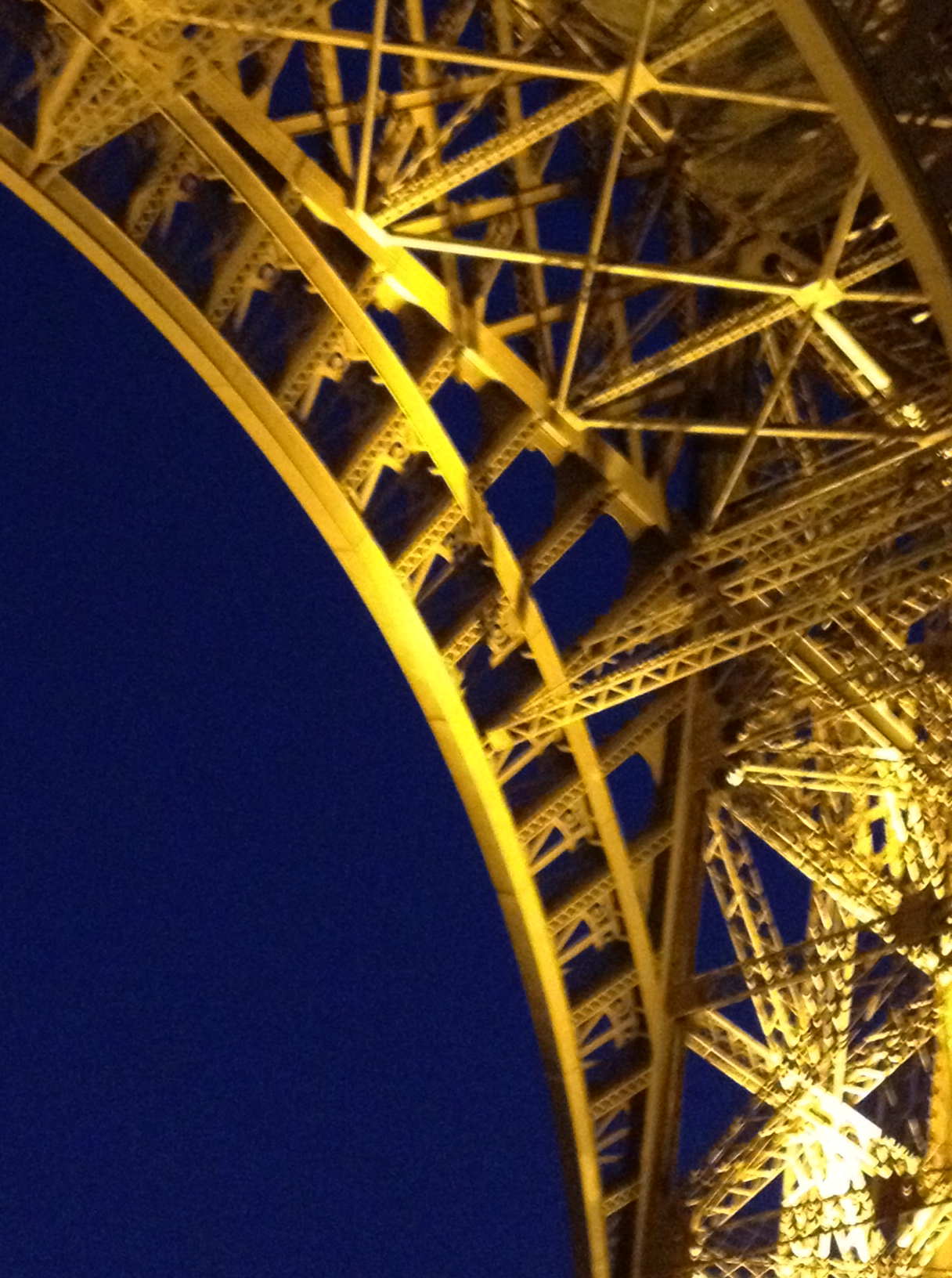
A bit of the Eiffel Tower

A bit of the Eiffel Tower

I am nearly through the throes of jet lag and my inner anthropologist has an observation or two about the altered state that occurs when one wakes up in Paris and goes to sleep in Kenosha.

When 36 hours pass in a 24-hour daylight cycle, the human body (my human body) experiences shock and awe. A soul cannot travel nearly as fast as a body in a modern airplane; that’s why they call it jet lag. The jet does not lag. The soul doddles as a good soul should while the body flings through space in a pressurized aluminum tube. The soul lags (note: my inner anthropologist is a scientist and is dubious about using the word “soul.” He wants you to know that “soul” is my translation of his term, “consciousness”).

Jet lag is like being inside a bubble. There are great benefits to being inside the bubble. For instance, the world is wonderfully distorted. Nothing is normal when sifted through a soapy haze. The bubble is the overlap of dream space and the everyday. From inside the bubble, people move too fast. Or, they move too slowly. The words people speak are garbled and generally bounce off the bubble. Checking out of a grocery store is like a scene in a sci-fi movie. Sense-making is impossible but the surrender to no-sense is sweet and oddly comforting. To release the necessity to understand, the need to recognize, rationalize, explain, or connect even the simplest of thought-dots is liberating. In the bubble, a sigh is the only appropriate response.

From the bubble, there is nothing to be done but to watch the time river roll. Jet lag bubble consciousness makes things somehow more simplistic; complexity is not possible from a jet lag haze. Inside the bubble, life routines that were unconscious prior to traveling are startling and new; they are like gestures from a previous incarnation. For example, this morning, doing the dishes, my hands knew what to do yet I was fascinated with the odd process. I was both doer and witness. Doing the dishes was known and new all in the same instant. The bubble, so my inner anthropologist claims, is a paradox: it dulls the thinking but sharpens the simple moments. It opens the senses. Prior to doing the dishes, watching the sunrise through the fog, I listened with fascination to the wind shake the dew through the high leaves in the trees. It was gorgeous; nature’s rainstick.

Within the bubble, sleep is a constant tug like an undertow. It pulls time into slow motion. It creates a liminal space, a not-here-and-not-there space. It creates a “now” space with a single simple imperative: stay awake for a few more hours.

Stay awake. I like the metaphor: to stay awake amidst the pull to dullness; ultimately it is the gift of the bubble. It is a reminder not to sleepwalk through life, to stay alert to the simple moments. Stay awake or your life becomes like a television running an endless cycle of sitcoms. Dullness is a choice. My inner anthropologist just rolled his eyes. It’s more extravagance on my part; apparently “choice,” like “soul” is not an appropriate scientific term.

Go here to get my latest book, The Seer: The Mind of the Entrepreneur, Artist, Visionary, title_pageSeeker, Learner, Leader, Creator…You.

Or, go here for hard copies.

Story Your Life

title_pageI’ve received a few questions this week about life stories and rather than blather…here’s another snippet from my book, The Seer:

Stories often deal with the collision that arises when learned patterns blind us to our natural impulses. Living according to what we “should do” or “should think” inevitably collides with what we desire to do and this provides a hot crucible for growth. When Virgil asked me to practice “not knowing” he was poking a hole in my story of “should do” so that I might once again hear what I intuitively knew to be true. Stories show us how to get out of our own way. As Virgil recently wrote:

Virgil: You are at one time the source of your yearning and your greatest obstacle. What you think that you should do IS the obstacle to your desire.

In my latest chat with Virgil I told him of my revelations about ‘not knowing what I DO know,’ about my memory of my client, and how I convinced her that she didn’t need me and could do the work by herself. I wrote:

Me: At the time I really needed the money. I needed the business! And I spent that morning convincing a potential client that she didn’t need me. It’s the story of my life!

He responded:

Virgil: Oh, you are dangerously close to the third recognition.

I decided I needed to stop being careful with how I said things to Virgil. I’d just learned that my language mattered so I might as well write what I was thinking:

Me: Well, maybe you should tell me before I trip over something and hurt myself. You must have an answer or two in there somewhere…

Virgil: I’m woefully low on answers but I do have a question for you: What did you mean when you wrote: It’s the story of my life?

Me: I don’t know. It was just a phrase, an attempt at humor.

Virgil: What if it’s not just a phrase?

Me: You mean that convincing people that they don’t need my services is the story of my life? That is why my business crashed?

Virgil: No. I’m not inferring, interpreting or implying anything. You used this phrase: It is the story of my life. I’m asking you to consider that this is more than a flippant phrase. Are you aware of the story of your life?

I was getting angry again. And I was beginning to recognize that my anger was a pattern that flared when I felt lost. I get angry when I am driving and miss my turn or can’t find where I’m going. I wanted a map. I wanted Virgil to be my personal GPS and tell me where to go. Where were we going with this? Sometimes I can’t help my sarcasm:

Me: You mean I only get one story?

Virgil: Your story is not something you get. Remember, your language matters. Choose your words more carefully and you might see the third recognition before you trip over it. Connect the dots. Tripping over it will not hurt you. It’s the choice to be blind that causes your pain.

Go here to get my latest book, The Seer: The Mind of the Entrepreneur, Artist, Visionary, Seeker, Learner, Leader, Creator…You.

Go here for hard copies.


Locate Your Self

title_pageHere’s a short excerpt from my book, The Seer, dealing with the dance between investments, limitations, and the roles we play in life. This conversation is a kind of coaching session and is happening via online chat:

Me:…All week I’ve asked myself, “why?” Why the dramatic shift in experience from role to role? I’m a bit shocked to realize that I play many, many roles each day. In each role I want something and what I want is different depending upon the people I am with. I realized that my roles are not about me in isolation – and what do I mean by that? I mean that I define my role by how I define the relationship I am in at the moment. For instance, in my workshop, I assumed the role of “guide” and I wanted to lead the young people to some new insights that might help them create their businesses. In my conversation with my parents, in the role of “son,” I wanted them to be pleased with my work. I wanted to share and I wanted their approval. So, my role is defined by relationship and in each different relationship I tell a specific story based on what I want or need. I’ve “cast” myself in these little mini-stories. Or to use your term, “role” is the way I “locate” myself in the story.

Virgil: And how does this knowledge help you with your questions about business?

Me: The first thing that occurs to me is that I have the capacity to locate myself in a different way if I don’t like the role I’m playing. I can change how I locate myself. Also, there is a dance with the words “limitation” and “investment.” I took notes all week and realized that I was using the verb “to invest” over and over again to describe my experience of different roles. So, for instance, during my dinner with my friend Bruce I invested in helping him. I wanted Bruce to know that I cared about his challenges. Then, I watched Bruce invest in being the wine expert. It was his way of caring for me and demonstrating his expertise. I began to see my investments as keys to discerning my limitations. In some roles I’ve invested in the idea that I can’t do something or that I’m not good at something. In some roles I diminish myself; my limitations are investments in being small.

Virgil: Just a caution: as you explore further the dance between investment and limitation, remember to practice suspending your judgment. Remember: you are having experiences first so you can see how you make meaning and begin to choose how you make meaning.

Me: Thank you. It’s a good reminder. I was beating myself up every time I     realized I was investing in being small.

Virgil: We tell ourselves stories. We locate ourselves within the stories. In fact, that is the next recognition: you locate yourself within your story. We do it physically (like your description of choosing the table in the restaurant); we do it through the roles we assume – specifically our assumptions of how we need to play our roles, what is ours to do, etc. Locating is simply a way of establishing comfort. We sort to the known. If you judge how you locate yourself, you miss the opportunity to change how you locate yourself.

Me: Right. Judgment blinds me to the choices I am making.

Virgil: Judgment is always a version of the “things are happening to me” story. In fact, judgment is a way of locating: it is the warning signal when we step too close to discomfort. When I judge myself and say, “I’m an idiot,” I’m actually locating myself, pulling myself back into my comfort zone. When I judge others, “They are idiots,” I’m locating myself in a higher status position. The action of diminishing “them” elevates me back into a comfortable status position. Thus, suspending your judgments removes the easy step back to comfort and allows you to stand in “not knowing” and see what is there beyond what you think is there.

Go here to get my latest book, The Seer: The Mind of the Entrepreneur, Artist, Visionary, Seeker, Learner, Leader, Creator…You.

Or, go here for hard copies.

Remember The Fire

this is the first painting in a triptych I did for The Creatures Of Prometheus, a performance I did with The Portland Chamber Orchestra. special kudos to Jen and Brad for housing these enormous paintings for me.

This is the first painting in a triptych I did for The Creatures Of Prometheus, a performance I did with The Portland Chamber Orchestra. Special kudos to Jen and Brad for housing these enormous paintings for me.

With the spring the storms have come. Brilliant blinding flashes of lightning followed by thunder that rolls and rolls for minutes without ceasing. Joseph Campbell once posited that the voice of the thunder was humankind’s first experience of the godhead; as I listen now to the sky roil and rumble, watching Tripper-Dog-Dog-Dog look for a safe place to hide, I am grateful to be inside protected from the god’s displeasure.

Last week I learned that the phrase, “blinding flash of lightning” was more than poetry. Kerri and I were taking our usual late night stroll. There were distant rumbles of thunder, but nothing close or threatening. The crack and flash seemed to come from nowhere. I ducked. Kerri screamed. It felt like we were inside the lightning rather than beneath it. The ground rumbled in concert with the sky. For blocks around us, car alarms whooped and beeped like Chicken Little. I imagined the cars were as taken by surprise as Kerri and I. For several moments after the flash, I was literally blind.

We were already running when sight returned, we laughed and squealed and kept our heads down as if that would make a difference. It seemed as if the storm was far distant one moment and on top of us the next. The sky spit hail. It rained for a moment. And, as suddenly as it was on us, it was gone. We stood still in the wake of the storms departure. I wondered if I’d imagined it except the parked cars were still sounding their alarms.

Once, when I was in high school, I hiked with a friend to the top of a peak. We were above the timber line and although I knew enough to be off the mountain top before the afternoon storms rolled over the divide, the thunder clouds came fast and we were caught in a powerful storm in a meadow just beneath the peak. It seemed as if we were literally inside the cloud as the lightning made the hair on my head stand on end. We wedged ourselves in a sitting fetal position between some boulders, and reflexively closed our eyes and covered our heads. Each flash sent a jolt of fear through me. I’ve rarely been as frightened or exhilarated as I was that day. The storm roared over the mountain top and descended into the valley. It was gone as fast as it came. It was awesome.

In one of the versions of the Prometheus story, Zeus charges Prometheus with the task of creating creatures for the sole purpose of worshipping the gods. Zeus wants the new creatures to be crude and stupid. Prometheus, instead, creates something beautiful and smart: humans. From clay, he sculpts a female and male form. Knowing that Zeus will never give life to his beautiful creatures, Prometheus steals the immortal fire, the lightning, and sparks the human hearts to life. To punish Prometheus, to keep his beautiful creatures from knowing their own beauty, Zeus introduces them to warfare, both the internal and external variety; he makes them doubt. He infuses them with fear. He makes it easy for them to focus on their ugliness so that they might misdirect their awesome power and forget the creative fire burning in their hearts.

Go here to get my latest book, The Seer: The Mind of the Entrepreneur, Artist, Visionary, title_pageSeeker, Learner, Leader, Creator…You.

Go here for hard copies.

Look Up And See

Another painting from my archive. Today I call this, "The Other Side Of Yearning."

Another painting from my archive. Today I call this, “The Other Side Of Yearning.”

The fire in the fire pit was waning. The party was over and everyone had gone. We sat staring into the small flames, quiet, exhausted from the day yet exhilarated from the amazing people and conversations that filled our evening. It was a cloudless night sky and I sat back into my chair and lost myself in the stars.

Once, many years ago, I went to Kitt Peak Observatory outside of Tucson and spent a long evening looking into deep space. I saw stars and star clusters, asteroids, black holes and ice fields. We ended the evening looking towards Andromeda, the nearest galaxy to ours; it was so distant that its stars appeared to me as a mist, a shadow that shimmered. I was overcome with emotion that night. I’ve never felt so small and yet so undeniably connected. I was a universe within a universe within a universe. I was nothing and everything.

As I sat last night in my chair looking at the little points of light in the sky, I thought about all the things that seem so insurmountable on this earth. There are economies of exclusion, wars and markets that depend upon wars to prosper, slavery and drought and poverty, there are broken lives, broken hearts, and broken dreams. There are closed hearts and closed minds. There are people killing people over conflicting definitions of god. There are so many tug-of-wars over possessions and power and resources and boundaries that, from ground level, appear vital, real and important. But the moment you gaze into the night sky, the moment you place yourself in the context of the enormity, the moment you recognize the paradox of existence, the smallness of separation and the infinity of connection, you see how mechanical and rote most of our dramas really are. They are mostly made up. They are patterns of our creation. They are, each and every one, built upon the ultimate cop-out answer: we do it this way because we’ve always done things this way.

Once, in high school, I was at science camp in the mountains on the night of a meteor shower. We lay on blankets in a meadow oohing and aahing at the dance of stars happening in the heavens. I remember being awed. I remember thinking that the only real purpose people serve is to make up stories about the things we can’t explain. We are witnesses to miracles everyday and because we must somehow contain it, we reduce it. That night I understood that all belief systems were just that: systems. They are mechanisms to help us contain what we cannot comprehend. We need them to function, to orient ourselves in infinite space but forget that we invent them. In the face of the sheer magnitude of our existence, we reduce ourselves, too, and forget that what blinks at us in the night sky, is a force, an energy that transforms, and we are an expression of that force. We are part of it. Our role may be to witness, to appreciate, to interpret, to sense make, but mostly, gazing into the sky, I think our role is to recognize ourselves in it. If we are capable of losing ourselves in the stars we are equally capable of finding ourselves in the enormity of it all.

Go here to get my latest book, The Seer: The Mind of the Entrepreneur, Artist, Visionary, title_pageSeeker, Learner, Leader, Creator…You.

Or, go here for hard copies and Kindle.


Walk As One

From my archives. I call this painting, "Alki."

From my archives. I call this painting, “Alki.”

Alan and I talked today. We are planning our upcoming Summit in Holland in June. Our conversations are always as wide-ranging as they are deep dives into sense making and soul. There seems to be no horizon that we won’t step towards, no secret passage that we won’t explore. This has been true since the moment we met. We’ve always been verdant collaborators. We joked that someday clients will hire us just to listen to how our minds spark each other. And, given our conversation today, we’d be worth every penny. We are both in the business of facilitating perceptual shifts and transformation so we do it for each other. Our planning sessions are a festival of insight upon insight, shift within shift. Together, we are innovation squared.

Recently, I shared a short TED talk by neurologist V.S. Ramachandran about mirror neurons and how deeply and concretely we are connected despite our belief/experience that we are separate. It came up again for me because during our call Alan and I discussed the waves of far-reaching impact that any simple action or word generates. Paul Barnes used to say to young actors, “Never underestimate the power you have to influence another person’s life.” Most of us are unaware of the impact that we have on lives that we never directly touch. For instance, I have had great teachers in my life and I carry their work forward in every word I write and every group I facilitate. My teachers will never know the many lives they touched and continue to touch. And, neither will I. And, neither will you. The best we can do is know that our actions matter, our thoughts matter, our intentions matter. We are more powerful than we understand.

No one lives in a vacuum. No one creates without influences. No one has a purely original thought. In fact, if you grasp what V.S. Ramachandran is addressing, no one thinks or feels independently of others. We are not as isolated or as separate as we believe ourselves to be. We have to work at separation. We are, each of us, continually co-creating (to use Alan’s term) our world in every moment of every day. What might you see if you stopped and pondered the implications of co-creation, if you took a moment and considered that you are not merely a bobber in an ocean but, in fact, are the ocean? How might you read the news of the day or address your dreams if you understood that you were a participant, a dynamic part, a burning point for the ancestors, a sender of ripples through space and time, and not simply walking this path all alone?

Go here to get my latest book, The Seer: The Mind of the Entrepreneur, Artist, Visionary, title_pageSeeker, Learner, Leader, Creator…You.

Or, go here for a hard copy.

Smile In Secret

Taking the Sealy for a  test drive.

Taking the Sealy for a test drive.

I never had children so there are certain ritual passages that I’ve never experienced. In my life I’ve ushered a legion of other people’s children through various thresholds so it was surprising how Craig’s Facebook post today struck me. I saw him just last week. We had a late night dinner in Nashville, Indiana and I spent much of the evening secretly smiling. He was different. He’d made the passage and was standing firmly in his independence.

In his post today he wrote, “ And with that final, I’m officially a college senior.”

His passage, like all worthy passages, did not come easily. Nothing worthwhile ever does.

Last August, I helped him move to a new university. We packed the truck and drove out of state. Together, along with Josh, we carried his enormous couch and all the other stuff in the truck into Craig’s first-ever apartment. We helped him set things up and then he needed Kerri and me to go. He needed to be on his own. He needed to step into the unknown places and get lost.

Over the year I was witness to how he got lost, met a multitude of fears and frustrations head on, and how he stood in the fire with all of it. It shouldn’t have surprised me that it transformed him. I know how transformation works and yet this time I was somehow too close to fully see.

Over the year I’ve talked with Craig through the night and into the wee hours about socialism and the difference between a plan A and a plan B. We talked about sarcasm and life without having to push other people under water to feel powerful. We’ve talked about true power. We celebrated Thanksgiving and Christmas. On a freezing cold day in December we tromped through a farm and picked out a Christmas tree that I dubbed Satan because the needles were like daggers. I’m still finding those needles in my socks. We smoked cigars and he made a mixed drink for me called something I can’t remember (a testament to the potency of the concoction); it was awful. We laughed and drank it anyway.

I learned to play Apples to Apples when he came home for a surprise visit. We sat around the table into the wee hours with Pierre and Kirsten and Josh and laughed about anything and everything.

He inspired a week of posts when he asked me a single question and I suspect it will not be the last time.

Last week when he met us for dinner at Uncle Bill and Aunt Linda’s house in the woods of Indiana, I couldn’t believe the chatty, funny, informed, strategic, considerate man sitting across the table was the same boy I drove to college in August.

Craig’s post came on the day after I lost one of my champions: Bob. He was a man who made his own destiny and I think Craig will do the same. I wished that the new college senior had met the man who ushered me through so many of my life’s passages. They are cut from the same cloth. I wanted to write Craig and tell him, “You have no idea how many people are cheering for you.” I wanted to welcome him to the other side.

Go here to get my latest book, The Seer: The Mind of the Entrepreneur, Artist, Visionary,title_page Seeker, Learner, Leader, Creator…You.

Go here for hard copies.


See The Force

from my children's book, Peri Winkle Rabbit Was Lost

from my children’s book, Peri Winkle Rabbit Was Lost

Bill is a board member for non-profit education organization and is forming a case for changing the curriculum. He’s asked me to help him shape his argument. The students going to the organization’s classes did not fare well in the public schools. As Bill wrote, most of the students are interested in the arts and there are no arts available. He wrote that the curriculum is mostly “traditional.”

Many years ago, my mentor, Tom, told me that the alternative schools were filled with artists, so Bill’s observation is not surprising. Anyone familiar with Howard Gardner’s work will recognize the notion that people learn in different ways. Desks are torture chambers to kids who need to move or manipulate things in order to process information. I was one of those kids and I can tell you that the word “torture” is not an overstatement. Even today, sitting is unproductive time for me. I do my best thinking while I walk or while painting. Staring out a window is also highly productive: after all, the imagination is a fancy dancer.

Bill is making the same wrong assumption made by all people interested in educational reform when they first wade into the swamps of change: he’s focusing on the teaching and the teachers. If only the teachers could see the value of working experientially, engaging the students in a real pursuit instead of an abstraction, all things would be better. On the surface, that might be true. What he’s not considering are the forces in place that require teachers to default to rote exercises, compartmentalization, and standardization. In his case (and all cases), the teachers are not being reinforced (paid) to engage the students on a learning journey; they are being reinforced to raise test scores. The change he seeks is not in the teachers or the teaching. He must address the forces of compliance that teachers, just like their students, must obey. He must address the systemic assumptions that define the expectations.

This is the same conundrum that organizations face when they desire their employees to work in teams but are structured to reward individual achievement. The desire for team is in direct conflict with the systemic foundations.

As Arnie recently reminded me, 1) our system of education was not created by educators, so 2) the aim was never to educate but to standardize. These two aspects, the structure and the intention, are powerful forces to change. They now define our assumptions of what education should be. Systems are living things, and, as I learned in school, will fight to the death just like all other living things.

Bill has his work cut out for him. Changing the focus of the teachers is the easy part and can only happen when the focus of the system supports the deep human desire to learn.

Go here to get my latest book, The Seer: The Mind of the Entrepreneur, Artist, Visionary, title_pageSeeker, Learner, Leader, Creator…You.

Go here for hard copies.

Join A Group!

title_page“This book invites conversation,” Mary said. “I’m enjoying that others feel the same way and want to talk about it.”

I was enjoying it, too because it was my book, The Seer, that they were meeting to discuss. It was the first time since publishing The Seer that I’d participated in a conversation about it. There have been other group conversations and I’ve received some very useful emails and insightful notes, but this was the first time that I was able to attend. Since I’ve been approached to coach people using The Seer process, I was delighted with the opportunity to hear their discussion. It was the first of several calls with a people from many countries who are working their way through the 9 Recognitions (the chapters are a progressive series of recognitions).

During the call I thought about my very first art exhibit. I was young, shy and unknown so I was able to follow people through the gallery and listen to what they saw in my paintings. It was a revelation. There were as many different interpretations of my paintings as there were people in the gallery. Each person interpreted the paintings through their unique lens; they did not see what I painted, they made sense of the image through their life-narrative. They recreated the images. I loved it. It was a lesson in the power of art, seeing and was a seed for my fascination in communal narrative: where do our stories become transcendent and singular? Where does identity become cultural?

During the call I listened to what was important about the First Recognition to each caller. They had unique experiences with the concept. The First Recognition sounds simple but is capable of reorienting what you see if you take it seriously. It goes like this: you don’t have a problem, you have a pattern. “Problem-seeing” is a lens and defines a path of available actions. It defines a worldview is rooted in the notion of separation. “Pattern-seeing” is also a lens and defines a path of available action. It, too, defines a worldview but the rooting is in connectivity. The callers discussed their experiences of shifting their seeing from problem to pattern.

Mostly, I appreciated Mary’s comment because she echoed two concepts layered into the book: 1) No one creates alone. Creating, whether it is a painting or a life story, is a team sport. We need each other to make sense of this life. 2) Working with my book is like riding a bike or throwing a pot: you can’t make the shift unless you do it. To read it alone is useful and perhaps illuminating, but the real worth becomes available when you step into the actions, when you get on the metaphoric bike and fall down a few times. And, looping back to the first point, it is easier to fall with others stumbling along with you. Creating is a team sport because life is a team sport. This group inspired me and how lovely for the potency of the First Recognition to come back at me through the eyes of my readers.

Go here to get my latest book, The Seer: The Mind of the Entrepreneur, Artist, Visionary, Seeker, Learner, Leader, Creator…You.

Go here for hard copies.

Run With It

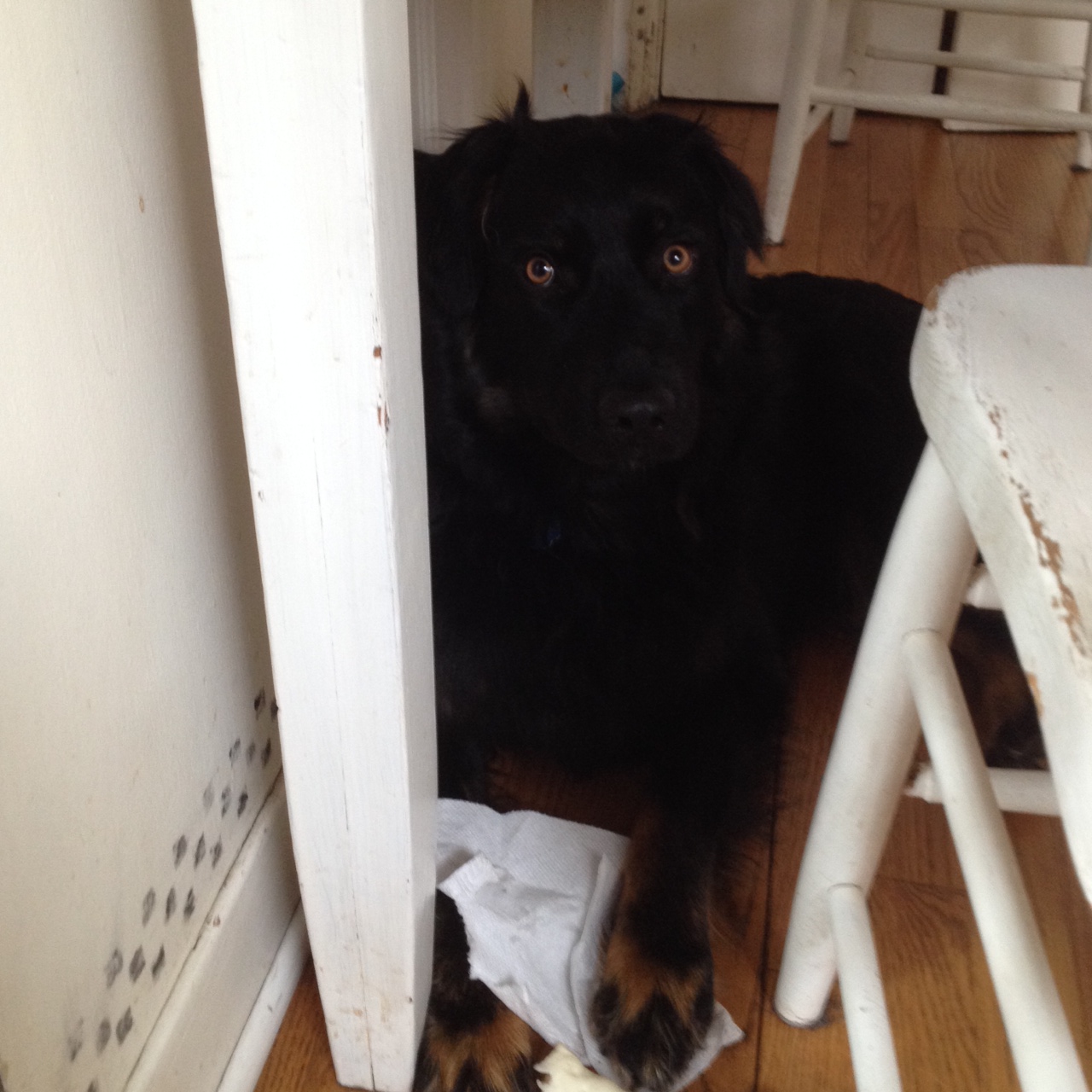
The criminal with the evidence. Tripper with Kleenex.

The criminal with the evidence. Tripper with plundered Kleenex.

Tennessee Tripper Dog-Dog-Dog is a fantastic pick pocket. I’m certain he is kin with the Artful Dodger and the other sticky-finger street boys who lift wallets and jewelry without detection. Dog-Dog’s preferred target is Kleenex. With his snout he can reach into the deepest pocket and disappear into a crowd, Kleenex in mouth, and his poor victim is none the wiser. Lately I have had a nasty cold so my pockets are prime targets for his crimes. More than once I’ve reached into my pocket, alarmed by the rising tide of an inevitable sneeze, and found that my pocket has been picked. “Dog-Dog!!” I scream (and then sneeze). He always appears with tiny bits of evidence in his whiskers.

I first noticed his pilfering when he was still more puppy than dog. He was adept at undetected napkin snatching. I knew it was a crime scene when dinner guests started looking on the floor for missing napkins and came up empty. Although publically I’d hang my head and make Tripper confess his misdeed and return his plunder, secretly I was impressed by his stealth and wondered if he would grow up to become a Ninja.

Tripper Dog-Dog does not suffer guilt. He does not question his choices. He rarely debates whether he should or should not do something. He does not mask his confusion or blunt his awe. He races across the yard in full celebration of his speed and how good it feels to run. He does not run to win, he runs to run. Were I still working with actors I’d have them study the pure intentionality of their pets. I’d have them study what undiluted commitment to action really looks like.

One of my favorite themes running through the books of Paulo Coehlo is to find your enthusiasm and follow it; there lives your treasure. Joseph Campbell famously said, “Follow your bliss.” One of the post-it notes on our Be A Ray plan wall reads: Dream big dreams. The sub note adds: Run At It. The other day we heard a man say, “At least when I die, I’ll know I took my shot and gave it my all.” I sat up and wrote his thought as two questions: What is your shot? What would it look like to give it your all?

And then, finding my pocket empty of Kleenex, I added a third question: If “it” was a Kleenex and I was Tripper, what would I do? I’d take “it” with great enthusiasm, no apology, and without doubt or question. And then I’d run with “it” just because I liked the way it feels.

Go here to get my latest book, The Seer: The Mind of the Entrepreneur, Artist, Visionary, title_pageSeeker, Learner, Leader, Creator…You.

Or, go here for hard copies.