Take Casey’s Advice

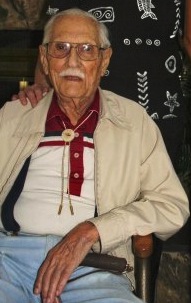
Clarence Ira Metcalf

Clarence Ira Metcalf

The other night we saw the first fireflies of the season. We were sitting by the fire pit. At first I thought the fireflies were sparks from the fire. My mind made a small u-turn when I realized the sparks were, in fact, fireflies. I laughed and clapped my hands. They are magic and I delight at their return.

They blink on. They blink off. I have always thought their light was like a life span or consciousness. We are here for a moment. We are a musical note made meaningful by the silence that surrounds us.

I thought of the first fireflies of the season when I received the news that yesterday afternoon Casey passed away. He was my grandfather. He was working on his 106th year.

Casey was born before people invented world wars. The airplane was in its infancy; it was more of a bicycle with wings than the jumbo jets we know today. He was a young man just getting started when the market crashed. He learned his trade (he fixed sewing machines) during the great depression. By the time people decided that one world war was not enough, he had a family so he fixed sewing machines for the military. He saw Pearl Harbor. Then there was the introduction of the atom bomb, a thing called television, a Korean war, a cold war, a moon landing, and a Vietnam war, and so on. Typewriters became personal computers, phones became cordless, mobile, and small enough to fit in your pocket. In fact, the phone in his pocket had more computing power than the ship that landed on the moon. I’m not sure if he had much use for the internet but he saw the revolution that it inspired.

Casey loved to fly fish. I remember sitting on the bank of a stream watching him whip his line, again and again, until he floated it to just the right spot. He carried a personal pool cue in a special case; he assembled it like an assassin in the movies assembling his rifle. He lost a leg (from the knee) in a hunting accident, and rather than treat the loss like an obstacle, he invented things like gas pedals for his car and for his bike that accommodated his hoof (his prosthetic leg was more hoof than foot. In fact, in my favorite photo of Casey, he is standing in front of a cannon using his hoof/leg as a cannon ball ram).

His garage was a goldmine of machine parts, tools and workbenches. He could fix any machine. I asked him how he learned to fix stuff and he told me that when he was young there was no such thing as a repair shop for your car. If it broke you had to figure it out for yourself.

You have to figure it out for yourself. That could have been the central mantra of Casey’s life and the best bit of knowledge that he passed on to me. He said, “You can figure out anything if you give yourself the time. It’s when people get in a hurry that they decide that they can’t do stuff.”

Go here to get my latest book, The Seer: The Mind of the Entrepreneur, Artist, Visionary, title_pageSeeker, Learner, Leader, Creator…You.

Or, go here for hard copies and Kindle.

Ponder The Pieces

Kerri's head exploding.

Kerri’s head exploding.

My beautiful Kerri’s head just exploded. I am currently surrounded by exploded head-bits and a dog-dog running loops around the house from the thrill of experiencing his first head explosion. Baby cat had the good sense to hide. There’s nothing for me to do but drink wine and write this post. And drink more wine.

Heads explode when the world ceases making sense. Beaky, Kerri’s mom, 93 years old, is no longer capable of crossing the room with her walker. Mobility is a problem and the source of Beaky’s despair. For months Kerri has been working to get Beaky an electronic wheelchair. Her doctor prescribed it. A physical therapist diagnosed it. A bevy of nurses recommended it. A mountain of paperwork was filled out and filed for it. Medicare did the expected and requisite thrice denial before begrudgingly approving a lesser model (apparently, Beaky looks like a reckless driver and can’t be trusted with too much speed). At long last, after hours of phone calls, pleading, cajoling and begging, the chair was ordered and scheduled for delivery. And then there was Jose. The man who measures aging bottoms to make sure the chair is a perfect fit decided that, while measuring Beaky, she was not yet ready, at 93 years of age, to have an electronic wheelchair. His reason: Beaky is too mobile.

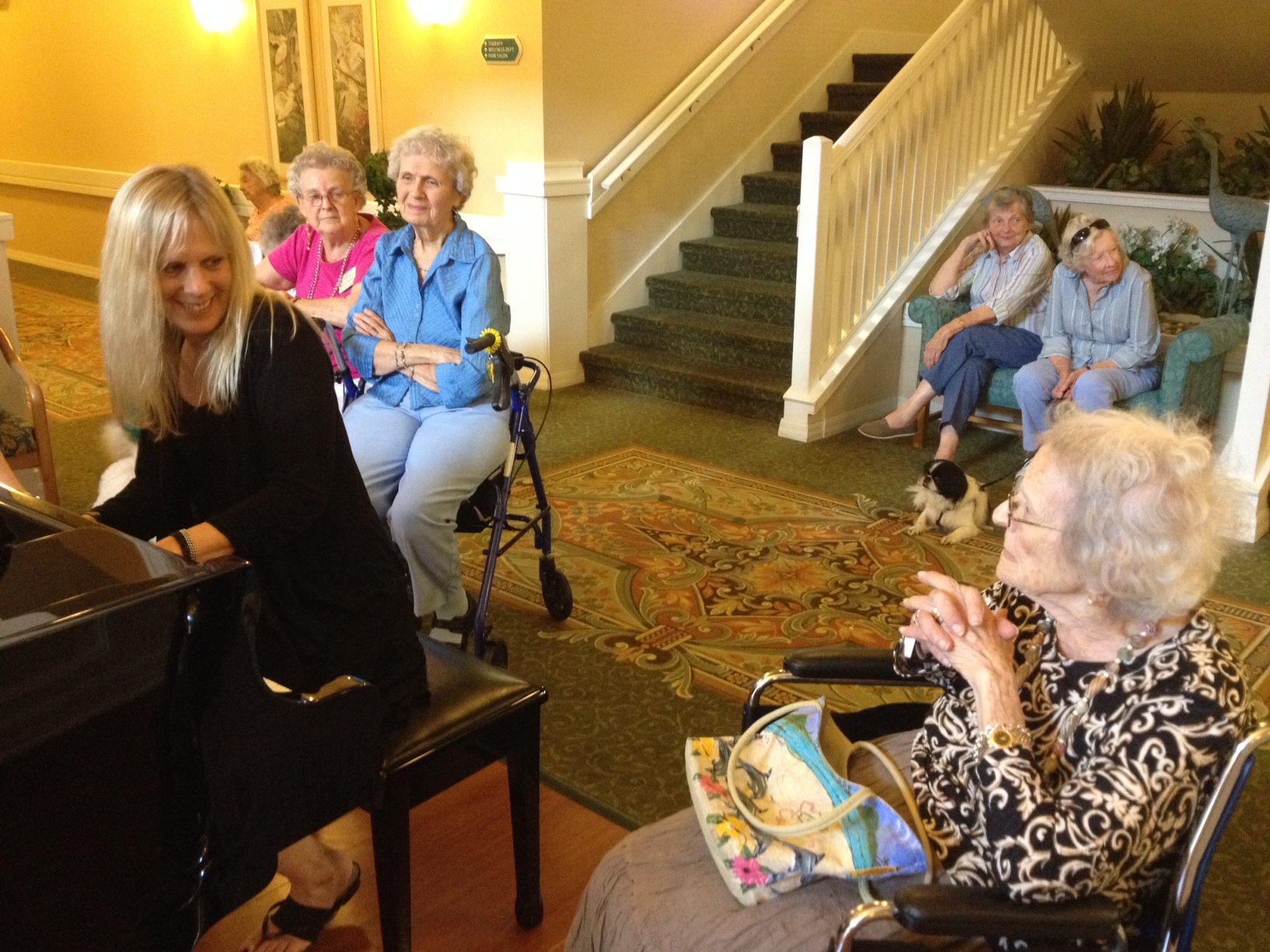
Kerri playing for her mom and the other ladies.

Kerri playing for her mom and the other ladies.

I wish I had filmed Kerri’s head explosion. I’d send it to Jose, the man with the measuring tape and the power to explode heads. As I watched the pieces of her mind drift back toward the earth I couldn’t help but remember the statistic – relative to the rest of the developed world – of how much Americans pay for their health care and how little they actually receive. Our costs are astronomical. Jose just showed me why. I wondered how many man/woman hours of work that Jose just annihilated. As Kerri said to the electric wheel chair supply company representative, every day of Beaky’s life is an extra inning or like a dog year. It is a gift. To tell this woman that it will only be a few more months before she will be approved is cruel. It need not make sense. It is merely cruel.

On another related note, today was Josh’s first day of work as a nurse in an emergency room. He wrote that he had a very good first day. The highlight was extracting a penny from a young boy’s nose. Apparently, the boy tried unsuccessfully to swallow the penny and coughed it up and into his nose. A hole in one! What are the odds of such a perfect shot? If I ever have a penny up my nose I want Josh to do the extraction. He cares for people. He is kind. Mostly, I want Jose, the man with the tape measure, to meet Josh, the man who helped a kid with a penny problem, so that Josh can explain to Jose how to recognize a person in need and what it means to serve. Service often requires dropping the tape measure and looking at the person being measured.

I suppose this is yet another tribute to Doug whose wisdom is worth repeating: “Your problem,” he said to me, “is that you want it all to make sense.” The path to happiness, according to Doug, is to cease the expectation of sense. No mother can make sense of a penny lodged up the nose of her son and Kerri will never be able to make sense of the man with the tape measure. It was her attempt at sense making that caused her head to detonate. I’ll keep that bit of information to myself until all the pieces find their way back to earth. In the meantime, let’s have more wine!

Go here to get my latest book, The Seer: The Mind of the Entrepreneur, Artist, Visionary, title_pageSeeker, Learner, Leader, Creator…You.

Or, go here for a hard copy and Kindle.


Embrace The Bubble

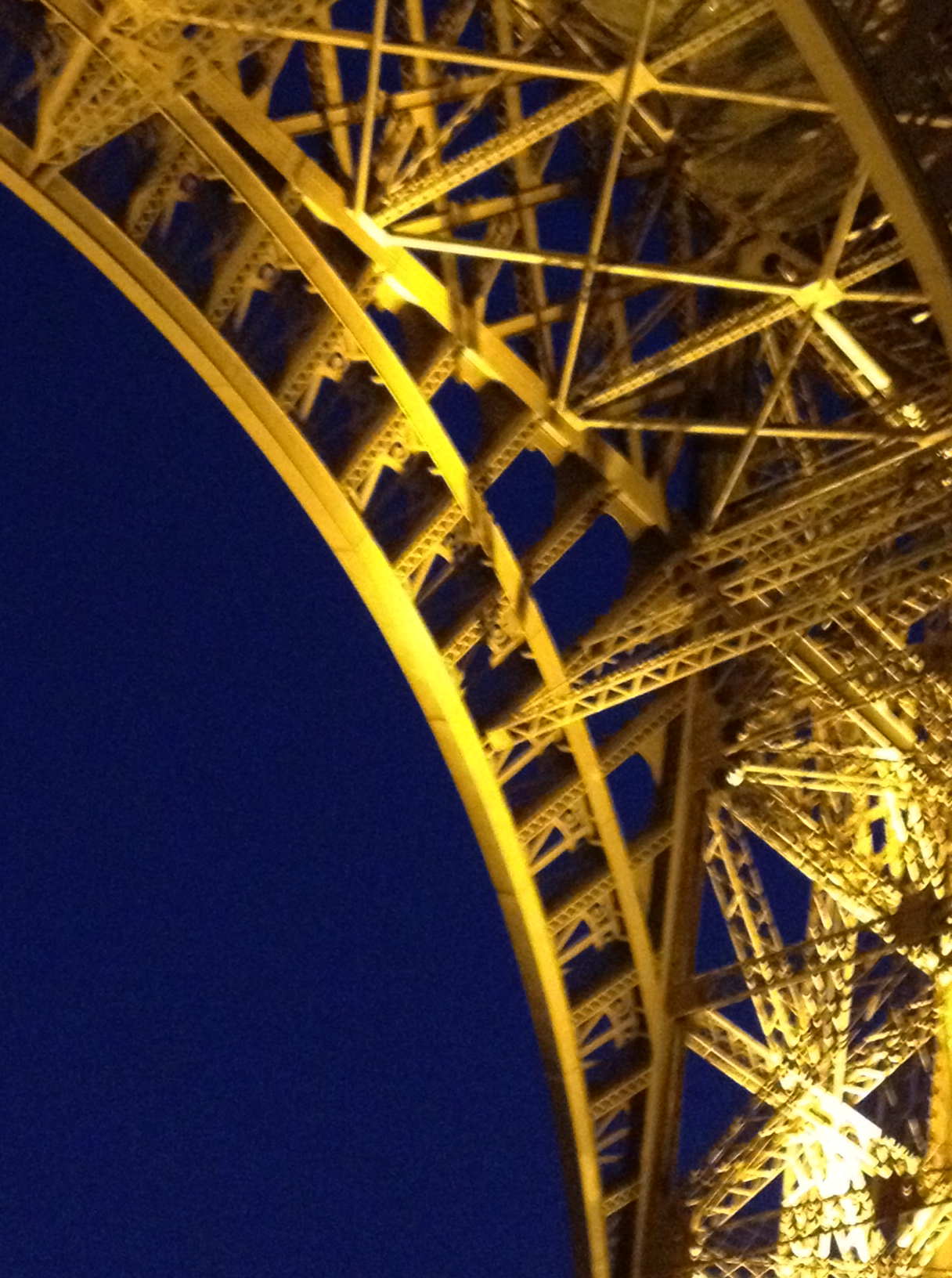
A bit of the Eiffel Tower

A bit of the Eiffel Tower

I am nearly through the throes of jet lag and my inner anthropologist has an observation or two about the altered state that occurs when one wakes up in Paris and goes to sleep in Kenosha.

When 36 hours pass in a 24-hour daylight cycle, the human body (my human body) experiences shock and awe. A soul cannot travel nearly as fast as a body in a modern airplane; that’s why they call it jet lag. The jet does not lag. The soul doddles as a good soul should while the body flings through space in a pressurized aluminum tube. The soul lags (note: my inner anthropologist is a scientist and is dubious about using the word “soul.” He wants you to know that “soul” is my translation of his term, “consciousness”).

Jet lag is like being inside a bubble. There are great benefits to being inside the bubble. For instance, the world is wonderfully distorted. Nothing is normal when sifted through a soapy haze. The bubble is the overlap of dream space and the everyday. From inside the bubble, people move too fast. Or, they move too slowly. The words people speak are garbled and generally bounce off the bubble. Checking out of a grocery store is like a scene in a sci-fi movie. Sense-making is impossible but the surrender to no-sense is sweet and oddly comforting. To release the necessity to understand, the need to recognize, rationalize, explain, or connect even the simplest of thought-dots is liberating. In the bubble, a sigh is the only appropriate response.

From the bubble, there is nothing to be done but to watch the time river roll. Jet lag bubble consciousness makes things somehow more simplistic; complexity is not possible from a jet lag haze. Inside the bubble, life routines that were unconscious prior to traveling are startling and new; they are like gestures from a previous incarnation. For example, this morning, doing the dishes, my hands knew what to do yet I was fascinated with the odd process. I was both doer and witness. Doing the dishes was known and new all in the same instant. The bubble, so my inner anthropologist claims, is a paradox: it dulls the thinking but sharpens the simple moments. It opens the senses. Prior to doing the dishes, watching the sunrise through the fog, I listened with fascination to the wind shake the dew through the high leaves in the trees. It was gorgeous; nature’s rainstick.

Within the bubble, sleep is a constant tug like an undertow. It pulls time into slow motion. It creates a liminal space, a not-here-and-not-there space. It creates a “now” space with a single simple imperative: stay awake for a few more hours.

Stay awake. I like the metaphor: to stay awake amidst the pull to dullness; ultimately it is the gift of the bubble. It is a reminder not to sleepwalk through life, to stay alert to the simple moments. Stay awake or your life becomes like a television running an endless cycle of sitcoms. Dullness is a choice. My inner anthropologist just rolled his eyes. It’s more extravagance on my part; apparently “choice,” like “soul” is not an appropriate scientific term.

Go here to get my latest book, The Seer: The Mind of the Entrepreneur, Artist, Visionary, title_pageSeeker, Learner, Leader, Creator…You.

Or, go here for hard copies.

Rap With B-Cat

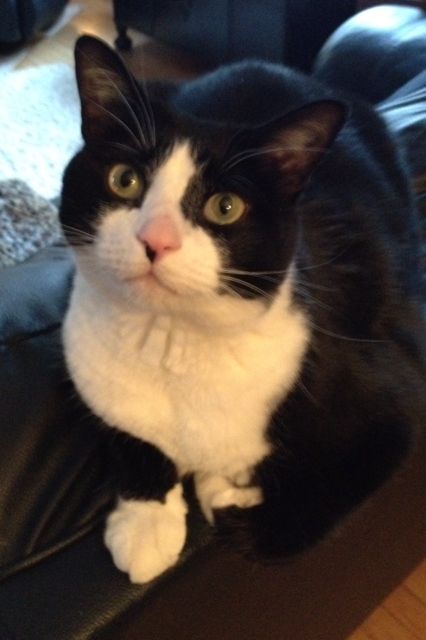
Baby Cat daydreaming

Baby Cat daydreaming

It occurs to me, as I sit in the studio on this cool spring morning, that there is a fourth member of my household that has yet to be introduced. We have a cat, an elder statesman, a worthy companion and sparring partner for Tripper-Dog-Dog-Dog. He has a name that no one uses because, early in his life, he became a rap star and dumped his given name. He is now known to all the world as Baby Cat.

When I first met Baby Cat I called him Sumo. He is a very large cat, a formidable kitty. Late at night I have more than once thought there was a burly intruder in the house but it was only Baby Cat pacing as he worked out his latest rap. It is an understatement to say that he is heavy on his feet. Sometimes the room bounces when he leaps from a windowsill.

photoBaby Cat is teaching me about clarity of intention. He leaves no doubt about what he wants (food or pets) and is relentless until he gets it. Truly, he is relentless. He does not know the word “try.” Baby Cat gets. He meets me every morning and guides me to his bowl. If I deviate, he wraps his hulk around my feet or herds me like a shepherd. If physical action is not enough to direct me to his bowl, he begins a verbal assault that would make his mother blush. He wants what he wants and he wants it now. Black and white. In addition to Sumo, I also call him Terrorist Kitty because he resorts to biting ankles as a last resort. Yoda would be proud of Baby Cats force of will. Were he not a rap star I’m certain that he’d be a Jedi. Actors would be well served to study with Master Baby Cat.

Baby Cat is teaching me about simple contentment (yes, like all things true, it is a paradox: intention and contentment are bedfellows). He shows me how to linger in sunny spots or stare out the window for hours, just because. He has reintroduced me to the fine art of daydreaming. He joins me every morning as I stretch and do a bit of yoga, shamelessly positioning himself in the optimal petting zone close to my feet and gives himself over to my affections. And, because he is so capable of presence and pleasure, I’ve found that my morning yoga has transformed. It is no longer a discipline, something I do that is good for me; it has become a practice of simple attention and loving. I am more capable of presence and pleasure. I rest in it. Like Baby Cat, my body tells me what it needs, and I breathe.

Go here to get my latest book, The Seer: The Mind of the Entrepreneur, Artist, Visionary, title_pageSeeker, Learner, Leader, Creator…You.

Or, go here for hard copies.


Make Nonsense

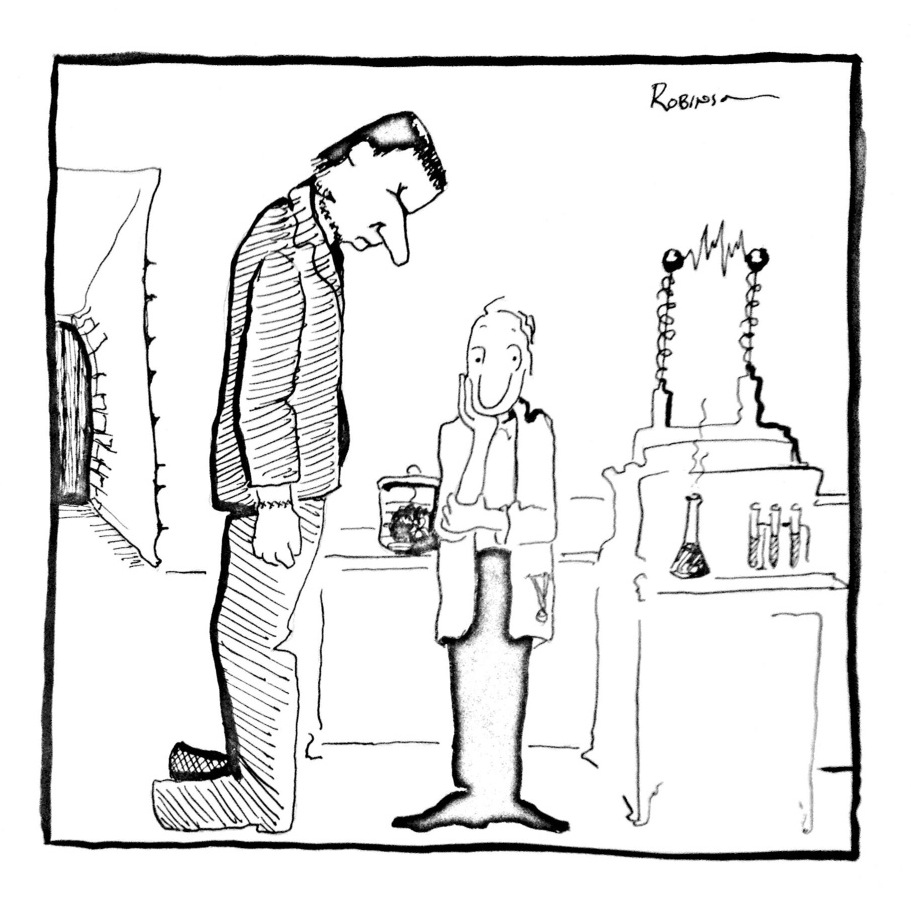
from the Flub cartoon series. Do you catch the joke.

from the Flub cartoon series. Do you catch the joke?

Life just gets weirder and weirder. That’s part of what I love about it. Many years ago when I was full to the top with frustration, Doug told me that my real problem was that I wanted life to make sense – and it doesn’t. Truer words were never spoken! Stop trying to make sense of things and most of life’s frustrations dissipate. Any good innovator or creative type will tell you that what they do is completely unreasonable. Buddhists call this state on nonsense beginner’s mind.

Sense making is often referred to as Reason. Parents are occasionally overheard in grocery stores pleading with their screaming child, “Be reasonable!” Couples married for years make the same appeal when they are not getting what they want from their spouse.

In some circles, sense making is known as Rational Thought. Useful words and necessary when getting onto an airplane (without Rational Thought, you’d necessarily confront the senseless act of getting into an aluminum tube and hurtling through space at 37,000 feet)!

If you are lucky, the more you live, the more you realize that meaning is all made up. What is reasonable to you may be unreasonable to me. What makes sense to me might not make sense to you. What is true for you may be untrue for me. The idea that there is a single overriding truth is the source of much frustration in the world and has created horrors throughout recorded time. The notion of a single truth makes seekers of us all as if we might find truth sitting in a cafe sipping wine. The notion locates truth outside of us and renders personal truth subject to someone else’s definition.

All seekers inevitably come to this question: “What is truth?” Asking the question usually brings the external-truth pursuit to an end. I’ve learned that no matter how diligently I’ve sought truth or ‘the answer’ in the eyes of others, I am only capable of finding what I seek by looking inside myself. Like all seekers, I find truth within. I find truth when I listen within to the still-small-voice. All the trouble I’ve ever created for myself came when I stopped listening to that voice.

Quinn told me years ago that, “Nothing makes sense.” He smiled. He was a master of double meanings. Where he less given to fun he might have said that people are story makers and given to make sense out of nothing. It’s a magic trick. The problem, as Doug pointed out to me years later, comes when we think the sense exists before we arrive.

Go here to get my latest book, The Seer: The Mind of the Entrepreneur, Artist, Visionary, title_pageSeeker, Learner, Leader, Creator…You.

Go here for hard copies.


Bark Your Opinion

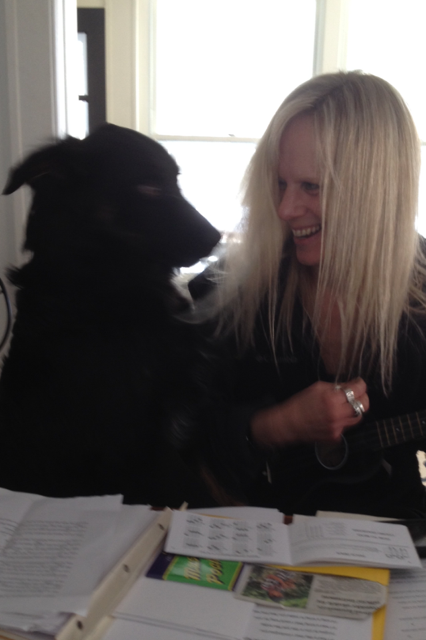
K.Dot and Tripper

K.Dot and Tripper

Tripper Dog-Dog-Dog does not like the ukulele. He is not shy about expressing his opinions, particularly where his musical tastes are concerned. For instance, Kerri has a djembe (a very cool drum) that he adores. My frame drum, on the other hand, makes him frantic and filled with angst. I was certain that it was my playing and not the drum that drove him nuts until Kerri tried my drum and he was equally distressed. So desperate was he to silence the offending sound that he tried to put his head through the drum. He bit the frame. We can no longer play my frame drum in the house as it evokes the inner rabid wolf spirit in the normally calm and reserved Tripper Dog.

Our house is filled with musical instruments. Dog-Dog hangs out under the piano when Kerri plays. He wraps himself around her stool and chews a bone when she practices her cello. He sleeps through my clumsy first attempts at new guitar chords (or, perhaps my playing puts him to sleep). His broadmindedness snaps shut at the ukulele. He will go to great lengths to stop the strumming. If we contain him in the kitchen he howls.

Tripper Ukulele Interruption

Tripper Ukulele Interruption

I’m considering an experiment. If you’ve not yet discovered Jake Shimabukuro, do yourself a favor and listen to his work. He is a ukulele master and makes those four little strings sound like a full orchestra. He plays rock and jazz and the blues and anything else that you can’t imagine coming out of a ukulele. Go see his concerts. You won’t believe your eyes or your ears. I have a Jake Shimabukuro CD and am considering slipping it on the player while Tripper isn’t looking. I’m wondering if his disapproval of the ukulele might dissolve in the face of mastery. I’m wondering if Tripper Dog-Dog might gain an appreciation of the ukulele if introduced to deeper levels of sophistication. He is, after all, a puppy and generally open to learning new tricks.

As an old dog, I, too, am open to learning new tricks and the ongoing lesson in this life is about what I can and cannot control. Whether or not Dog-Dog ever grows to appreciate the ukulele is definitely out of my control. What is in my control is this: I will love him either way.

Go here to get my latest book, The Seer: The Mind of the Entrepreneur, Artist, Visionary, title_pageSeeker, Learner, Leader, Creator…You.

Or, go here for hard copies.

Know What Matters

A day with Beaky

A day with Beaky

When you leave Florida driving north there is a stretch of highway in Georgia that is littered with billboards advertising everything from the adult superstore to the second coming. The spectrum is as breathtaking as it is comical.

I’ve driven this stretch three times during the past several months and each time I wonder what an archeologist from some distant future might deduce about us if this stretch of highway was the only remaining fragment of evidence of our culture. A few years ago I spent a day in Herculaneum, the other city buried with Pompeii on the day that Vesuvius erupted. Like Pompeii, it was remarkably well preserved. We have so much writing from that time, we have eyewitness accounts, we have museums stuffed with artifacts and art. While I walked the streets of Herculaneum on that hot summer day, I read about the social norms, the exercise practices, food preparation, infrastructure, and what we assume a normal day was like. I also read, based on the placement of the bodies, what that most unusual day, the day the world ended, must have been like. There was a timeline of events. All the while I couldn’t help but wonder if our study of their culture could only reach the superficial, the top layer, the economics. We can sort through the garbage and garner much about daily practices. To study is not the same as knowing. What we know is minute when compared to what we do not know. The timeline told me little of the terror. It told me nothing of the love. The economic statistics told me less than the plaster cast of the old couple huddled together, arms wrapped around each other on their final day.

I recently watched a short TED talk by Ric Elias who was on the plane that a few years ago landed in the Hudson River. He talked about his thoughts as the plane went down, what he learned about life when he faced his death. He was surprised that there was no fear in dying but there was great sadness for all the things he would miss, all the relationships he would leave behind. He learned from that experience that the only thing in his life that mattered was being a good father. He also decided to clear all the toxic relationships and never again participate in negative energy. He said that he gave up being right. I thought of him as I drove the billboard gauntlet a few days ago. The archeologist from the distant future would glean much about our economics and ponder our obvious confusion. She would write studies useful for the tourists that would travel halfway around the world to visit the site of a once thriving community. The tourists would walk the stretch of ancient freeway, gape at the billboards and speculate about our addictions. But they would know nothing of the people who everyday drove that stretch of road with their families, or about people, like me, who drove more than a thousand miles to spend a day or two with a 93 year old woman named Beaky who can tell a story better than almost anyone I’ve ever known.

Go here to get my latest book, The Seer: The Mind of the Entrepreneur, Artist, Visionary, title_pageSeeker, Learner, Leader, Creator…You.

Go here for hard copies.


Hold A Vigil For Kermit

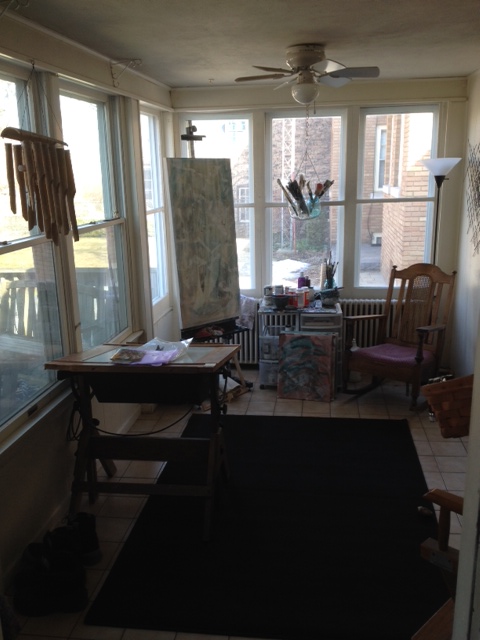
My studio moves into the light.

My studio moves into the light.

Life returns slowly. It is the time of year that the goddess Demeter ceases grieving because her daughter, Persephone, is allowed to return from the underworld. Demeter’s joy ignites earth’s renewal.

This morning we sat outside on the back porch, wrapped in a blanket, our chairs facing the sun, our backs to the wall so we could feel the radiant heat. We drank coffee, soaked up the sun and talked about everything and nothing at all.

We are feeling the stirring. We moved the studio from the basement into the light. A stalled project now has life and is arcing toward production. Inspiration and enthusiasm are playing chase through our creative sessions. A few days ago I found my sketchbook and spend time each day filling its pages. There are new canvases sitting on my easel.

It is the season of resurrection. We are holding vigil for our pond frog, Kermit. Although his name is common his story is extraordinary. Last summer, after we dug the pond in the backyard, Kermit suddenly appeared. All through the fall we checked on him. He looked out at us from his hiding place in the rocks or if caught him by surprise, he’d dart to the opposite side of the pond. This winter was harsh and the pond froze solid. We worried about his fate. When the pond melted, we found a seemingly lifeless Kermit on the bottom with the leaves.

Many species of frogs hibernate. In fact, we learned that certain wood frogs freeze solid to the core. When winter comes their bodies replace the water in their vital organs with a protective “anti-freeze.” All signs of life cease. The heart stops (it is frozen). All measurable electric impulses close down. When the weather warms, their core thaws, and they quite literally come back to life. If you’ve ever doubted the magic and mystery of this life, spend some time watching frogs.

We don’t know yet if Kermit is hibernating or not so we watch. A layer of ice returns to the pond each night. The temperatures are bobbing just above and way below freezing, so we wait, drink in the sun and good coffee. We watch Tripper-dog-dog-dog discover birds and bark at raindrops on the pond; this is his first-ever spring. We fill with hope and ourselves slowly revive from a long winter of hunkering down. We stretch our limbs, we thaw, we breathe.

Go here to get my latest book, The Seer: The Mind of the Entrepreneur, Artist, Visionary, title_pageSeeker, Learner, Leader, Creator…You.

Or, go here for hard copies.


Serve Life

Untitled by David Robinson

Untitled by David Robinson

I’m writing language for a website. In the past my website reinventions felt like an exercise of the same old cereal in a new marketing box. This time it’s different. I am a new cereal and I’m not certain that I want a box. It makes a difficult task of telling people what I do when I’m fully invested in container resistance. As I wrangled deep into the night with clever but remarkably meaningless marketing language, I had two mini-epiphanies:

1) Last year, unlike the captain of the Titanic, I sailed my ship directly at an iceberg so that it would sink. I sank the ship with all of the fine china, the gold bars and diamonds in the safe, the furniture, the clothes and fine food. It all went to the bottom of the ocean. I wanted off the ship so why would I now build for myself a new ship? I didn’t bob around in my raft in the vast ocean spearing tuna and catching rainwater so that I might someday step back on to the bridge and do it all over again. What, exactly, am I building?

2) I have tried my whole life to squeeze myself into too small of a box (as, I suspect, all of you have, too). I have worn the jacket of coach, of facilitator, of teacher, of director, of actor and waiter and painter. I am none of these and all of these. I have made websites complete with testimonials and classes, nice pictures and e-books, workshops and retreats. The process of building a site is a two-agenda process: first, locate yourself in space and time for other people so that they might find you and, second, orient yourself toward other people’s concern so they might know why they should seek you. In other words, 1) this is where I am and, 2) this is what I provide. The pronoun is “I.”

What, exactly, do I provide? I am not a plumber or a pizza maker. Every marketing person I’ve ever known has advised me to brand myself. Brand myself as what? Brands are made up. A year ago on New Year’s eve, tarot woman told me that she didn’t see a career for me. Rather, she saw lots of expression. “Brand that!” I thought to myself. Last night I reasoned, “I am not a brand.” Neither can I reduce what I do to a pithy phrase or clever visual. That’s precisely why I sought an iceberg and sank the ship!

I’m an artist (a painter and performer) and I write. I like to write a lot. At the center of all that I do is…disruption or change or spirituality or transformation, words that sound great but what do they mean on the concrete, day-to-day experience of living. I deal in heart, intuition, and soul. Great. I hold people’s hands and walk with them into their dreams. I dive with them into their past so they might let go of their story and sit solidly in their present. I help them unbuckle the weight belt of their story so they might surface for air. Brand that.

To ask, “What do I provide?” is to ask the wrong question. This question will always lead to too tight boxes.

Joe sent me some links: short films of Stephen Jenkinson (The Meaning of Death and Making Humans). Stephen Jenkinson says that humans are made, not born. He speaks eloquently about the necessity of dying to our childhood – which means recognizing that our short lives are limited. That’s the recognition necessary to grow up. We can only really fulfill our gifts when we understand the necessity to serve life, not our life. We end. Life continues. Martin Prechtel writes of his community’s male passage rituals; young men learn that they can only serve their community when they recognize their mortality. The passage ritual is meant to bring them to the realization that they are finite. Only then can they understand the imperative to serve something greater than themselves: life. Tonight in the Taize service, Pastor Tom read a passage about losing yourself to find yourself. It is the same concept wrapped in biblical clothes.

Here’s what I want to say on my site: when you are willing to stop trying to save your life and ready to start giving it, call me. No box necessary.

Go here to get my latest book, The Seer: The Mind of the Entrepreneur, Artist, Visionary, title_pageSeeker, Learner, Leader, Creator…You.

Go here for hard copies (amazon)

Listen To The Window

'Dancing In The Front Yard' by David Robinson

‘Dancing In The Front Yard’ by David Robinson

I am having an ongoing conversation with a stained glass window. Perhaps it sounds odd but I sit in the choir loft, across the sanctuary from it, and I listen. Without fail a thought always jumps into my head. Sometimes it’s a feeling and if I continue to listen, if I ask questions, breathe and get quiet, great insight follows. My conversations may be the fodder for my next book.

Here’s what I heard today: Stories can be the heaviest thing on earth to carry.

“Tell me more,” I prompted, staring at the red robe that serves as the visual focal point of the window.

After a few moments I heard: So many stories are fear-based. Fear stories are the centerpiece of angst and depression. They are monumental. If you pay attention you can see the weight of the story that people carry. Closed hearts and furrowed brows, burdened shoulders and bad backs: these are bodies struggling under the weight of the story they carry. Stories of shame are heaviest of all.

There was silence but I know enough to sit still, breathe, and listen. After a few moments, the stained glass window continued: No one need carry the burden. Every story can be set down. A story can be left behind.

“Why do we choose to carry the weight?” I asked.

I heard almost immediately: Everyone has experiences that inform the arc of their lifetime. Sometimes it is a wound. Sometimes it is a loss. The story is often the account of “something happening to me.” It forms the great helplessness. It is the victim story. People confuse their life with the story they tell of their life. They think they need the story to know who they are. Without the story they would have to own their choices. Both feet in! They would have to start living. People are life, not the story they tell of life.

“People tell stories. It’s what they do!” I responded.

The light poured in through the window. The clouds must have shifted across the sky. I imagined the window was chuckling at me as I heard: Stories can be the lightest thing on earth to carry….

Go here to get my latest book, The Seer: The Mind of the Entrepreneur, Artist, Visionary, title_pageSeeker, Learner, Leader, Creator…You.

Go here for hard copies (it’s Amazon;-)