Give As Love

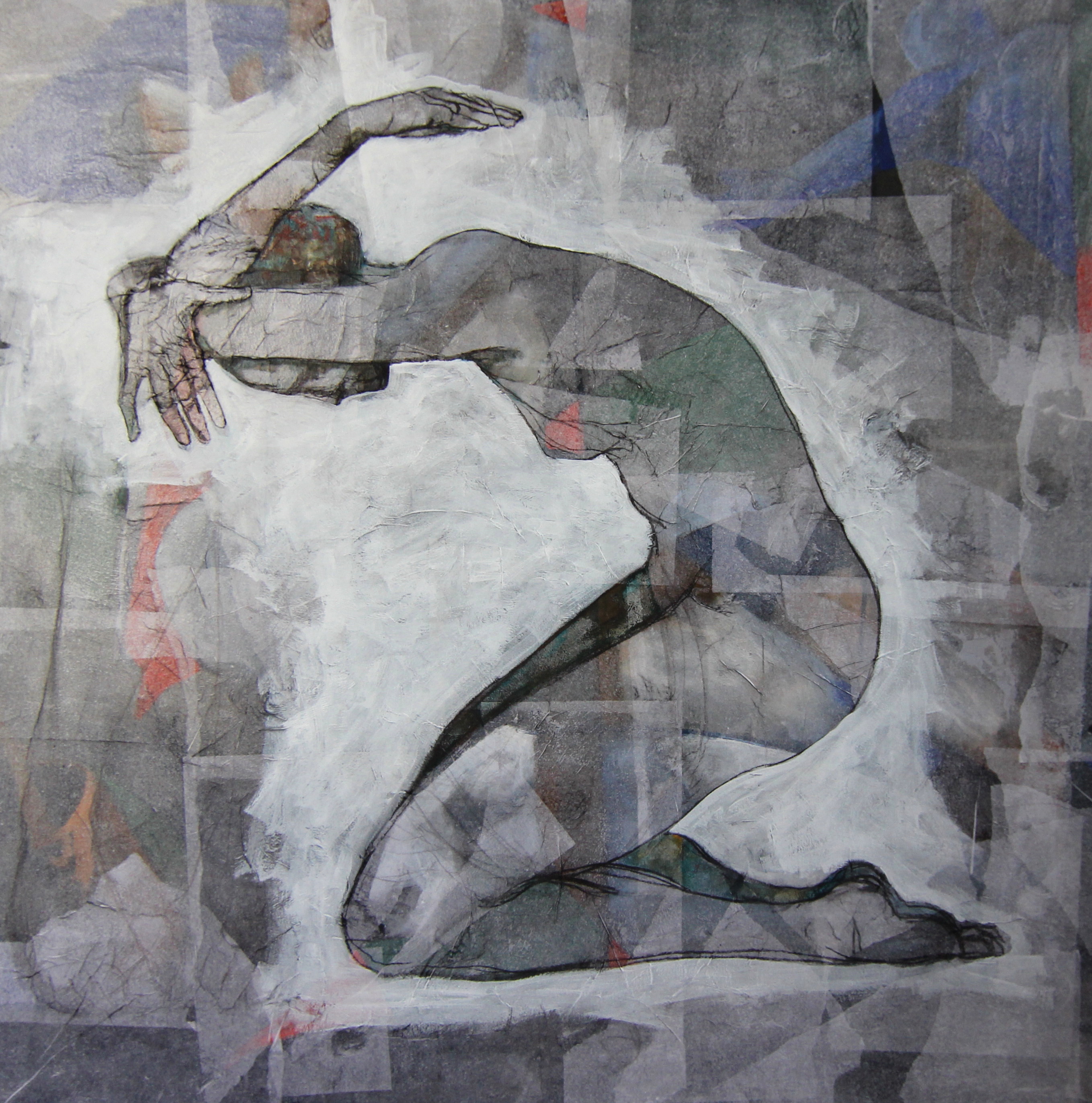
The stack of paintings sitting in my basement waiting for me to show them.

The stack of paintings sitting in my basement waiting for me to show them.

Sitting in the choir loft this morning I was at first disappointed that the stained glass window was silent. I was so full of questions – and have lately been so full of questions – and have come to look forward to hanging out in the loft, conversing with the window, while Kerri plays a service.

When I bring my questions the window always has something to say. The window offers a better set of questions or a startling reflection or a slap of insight. The window’s responses always come in the form of a message of return (return to heart, return to forgiveness, etc.). If I get quiet and ask my question, out of the peace, a conversation always ensues. Today, from my quiet, I asked my question about artistry, about my artistry, and I was met with an unusual silence. I wrinkled my brow. I wondered if my conversation with the window had come to an end or if perhaps my question was out of the scope of topics for a stained glass window.

There was a visiting pastor, an elder who’d been preaching for over 50 years. I sat up and paid attention when he began his sermon this way:

“Artists have a special gift. They help others see in a new way….”

His message was about love. Love, he told us, takes many forms and the form that love takes depends upon the unique gifts of the lover: a symphony is a gift of love, a painting is a gift of love. A plumber fixing a broken water main late into the evening is a gift of love. “What is your gift? he asked. Do you recognize it as love?

A few years ago, on New Year’s Eve, I visited a tarot woman at a bookstore in Denver. During our session she asked me a question that felt like a cold slap in the face. “You know god’s voice,” she said. “Why do you not use it?” I mumbled a lame excuse that dribbled into silence. “Why do you not use it?” she asked again.

Sitting across the table from the tarot woman, I knew without doubt that I have, my whole life, been a great servant to other people’s artistry but a lousy servant to my own. In my life I’ve been the midwife to many people’s gifts while mine have remained mostly unrealized.

The window whispered, “A painting is a gift of love. So is a play. So is a book. These are your forms of love. Your gift is a gift of love. Love is god’s voice and you know god’s voice.”

“I do know it,” I said, timid to admit it. “Don’t we all?” I asked the window.

“Access is open to all. Few actually listen,” the window replied. “Few know how to listen. Most fear their gift and plug their ears.”

To offer my gift without inhibition is how I best express love to the world? That was old and new for me at the same time. I asked the window, “How many artists need to hear that message? How many people need to hear that message?”

“You are deflecting. You deflect your gift by serving other people’s purposes before your own. These questions you ask are the wrong questions,” said the window. “Yes, of course, all people need to hear the message. But, is it your purpose to deliver the message or is it your purpose to fulfill your gift? Helping others hear their message is not yours to do. Yours is to fulfill your gift and, in that way, help others to see their gift in a new way. You need do nothing but give your gift. They will see or not without your intervention. Love by giving your gift. It is simple. Give your gift, give your love, without reservation or doubt.”

“Love can be how you listen to a friend in need,” the pastor said. Love is not about the rules or the restrictions. Even when you try to alienate love, it will always find its way back to you. It will find its way back through you.

“You know god’s voice,” the window continued. “And you know it. Return to the truth; return to your truth. The question, ‘Why do you not use it,’ no longer matters. It, too, is a deflection. Asking ‘why’ merely delays the giving. Use it. Give it. Give as love.”

Go here to get my latest book, The Seer: The Mind of the Entrepreneur, Artist, Visionary, title_pageSeeker, Learner, Leader, Creator…You.

Or, go here for hard copies.

Return To Your Self

DSC_1914

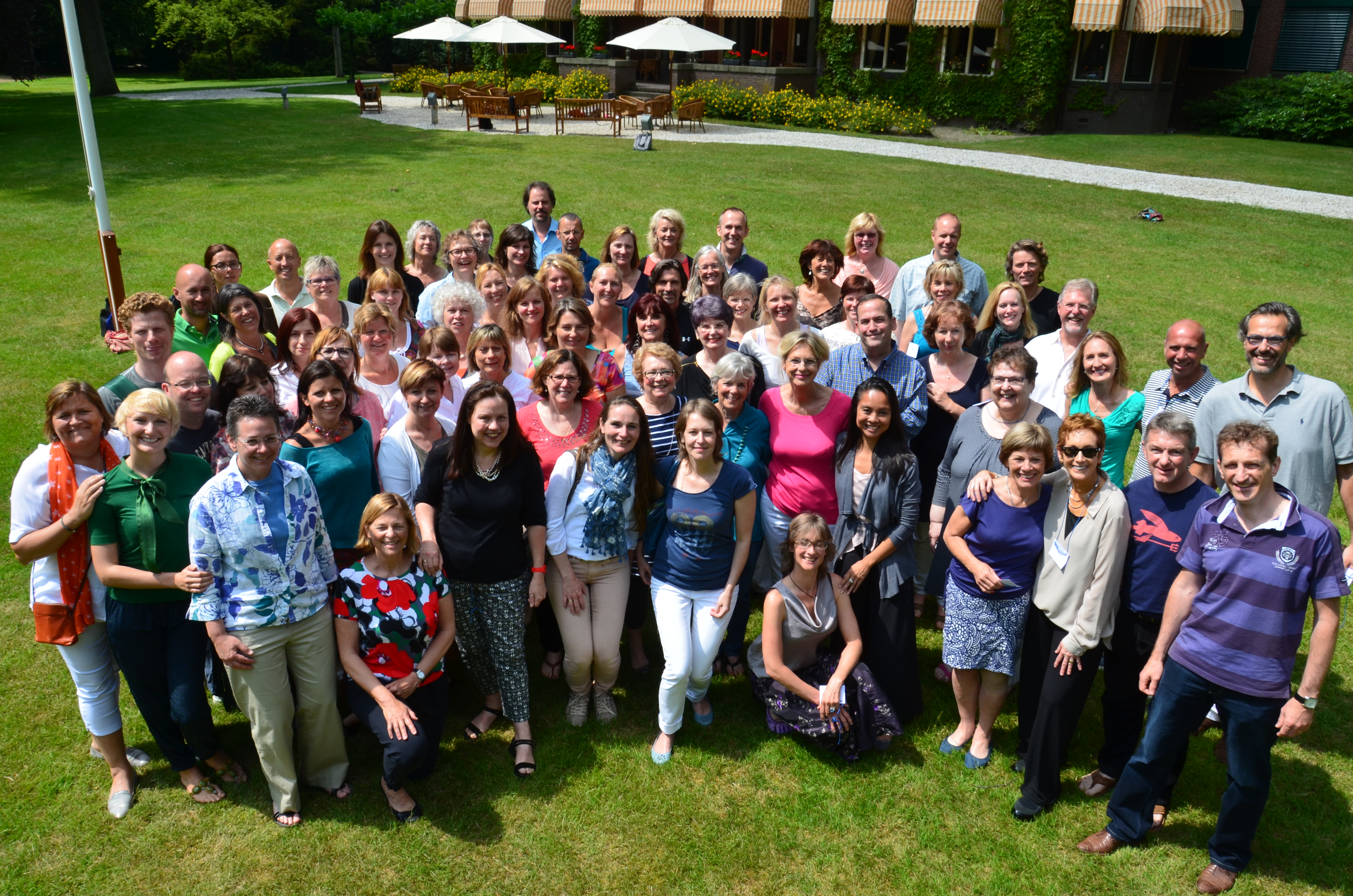
The 2014 Transformational Presence Global Summit in Vught, Holland

While in Holland I led a group through a segment of an exercise called The Dream Police. I created the exercise years ago with John Langs and Lisa Paulson – two master teachers and performing artists – while doing some work with young actors at PCPA Theatrefest. The original exercise is deeply rooted in ritual and communal transformation. The group in Holland was engaged in a more personal exploration so I only led them through the first part of the exercise.

It is surprisingly potent and I’ve learned to use it carefully. The first part of the exercise sounds simple but can be explosive: Write for 5 minutes as if, in 5 minutes, your memory will be wiped clean. All that you will know of your life, of your values, your relationships, your dreams, your identity… will be what you capture in those few moments of writing. After the writing, in a ritual act, the scribbles on the paper are left behind. Most often, people destroy the paper. They shred it. The writing is lost. The question becomes, “Who are you without your story?” It is intended to disorient so the participants might reorient to the essentials of their lives; it is a great exercise for cleaning the gunk. It can be freeing. It can be terrifying. It is always illuminating.

The reorientation process is impossible to do alone. Reorientation is communal. Until Holland I’d never left a group midway, I’d never let the exercise stop in the middle of the disorientation and had always before made sure the reorientation process was at least initiated. IN Holland, the exercise was interrupted. The disoriented community fragmented. Some left the exercise feeling liberated. Others were angry. Some were confused or frightened. All left by themselves. Disorientation makes lonely introverts of us all. Disorientation is an individual sport.

The ritual of coming back to yourself is always a ritual of returning to the community. Clarity is a boon that requires sharing with others. To come back to yourself is to come back to relationship. No one walks this earth alone. No one is capable of saying “This is me,” without the presence and assistance of others. The process can be volcanic. It can be quiet and intense. It always requires another question: “Will you tell me what you see?”

24 hours later we completed the exercise. The individuals returned. They gathered, reoriented and a new form of the community was born. I knew all was well when the newly reformed community asked, “What do we do now?” and the only available answer was, “We don’t know – but let’s find out together.”

Go here to get my latest book, The Seer: The Mind of the Entrepreneur, Artist, Visionary, title_pageSeeker, Learner, Leader, Creator…You.

Or, go here for hard copies.

Have A Chat With Erling

Kerri with her dad.

Kerri with her dad.

It seems as if the theme for the week is lost conversations. It occurred to me that, after writing yesterday’s post, there is, in my life, another conversation that I wish I could have but never will. And, because I never will have the actual conversation, I am reaching into the void and having another form of dialogue.

I wear on my right wrist, wrapped three times to form a bracelet, a pull chain for a light fixture that I found on a workbench. Kerri wears on her left wrist, wrapped three times, the rest of the chain. I found the chain during our first trip to Florida. We were visiting Kerri’s mom in an assisted living facility and, in the evenings, cleaning out her parent’s home. Kerri’s dad, Erling Arnson, died a year before we met, and she’s often said to me, “I wish you could have known my dad.”

I found the chain on Erling’s workbench. He was a watchmaker and a jeweler. He worked with his hands, rebuilt cars, machined new parts for things, and was the master of a quick fix. He liked to build things. He liked to tinker. You can tell much about a person by the way they keep their space and I spent a long time standing at Erling’s workbench. It had been mostly picked apart, scavenged, but the organizing principle was still in tact. He liked to re-purpose things. He liked to make things out of things; every bolt and scrap was filled with potential. I could feel (and understand) the simple joy of creation apparent at his bench.

When I saw the chain (discarded by the scavengers) I knew it would be a way for Kerri and I to bring her dad forward with us. We secured the chains on our wrists and because it is there, I think about Erling everyday. I wonder what I might have learned from him. I like to tinker, too. I like to make things.

Me at Erling's resting place.

Me at Erling’s resting place.

On the second anniversary of his death, Kerri said, “Daddy will show up, today. I don’t know how, but he will.” A few minutes later the faucet in the kitchen broke. Evidently Erling had a wicked sense of humor. As I replaced the faucet (the first faucet replacement of my life), a lengthy affair requiring a call to the neighbor for tools, I felt a deep sense of patience. I remember my grandfather telling me that a person can figure anything out if they just take the time to do it. “You don’t need to know how, you just need to give yourself the time to figure it out.”

Kerri was on the phone with her mom when I finished the job. I was feigning machismo, peacocking my plumbing prowess. Kerri’s mom said, “I think he passed Erling’s test.” She smiled and I thought, “Thanks for the help, Erling. Now, how do I fix the plaster on the ceiling?” His response: I don’t know. But, let’s figure it out.

title_pageGo here to get my latest book, The Seer: The Mind of the Entrepreneur, Artist, Visionary, Seeker, Learner, Leader, Creator…You.

Or, go here for hard copies and Kindle.

Make It Rain

Pura Besakih, the highest temple on Gunung Agung

Pura Besakih, the highest temple on Gunung Agung

Terry was a crazy expat dive master living in Bali. He’d been a deep water welder, a surfer, a fugitive from what most people recognize as civilization. He was an old soul, one of the few people I’ve met who was completely comfortable anywhere in the world. He was always a local.

When I signed up to learn to dive I had no idea that 1) I’d be the only person in the class, and 2) that my dive lessons would, in fact, be some of the most profound life lessons I’d ever receive. By the time I left Bali, Terry and I did a dozen dives including a magical drift dive (the closest thing to flying I’ve ever known), a night dive, cliff dives, and a wreck dive. Once, driving to a dive site on the other side of the island, Terry pulled off the road so a tiny elderly Balinese woman could bless us. He called it “dive insurance.”

Although I never saw it, I heard about the Buddha statue that sat in the corner of his small upstairs apartment. Terry threw money at the statue. Every time he was paid he took a portion of the money and tossed it at the statue. When there was too much money accumulated around the statue, he’d open his window and throw it out to the people working in the shops below. He called it the “agung rain.”

Gunung Agung is the central mountain in Bali. It is an active volcano. All of the altars and houses (and lives) are oriented toward the mountain. To the Balinese, it represents the central axis of the universe. When Terry opened his window, which he often did, and made it rain money, he was orienting his life to abundance. He was saying to himself and to others, there is so much, more than enough, for everyone. He was demonstrating that the universe in which he lived was infinite with resource.

He told me of the agung rain one day as we bobbed in a boat between dives. Even though I did not yet know, I am certain that he knew I was on the island to learn a new way of living. The old way wasn’t working for me. “The thing that people miss,” he said, “is to not hold on to stuff. People think the measure of their lives is by the chunk of stuff that they hold.” He smiled and added, “Life has open hands. You can’t really know how to live until you can make it rain.”

Go here to get my latest book, The Seer: The Mind of the Entrepreneur, Artist, Visionary, title_pageSeeker, Learner, Leader, Creator…You.

Or, go here for hard copies.

Look Up And See

Another painting from my archive. Today I call this, "The Other Side Of Yearning."

Another painting from my archive. Today I call this, “The Other Side Of Yearning.”

The fire in the fire pit was waning. The party was over and everyone had gone. We sat staring into the small flames, quiet, exhausted from the day yet exhilarated from the amazing people and conversations that filled our evening. It was a cloudless night sky and I sat back into my chair and lost myself in the stars.

Once, many years ago, I went to Kitt Peak Observatory outside of Tucson and spent a long evening looking into deep space. I saw stars and star clusters, asteroids, black holes and ice fields. We ended the evening looking towards Andromeda, the nearest galaxy to ours; it was so distant that its stars appeared to me as a mist, a shadow that shimmered. I was overcome with emotion that night. I’ve never felt so small and yet so undeniably connected. I was a universe within a universe within a universe. I was nothing and everything.

As I sat last night in my chair looking at the little points of light in the sky, I thought about all the things that seem so insurmountable on this earth. There are economies of exclusion, wars and markets that depend upon wars to prosper, slavery and drought and poverty, there are broken lives, broken hearts, and broken dreams. There are closed hearts and closed minds. There are people killing people over conflicting definitions of god. There are so many tug-of-wars over possessions and power and resources and boundaries that, from ground level, appear vital, real and important. But the moment you gaze into the night sky, the moment you place yourself in the context of the enormity, the moment you recognize the paradox of existence, the smallness of separation and the infinity of connection, you see how mechanical and rote most of our dramas really are. They are mostly made up. They are patterns of our creation. They are, each and every one, built upon the ultimate cop-out answer: we do it this way because we’ve always done things this way.

Once, in high school, I was at science camp in the mountains on the night of a meteor shower. We lay on blankets in a meadow oohing and aahing at the dance of stars happening in the heavens. I remember being awed. I remember thinking that the only real purpose people serve is to make up stories about the things we can’t explain. We are witnesses to miracles everyday and because we must somehow contain it, we reduce it. That night I understood that all belief systems were just that: systems. They are mechanisms to help us contain what we cannot comprehend. We need them to function, to orient ourselves in infinite space but forget that we invent them. In the face of the sheer magnitude of our existence, we reduce ourselves, too, and forget that what blinks at us in the night sky, is a force, an energy that transforms, and we are an expression of that force. We are part of it. Our role may be to witness, to appreciate, to interpret, to sense make, but mostly, gazing into the sky, I think our role is to recognize ourselves in it. If we are capable of losing ourselves in the stars we are equally capable of finding ourselves in the enormity of it all.

Go here to get my latest book, The Seer: The Mind of the Entrepreneur, Artist, Visionary, title_pageSeeker, Learner, Leader, Creator…You.

Or, go here for hard copies and Kindle.


Walk As One

From my archives. I call this painting, "Alki."

From my archives. I call this painting, “Alki.”

Alan and I talked today. We are planning our upcoming Summit in Holland in June. Our conversations are always as wide-ranging as they are deep dives into sense making and soul. There seems to be no horizon that we won’t step towards, no secret passage that we won’t explore. This has been true since the moment we met. We’ve always been verdant collaborators. We joked that someday clients will hire us just to listen to how our minds spark each other. And, given our conversation today, we’d be worth every penny. We are both in the business of facilitating perceptual shifts and transformation so we do it for each other. Our planning sessions are a festival of insight upon insight, shift within shift. Together, we are innovation squared.

Recently, I shared a short TED talk by neurologist V.S. Ramachandran about mirror neurons and how deeply and concretely we are connected despite our belief/experience that we are separate. It came up again for me because during our call Alan and I discussed the waves of far-reaching impact that any simple action or word generates. Paul Barnes used to say to young actors, “Never underestimate the power you have to influence another person’s life.” Most of us are unaware of the impact that we have on lives that we never directly touch. For instance, I have had great teachers in my life and I carry their work forward in every word I write and every group I facilitate. My teachers will never know the many lives they touched and continue to touch. And, neither will I. And, neither will you. The best we can do is know that our actions matter, our thoughts matter, our intentions matter. We are more powerful than we understand.

No one lives in a vacuum. No one creates without influences. No one has a purely original thought. In fact, if you grasp what V.S. Ramachandran is addressing, no one thinks or feels independently of others. We are not as isolated or as separate as we believe ourselves to be. We have to work at separation. We are, each of us, continually co-creating (to use Alan’s term) our world in every moment of every day. What might you see if you stopped and pondered the implications of co-creation, if you took a moment and considered that you are not merely a bobber in an ocean but, in fact, are the ocean? How might you read the news of the day or address your dreams if you understood that you were a participant, a dynamic part, a burning point for the ancestors, a sender of ripples through space and time, and not simply walking this path all alone?

Go here to get my latest book, The Seer: The Mind of the Entrepreneur, Artist, Visionary, title_pageSeeker, Learner, Leader, Creator…You.

Or, go here for a hard copy.

Intend And Forget

I have many titles for this painting and have used it a few times for posts. It is ultimately about intention and inner guidance.

I have many titles for this painting and have used it more than a few times for posts. It popped up for me again today. It is ultimately about intention and inner guidance.

I just finished writing this post and realized that, in many ways, this is the continuation of yesterday’s thought: clear the mental static and the channel to full expression opens. So, here is part two of my meditation on inner static:

John and I were having a conversation about the passage of time. He told me that he’d recently found some old lists that he’d written of life goals and intentions. The interesting thing about discovering the lists was 1) that he’d forgotten writing them and, 2) that he’d achieved most of what he’d written. He said, “The form of what I created was different than what I’d originally imagined but I was surprised to see that I’d actually created what I intended.” It was as if he had to write the intention in order to activate it. Forgetting the intention was necessary to give it space to manifest and grow. Write and forget.

When I was first training as an actor, late in every rehearsal process, my teachers consistently advised that we let go of everything we’d rehearsed and just show up. “You’ve done your work,” they’d say. “Now, let it go and trust.” Many years later when I was directing plays and teaching actors I gave the same advice. “Let go and trust. You’ve done your work. All that remains is to be present.” From the teacher/director seat, the moment of letting go is palpable; you can literally see and feel the phase in the process when an actor needs to let go of their work to come alive. They need to get out of their own way. They need to get out of their head and give all of their focus to the relationships on the stage. The work moves from the head to the body. It is this last step that transforms their study to a living pursuit. Forgetting the work creates spaciousness and allows the art to happen. Art is always about relationship and great art happens when the relationship is clear and expansive enough for all comers.

One of the most profound lessons I gained from my time in Bali concerned this dynamic connection between setting an intention and letting it go. While I was on the island my internal monologue disappeared; one day I realized that I was completely quiet. Thought was a choice and not a plague or chattering background noise. Silence was simple when no story was necessary, when no interpretation was needed. In the middle of that silence I could set an intention (“This is what I want to do/find today”) and then forget it. Before the day was over I would have found what I intended. The steps came to me; I did not have to seek the steps. Sometimes the intention was simple and sometimes seemed complex but that didn’t matter. If I clearly stated what I wanted and returned to silence the necessary coincidence always found me. I felt as if I could see the pieces on the game board moving on my behalf. There was no internal noise to compromise my intention so there was no external discord confusing my choices. I was conscious of my connection.

Alan calls this co-creating. Work with the energy and cease trying to force things to happen. John told me of his lists and I wondered how many people have had the same experience. We make lists, we try to make the list happen, life gets in the way and we forget. And, in the moment of forgetting, we relax our grip on how we think things need to happen. We forget the form and inadvertently open to possibility. In the forgetting we create the steps necessary for fulfillment: spaciousness, trust, and quiet participation.

Go here to get my latest book, The Seer: The Mind of the Entrepreneur, Artist, Visionary, title_pageSeeker, Learner, Leader, Creator…You.

Go here for hard copies.

See The Force

from my children's book, Peri Winkle Rabbit Was Lost

from my children’s book, Peri Winkle Rabbit Was Lost

Bill is a board member for non-profit education organization and is forming a case for changing the curriculum. He’s asked me to help him shape his argument. The students going to the organization’s classes did not fare well in the public schools. As Bill wrote, most of the students are interested in the arts and there are no arts available. He wrote that the curriculum is mostly “traditional.”

Many years ago, my mentor, Tom, told me that the alternative schools were filled with artists, so Bill’s observation is not surprising. Anyone familiar with Howard Gardner’s work will recognize the notion that people learn in different ways. Desks are torture chambers to kids who need to move or manipulate things in order to process information. I was one of those kids and I can tell you that the word “torture” is not an overstatement. Even today, sitting is unproductive time for me. I do my best thinking while I walk or while painting. Staring out a window is also highly productive: after all, the imagination is a fancy dancer.

Bill is making the same wrong assumption made by all people interested in educational reform when they first wade into the swamps of change: he’s focusing on the teaching and the teachers. If only the teachers could see the value of working experientially, engaging the students in a real pursuit instead of an abstraction, all things would be better. On the surface, that might be true. What he’s not considering are the forces in place that require teachers to default to rote exercises, compartmentalization, and standardization. In his case (and all cases), the teachers are not being reinforced (paid) to engage the students on a learning journey; they are being reinforced to raise test scores. The change he seeks is not in the teachers or the teaching. He must address the forces of compliance that teachers, just like their students, must obey. He must address the systemic assumptions that define the expectations.

This is the same conundrum that organizations face when they desire their employees to work in teams but are structured to reward individual achievement. The desire for team is in direct conflict with the systemic foundations.

As Arnie recently reminded me, 1) our system of education was not created by educators, so 2) the aim was never to educate but to standardize. These two aspects, the structure and the intention, are powerful forces to change. They now define our assumptions of what education should be. Systems are living things, and, as I learned in school, will fight to the death just like all other living things.

Bill has his work cut out for him. Changing the focus of the teachers is the easy part and can only happen when the focus of the system supports the deep human desire to learn.

Go here to get my latest book, The Seer: The Mind of the Entrepreneur, Artist, Visionary, title_pageSeeker, Learner, Leader, Creator…You.

Go here for hard copies.

Hide The Horse

from my archives. This one is called 'Angels At The Well.'

from my archives. This one is called ‘Angels At The Well.’

I first learned this story prompt from Rick Stone at The Storywork Institute: I come from a people who (fill in the blank), and from them I learned (fill in the blank).

Rick’s story prompt was with me when I awoke this morning because I’ve lately been thinking about my grandma Sue. Kerri and I just started rehearsals on our Back To Center concert series and for some reason Grandma Sue has been present when we rehearse. She passed away several years ago and I adored her. She was small in body but big in spirit. Over the weekend my mother said of her mother, “She took everything in stride and adapted to whatever came her way.” Grandma Sue did not resist her lot in life, she made the most of it. She had fun. She created fun.

I’ve been rolling over and over in my mind a specific story about her that happened before my time on this planet. The shorthand goes like this: the glue factory was coming for an old horse that lived in the pasture next to her house. She knew the truck was coming so she hid the horse in her kitchen.

I grew up playing in her house. I know her kitchen. What makes the story miraculous to me is that 1) her kitchen was teeny and 2) you had to climb some stairs to get from the back door into her kitchen. This tiny woman managed to get an old horse through her back door, make a right hand turn, and climb some very narrow stairs. And then she “hid” it from the owner and the glue factory search team.

I do not doubt the truth of this story for a moment and if you knew my Grandma Sue you would not doubt it either. She was a champion for the underdog, a lover of the small moment, a believer in the extraordinary in the ordinary. She lived from her heart and not her need to make sense. What do you do if the sweet old horse next door is in imminent danger? Anything you can.

This morning, as I awoke, I was again thinking of my Grandma Sue and Rick Stone’s prompt came to me. I smiled because I come from a people who act on what they believe- against all odds. And from them I learned moxie and perseverance.

Go here to get my latest book, The Seer: The Mind of the Entrepreneur, Artist, Visionary, title_pageSeeker, Learner, Leader, Creator…You.

Or, Go here for hard copies.

Join A Group!

title_page“This book invites conversation,” Mary said. “I’m enjoying that others feel the same way and want to talk about it.”

I was enjoying it, too because it was my book, The Seer, that they were meeting to discuss. It was the first time since publishing The Seer that I’d participated in a conversation about it. There have been other group conversations and I’ve received some very useful emails and insightful notes, but this was the first time that I was able to attend. Since I’ve been approached to coach people using The Seer process, I was delighted with the opportunity to hear their discussion. It was the first of several calls with a people from many countries who are working their way through the 9 Recognitions (the chapters are a progressive series of recognitions).

During the call I thought about my very first art exhibit. I was young, shy and unknown so I was able to follow people through the gallery and listen to what they saw in my paintings. It was a revelation. There were as many different interpretations of my paintings as there were people in the gallery. Each person interpreted the paintings through their unique lens; they did not see what I painted, they made sense of the image through their life-narrative. They recreated the images. I loved it. It was a lesson in the power of art, seeing and was a seed for my fascination in communal narrative: where do our stories become transcendent and singular? Where does identity become cultural?

During the call I listened to what was important about the First Recognition to each caller. They had unique experiences with the concept. The First Recognition sounds simple but is capable of reorienting what you see if you take it seriously. It goes like this: you don’t have a problem, you have a pattern. “Problem-seeing” is a lens and defines a path of available actions. It defines a worldview is rooted in the notion of separation. “Pattern-seeing” is also a lens and defines a path of available action. It, too, defines a worldview but the rooting is in connectivity. The callers discussed their experiences of shifting their seeing from problem to pattern.

Mostly, I appreciated Mary’s comment because she echoed two concepts layered into the book: 1) No one creates alone. Creating, whether it is a painting or a life story, is a team sport. We need each other to make sense of this life. 2) Working with my book is like riding a bike or throwing a pot: you can’t make the shift unless you do it. To read it alone is useful and perhaps illuminating, but the real worth becomes available when you step into the actions, when you get on the metaphoric bike and fall down a few times. And, looping back to the first point, it is easier to fall with others stumbling along with you. Creating is a team sport because life is a team sport. This group inspired me and how lovely for the potency of the First Recognition to come back at me through the eyes of my readers.

Go here to get my latest book, The Seer: The Mind of the Entrepreneur, Artist, Visionary, Seeker, Learner, Leader, Creator…You.

Go here for hard copies.