Speak Your Truth

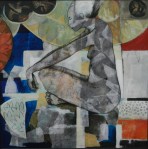
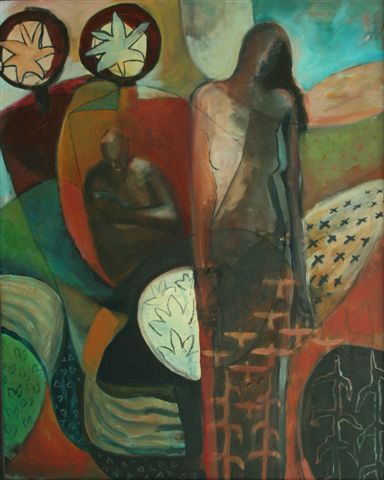
old photo of an old watercolor. I did this painting sometime in the 1980's

old photo of an old watercolor. I did this painting sometime in the 1980’s

Words hook me and lately I’ve been paying attention to the difference in the phrases:

  • Speak the truth, and
  • Speak your truth

One word makes a world of difference! Literally, an entire world of differentiation is made in one little word. “The” truth or “your” truth?

Outside of every courthouse in America is Lady Truth wearing a blindfold and holding a tipping scale. The idea is that truth is objective and fact based. Truth, so the symbol implies, is blind to any personal consideration and justice is equal to all who enter the marble courthouse. It’s a concept that was firmly ensconced in the age of reason with roots running back to the Greeks: truth is something neutral, measurable, concrete, fixed, and external. In such a construct, inner truth is suspect because it is subjective and, at best, fluid.

I’ve sat on a few juries and was reinforced in the notion that the lawyer who told the better story always wins. Truth in the courthouse was as malleable as truth outside the courthouse. The point of the whole exercise, a prosecution and a defense telling opposing stories to a captive group of citizens, is an exercise in subjectivity. Whose version of truth do the captive citizens embrace? Truth, in the courthouse, is an agreement.

Also, there are a myriad of forces at play in the epicenter of the symbol and few are fixed, blind, or measurable. For instance, a public defender with a mountain of cases does not stand a good chance against a modestly prepared prosecution. The story is already tipped when the circumstance of the play is “someone stands accused….” If truth were fixed and measurable, millions of Americans would not be glued to their televisions each night watching Law & Order. Truth makes for good drama because it is a matter of perception. Truth is perception.

We live in the age of news as entertainment (I’d make an argument that we’ve digressed into the age of news as marketing ideology – but that is a post for another day). For instance, listen to the news as told by MSNBC and then flip your dial to FOX NEWS and you’ll see what I mean. Then, for grins, listen to the same series of stories as reported by the BBC. We regularly apply two words when debating our news-of-the-day that make me shake my head with despair: slant and spin. Truth is what we want to believe – or, more to the point, what others want us to believe.

And therein lies the hook. Because we hold dear the notion that truth is neutral, external, and objective, despite overwhelming evidence to the contrary, we are willing to abdicate personal truth. We blunt the inner guides for what we are told to think, feel, and believe. We become passive. If truth is fixed and external then the inner voice is all but meaningless. Self-doubt is the blossom. The symbol of blindfolded Truth is accurate but it is a different kind of blindness. Seeing is as much internal as external. Experiences are interpreted; there will always be conflicting points of view. That means there will be multiple truths. Always. Isn’t that the definition of subjective?

The only real measure that matters is inner truth. At the end of the day, in the dark of your private space, there is no one other than yourself to ask (and answer) the question, “Did I speak truth or did I spin things.” Words matter. Words create. Truth is the name we give things.

title_pageGo here to buy hard copies (and Kindle) of my latest book: The Seer: The Mind of the Entrepreneur, Artist, Visionary, Innovator, Seeker, Learner, Leader, Creator,…You.

Go here for all forms of digital copies

Go here for fine art prints of my paintings

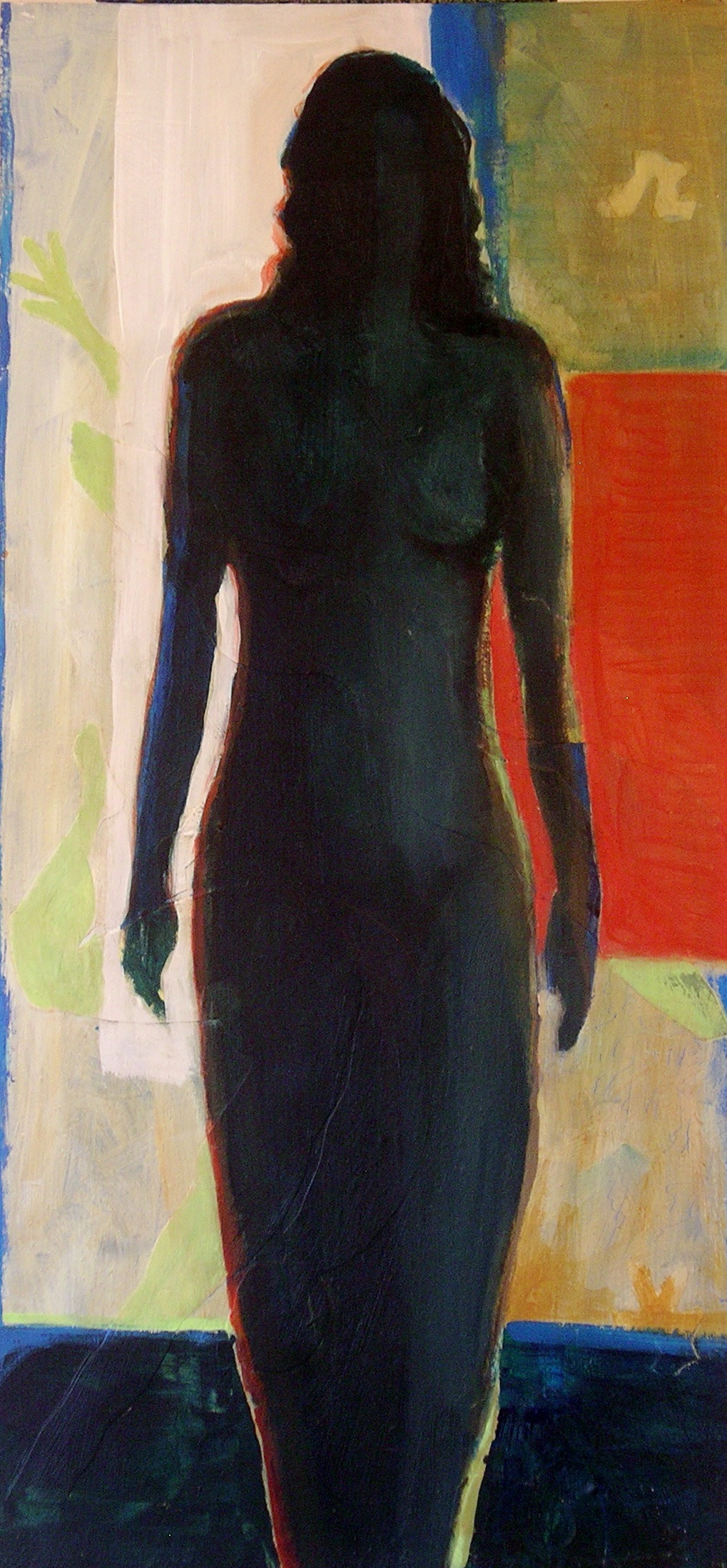
Eve, by David Robinson

Eve, by David Robinson

Bring Your Boon

This painting is called Icarus.

This painting is called Icarus.

During my call with Skip I used the word, “boon.” He scribbled a note saying, “You’ve not used that word before.” The word came up because he’s been overrun by well meaning advice-givers that think he needs to know about the hero’s cycle. Skip said, (and it’s true) that he’s forgotten more about the hero’s cycle than most people will ever know. “I’m a business guy so they think I can’t possibly know about it!” he exclaimed. “If another person tells me about the hero’s cycle I’m going to explode.”

My thought for him was to pay attention to why so many people are coming up with the same response when they hear about his work. What’s evoking the common response: have you heard about the hero’s cycle? I always pay attention when a book title repeatedly drops into my world (I get the book) or when a place or a metaphor seems to pop up everywhere. What’s there that I may be overlooking? What is hammering Skip that he may not see? That’s what sparked the word, “boon.”

When the hero (and we are all heroes in our personal story) emerges from the ordeal of change, when they escape the belly of the whale, they are transformed. They know something that they didn’t before understand. This is the boon. They have a new gift or insight that will, in turn transform the community. Personal change is communal change. They are one and the same thing.

There is a small catch when dealing with boons: communities (like individuals) talk a lot about the need for change but mostly resist it. When you are the bringer of the gift, the carrier of the insight, often you are not welcome when you share it. New insights are dangerous to the status quo. History is resplendent with visionaries banished for sharing the boon of their transformation or bringing to the community the gold that they need but are incapable of recognizing.

Skip has arrived back to the world with a boon. He sailed to the edge and has returned with strange knowledge and a unique perspective. His insight contradicts common models of business. His boon describes motion, a flow, which is hard to see when the landscape is dominated by bottom lines and outcomes. His community mistakenly thinks he needs to go on a hero’s journey when, in fact, he is just returning. His hands are full of gold that they cannot see.

The best we can do is share what we hold. How it is received is out of our hands. If it is received at all is not in our control. Vincent Van Gogh died having sold one single painting – and that to his brother. The glory of his life – and the lives of all visionaries – is that he kept painting regardless of whether the world might someday see the boon, or not. It didn’t (and doesn’t) matter. Bringing the boon home is all that is required.

title_pageGo here for my latest book, The Seer

Go here for Fine Art prints of my paintingsYoga.Meditation

Reach Out. Peer In.

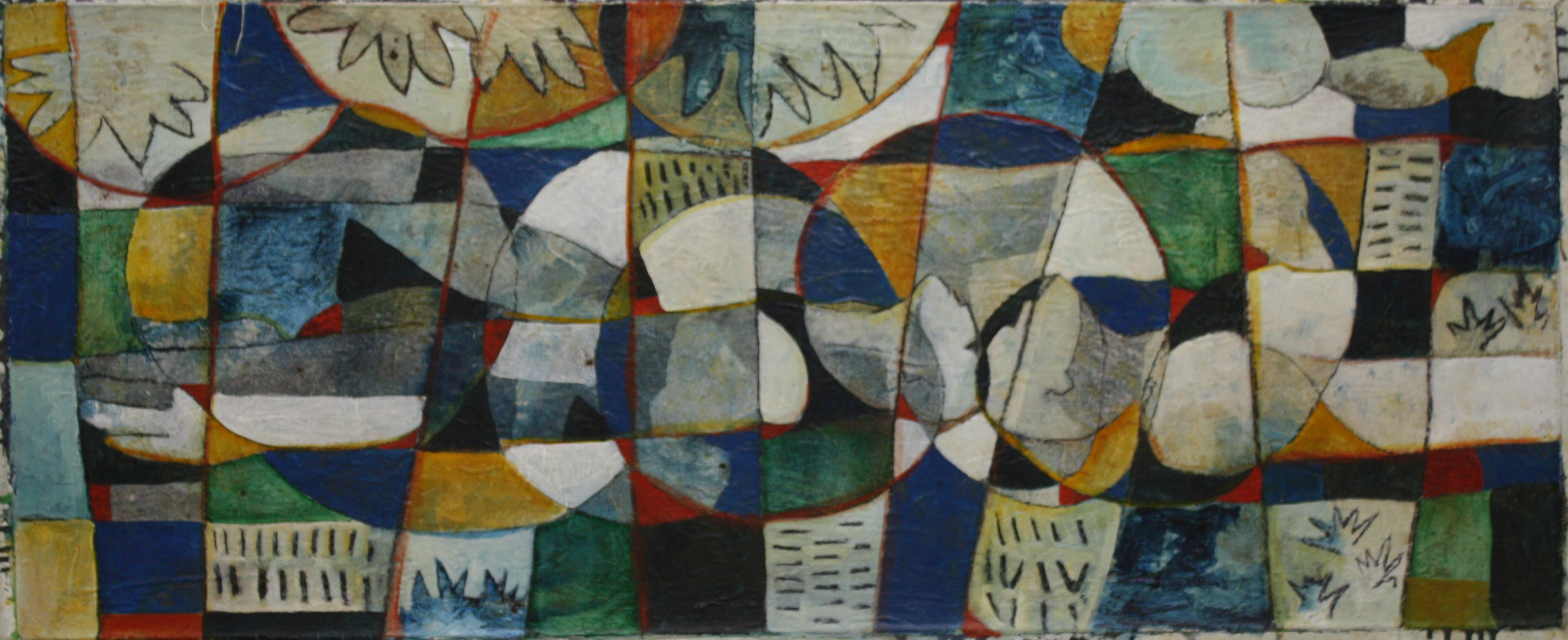
I've yet to title this painting but it seemed right for this post.

I’ve yet to title this painting but it seemed right for this post.

It’s a mid August morning with a hint of fall in the air. The breeze carries that “something” that is indescribable, more of a feeling than a chill or the changing of leaves. Never-the-less it is present. It is the signal and my body knows even as my mind debates. It is too soon for this – but even as I think the thought, I wonder what that means. Too soon based on what? Compared to what? This is my first summer in my new home. Last year I was an occasional visitor. I had glimpses into the cycle of the season so I have little with which to compare.

It has been a surprising summer all the way around. We’ve been traveling almost constantly since early June. The first few weeks of travel was planned, the rest was not. I’m not sure what the summer was like here because I was not present for it. The neighbors tell me it was a wet and cool summer. “Summer never came,” is a phrase I’ve heard more than once. After this summer of travel I will move into autumn with mere glimpses of the season.

I just had a call with Skip. He inspires me and makes me think things I would not ordinarily think. We’ve not talked for many months and our call was about catching up. Since I am writing about glimpses I was aware during our call that the best we can do is offer small windows into our lives. I said, “These past few years have been extraordinary in the changes and transformation I’ve experienced.” I was fundamentally incapable of articulating how profound my experiences have been. “It’s been like peeling off layers,” I said. A simile is the best I can do. Like or as. Glimpses. Events. Metaphor. No one can ever know the full scope of my walk just as I can never know the fullness of another person’s life.

During our call Skip told a story of walking through the woods with his wife when his cell phone rang. It was his daughter and infant granddaughter calling on Facetime. Skip’s granddaughter was taking her first steps. He and his wife peered into their phone and watched the miracle of first steps as their granddaughter, taking her first steps, looked into her mother’s phone at the excited faces of her grandma and grandpa. Glimpses into spaces.

We peer for a moment into a space. We stand in a space for just a moment. We try to share what we see. We try to share the fullness of our experience but can only approximate. Reaching out and peering in. Standing on the deck feeling that indescribable something that my body knows. My mind debates. This is life. Reaching out and peering in. What else?

title_pageGo here for my latest book, The Seer

Go here for fine art prints of my paintings.Yoga.ForwardFold


Chase Your Lion

This is from the long ago archives. A sketch I call Persephone

This is from the long ago archives. A sketch I call Persephone

We were talking about fear. I’d suggested that some fears were actual and some imagined. For instance, if a lion were chasing me, fear would be my ally. It would be actual and useful. My fear would possibly save my life. It would make me run faster. On the other hand, if I feared pursuing my dream, of doing what I wanted to do in the world because of what others might think, my fear would be imagined. It would not be useful.

He said, “You don’t understand how afraid I am.”

“How afraid are you?” I asked.

He wrinkled his brow, “How can I answer that? No one can answer that.”

“Well, tell me how big is your fear?” I said. “Give it a size.”

“I can’t do that!”

“Sure you can,” I said.

“How do you quantify fear? How does anyone quantify fear?”

“Oh, quantifying fear is easy.” I said. “You simply count all the things you don’t do because of your fear. Those things are quantifiable. Count all the life experiences that you are willing to lose by holding onto your fear.”

He was silent for a moment. Then asked, “Like what?”

“Most people lose access to their lives. They let go of their dreams. They tell themselves that they don’t know how or that they were not meant to do what they want to do. How much life are you willing to miss by telling yourself the story that you are afraid? Count the days, the moments, that you stop yourself. Those moments are actual. Those days are quantifiable.”

He was angry, so I added, “Dreams are not lions.”


title_pageGo here for my latest book


Or, go here for fine art prints of my paintingsThe Poet

Flow With Your Constraints

a rough draft from my soon to be released children's book, Play to Play

a rough draft from my soon to be released children’s book, Play to Play

Margie said, “You two need to learn how to be cool and calm.” We repeated her words as if in a trance, “Cool and calm,” I muttered. “Cool and calm,” Kerri said and then looked at me and asked, “Can we do that?” I shook my head. We smiled. The previous day we jumped out of bed at 1:30am and drove 4 hours to Indianapolis to help Craig move out of his apartment. We made it back home by 10pm.Tomorrow we drive to Colorado and then on to Columbia, Missouri. Next week we drive to Minneapolis and on to Colorado again. “You have to learn to sit still!” Margie chirped.

Many years ago Makaela told me that I was like a feral cat. “There’s a part of you that flees from any form of containment,” she said. I was at first surprised by her comment. From the inside, my life seems ordinary. I go to the grocery store. I pay bills. Makaela has a Cheshire Cat grin and it flashed across her face. In truth, I can’t wear lace-up shoes. Neckties are deadly to me. I am brilliant at starting things: programs, theatres, companies,.., just don’t ask me to maintain them once started. Neckties, cubicles, and commutes suffocate me. “See? Feral,” she said.

Cool and calm? Feral?

Neckties and lace up shoes restrict movement. To me, they are improper constraints. Improper constraints are akin to knots in a muscle: they impede flow. Toxins collect around the knots. Disease in a body is the result of an improper constraint. An improper constraint can be literal, a knot in a muscle, or a thought pattern, like the expectation of being perfect. “Perfect” is a mental knot. It stops flow. It stresses unnecessarily. It blocks the movement of free self-expression and engenders judgment. It becomes toxic to the system. Gossip is an improper constraint.

The flip side an improper constraint is a proper constraint. Proper constraints facilitate movement in a direction. They focus energy. Proper constraints define clear and open channels of movement. In a healthy body, air and blood and lymph move unimpeded through channels of proper constraint. Proper constraint is necessary to feed the body. Proper constraint is necessary for vital artistic expression. Healthy communication works just like a healthy body. A choice is a proper constraint. Proper constraint frees the movement of self-expression and engenders connectivity. It clears toxins from a system.

“Wait a minute,” Kerri said as Margie retreated down the stairs, “I think we’re always cool and calm.” I agreed. Our proper constraints look a bit different than most peoples. More than once Craig has looked as us and said, “You two are not normal.” Too true. What is normal, after all? A proper constraint for me is improper for others and vice versa. Kerri and I know for ourselves what engenders flow and what interrupts it. Jay Griffiths wrote that a society has to be tame to need the concept of wild. If there is no break in the natural world, if there isn’t a need for dams and fences, there is no need to distinguish between wild and tame. I am not feral after all. Kerri and I work at having no internal dams or unnatural fences. Our business is to create our own version of flow. Isn’t that what everyone wants?

title_pageGo here for my latest book

The PoetGo here for fine art prints of my paintings

Carry Your Story

I call this painting, "Canopy"

I call this painting, “Canopy”

Since writing my post yesterday I’ve been rolling around in my mind the image from this quote from Deepak Chopra’s book, Life After Death: “Every former self you have left behind is a ghost. Your body is no longer the body of a child. Your thoughts, desires, fears, and hopes have changed. It would be terrible to walk around with all your dead selves holding on.”

All day I’ve been looking at people as if they are walking around with all of their dead selves hanging on. And, technically, we are. We define our present moment through the eyes of the past. I suppose the number of ghosts we carry depends upon the definition we carry about ourselves.

Definitions are stories. Thoughts, desires, fears and hopes are contained in the form of a story. Any thought you have is actually a form of storytelling. When we worry if this will happen or that, we are telling a story. When we tell our friends about being stuck in a traffic jam, we are telling a story. When we say, “This is who I am,” we are telling a story. When we say, “That is who they are,” we are telling a story. In a week, my family will gather to memorialize my grandfather; we will tell his story.

I’ve found in many parables and myths that an inner monologue (the story you tell yourself) acts like a fog. It obscures the present. For instance, in the Sisyphus tale, Sisyphus goes to the underworld and watches the souls of the newly departed cross the river Styx. Each soul thinks it is alone even though they are with many others; they cannot see the others through the curtain of their ego story. To enter the great “I am” they must first stop telling a story of separation.

Stories obscure.

We carry our stories forward. That is a legacy. Carrying a story forward is how we connect to our ancestry. Jean Houston once used an image that I like: we are the burning point of the ancestral line. We carry the story-torch forward. Like the Olympic flame our fire was ignited by a spark that stretches back eons. And through us, this flame will reach far into the future. We burn now. This story-torch, the family story, is the root story. It illuminates us.

Stories enlighten.

In both cases, obscuring and illuminating, stories can be heavy to carry. Or, they can be light. It may not be so terrible to walk around with your dead selves holding on if your dead selves tell a story love and connection, a story of hope and aspiration, a story of yearning and possibility. If illumination is the act of transcending your story, a step toward illumination certainly includes a story of love, and usefulness, and a deep appreciation of the ordinary moments that we story to fill our extraordinary days.

title_pageGo here for my latest book


Leave Your Ghost

from the archives. I call this painting "Demeter."

from the archives. I call this painting “Demeter.”

As Alan said, this year for me is a year of departures. First Tom, then Kathy, Bob, and Doug passed; mentors all. Earlier this month Casey, who lived a long season and once told me that heaven didn’t want him and hell wouldn’t have him, finally found his way out of this life and into his proper place in the mystery.

When I was a boy my favorite book was an old college text of my father’s on comparative religions. It was moldering on a shelf in the basement with other long forgotten books. Finding it was like uncovering buried treasure. I fell into it, reading and rereading it. Among other things, it helped me understand that religion was not fact but a cultural expression of universal experiences. Human beings have to deal with the enormity of existence (who am I?), birth (where do I come from), death (where am I going?), and everything in between (what’s my purpose?). Human beings deal with the enormity of existence like they deal with everything in life: they story it.

Since there has been so many significant departures this year I’ve been doing some reading about death and dying. Lately, I’m reading Deepak Chopra’s book, Life After Death. He weaves the book around a parable of a young woman who must confront Death. The woman seeks the help of rishi, a wise contemplative who lives in the forest. In one of my favorite sections of the parable, the rishi introduces the young woman to ghosts. The first is a toddler; the second is young girl. The woman soon recognizes that the ghosts are her past; they are the phantoms of various stages of her own life. The rishi tells her, “Every former self you have left behind is a ghost. Your body is no longer the body of a child. Your thoughts, desires, fears, and hopes have changed. It would be terrible to walk around with all your dead selves holding on.”

He teaches her that death has been with her every moment of her life. “You have survived thousands of deaths every day as your old thoughts, your old cells, your old emotions, and even your old identity passed away. Everyone is living in the afterlife right now. What is there to fear and doubt?”

title_pageGo here for my latest book

Go here for fine art prints of my paintings.

Allow Your Wings To Dry

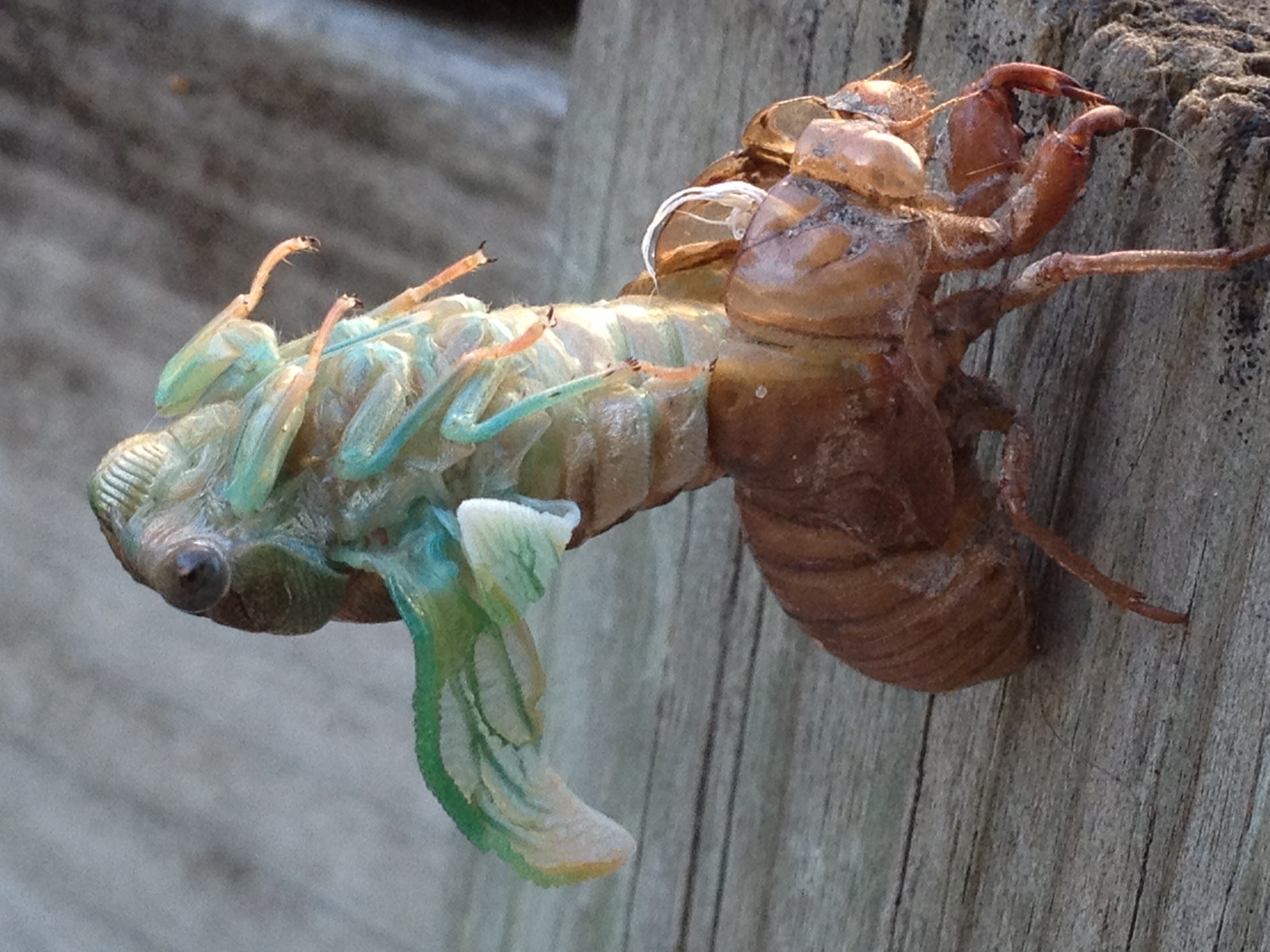
The cicada molting

The cicada molting

This morning, very early, sipping coffee on the deck, as I was trying to decide whether Dog-Dog would make a better purse or a pair of slippers (he woke us up very early), Kerri said, “What’s that?” Clinging to the corner post of the deck was a small thumb-sized alien. It was a cool blue green monster emerging from the splitting body of a very large red-brown scarab-esque bug. Had I not been so fascinated I would have squealed like a schoolgirl and called in Sigourney Weaver or the Air Force.

A quick Google identified the alien as a molting cicada (special note: for the next two hours we watched this miracle process. “Molting” is a word that must have been concocted by engineers or science-types; it is much too dull a word to describe the magic we witnessed. Shakespeare would never have arrived at “molting”).

photo-5A molting cicada is goldmine of metaphor and symbolism. Since I am human and believe the world revolves around me, I took the metaphors/symbols as personal messages. The most potent was the process of emerging wings. They first appeared as tiny useless rolls that unraveled. Once unfurled, the wings were fragile and useless. They flapped helplessly in the morning breeze. And then they seemed to dry and take shape. They shimmered. The cicada pulled them into its body, tested them, and crawled into the sun.

It rested. That was the reinforcement of a hard-learned message for me. Between each step, the cicada rested. Transformation is exhausting. It did not rush the process. It was not in a hurry to “get there.” It moved through a phase and rested. Each step happened as it needed to happen and rest was essential to each step. It pulled itself from the exoskeleton at just the right moment. It sat still, it rested, as its wings took form and “dried.” Once it had new form, it walked to a more protected spot and sat very still. Its body still soft and needing to harden, it rested.

I do not easily rest. I am reticent to sit still and have had to learn the necessity of rest for transformation to be possible. Rest is part of the process of moving forward. Sitting still is essential to growth. Many times in my life I have argued with school boards for the necessity of daydreaming, the importance of staring out the window. Rest your mind. Relax your heart. Sit still and breathe.

Before and After

Before and After

It is no small feat to exit a too-small-body. It is no small feat to step into uncertainty, to open yourself to new ways of being. Rest is necessary to inhabit your dreams.

Tom used to say, “The readiness is all.” He knew that transformation was possible only when the person was prepared to jump. “The inner work always leads the outer.” Getting ready to jump often looks a lot like doing nothing. Resting allows the wings to dry. Wings need to dry before they are useful. After the jump it is a good idea to sit still and get used to the new body. Stare out the window with new eyes. Discover the new daydream. Rest in the miracle of new space.

Go here to get my latest book, The Seer: The Mind of the Entrepreneur, Artist, Visionary, title_pageSeeker, Learner, Leader, Creator…You.

Or. go here (Amazon) for hard copies.

Remember The Fire

this is the first painting in a triptych I did for The Creatures Of Prometheus, a performance I did with The Portland Chamber Orchestra. special kudos to Jen and Brad for housing these enormous paintings for me.

This is the first painting in a triptych I did for The Creatures Of Prometheus, a performance I did with The Portland Chamber Orchestra. Special kudos to Jen and Brad for housing these enormous paintings for me.

With the spring the storms have come. Brilliant blinding flashes of lightning followed by thunder that rolls and rolls for minutes without ceasing. Joseph Campbell once posited that the voice of the thunder was humankind’s first experience of the godhead; as I listen now to the sky roil and rumble, watching Tripper-Dog-Dog-Dog look for a safe place to hide, I am grateful to be inside protected from the god’s displeasure.

Last week I learned that the phrase, “blinding flash of lightning” was more than poetry. Kerri and I were taking our usual late night stroll. There were distant rumbles of thunder, but nothing close or threatening. The crack and flash seemed to come from nowhere. I ducked. Kerri screamed. It felt like we were inside the lightning rather than beneath it. The ground rumbled in concert with the sky. For blocks around us, car alarms whooped and beeped like Chicken Little. I imagined the cars were as taken by surprise as Kerri and I. For several moments after the flash, I was literally blind.

We were already running when sight returned, we laughed and squealed and kept our heads down as if that would make a difference. It seemed as if the storm was far distant one moment and on top of us the next. The sky spit hail. It rained for a moment. And, as suddenly as it was on us, it was gone. We stood still in the wake of the storms departure. I wondered if I’d imagined it except the parked cars were still sounding their alarms.

Once, when I was in high school, I hiked with a friend to the top of a peak. We were above the timber line and although I knew enough to be off the mountain top before the afternoon storms rolled over the divide, the thunder clouds came fast and we were caught in a powerful storm in a meadow just beneath the peak. It seemed as if we were literally inside the cloud as the lightning made the hair on my head stand on end. We wedged ourselves in a sitting fetal position between some boulders, and reflexively closed our eyes and covered our heads. Each flash sent a jolt of fear through me. I’ve rarely been as frightened or exhilarated as I was that day. The storm roared over the mountain top and descended into the valley. It was gone as fast as it came. It was awesome.

In one of the versions of the Prometheus story, Zeus charges Prometheus with the task of creating creatures for the sole purpose of worshipping the gods. Zeus wants the new creatures to be crude and stupid. Prometheus, instead, creates something beautiful and smart: humans. From clay, he sculpts a female and male form. Knowing that Zeus will never give life to his beautiful creatures, Prometheus steals the immortal fire, the lightning, and sparks the human hearts to life. To punish Prometheus, to keep his beautiful creatures from knowing their own beauty, Zeus introduces them to warfare, both the internal and external variety; he makes them doubt. He infuses them with fear. He makes it easy for them to focus on their ugliness so that they might misdirect their awesome power and forget the creative fire burning in their hearts.

Go here to get my latest book, The Seer: The Mind of the Entrepreneur, Artist, Visionary, title_pageSeeker, Learner, Leader, Creator…You.

Go here for hard copies.

Make It Rain

Pura Besakih, the highest temple on Gunung Agung

Pura Besakih, the highest temple on Gunung Agung

Terry was a crazy expat dive master living in Bali. He’d been a deep water welder, a surfer, a fugitive from what most people recognize as civilization. He was an old soul, one of the few people I’ve met who was completely comfortable anywhere in the world. He was always a local.

When I signed up to learn to dive I had no idea that 1) I’d be the only person in the class, and 2) that my dive lessons would, in fact, be some of the most profound life lessons I’d ever receive. By the time I left Bali, Terry and I did a dozen dives including a magical drift dive (the closest thing to flying I’ve ever known), a night dive, cliff dives, and a wreck dive. Once, driving to a dive site on the other side of the island, Terry pulled off the road so a tiny elderly Balinese woman could bless us. He called it “dive insurance.”

Although I never saw it, I heard about the Buddha statue that sat in the corner of his small upstairs apartment. Terry threw money at the statue. Every time he was paid he took a portion of the money and tossed it at the statue. When there was too much money accumulated around the statue, he’d open his window and throw it out to the people working in the shops below. He called it the “agung rain.”

Gunung Agung is the central mountain in Bali. It is an active volcano. All of the altars and houses (and lives) are oriented toward the mountain. To the Balinese, it represents the central axis of the universe. When Terry opened his window, which he often did, and made it rain money, he was orienting his life to abundance. He was saying to himself and to others, there is so much, more than enough, for everyone. He was demonstrating that the universe in which he lived was infinite with resource.

He told me of the agung rain one day as we bobbed in a boat between dives. Even though I did not yet know, I am certain that he knew I was on the island to learn a new way of living. The old way wasn’t working for me. “The thing that people miss,” he said, “is to not hold on to stuff. People think the measure of their lives is by the chunk of stuff that they hold.” He smiled and added, “Life has open hands. You can’t really know how to live until you can make it rain.”

Go here to get my latest book, The Seer: The Mind of the Entrepreneur, Artist, Visionary, title_pageSeeker, Learner, Leader, Creator…You.

Or, go here for hard copies.