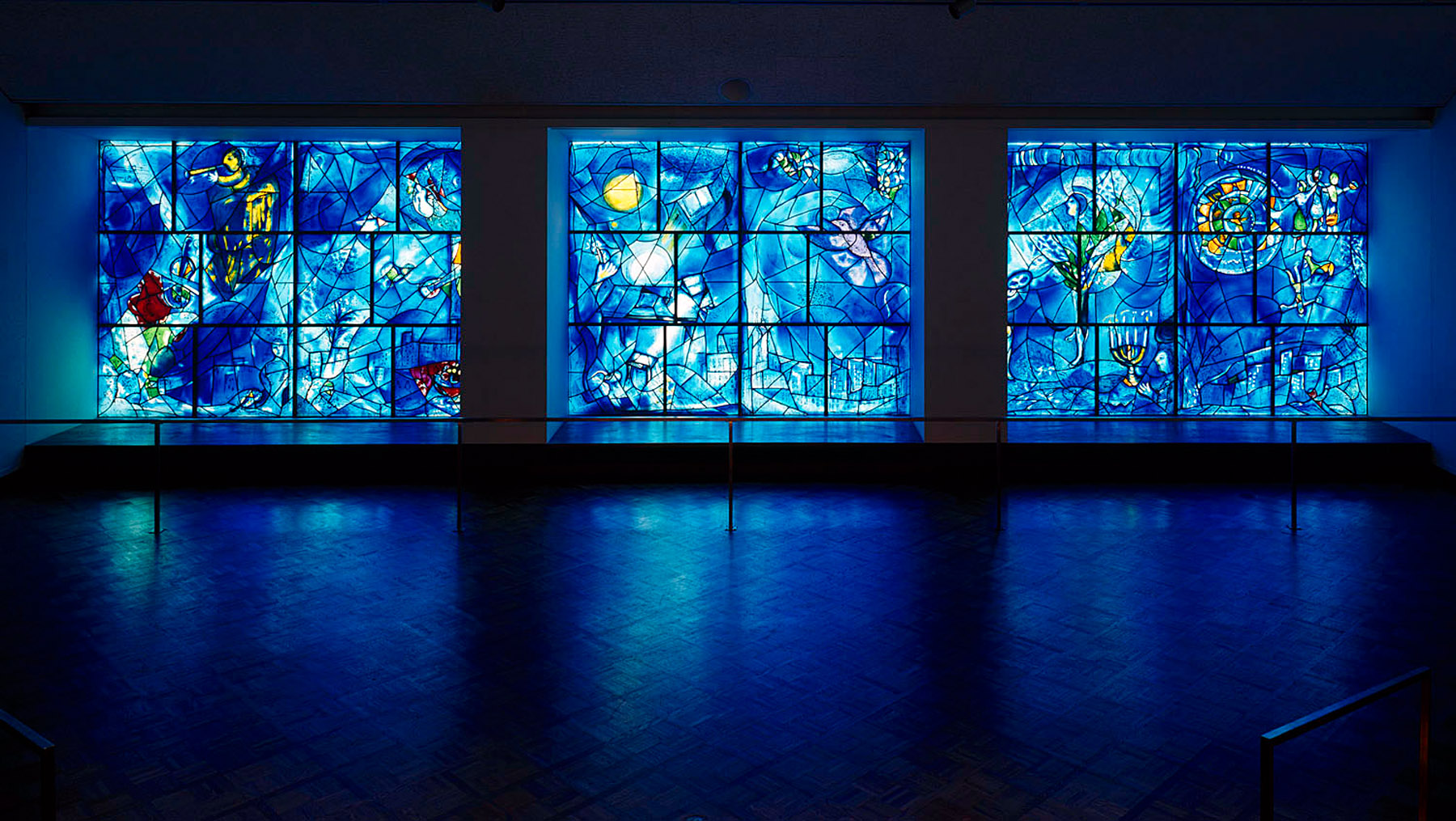
Dance With Alpha And Omega

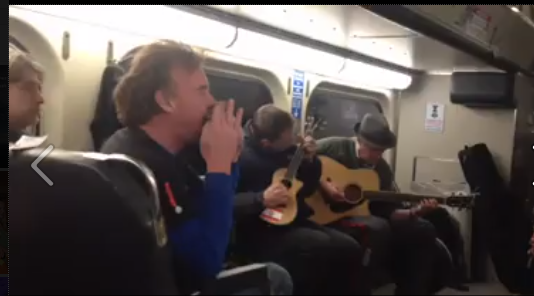
When Kerri isn’t composing music or performing concerts, she is a music minister at a church. It is a great gift and irony of my new life that I am spending lots of time in a church. I have never identified myself as Christian – I do not believe that nature is corrupt, particularly my own nature – so the fundamental building block of the faith has never made much sense to me. However, Kerri is no ordinary music minister (imagine Sheryl Crow designing the music for church services). There is a raucous ukulele band boasting 50 players, a budding contemporary rock band heavy on the traditional drums; she is experimenting and innovating to help rejuvenate and rebuild a once waning congregation. Art and passion are now bubbling in the wellspring of this community.

During the services on Sunday I sit in the choir loft (side note: the pastor, Tom, is an excellent storyteller and I am at long last hearing the biblical tradition from someone who understands its oral beginnings) and lately I have been taken with the stained glass windows and banners. I am a lover of symbol and behind the altar is a huge window in three sections: the birth, the death, and the resurrection. This morning as I listened to Tom tell the story of the prophet Elijah, I studied the window. I admired the altar cloth that sported and Alpha and Omega symbol. Because I was listening to a story and taken by the Alpha and Omega as one symbol, one action, I had a no-duh moment. Every story is a birth-death-resurrection cycle. Every life is a birth-death-resurrection cycle – and isn’t that the point! When we know enough to read the stories/symbols as metaphors instead of taking them literally, they open like a lotus!

Stories begin when the main character is knocked off balance. Stories begin with disruption, when the old world no longer works, and we must leave behind all that we know and step into the unknown. That is both a death and a birth. It is the Alpha and Omega together as one action. And, isn’t that really the way life works? In living we are dying, in dying we are transforming and generating new life. I have heard it said that presence only becomes possible with the recognition of the impermanence of life. It is movement, as the cliché would have it, an ever-moving river.

In a hero journey, the Alpha Omega cycle ultimately leads to a return. At the beginning of many stories, the hero must go to the place from which no one ever returns and that is metaphoric. It doesn’t mean that no one returns. It means that the person that comes back to the village is not the same person that left. The adventure transforms the hero. This transformation is a resurrection. It is a return. It is a return that is universal to every life story. It is a resurrection open for everyone. Life is an Alpha Omega in every moment: it is a death, birth, death, and rebirth cycle. The return marks the beginning of the next leaving.

Before church this morning I was meditating on life as motion. Life never stops moving. Growth is movement. Learning is movement. It is when we try to stop the movement that we create pain for ourselves. In a physical body, the blockage of movement is the place where toxins accumulate and the same is true in a spiritual body or communal body. It is all movement. It is Alpha Omega in every moment.

For a humorous look at the wonderful world of innovation and new ventures, check out my new comic strip Fl!p and the gang at Fl!p Comics.

Intend The Glitch

Watching a video on “Glitch Art” the other day I heard this phrase: you have to understand a system before you can break it. A glitch in computer code is an anomaly or mistake that creates a hiccup or break in the system. It is a mistake that can make some very interesting imagery. Glitch artists seek the mistakes. They seek the beauty that comes from what others might view as a problem. And my favorite artistic moment as expressed by the glitch artists: at some point they start creating problems in the code. They intend the glitch (which makes it no longer a glitch).

Penicillin is the result of a process glitch. Science is often the art of surfing for glitches, finding the anomaly within the pattern. The word “experiment” implies an orchard of happy mistakes that reveal new insights. The word “unique” means distinctive, exceptional, singular – something out of the ordinary. In other words, a glitch.

Art and Innovation (in the USA) are equated with the new. Artists and innovators try to help us see the world in a new way – or even better, they help us see the world anew. Seeing anew always requires pattern disruption. It requires a challenge to the assumption set, a smack to the status quo. It requires a glitch.

Consider this: learning – true learning (not the answer driven drivel currently running rampant in our education system) and seeing anew are fundamentally the same thing. To learn is to see the new or to see anew. At the heart of art and science – the reason for math and English, economics, politics, ethics, social science,…, is an orientation to the question (as opposed to the numbing notion of a right answer).

Like the glitch artists, no one simply finds the new. It is not something that can be sought or predetermined. It is something we bumble into. It happens when you one day ask, “Hey, I wonder why that happened?” Or, “I wonder if it would work better if…?” It begins with wonder. Wonder leads to experimentation and questions within questions within questions that lead to more experimentation and more questions. This is also a good definition for being vitally alive. Wonder and step toward it. Orient to the question, do an experiment, and tomorrow ask a better question. Do this everyday and someday, just like the glitch artists, you will find yourself doing what all artists know as life-giving: you will intend the glitch, play with the mistake, and learn to see the world anew again and again and again.

For a humorous look at the wonderful world of innovation and new ventures, check out my new comic strip Fl!p and the gang at Fl!p Comics.

Paddle Two Rivers

[continued from yesterday’s post – October 16, 2013 – of no title]

After reading my post about the similarity in actor auditions and entrepreneur pitches, Step Onto The Field, Skip sent me several questions and reflections. One of my favorite questions from his batch concerned this section of the post:

An exciting viable idea in the hands of a pretender is a useless thing – just as brilliant plays are routinely slaughtered in the hands of fakers.

Skip asked me to clarify this statement relative to two rivers of thought we’d previously paddled. The first river was the notion that a brilliant play is different in every production despite the sameness of the script. How can a single script be interpreted in such vastly different ways? Is it the actor-as-pretender that makes the play useless? Or, is it the second river of leadership, the direction that can dull the brilliant? Skip reminded me of a phrase I like to use: save-your-ass-theatre. It’s a phenomenon that happens when the leadership is weak so all the actors (members of a team) resort to saving their own ass instead of bringing their best game for the team.

Plays are a literary form performed in an arena called a “stage.” A play is like the playbook of a football team. It maps the ideal action but must be executed by the players in an ever-changing context. Actors that pretend to execute the action will kill a play just as fast an NFL player that pretends to play. The pretending eliminates the need to watch. The absence of anything real is as boring and lethal as what is now happening in the public schools. Separating content and method (the equivalent of pretending to learn instead of engaging the unknown) is mind numbing.

Entrepreneurs are great a numbing investors minds because they have confused reading the playbook with executing the play.

The written play is poetry, often a piece of art by itself. It transforms when activated and the variables of activation are endless. Different actors, different cultures, different audiences, different budgets, different stages, different eras, different points of view,…; no play is ever performed the exact same way night to night because the audience is different night to night. Plays are different decade to decade and society to society. It is like the Buddhist concept that you can never step into the same river twice.

Entrepreneurs often confuse their big idea with the presentation of their big idea. The two are as different as a play as literary poetry and as a produced piece of theatre.

As I wrote above, save-your-ass-theatre happens when leadership is weak. The hallmark of weak leadership is the investment in being expert. Great leaders don’t orient according to what they “know.” They orient toward what they don’t know. They can never be expert because they are not trumpeting their past experiences but are engaging with the mysteries of the moment. Great directors of plays, like great leaders in organizations, facilitate the gifts of their team toward a common intention. Great leaders serve the story, the intention, the ideal, the creation, the business – something bigger than themselves. That’s why experts make lousy leaders: experts by definition serve only themselves. Experts, by definition, need others to be beneath them.

Skip and I have watched accelerator cohorts sadly devolve into isolated islands lost in pitch mania. The partners in the accelerators (experts all) look high and low for an explanation for the lack of clarity but rarely have the capacity to look at their leadership. Cohort members know, like actors know, that there will be an opening night, a moment when they will step in front of an audience and need to be seen. If they have had strong guidance, they will show up as members of a powerful team in service to a big idea, ready to step into the great unknown (also known as potential). If they have had experts all along, they will have become pretenders just like their leaders, invested in looking good and eager to tell you what they already know.

[..to be continued]

For a humorous look at the wonderful world of innovation and new ventures, check out my new comic strip Fl!p and the gang at Fl!p Comics.

[Continued from Know Your Net]

In addition to using the phrases “honest moment” and “honest action,” I used the term “honest pursuit” and Skip asked, “Pursuit? Same or different from honest action and honest moment.”

One of my favorite terms from the theatre is “split intention.” It has come in handy most of my life and is useful in all settings from corporate to non-profit to education. Viv gave me the perfect shorthand definition for a split intention. It’s from a Chinese proverb: chase two rabbits and both will get away. Chasing two rabbits splits your focus and confuses your action. For actors, a split intention happens when the actor believes they can determine what they audience will think of their performance. They focus on audience response rather than pursue their intention on the stage. The split focus also splits the audience from entering the story. The actor engages in a power game by trying to please or be seen as…. The performance experience for all concerned becomes a lie rather than an opening to a deeper relationship, a shared moment of truth. The pursuit is a false.

In my past life facilitating change processes in education and organizations, I often used two related phrases that are aspects of a split intention: circumstance driven and intention driven. Organizations spend oodles of time defining their values with the notion that they are driven by a clean set of aligned values. It’s nice on paper but falls apart when the money dries up. Nothing goes out the window faster when the economy tanks than the phrase, “We value our employees.” If you want to know what an organization or nation really values, watch what they do when the cash flow disappears. An honest pursuit doesn’t waver when the circumstance changes. This is one reason why I love artists and the artistry in myself: we do the work whether there is money or not. The artistry trumps the circumstance. The imperative runs deep.

Entrepreneurs and artists are a similar breed of cat. Both are marginally feral. They desire artistic/creative freedom. They want their ideas to be manifest in the world and desire to prosper from their efforts. They want to create their own constraints. Usually (but not always), entrepreneurs are trying to fill a need. They are in a service profession (whether they recognize it our not). They have fun creating cool things that make life easier for the user. Entrepreneurs split themselves when they succumb to the illusion that an investor controls their destiny. They split themselves when they give away their intention for investor dollars. They essentially become circumstance driven and, like the actor attempting to be liked by the audience, their pursuit becomes false. They give away the essential for the immediate.

The split becomes visible in their pitches. Are they pursuing the creation of their idea or hunting for dollars? This distinction is a swords edge but the difference is dramatic. After all, a pitch is made to investors. However, in the first case, the pursuit is intention driven and the second case it is circumstance driven. How much of the idea/dream will be sacrificed for the funding? It takes dollars to make an entrepreneur’s idea manifest. It also takes boundaries. Actors succeed when their pursuit is in service to the play and not themselves. Entrepreneurs succeed when their pursuit is in service to their users and not to their funders.

[to be continued]

For a humorous look at the wonderful world of innovation and new ventures, check out my new comic strip Fl!p and the gang at Fl!p Comics.

Step Onto The Field

The first few decades of my career were rooted in the theatre. In casting plays and assembling companies I’ve held and seen hundreds of auditions. Generally, it was my experience as an auditor (and also in managing auditions for others) that in the first round of auditions an auditor can see everything they need to know about an actor in seven seconds or less. Whether the audition is a prepared piece, a cold reading or some form of improvisation, this “seven second” rule seems to hold. For the auditor, the rest of the audition is usually an act of courtesy or spent hoping that they are wrong about what they already know. Auditors want actors to succeed. They want to be engaged, surprised, and swept into an honest moment. They want to meet the actor on the field of possibility. They want access into the story and the door is always honest action.

What can an auditor see in seven seconds or less that inspires them to call the actor back or put their file in the “no” pile? Probably a more accurate question is, “What can the auditor feel that inspires them to call back the actor?” The honest pursuit of an intention is something that can be felt before it can be seen. This is true on or off the stage, isn’t it? Do you feel it when someone is not authentic? Do you “know it” when you are being told a half-truth? How many times have you said, “I knew it but didn’t listen to myself.” Auditioning others is as an act of listening to what you sense in the first few seconds and the scanner is seeking honesty.

In the past few years I’ve been watching entrepreneurs do pitches for investors. Auditions and pitches are surprisingly similar activities! In both cases, the “seven second” rule applies. Investors know, like auditors know, when they are seeing something honest or something manufactured. An exciting viable idea in the hands of a pretender is a useless thing – just as brilliant plays are routinely slaughtered in the hands of fakers. Entrepreneurs, like actors, are more likely to meet success when they cease giving away their power and show up as they are. Showing up is not passive and has nothing to do with information delivery. Showing up means to share the quest, to bring others along on the pursuit of a dream. Showing up is being present with others. It is inclusive (as opposed to protected).

Rule #1 for entrepreneurs is the same as it is for actors: You can’t determine what others (investors/auditors) see or think or feel or value. You can only bring your best game to the field of possibility and love playing it.

For a humorous look at the wonderful world of innovation and new ventures, check out my new comic strip Fl!p and the gang at Fl!p Comics.

Step In Front Of The Canvas

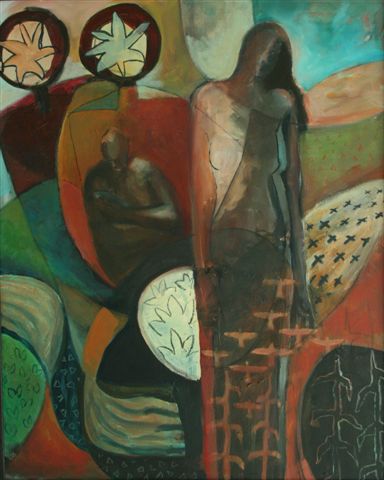
I used to stand in front of a blank canvas, clear my mind, and look for the painting that was waiting for me to draw it out. Mostly, but not always, there was an image waiting for me. It was like a very shy animal staring back at me. I would coax it forward and it would slowly reveal itself to me. The act of painting was the act of following the signals. If I moved too fast the image would retreat. It drew me out as I drew the image forward. As it advanced, coming into the light, the image would shapeshift. It would try to frighten me. It would test my agility and capacity to pursue it. Finally, after it had tested my respect for it and gained respect for me, the image would rest, give up the chase and open. In that moment we merged. I was the art and the art was me. Many hours would pass in a single moment. Time was no longer fixed. None of the usual rules of life applied.

This sounds like a strange and reactive process until you consider that I spent days stretching and preparing the canvas. I prepared myself, too. I opened the portal and chose the moment to step in front of the canvas, brush in hand, and issue the call. Sometimes the animal that came forward was aggressive, sometimes magical, and sometimes swift. Always it was dedicated to opening a portal in me. Art is like that. Art opens portals in people.

Today I know without doubt that the world has at last become my studio. Each day is a blank canvas that holds a unique gift and demands one from me in return. It is a portal that I open that, in turn, opens me. It calls me to the center. I’ve spent a lifetime preparing this canvas. Each morning I step forward into the day and so begins a unique relationship with this vast field of possibilities shimmering in front of me – as it teases forward the vast field of possibilities within me. Life is like that. Life opens possibilities in people.

[903. Join me in inspiring truly powerful people. Each day I will add a new thought, story or idea to support your quest and mine.]

For a humorous look at the wonderful world of innovation and new ventures, check out my new comic strip Fl!p and the gang at Fl!p Comics.

Learn To Laugh

Comedy is about other people’s pain. Wiley Coyote going off the cliff one more time is funny. The guy slipping on the banana peel is hysterical as long as you are not that guy. Humor is mostly a status drop for someone.

I’ve been writing and drawing a cartoon called FL!P for almost half a year now so I’m inadvertently making a study of what’s funny and what is not. Recently some acquaintances that know me from my coaching life took me to task because my comic strip seemed out of character. “It’s mean,” they said. “Yes.” I said. That is precisely why it is funny.

The strip is aimed at entrepreneurs and there is a need for a bit of levity in a world so steeped in self-interest and confusing agendas. In many traditions around the world the trickster is an integral part of worship. We are not meant to take our gods so seriously. The reverence is always found in the relationship and the realization that the godhead is in all of us. It is our flaws that take us closer to the creative. Worship is a relationship and a full relationship includes laughter, joy, play, as well as inner quiet and awe. Tricksters break rules and pull the blanket off of societies inequities. Tricksters help us see what we pretend not to see. The Emperor would still be strutting around naked if the trickster boy hadn’t spoken a truth that the rest of the village denied. Truth comes easier with laughter. I can tell you that there is much public prancing in the world of accelerators and incubators but very little real apparel. Humor is necessary in a landscape so rife with pretending.

Artists are often of necessity the tricksters of their culture. It is the artists’ job to open eyes to what is there (versus what we think is there). It is the artists’ job to bring the communal attention into the present, to slap-stop the puffed up importance of things that do not matter so that the things of real importance can be seen. With a 24 hour news cycle and a congress ruled by corporate dollars it is hard for us to sort out what is valuable and what is not. The narrative in the commons rarely reaches the level of significance. It is no wonder that many people confess to getting their news from John Stewart and Stephen Colbert (both heroes of mine).

The greatest lessons of my life did not come gently and I am all the more grateful for the force behind the learning. My lessons came with status drops and like Wiley Coyote I have gone more than once over the cliff with an anvil close behind. Comedy is mean. Learning requires falling down. Stepping into the unknown is potent because of the myriad of things to trip over. If you can’t laugh at the bungle you’ll miss the lesson.

897. Join me in inspiring truly powerful people. Each day I will add a new thought, story or idea to support your quest and mine.

For a humorous look at the wonderful world of innovation and new ventures, check out my new comic strip Fl!p and the gang at Fl!p Comics.

Meet At “We.”

Many years ago I was watching Johnny direct a play. It was one of Shakespeare’s though I can’t remember which play. Suddenly, in the middle of the rehearsal, he was overcome with the recognition that he and his actors where carrying forward a tradition. They were engaged in an artistic tradition that stretches back centuries. They were carrying the torch in this lifetime so that they might pass the flame to the next generation. Johnny’s passion and recognition was infectious and his cast dawned to the reality that they were in service to something greater than their small parts in a singular production of the play. They became priests and priestesses enacting the ritual story for all ages.

They found deeper meaning to their work. It mattered. They found connection to both the past (the tradition) and the future (the legacy). Their work rippled in time and came alive in the present moment because they suddenly understood who they were relative to the past and the future. They located themselves. This play was theirs to do. Their service to the play and the tradition defined their purpose. Their art was their gift to the community and the community the served transcended time: it reached into the past and stretched into the future.

This is the purpose of the arts: to locate us in time relative to our traditions and our legacy. The arts orient us to the question, “Who are we?” The arts do not answer the question, there is no single answer, but they facilitate an ongoing conversation and exploration of what it is to be alive as a member of a community.

Artists are the keepers of the communal narrative. When the artists no longer occupy the center, the narrative dissipates and so does the society. Rules and laws can hold the pieces together for a while but disparity and self-interest are inevitable. They are harbingers of communal collapse. A common narrative is the beating heart of a healthy community.

No plant can live without it root and neither can a community. No person can prosper alone. The purpose is never the “I.” Purpose requires a target so it is by definition the “We.” Greater purpose extends to the past and the future, just as the roots of a plant reach deep into the earth while the branches and leaves reach to meet the sun. This reaching, this connection to past and future that meets and grows in the present moment defines us. It is the two directions of mattering that meets in the moment of “We.”

(895. Join me in inspiring truly powerful people. Each day I will add a new thought, story or idea to support your quest and mine.)

For a humorous look at the wonderful world of innovation and new ventures, check out my new comic strip Fl!p and the gang at Fl!p Comics.

Give The Gift

893. Join me in inspiring truly powerful people. Each day I will add a new thought, story or idea to support your quest and mine.

Amy and I meet for coffee every few months. We usually meet early in the morning, bleary eyed and mostly exhausted by the path we’ve chosen to walk in this life. That’s why we schedule the date: we are exhausted and seeking inspiration. By the time we part a few hours later we are on fire with possibility. It happens every time. We spark each other. We ignite the imagination and remind each other of the riches of art and creativity in a community that understands the creative through the lens of commodity. We leave behind our need to assign value to our work and simple revel in our reason why.

Early on in life, artists learn to either diminish or inflate their gift. In looking for their place in this tribe that knows value only in monetary terms – and art cannot really be understood in such an abstract value system – they default to judge their own work. In the absence of any meaningful valuation they create a shadow standard. They cannot find a place so they invent one and the invention usually comes in the form of a value box: good enough, not good enough, appreciated, underappreciated, understood, misunderstood. It becomes an inner debate, a reason to hide, a certainty of inauthenticity, a story of hidden genius, a disdain for an ignorant community. It is a story of separation or suffering, a story as disembodied as the commodity system that inspired it.

I shared with Amy that a major part of my learning this year has been to get out of the valuation game. I’ve surrendered my shadow standard and am no longer interested in placing my work in a value box. I’m out of the business of inflation or deflation. I have a gift and need not concern myself with its reception. Mine is to give it. Mine is to give it as boldly and joyfully as possible. The value debate sucks air from my offer.

I’ve learned that arts live at the center so I need not seek any other place. They are connective tissue and any form of separation (belief that I am special or less than useful) is anesthetic; it is the antithesis of art. Art joins. Art enlivens. It awakens. It unifies. It does not fit in boxes. It is ordinary, ubiquitous, a path available to every human being. Gifts are meant to be given without condition. Gifts are meant to be opened and celebrated..

See Her Hands

889. Join me in inspiring truly powerful people. Each day I will add a new thought, story or idea to support your quest and mine.

Alan issued me a challenge today. He asked me, for a few weeks, to write about something other than the events of my day. Perhaps to write about ideas or dreams or imaginings or something that happened in the past. His challenge to me is about moving beyond the role of witness – a role I play well – and to actually inhabit the moments of my life. He asked me to intentionally be a participant more than an observer. It’s a great idea and a worthy challenge. And, I will start tomorrow. Today I have to write about Kerri’s hands.

Kerri is a musician, a composer with many albums to her credit. When she plays the piano she drops into a deep root, she grounds into her music, and a river of sound flows from her. Life flows through her. So much life flows through her that she cannot sit at the piano. She stands and life flows through her hands as sound and vibration and heart. It is her music.

The first time I met her I asked her to play something for me. I stood at the side of the piano and I watched her reach into the earth. I watched life pour through her hands. They knew just what to do. When she grounded and gave herself over to the music, her hands merged with the keys and I wasn’t sure if the hands were playing the keys or the keys were moving her fingers.

This morning while I was talking with Alan she began to play a new composition. I left the call and stood by the piano. The lid to the piano was open so I could see her hands and the hammers touch the strings as she touched the keys. I know this sounds obvious but the piano is an extension of her hands. The piano is a channel for her soul.

Later we stood on the front stoop as a storm blew through. The thunder rolled and rolled without ceasing. It was magic, something I’ve never heard before. The same power I saw in her hands I also saw in voice of the sky. I took her hand and felt the life, the thunder and the power. I felt the music. It was breathtaking.