What Is Your Location?

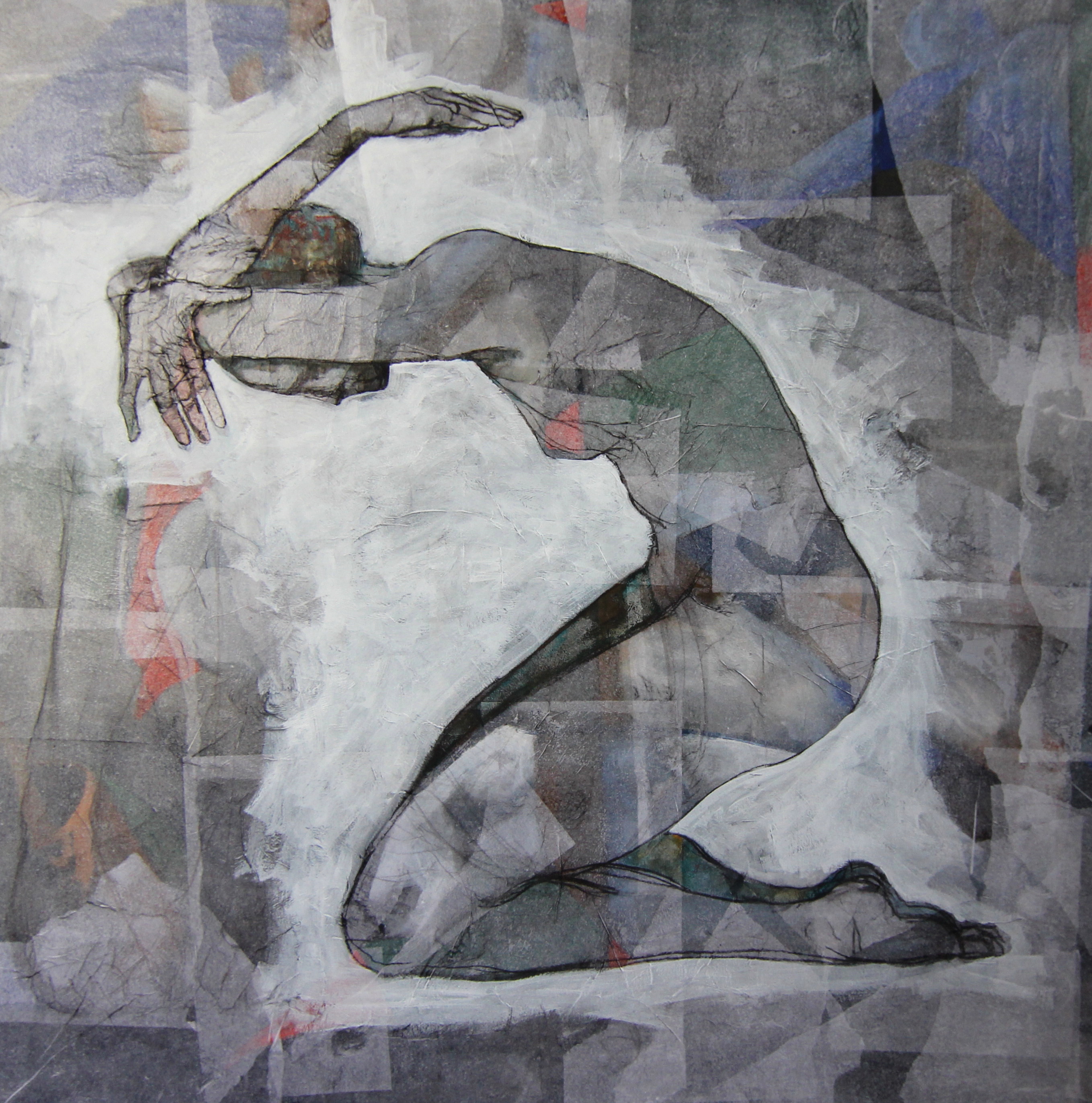
Yoga Series 7I painted this last year. For many months I’d been bored with my paintings – a sure sign of a coming growth phase – and was experimenting with new surfaces and techniques. This is the painting where all the experimentation came together. It landed and I was no longer wandering through an experimental geography but had found my new artistic location.

Just as I now locate myself within this arena, we are constantly locating ourselves in our lives. We physically locate ourselves in space (where do you like to sit when you go to the movies?) and we metaphorically locate ourselves, too. “Comfort zone” is a term of location, as is “preference,” as is “community.” “Safety” is a term of location. “Role” and “mine-to-do” are statements of location. What is yours to do? How do you know?

Some locations are given, others are chosen, and most are patterned. What we believe is possible to achieve is most often a pattern location. Children achieve according to how they are patterned; if you’ve never had an adult in your life attend college then you will most likely believe that college is out of your sphere. Economics are identity.

Once I led a group of students from the international center at their high school to the theatre where we were meant to rehearse a play. When we arrived at the theatre I walked through the front doors and the students stopped as if they’d hit a glass wall. They did! When I went back outside I asked what was wrong, a young woman from Cambodia said, “We don’t belong in there.” They’d learned that the theatre was for citizens; it was not for them. They could not imagine themselves there. I had to help them enter the building and locate themselves as “belonging.”

What you can or cannot imagine is a statement of location. Can you see yourself succeed? Can you see yourself painting a painting? Can you see yourself walking on the beach at sunset? How do you locate yourself? What do you imagine is possible?

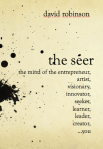
Go here to get my latest book, The Seer: The Mind of the Entrepreneur, Artist, Visionary, Seeker, Learner, Leader, Creator…You.title_page
 

Consider The Root

Doves by David Robinson

Doves by David Robinson

This one reads like a Zen koan. It is from Tom. We had a conversation the other day and I scribbled these thoughts from our exchange:

Change always shakes the tree. Leaves fall off. People see the leaves fall off and panic. They mistake the leaves for the trunk. They mistake the transient for the foundational. Superficial change is visible; leaves fall. The deeper, necessary change is invisible and much slower in pace; people rarely consider the roots.

It is necessary for the health of the tree to drop its leaves. Roots regenerate in the winter.

Leaves fall. Leaves return. Roots reach deeper so the tree can grow taller. These two oppositions are actually a single action.

Go here to get my latest book, The Seer: The Mind of the Entrepreneur, Artist, Visionary, title_pageSeeker, Learner, Leader, Creator…You

Water The Seed

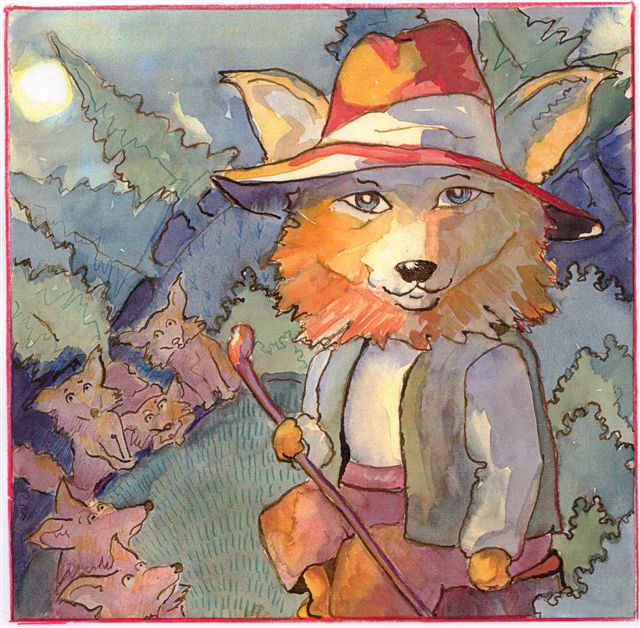
Illustration 07 Illustration 08In 2004 I wrote and illustrated a children’s book, Lucy and the Waterfox. I could have sworn that Lucy was only 5 years old and was taken aback to realize that she’d been around for a decade. Time flies! I recently bought a copy of Lucy since I had nothing in the archives and I will soon release her in versions for ipad and kindle. She’s an old fox and is not available in digital form. It felt funny to buy my own book. I was delighted when she came in the mail! It was as if she was coming home.

It had been a few years since I’d read Lucy so I was taken aback (again) by the parallels in Lucy to the book I just released, The Seer. I’ve been chewing on these ideas for a long time! In The Seer there is a mysterious guide named Virgil who challenges the assumptions of the main character and helps him reorient to a healthier more powerful way of being. In Lucy, a mysterious storyteller emerges from the forest one night; his story stirs deep yearning in Lucy to own and fulfill her extraordinary capacity. Lucy, I recognized, was a seed for The Seer.

Ten years ago I was hired to tell a story in several installments at a conference of health care providers. The conference lasted 3 days and the story served as a thread that tied all the conference segments together. The story also provided a central metaphor for the participants; it served – as stories always do – as the force that forged the individuals into a community. The participants had deep, meaningful conversations because they didn’t get stuck in the superficial, literal levels of their topics. They went into the well through their metaphor and, instead of trying to fix problems they explored their choices and opened to new opportunities.

On the second night of the conference there was a talent show and the organizers approached me and asked if I would tell a simple short story. I had nothing prepared but knew I had a little ditty in my journal about a fox named Lucy. She had a gift and was hiding it because it made other foxes uncomfortable. I told her story and Lucy was such a big hit that night, I received such enthusiastic feedback, that I returned home, illustrated, and published her. The experience of publishing Lucy inspired me: I’d never before thought of myself as a writer. Publishing ideas and stories was nowhere on my personal radar.

A decade later, publishing ideas and stories is the only thing on my radar. I have so many ideas! I have so many stories to tell and more show themselves to me everyday.

I’m delighted that Lucy came home to remind me that in the decade since she was born that I have grown, too, and have a much expanded personal radar. I look forward to the day, a decade from now, that a copy of The Seer comes in the mail and I say, “Whoa. Look at that! I’ve been chewing on these ideas for a long, long time.”

Go here to get my latest book, The Seer: The Mind of the Entrepreneur, Artist, Visionary, title_pageSeeker, Learner, Leader, Creator…You.


Know Your Metaphor

Canopy by David Robinson

Canopy by David Robinson

Metaphors matter far more than we know. In fact, it is not an exaggeration to say that we build our realities on the metaphors we entertain. The stories we tell about ourselves and are lives are built upon metaphor. For instance, is your god a hairy old thunder hurler, a pervasive energy, a spirit with intention, an abstract concept, science, or a force of nature? How you build your reality will have much to do with the metaphor you choose. Do you step into the future or does the future step toward you? Are you part of nature or the steward of it? Metaphors are not just for literature!

For instance: Don’t put all of your eggs in one basket. It’s a well-worn metaphor warning us to keep our options open. When Kerri and I first met she asked me to never forget that she’d placed all of her eggs in my basket. “Organic, free-range,” she said in response to my laughter at her reference. “I won’t forget,” I replied. Putting all of the eggs in a single basket is a great statement of commitment yet it’s not the best metaphor to build a relationship upon. Eggs are, after all, fragile. They break. While the metaphor for our relationship was eggs in a basket we necessarily treaded lightly. We’ve been much happier and healthier since we populated our basket with twelve organic free-range rocks.

The Holy Grail is a metaphor. When Arthur’s knights roamed the realm seeking the grail, they were establishing a lovely metaphor for personal fulfillment. The knight who finds the grail is the knight who finds the middle way between the armor of social obligation (self sacrifice) and the nakedness of an uncontrollable wild-child (self indulgence). Parcival must fail to find himself. And, isn’t that a lovely metaphor for living and learning? It is impossible to find the middle way until you’ve cracked some eggs or shifted your metaphor to something unbreakable and capable of sitting in the fire.

Go here to get my latest book, The Seer: The Mind of the Entrepreneur, Artist, Visionary, title_pageSeeker, Learner, Leader, Creator…You.


Teach

A few years ago I was facilitating a workshop with my beloved teachers in Hastings, NE. We were exploring rituals of entering the classroom. A ritual is a repetition of action. Each morning teachers enter the classroom and perform a ritual of preparation for the day. The lights go on. Papers are arranged. Desks are organized. Many seemingly simple tasks of are executed just as they were executed the day before and the day before that. I asked the teachers in the workshop to create a simulation of their classroom and one at a time to enter the space and perform their ritual of preparation for the day. It was not long before the group recognized that their rituals were rituals of control; they were preparing to control their students. It is one of the major confusions in the American public school system: we’ve confused control with teaching.

Next, I asked them to perform their students’ ritual of entry into the classroom. After much laughter and caricature, one at a time, they demonstrated how their students entered the learning space. They knew intimately their students’ ritual: who would enter first and how. In each case there were disrupters and the disappeared. The teachers’ revelation was breathtaking: the students’ ritual was a challenge to control. The entire game, the frame of the experience each and every day, was a game of control and challenge. Keep in mind that this was a group of superior teachers, some of the best I have ever known. Their game of control was systemic. They were, until that day, unconscious of the game. They work within a system designed to reinforce the control/challenge game. They must play the game to get paid.

This morning as I was taking a walk with my greatest teacher – Tripper the Australian Shepherd, Circus Dog, six months on the planet with no need to figure stuff out, just happy to be alive and barking – I remembered that day with the teachers and the amazing discussion that followed. Tripper is teaching me a lesson about the line between control and teaching. I am trying to teach Circus Dog lots of things, like “sit” and “stay,” “heel” and “fetch.” There are days when I attempt to control him and things do not go well, especially for me. I get frustrated and behave miserably. There are days when I know that I am teaching him. We have fun. We have patience with each other. And, he teaches me something that I already know: instead of controlling him, the best learning happens when I help him learn how to control himself.

Like all children, he wants to please. He wants to belong with the pack. He wants to understand how and where he fits. When I make it my mission to control him, he makes it his mission to challenge my need to control. I would do the same thing. I have done the same thing. My very natural response to controllers is to pull and push and disrupt. When I make it my mission to help him learn, he does his best to respond to what I am asking of him. Sometimes that takes time. In fact, it always takes time and patience, and repetition. It is a different kind of ritual.

Another phrase that I used to say but have recently retired due to wrinkled brows, is that the best learning happens when we help students (children, little people who want to understand how and where they fit in this big world) to be self-directed and self-regulated. Personal power is the fruit of self-direction and self-regulation. As Saul taught me, to orient to the self is to see the vast field of possibilities bubbling right in front of you. Trying to control “the other” makes one short sighted.

Go here to get my latest book, The Seer: The Mind of the Entrepreneur, Artist, Visionary, title_pageSeeker, Learner, Leader, Creator…You.

Make Sense

title_pageThe Seer is built upon 9 Recognitions. Much of the book is an email conversation between the protagonist and his mysterious guide, named Virgil. Virgil coaches the protagonist through his discovery and encounters with the 9 Recognitions. Here is a small excerpt from an email exchange between the protagonist and Virgil:

Me: I realized that I think in patterns. I think the same stuff over and over. This is a puzzle: the act of looking for patterns opened my eyes. So, patterns reveal. And yet, later, when I became aware of the patterns of my thinking, I recognized that those patterns were like ruts or grooves. It’s as if I am playing the same song over and over again so no other music can come in. My thinking pattern, my rut, prevents me from seeing. So patterns also obscure. Make sense?

Virgil: Yes. It must seem like a paradox to you. Think of the song or rut as a story that you tell yourself. Your thoughts, literally, are a story that you tell yourself about yourself and the world; the more you tell this story the deeper the rut you create. So, a good question to ask is: what is the story that you want to tell? Are you creating the pattern that you desire to create? We will return to this many times. This is important: the story is not happening to you; you are telling it. The story can only control you if you are not aware that you are telling it.

Me: Can you say more?

 Virgil: We literally ‘story’ ourselves. We are hard-wired for story. What we think is a narrative; this pattern (song) that rolls through your mind everyday is a story that you tell. You tell it. It defines what you see and what you do not see. What you think is literally what you see.

There was a pause. That was a lot for me to take in. When I didn’t respond, he continued:

Virgil: So, what you think is nothing more than a story; it’s an interpretation. You move through your day seeing what you think – instead of what is there. You are not seeing the world you are seeing your interpretation of the world. You are seeing from your rut and your rut is a pattern. So, your patterns of thinking, your rut, can obscure what you see. Make sense?

Go here to get my latest book, The Seer: The Mind of the Entrepreneur, Artist, Visionary, Seeker, Learner, Leader, Creator…You.

Learn To Trust

StackedRocksIn 2013, I went on a pilgrimage of sorts. I blew up my world, destroyed my patterns, and let go of most of my possessions. I left my apartment, my relationship, my stability, my safety and for months wandered without knowing most of the time where I’d be the next week. It was (and continues to be) the most transformational time in my life.

Angels showed up to help me at every turn. They gave me places to stay, support, friendship, reflection, reality checks, hugs and dope slaps. Friends checked in; more than once I received a text asking, “Where are you? How are you?” People fed me. Homes opened for me. It was a year of faith training. Many times I stopped and said to myself, “You can’t see it, but help is just around the bend.”

Once, many years ago, Roger and I were walking the Lake District in England. It was pouring rain. Roger had a terrible fever and was nearing delirium. I was desperate and afraid and did not know what to do but keep walking. We were miles from the next village. As panic was about to overtake me, a motorhome (yes, a motorhome in England!) came bumping up the road behind us. It stopped, the door opened and a lovely South African family asked us if we needed a lift. The made hot tea, gave us towels, and talked about the wonders of the world. They dropped us safely at the next village where we checked into a hostel and stayed until Roger’s fever passed. That family saved me from my fear and taught me a lesson about generosity and faith. They are a minor miracle in my life story.

In reflection, my pilgrimage was a journey back to the living. I was as Orpheus, ascending from the underworld back to the light. I could not look back or I would loose an essential part of myself. Each step was an act of faith. As I walked my way back to life, my love followed, ever closer, until I was restored.

When I was younger, walking in the rain with Roger, I saw fear. Since then, I’ve learned how to place my focus, to direct my thought and my eyes. I’ve learned to see what is around me not what I think is around me. This year, stepping one day at a time, I learned again to look into my present moment. There is no fear in the present. There is only support, friendship, generosity and opportunity.

Go here to get my latest book, The Seer: The Mind of the Entrepreneur, Artist, title_pageVisionary, Seeker, Learner, Leader, Creator…You

Wake Up

ELDERS

The Elders by David Robinson

Many years ago I took a class called Art and Transformation. Over several months we studied the art of different culturals, specifically cultures that understand art as central to their health and wellbeing. It is not correct to say we studied: we made art. We drummed our way into trance and drew what came to us in the trance. We participated in a sweatlodge to find the symbols necessary to make medicine shields. We meditated and made sandpaintings. We sat still in nature, drew with our nondominant hand, gathered dream symbols, made mandalas and explored what it means to be connected through art to “something bigger.”

In the weeks following a class session, we painted work inspired by the class experience and then gathered to share our new work. It was amazing to see the change in my own work when I was rooted in the deeper rivers of life. When I was working from the actual experience of connectivity – and not a mental abstraction or a concept – my paintings startled me.

We worked for months – consciously –  with transformation as the central impulse driving our visual forms. I learned through the class that “transformation” and “connection” were the same thing. Growing in consciousness is almost always a recognition of unity. As Joe said, “The universe tends toward wholeness.” Becoming more aware, opening the doors to greater consciousness, is how that tendency toward wholeness shows up. We see.

I also realized during the course that “story” was central to transformation. Art in its purest form is meant to be the keeper and transformer of the identity of a community. Identity is a story based on certain agreements a community makes about nature and time and god. Story needs context to make sense. I know this sounds like a loop and it is. Transformation is usually a movement toward wholeness (unity) and the movement is made visible through a change of story. I used to say, “Change your story, change your world,” but stopped because the phrase generally invoked wrinkled brows, protests and confusion. Most folks see their story as “reality” and will do anything to defend their reality. Initally a change of story can feel like an assault on reality.

I was once called on the carpet by a superintendent because a play I did with students challenged the reality of the teachers and parents. The superintendent shouted, “Art is supposed to entertain.” Well, yes. Art can entertain. Art is supposed to challenge, to shake the tree of assumptions, to help the community see itself. Art is supposed to help a community ask, “Is this who we are? Is this who we want to be? Is this what we believe?” I sighed and asked  the red-faced superintendent, “Why are you so upset?” Her response: “The play made me uncomfortable.” Yes. Powerful art will always make us uncomfortable. Growth is always in the direction of discomfort. When the universe within us tends toward wholeness we will inevitably walk into vast fields of discomfort. It is how we wake up and see.

Go here to get my latest book, The Seer: The Mind of the Entrepreneur, Artist, title_pageVisionary, Seeker, Learner, Leader, Creator…You.

End The Ambiguity

Photo by Paulo Brabo

Photo by Paulo Brabo

I’ve been reading books about training a puppy because I have a puppy who already knows how to train me. Whenever I need to level the playing field I buy a book. I’ve bought several on puppy training and still I’m being out-maneuvered at every turn.

The notion I’m reading over and over again in my books is that puppies are happy when there is no ambiguity (no grey zone – see yesterday’s post: Exit The Grey). Puppies don’t do well with debates. They require a clear and consistent message.

In this regard, people are no different than puppies. Children prosper when they know the boundaries. People play when they know they will be safe. Artistic freedom is often defined by the constraints. Doug Durham, a brilliant teacher of at-risk youth, once told me that his job was to draw boundaries and hold them: kids know they matter when the adults hold a clear, fair, and consistent line.

Coincidently, I’ve also been rereading The Mastery of Love by Don Miguel Ruiz and it turns out that fear stories (stories of enabling) are filled with ambiguous grey zones and the subsequent debates that weak boundaries breed. To master love is to practice love. To practice love is to eliminate the grey zone. Eliminating the grey zone requires knowing what is yours-to-do and what is not yours-to-do. It is puppy simple: taking responsibility for your happiness is yours-to-do.  Taking responsibility for the happiness of others is not yours-to-do. There’s no grey when the message to your self is clear and consistent. There is no grey zone when your message to others is clear and consistent. Life becomes the mastery of love.

Assuming ownership for your own happiness ends the ambiguity. Paradoxically, a black and white line opens life to a full range of color. When you understand that your happiness is your responsibility, there is no one else to blame. What remains is the recognition of love without condition; something my puppy knows without doubt and is diligently attempting to teach me.

Go here to get my latest book, The Seer: The Mind of the Entrepreneur, Artist, title_pageVisionary, Seeker, Learner, Leader, Creator…You.

Exit The Grey

Pieta with Paparazzi_David RobinsonThe universe delivered a hammer-on-the-head-message to me this past year. It showed up in the books I read, the films I saw, and the conversations I had. It hammered me for months before I decided to pay attention. The message is simple: get out of the debate.

The debate ignites inside whenever there is a grey zone: the places where we ignore a decision or abdicate a responsibility. It’s the conversation inside when we’ve not made a choice and/or are waiting for circumstance to decide for us. The debate happens where we have yet to draw a boundary when we need to draw a boundary. It splits the inner monologue into two voices. “Stop. Go. No, stop. Go. Ahhhhhhh!!!”

Getting out of the debate means to be clear. It means to choose to be clear. Make a choice. Walk the path with eyes wide open. If you don’t like the current path of choice you can turn around or cut across the field. You can always choose to stomp through the tall grasses and make your own path or fake a crop circle. And, there is always available the choice to stand still and do nothing. Standing still never requires justification so no debate is necessary. Choose to stand still and see the stars. Feel your heart beating. Smell the hint of fireplace smoke in the air. Listen to your beating heart for a clue about your next choice. The choice to stand still will always lead to a yearning. It will inevitably lead to a step.

I’ve learned that clarity does not mean “being right.” In fact, “being right” is usually a sign of the absence of clarity. The need to “be right” is a blossom of fear. Inner clarity means to walk with your head up, eyes and heart open. It means to embrace the moment and the mess. It means to be available to learning.

You never lose time when you are clear; you gain perspective. You gain experiences. You embrace your moment. You no longer believe in illusions like “mistakes” or “failure.” You walk strong. You practice grace. You see.

Go here to get my latest book, The Seer: The Mind of the Entrepreneur, Artist, Visionary, Seeker, Learner, Leader, Creator…You.title_page