Return To Your Self

DSC_1914

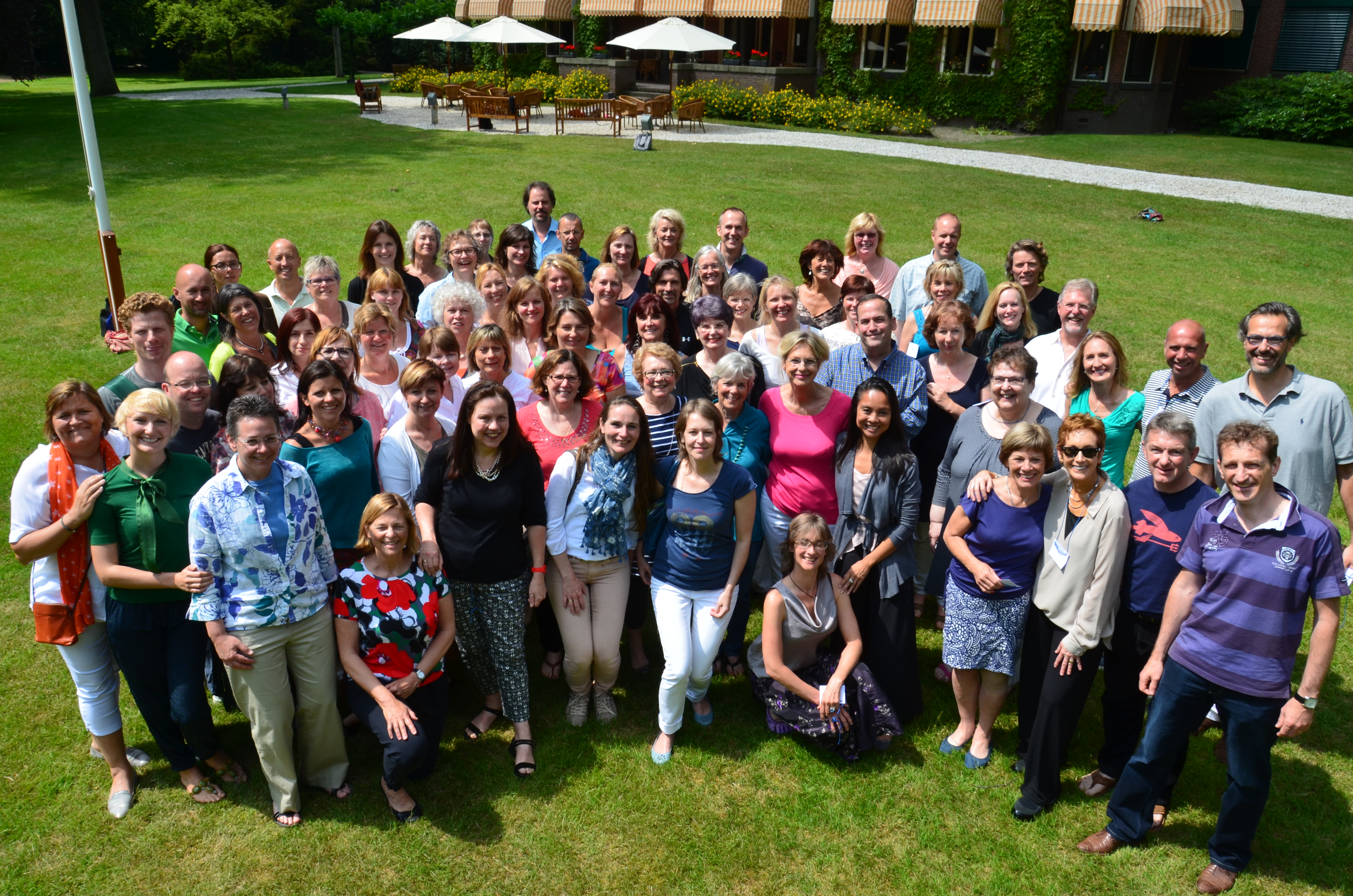
The 2014 Transformational Presence Global Summit in Vught, Holland

While in Holland I led a group through a segment of an exercise called The Dream Police. I created the exercise years ago with John Langs and Lisa Paulson – two master teachers and performing artists – while doing some work with young actors at PCPA Theatrefest. The original exercise is deeply rooted in ritual and communal transformation. The group in Holland was engaged in a more personal exploration so I only led them through the first part of the exercise.

It is surprisingly potent and I’ve learned to use it carefully. The first part of the exercise sounds simple but can be explosive: Write for 5 minutes as if, in 5 minutes, your memory will be wiped clean. All that you will know of your life, of your values, your relationships, your dreams, your identity… will be what you capture in those few moments of writing. After the writing, in a ritual act, the scribbles on the paper are left behind. Most often, people destroy the paper. They shred it. The writing is lost. The question becomes, “Who are you without your story?” It is intended to disorient so the participants might reorient to the essentials of their lives; it is a great exercise for cleaning the gunk. It can be freeing. It can be terrifying. It is always illuminating.

The reorientation process is impossible to do alone. Reorientation is communal. Until Holland I’d never left a group midway, I’d never let the exercise stop in the middle of the disorientation and had always before made sure the reorientation process was at least initiated. IN Holland, the exercise was interrupted. The disoriented community fragmented. Some left the exercise feeling liberated. Others were angry. Some were confused or frightened. All left by themselves. Disorientation makes lonely introverts of us all. Disorientation is an individual sport.

The ritual of coming back to yourself is always a ritual of returning to the community. Clarity is a boon that requires sharing with others. To come back to yourself is to come back to relationship. No one walks this earth alone. No one is capable of saying “This is me,” without the presence and assistance of others. The process can be volcanic. It can be quiet and intense. It always requires another question: “Will you tell me what you see?”

24 hours later we completed the exercise. The individuals returned. They gathered, reoriented and a new form of the community was born. I knew all was well when the newly reformed community asked, “What do we do now?” and the only available answer was, “We don’t know – but let’s find out together.”

Go here to get my latest book, The Seer: The Mind of the Entrepreneur, Artist, Visionary, title_pageSeeker, Learner, Leader, Creator…You.

Or, go here for hard copies.

Locate Your Self

title_pageHere’s a short excerpt from my book, The Seer, dealing with the dance between investments, limitations, and the roles we play in life. This conversation is a kind of coaching session and is happening via online chat:

Me:…All week I’ve asked myself, “why?” Why the dramatic shift in experience from role to role? I’m a bit shocked to realize that I play many, many roles each day. In each role I want something and what I want is different depending upon the people I am with. I realized that my roles are not about me in isolation – and what do I mean by that? I mean that I define my role by how I define the relationship I am in at the moment. For instance, in my workshop, I assumed the role of “guide” and I wanted to lead the young people to some new insights that might help them create their businesses. In my conversation with my parents, in the role of “son,” I wanted them to be pleased with my work. I wanted to share and I wanted their approval. So, my role is defined by relationship and in each different relationship I tell a specific story based on what I want or need. I’ve “cast” myself in these little mini-stories. Or to use your term, “role” is the way I “locate” myself in the story.

Virgil: And how does this knowledge help you with your questions about business?

Me: The first thing that occurs to me is that I have the capacity to locate myself in a different way if I don’t like the role I’m playing. I can change how I locate myself. Also, there is a dance with the words “limitation” and “investment.” I took notes all week and realized that I was using the verb “to invest” over and over again to describe my experience of different roles. So, for instance, during my dinner with my friend Bruce I invested in helping him. I wanted Bruce to know that I cared about his challenges. Then, I watched Bruce invest in being the wine expert. It was his way of caring for me and demonstrating his expertise. I began to see my investments as keys to discerning my limitations. In some roles I’ve invested in the idea that I can’t do something or that I’m not good at something. In some roles I diminish myself; my limitations are investments in being small.

Virgil: Just a caution: as you explore further the dance between investment and limitation, remember to practice suspending your judgment. Remember: you are having experiences first so you can see how you make meaning and begin to choose how you make meaning.

Me: Thank you. It’s a good reminder. I was beating myself up every time I     realized I was investing in being small.

Virgil: We tell ourselves stories. We locate ourselves within the stories. In fact, that is the next recognition: you locate yourself within your story. We do it physically (like your description of choosing the table in the restaurant); we do it through the roles we assume – specifically our assumptions of how we need to play our roles, what is ours to do, etc. Locating is simply a way of establishing comfort. We sort to the known. If you judge how you locate yourself, you miss the opportunity to change how you locate yourself.

Me: Right. Judgment blinds me to the choices I am making.

Virgil: Judgment is always a version of the “things are happening to me” story. In fact, judgment is a way of locating: it is the warning signal when we step too close to discomfort. When I judge myself and say, “I’m an idiot,” I’m actually locating myself, pulling myself back into my comfort zone. When I judge others, “They are idiots,” I’m locating myself in a higher status position. The action of diminishing “them” elevates me back into a comfortable status position. Thus, suspending your judgments removes the easy step back to comfort and allows you to stand in “not knowing” and see what is there beyond what you think is there.

Go here to get my latest book, The Seer: The Mind of the Entrepreneur, Artist, Visionary, Seeker, Learner, Leader, Creator…You.

Or, go here for hard copies.

Let’s Dance

from my cartoon series, FLUB

from my cartoon series, FLUB

[This is a response to my dear friend who believes he will someday be worthy to call himself “artist.”]:

There is a trap that every artist must negotiate: the mistaken notion that “artist” is something you achieve. “Artist” is something that you are (and every child is an artist, wouldn’t you agree?). Art is an exploration of life. Some of the greatest artists in history had no training and no experience. They, like you, enjoy playing with various colors and never followed a textbook or a guideline because art doesn’t happen in textbooks and the only guideline that ultimately matters is in the heart of each individual artist. Art is an exploration. It is a relationship with the mystery.  It is not a prescription. There isn’t A WAY to do it. There is your way. And my way.

Art is an engagement with something intangible and if it is life giving to you, that is all that matters. It gives you life and you bring it to life and that dance of giving and bringing life is the work of the artist. The viewer will never see what you see because they do not have your eyes or your life experience or your heart. They will see what they see and interpret it according to their life-filters. Some people will love your work, some will hate it, most will be indifferent – and that has nothing to do with you. You can’t (nor should you) determine what they see. A painting or photograph is like a doorway: the viewer can step through or not. They can choose to engage or not to engage and you have no power over what they  do or see or feel or think. And, it is vital that you understand that because the notion that you can control what they think is the very thing that leads you to believe that you must pass some credibility test to be deemed and artist. When a viewer engages with a work of art they cease to be a viewer and themselves become an artist. Engagement with art is never passive; it is creative. They enter their own dance of creation. They become creators. Yours is to offer the doorway, not to push people through it.

In truth, the shadow side for the artist in trying to control what other people think is that they give away the essential thing: what they think. Why assign to other people the responsibility for your identity as “artist.” If they like your work then you are an artist? If they hate your work then you are not? You can either serve your heart (art) or please other people but you cannot do both.

I’ve coached a legion of people who set up great studio space for themselves and then never go into it. People are great at creating separation from what they want. They can get close to it (set up the studio) but fear stepping into it (picking up the paint brush) because the act of making art is the act of releasing control. It is to offer without condition. It can be a scary thing to give voice to what you see. It is vulnerable to show your heart to the world. It is only scary until you own it and get out of the trap of valuing other people’s point of view over your own.

Another form of separation is to say, “I will be an artist when I sell my work.” Selling your work does not make you an artist. Making art is what makes you an artist. Acceptance does not make you an artist. Making art is what makes you an artist. 10,000 hours in the studio will make you better and better (meaning freer and freer to express) but it will not make you an artist. You are an artist in the first hour and an artist in the 10,000th hour because you are exploring your relationship with life. You might have better mastery of the tools in the 10,000th hour but “master of tool” and “artist” are two distinctly different things. The  artist uses the tool, the tool does not define the artist.

You have the courage to go to your studio and get lost in an exploration of life through image and color. You lose all sense of time because your relationship with the mystery is pure. And, in the end of the day, who cares if anyone sees you as an “artist;” who cares if you see yourself as an “artist.” All that matters is that you enter that sacred studio place and open yourself to the mystery and say, “Let’s dance.”

Go here to get my latest book, The Seer: The Mind of the Entrepreneur, Artist, Visionary, title_pageSeeker, Learner, Leader, Creator…You.

Or, go here for hard copies and Kindle (Amazon)

Die To The Past

683. Join me in inspiring truly powerful people. Each day I will add a new thought, story or idea to support your quest and mine.

Today, Diane and I talked at length about dying to our pasts. She shared a potent meditation image – looking from her grave and in death no longer being invested in the limitations and attachments that previously confined her life. Her fears no longer mattered. She let go of her past and in so doing opened the way for growth and a new relationship with her future.

In story cycles, a character must leave behind all that they know in order to step into unknown territories. It is the movement away from the known, the comfortable, and the safe that is the metaphoric threshold to adventure and transformation. Leaving behind what you know is “story language” for dying to your past. Frodo will always return to the Shire but he will be a greatly changed. The Frodo that leaves on the adventure is not the same Frodo that returns. He knows too much about middle earth and himself to resume his former identity.

The caterpillar’s body does heroic battle resisting the cell replication that will eventually bring re-formation to a new way of being called butterfly. The caterpillar’s body reads the sweeping tide of change as cancer and fights back. This classic struggle within the caterpillar’s body of change meeting the conservative impulse ends when the resistance ends; the caterpillar can fight no more and surrenders the struggle. The imperative for change overwhelms the old identity; the caterpillar’s body releases the known and collapses into mush. Only then can the new form materialize and the new form is beyond the caterpillars capacity to imagine.

Diane’s meditation, Frodo’s journey, and the caterpillar’s process of transformation are the same metaphoric image. Each had to die to the past to step into the possible. The lesson over and over again, whether in story cycles, nature or human transformation, is that the new identity will always be greater than our wildest dreams. The only requirement is that we surrender the struggle, leave behind all that we know, experience the little death, and take a step.

Truly Powerful People (450)

450.
Join me in inspiring truly powerful people. Each day I will add a new thought, story or idea to support your quest and mine.

For years the question I have most dreaded is the cocktail party standard, “So, what do you do?” I’ve never had a simple answer. I’ve never had a single answer. And usually, my answer serves to complicate rather than simplify. Once I stopped feeling bad that I didn’t have a simple answer, once I recognized that I was never going to have a suitable answer, I decided to make the moment an opportunity for play: I used the untenable question to sort my encounters into “those people I want to know” and “those people that I do not.” I went on offense. Without hesitation I tell them whatever comes into my mind; the people that step toward the chaos go into the “people I want to know” bucket. Those that flee the chaos have self selected themselves from my future friend pool. Recently, my newest favorite friend took me to lunch and started our time together with, “Who the hell are you?” It’s worth noting that he also has no simple answer to the dreaded question.

Once, at a conference for doctors, I performed a piece that was written to seem autobiographical, but was fiction through and through. I played the role of a doctor. Off the stage, I was surprised and delighted when people called me doctor! They didn’t realize that I was an invention – and I did nothing to help correct their perception. It felt good fitting into an identifiable box. “Doctor Robinson,” they said, “Thank you for telling us your story.” I smiled and said, “Thank you for listening to my story.” All the while I was thinking, “Mom would be so proud!” For one glorious day through my invention I felt the simple joy of being identifiable to others. And, in that day, I realized with relish that it is all an invention. None of us is truly identifiable; no one is the role that they play. Double liberation!

There is an exercise I love doing with groups: pretend that your memory will be erased in 5 minutes; before your memory is gone, before 5 minutes elapse, write all that you want to remember, all that you think you value, all that you want to recall about yourself. People write about their families and relationships, they write phone numbers of important friends, they write of their dogs and their desires. I’ve done this exercise with groups hundreds of times and once, only once, at a retreat, a woman wrote that she loved herself beyond measure, that she was fulfilled and talented and caring. When I asked her about it she said, “If I have a clean slate and can only know myself through what I’ve written, why not tell myself a great story. Why not invent an amazing me.”