Ask The Real Question [on Merely A Thought Monday]

“Through a lack of love everything hardens. There is nothing as lonely in the world as that which has hardened or grown cold. Bitterness and coldness are the ultimate defeat.” ~ John O’Donohue, Anam Cara

We just watched a news segment about Taiwan’s successful response to COVID-19. At the heart of their response, the reporter said, is a sense of social solidarity. Social solidarity; we are all in this together.

American’s celebrate their independent spirit which leads them to the delusion that they can go-it-alone. Watching documentaries and television shows of people living remotely in the great Alaskan frontier, I’m always aware of the manufactured rifles and bullets, the chain saws, clothes and coats from the store, boots and knives and rope and gas…participation in an economy. There is an entire web of support, hundreds of human beings making possible even the most dedicated illusion of the cowboy spirit.

It’s where we get it wrong. We are blind to our reliance on each other. An economy is more than the production and consumption of goods and services. It is a living, breathing web of interconnection.

Income gaps are descriptors of belief. Terms like “consumer behavior” are scrubbed, antiseptic descriptions of relationship, ethics, communal participation. The story is told in the economics. How the money flows defines the legislation: who starves, who prospers, how we support each other or not. Who has access to power and who does not.

Every-man-for-himself is not only a cold and bitter road, it is also a fantasy. The isolation of every hermit is made possible by the production of others. The existence of a leisure class is not possible without a successful working class. Prosperity is a team sport, especially in a capitalist economy.

No one walks this life alone so the real question is how we want to walk it?

These once-united-states have grown cold. We are hardened. We are divided. Fewer and fewer feel the wealth. There are no rules that apply, no ethic to the game of governance. Fearful and angry people are easily led into wild tales of deep states. Neighbors become enemies. Economies teeter and fall when balance is ignored. No one thrives for long in a bitter divide.

The ultimate defeat is ours. No garden grows in hard soil. We will have required no enemy invasion, no conqueror breaking down the gate or overrunning the ramparts. All that was required was to turn our backs on each other. To think we are two distinct teams, and need to win over the other at all cost, no-holds-barred and no rules apply, go it alone, protect the freedom of the individual with nary an understanding that no individual survives in a vacuum.

It is a lonely supper, indeed, at a table for one.

read Kerri’s blog post about CARING
Determine The Value

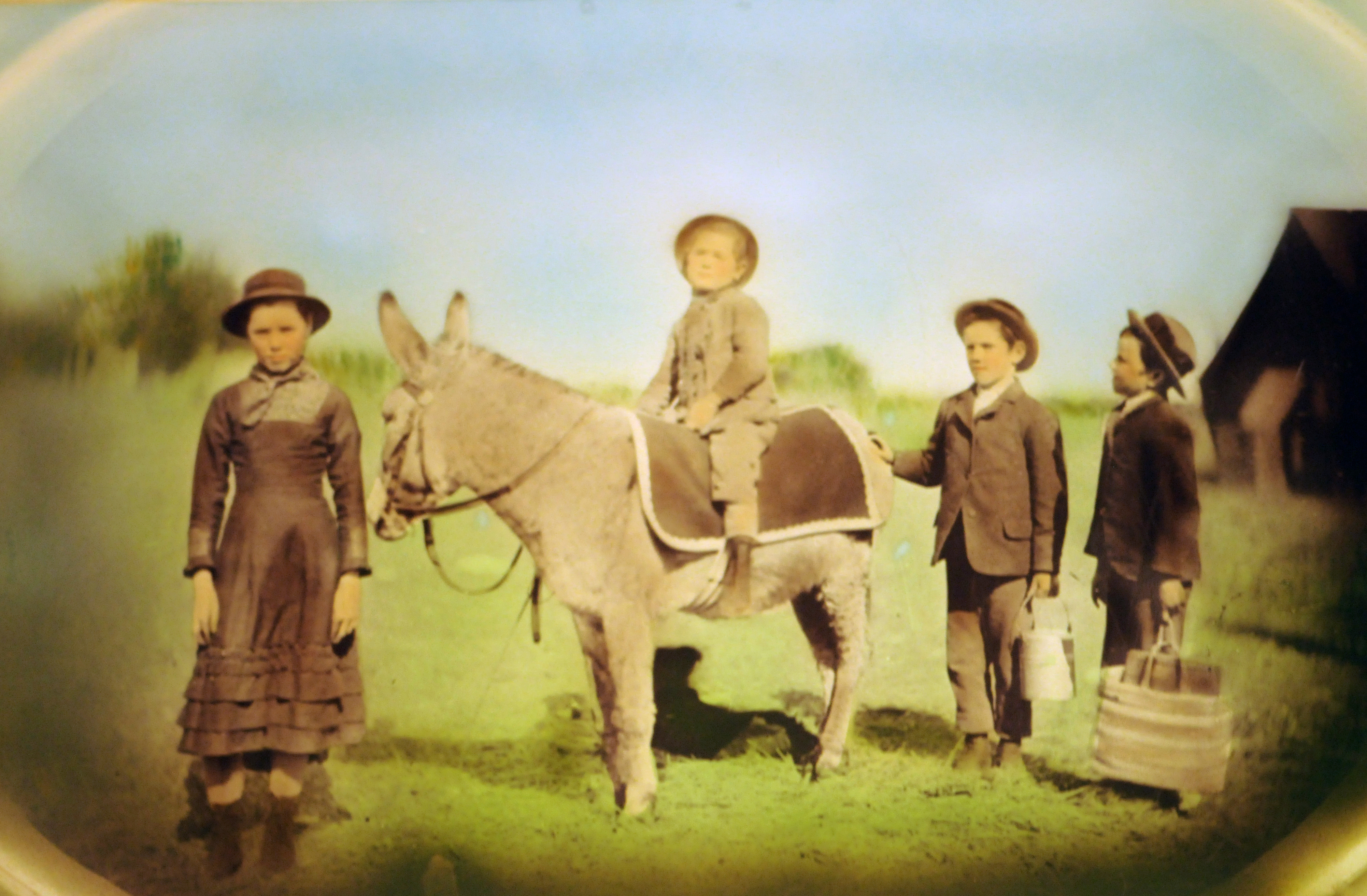
The Lost Boy (one of many) sitting on a mule.

The Lost Boy (one of many) sitting on a mule.

Last year Skip taught me that crowd sourcing sites like Kickstarter or Indiegogo were great ways to test the viability of a project or product. If an idea is valuable, people will invest in it. If not, not. If an idea is viable it will attract support.

As an artist I’ve had a wonky relationship with the valuation equation. Generally, the economics of art live outside the norms of the marketplace. For instance, I’ve run or consulted with many theatre companies; it is virtually impossible for the product of a theatre company – the live performance of a play – to pay for itself through ticket sales. Unlike other products, things like cars or bananas, arts organizations and the products they produce are made possible through grants, donations, patrons and this weird mechanism called “non-profit” status. The costs of producing the play (the art) usually outstrip the capacity of the “product” to generate a profit.

When I first met Skip he asked me a question for which I had no capacity to answer: “How can you scale up?” His question brought me to the concept confusion that lives at the very heart of the economics of art: bananas, cars, and iphones can be mass-produced. They are meant to be consumed on a grand scale. They are built to break down, to be replaced by the newest, latest, and greatest. The arts, to be living, to be vital, are rarely capable of mass consumption.

The arts serve personal (and, therefore, communal) transformation. They are not meant to break down, to be replaced by the new; they are meant to sustain, to renew from a deep irreplaceable wellspring. If the iphone, banana, or car is the fruit of the vine, the arts are the root system, that which brings nutrient to the fruit, that which holds the identity of the culture. Pluck the fruit and the vine will replace it. There will always be more. Pluck the root and you kill the plant. There is only one root. The fruit is meant for consuming. The root serves a different purpose.

Places of worship and education face the same value confusion. The sacred stuff, like art, is not consumable so how does a consumer culture determine its value? Learning is an ongoing personal process, an irreplaceable relationship with the world. Both education and worship, like a living art, are experiences rather than products. They are meant to be valued differently than a new countertop or a pair of shoes.

Some forms of art are capable, through the miracle of technology, of mass consumption: movies, music recordings, art posters and prints. Technology can do many things but it cannot replace presence. It allows us to see. It cannot replace touch. It allows us on a mass scale to see a reproduction of a painting by, let’s say, Van Gogh. We can appreciate the painting through the print. However, we cannot experience it. Nothing can replace direct experience, the personal moment of standing with the painting. A live performance is…live. It is alive, inclusive, and meant to transform through presence and participation in a shared moment. The economics of valuation confuse the greater valuation.

I am testing Skip’s notion with the viability of a project. I’ve launched a Kickstarter – my first – to fund a play. It is a heart project, personal to me and I think relevant to my community. Take a look. If it looks like it has value, you’ll know what to do.

Go here to check out my kickstarter for THE LOST BOYDSC_1196 copy


title_pageGo here to buy hard copies (and Kindle) of my latest book: The Seer: The Mind of the Entrepreneur, Artist, Visionary, Innovator, Seeker, Learner, Leader, Creator,…You.