Word Play [David’s blog on Not So Flawed Wednesday]

“Do you know what these are called?” she asked.

The homeowner, smiling that someone was appreciating his garden, replied, “I don’t know but they’ve been there since I was a kid.”

She whispered to me, “I know what they’re called but I can’t remember.” And then, as we continued down the road, she abruptly stopped, arms thrust high as if she’d just kicked the winning goal, “Snowdrops! They’re snowdrops!” The celebration of a thought retrieved from a long lost corner of the mind. “Snowdrops,” she smiled and strutted.

Beyond the strut-and-dance of word retrieval, there’s a great opportunity in this time of lost words. I adore the words we invent to replace a missing word. We stray far beyond the boundary of thing-a-ma-gig. Whos-e-what-see is child’s play compared to the sounds that come out of our mouths. They sometimes sound like remedial German: Schodenhammer. They sometimes sound like dinosaurs: Velocimapper. Shakespeare, the greatest of word inventors, reminds us that language is not a fixed thing. I think he’d be delighted by our spontaneous additions to the English language. “Make it rhyme!” he’d cheer!

And then, when a word goes missing and spontaneous-word-invention fails, there are the delicious descriptions. “Dough with things stuffed inside. You know! You cook them!” Ravioli? Pot Sticker? Gyoza? “That thing you fold and put in your pocket. It has money in it. Sometimes. And credit cards.” Oh, yes, even the most mundane word can hide for a while. The green thing with a big pit inside. Poor lost avocado.

Where do these words go? Vacation? I loved the homeowner’s response: I don’t know but they’ve been there since I was a kid.

read Kerri’s blog about SNOWDROPS

comment. like. share. support.

buymeacoffee is a word…well, three words smashed together to make a clever title for a donation site.

Name Your Wine [on Two Artists Tuesday]

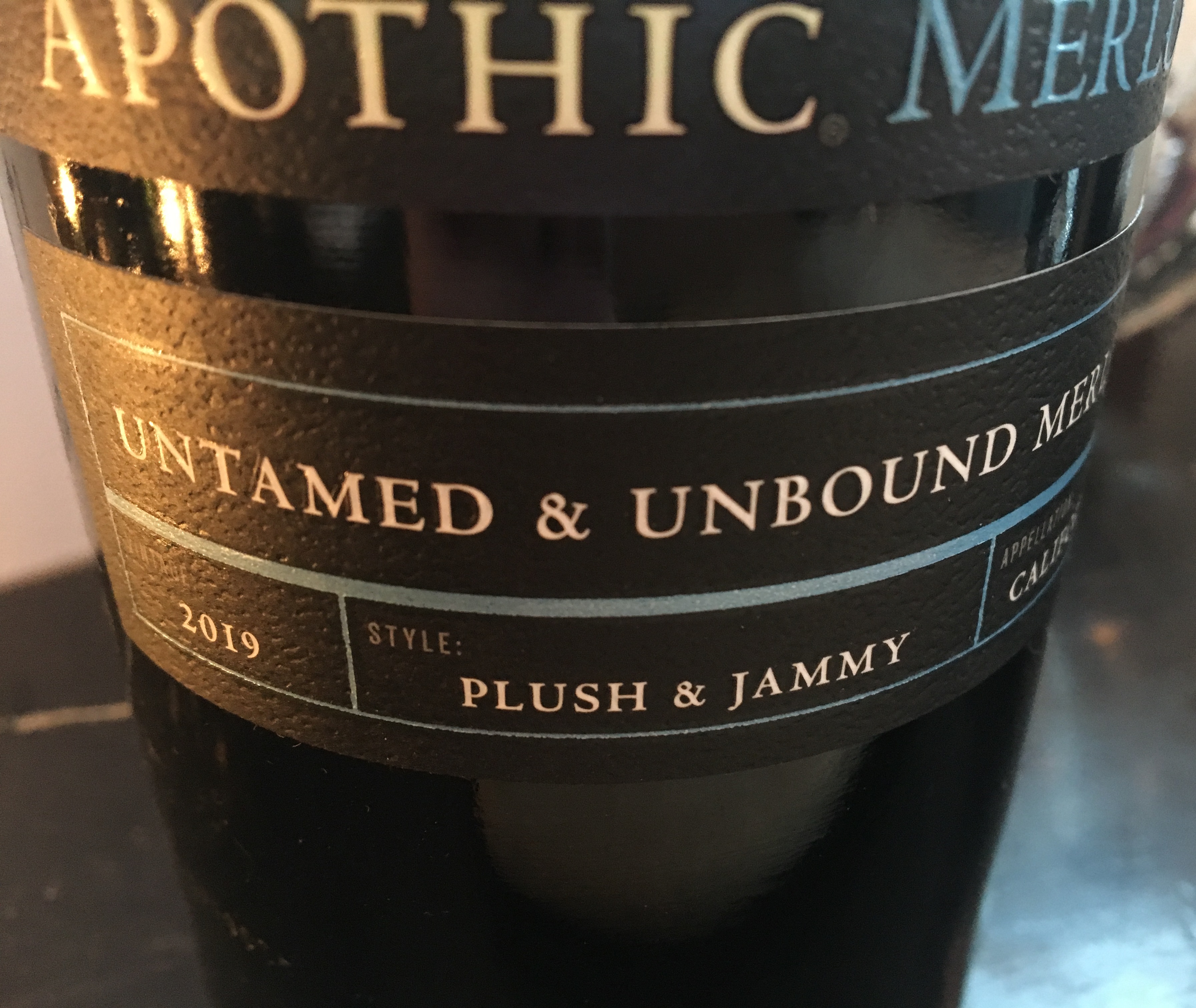
“Ooooh,” I said, reading the bottle, “I want to be untamed and unbound. Plush and jammy!” She rolled her eyes. I won’t tell you what she said. There might be children reading.

As wine bottles often do, it inspired an interval of time paying attention to the phrases I paste on the labels of my life. What if I described my days with wine-label terminology? Last week was definitely earthy and robust. Crusty with hearty notes of calamity.

In my work life, I’m hearing with alarming frequency the word taxonomy. We need to create a taxonomy. We are approaching a taxonomy. The study of naming. The science of definition. With what classification will we identify, and therefore label, our creation? If our product was wine, what would we say of it? Bold and expansive, yet subtle and refined? Are we talking about what it is, what it does, or defining it so it will sell? Those levers are never mutually exclusive. A written language is always an abstraction. Reaching yet never hitting its mark.

Aren’t we living in an age where the world is seeking a new-ish taxonomy? Spin your news channels and hear the same story-wine described in remarkably contradictory terms. What is fruity to one audience is classified as filthy to the other. Two labels, one wine. One team refusing to taste for themselves. We brand ourselves “divided.”

William Shakespeare either created or wrote for the first time in the English language over 1,700 words. I want him on my taxonomy team. I want him to lead my wine-life-labeling committee. Though, I imagine he would be amused to tears at our wild word-world of marketing, our reality-wielding-“news” channels, he wouldn’t be at all surprised that the power of a label pasted on an experience. “Call it what you will,” he might say, “It’s a sorry sight.” No matter. Words, words, words.

Sorry sight! A great name for a wine. A bold red blend for a brave new world. William gives it two thumbs up. Edgy and energetic, nutty and dippy with hints of crackers.

read Kerri’s blog post about WINE LABELS

Point The Way [on Merely A Thought Monday]

“You can accomplish with kindness what you cannot by force.” ~ Publilius Syrus

It’s one of the most interesting Wikipedia pages I’ve come across. Publilius Syrus. A life described in two sentences that conclude with this: “…but by his wit and talent he won the favor of his master, who freed and educated him. The rest of the page are maxims attributed to him. A Syrian. A Roman slave. An observer of human-kind.

We live in a world of ubiquitous maxims. They are posted everywhere, in stores, billboards, and elementary school signboards. Appeals to our better nature. Choose kindness. There are, of course, plenty of appeals to our worse nature, too. It’s as if our maxims are in a tug-of-war. I imagine that Publilius Syrus experienced in his short life both ends of the rope, the cruel and the kind, which is why he wrote so many maxims.

This quote came across my screen so I wrote it on a lilac colored post-it note and stuck it to my monitor. It may or may not be from Christina Wodtke: “When you make complex things, words eventually fail.” Life is a complex thing that words will always fail to describe or contain. The best a word can do is point to something, or the way to something. A maxim, an ideal, is, after all, a signpost, a direction. A choice of path. A point-of-view is created during those moments of choosing.

Kindness is not a thing. It’s not a word – not the word. The word simply points the way to something so complex, so boundless, that the word will always fail. But, we know it when we see it. We know it when we offer it. We know it when we receive it. We know with certainty when we choose it and when we do not.

read Kerri’s blog post about CHOOSE KINDNESS