Be A Team

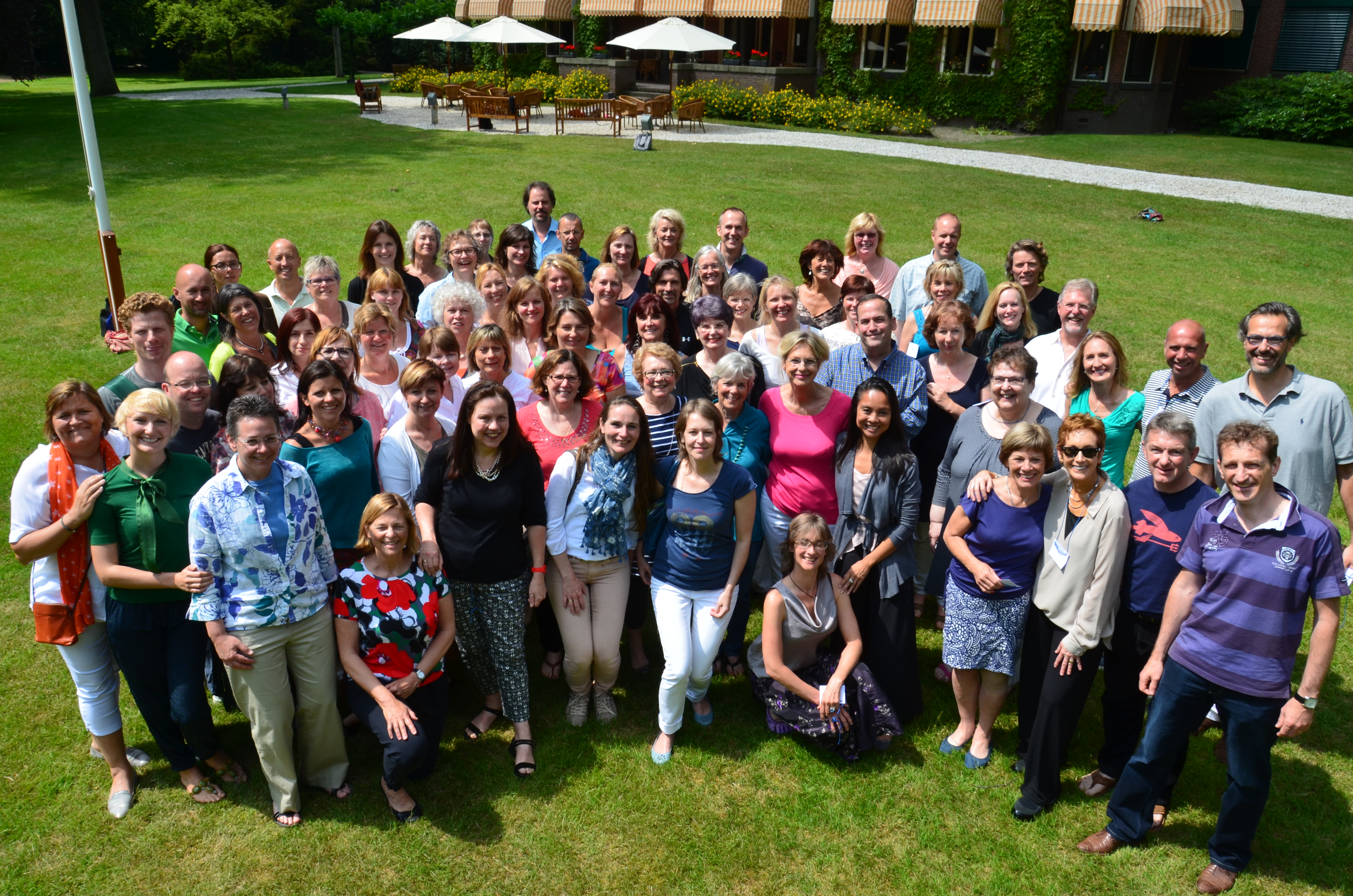
can you see the team boosting the child? I have many of these and will soon begin intentionally pursuing this form

can you see the team boosting the child? I have many of these and will soon begin intentionally pursuing this form

Many years ago Judy gave me a book by African writer Malidoma Some. He wrote that, in the village where he grew up, there were no locks on the doors. In fact, there were no doors. The people of the community respected the possessions and privacy of others. Locks were not necessary. The community cared for the health of its members so its members cared for the health of the community. From his point of view, a society that needs locks on the doors is a sick society. Locks are sign of communal breakdown.

I’ve been thinking much about sickness and the need for locks as I prepare to do a workshop for organizations about effective teams. I’ve done too many of these workshops not to recognize that the need to build teams is a sure sign of an unhealthy community. In Malidoma Some’s community, people were aware of and acted from a consideration of the health of the whole. Loyalty begets loyalty. “Acting for the good of the whole” is a great working definition for a team. It’s all you need to know to nurture great teams: make sure everyone in the organization, from the top to the bottom, is caring for the health of all the members. Make sure the choices are made for the good of the whole.

An organization that needs to team build is like a society that needs locks: most organizational systems support a philosophy of “every man and woman for themselves” while the executive suite needs cooperation and compliance to get the job done. No amount of team building can transcend compensation for individual merit. Once, a CEO asked me, “How do I get them to do what I want them to do?”

The short answer: you don’t.

A healthy team, just like a healthy community, requires no leveraging to act. It requires no policing. A team is a not a “thing.” A team is a relationship and just like a sports team or a theatre troupe, everyone needs to feel safe to really bring their game. They have to know the team cares for them as much as they care for the team. Many years ago, while sitting in a jury pool, the judge asked us, “Why do people resent being called to serve?” A lovely older woman raised her hand and replied, “The government offices are inaccessible and unhelpful when I need information or support. Why should I be happy to serve a system that wants nothing to do with me until it needs my money or someone to sit on a jury.” The rest of the jury pool applauded. When loyalty is a two-way street, teams form naturally. When loyalty is a given, people quite naturally offer their service to something greater than themselves.

There are a few other elementary things necessary for the relationship known as, “team,” like a common story (a common center) and a clear intention, but they are not possible when the metaphoric doors need locks. “Team” is something we are, not something we build or do.

Go here to get my latest book, The Seer: The Mind of the Entrepreneur, Artist, Visionary, title_pageSeeker, Learner, Leader, Creator…You.

Or, go here for hard copies.


Meet At “We.”

Many years ago I was watching Johnny direct a play. It was one of Shakespeare’s though I can’t remember which play. Suddenly, in the middle of the rehearsal, he was overcome with the recognition that he and his actors where carrying forward a tradition. They were engaged in an artistic tradition that stretches back centuries. They were carrying the torch in this lifetime so that they might pass the flame to the next generation. Johnny’s passion and recognition was infectious and his cast dawned to the reality that they were in service to something greater than their small parts in a singular production of the play. They became priests and priestesses enacting the ritual story for all ages.

They found deeper meaning to their work. It mattered. They found connection to both the past (the tradition) and the future (the legacy). Their work rippled in time and came alive in the present moment because they suddenly understood who they were relative to the past and the future. They located themselves. This play was theirs to do. Their service to the play and the tradition defined their purpose. Their art was their gift to the community and the community the served transcended time: it reached into the past and stretched into the future.

This is the purpose of the arts: to locate us in time relative to our traditions and our legacy. The arts orient us to the question, “Who are we?” The arts do not answer the question, there is no single answer, but they facilitate an ongoing conversation and exploration of what it is to be alive as a member of a community.

Artists are the keepers of the communal narrative. When the artists no longer occupy the center, the narrative dissipates and so does the society. Rules and laws can hold the pieces together for a while but disparity and self-interest are inevitable. They are harbingers of communal collapse. A common narrative is the beating heart of a healthy community.

No plant can live without it root and neither can a community. No person can prosper alone. The purpose is never the “I.” Purpose requires a target so it is by definition the “We.” Greater purpose extends to the past and the future, just as the roots of a plant reach deep into the earth while the branches and leaves reach to meet the sun. This reaching, this connection to past and future that meets and grows in the present moment defines us. It is the two directions of mattering that meets in the moment of “We.”

(895. Join me in inspiring truly powerful people. Each day I will add a new thought, story or idea to support your quest and mine.)

For a humorous look at the wonderful world of innovation and new ventures, check out my new comic strip Fl!p and the gang at Fl!p Comics.

Take A Look At Strider

802. Join me in inspiring truly powerful people. Each day I will add a new thought, story or idea to support your quest and mine.

He was formidable walking down the hill toward the waterfront. Wrapped in a grey blanket that made him look like a Jedi knight he took bold confident strides. He was a paradox: homeless and determined, aimless and intentional. People parted and opened a path for him even before they could see him. They felt him coming. He was a force.

For a moment I felt as if I was watching two worlds overlap. His grey blanket-cape swirling through a crowd of reserved business-casual wear. He was the most alive person on the street and the most fearsome. He was striding beyond the rules. He didn’t care if he was hit by a car or ran over a tourist. He didn’t care and the freedom of not caring was dangerous. I could see the message in his pace: no one cared for him so why should he care for anyone. He was experiencing the worst punishment a tribe can deliver: he was cast out. He did not belong.

I knew he had no destination because I recognized the force that drove him. He wanted his life to be different. He wanted a break, an opportunity, anything that looked like hope. And there was none in sight. He was pissed at his life choices. All he could do in this moment was walk and walk fast, hard, and determined and burn off the fury. It would either make him feel the vibrancy of his life or exhaust him and either way he would emerge from his walk in another mindset. He would find hope or fatigue and sleep. He would live another day.

As I watched him descend the hill, knowing that he would simply turn and walk right back up again only to descend one more time – a modern day Sisyphus – I also realized that the folks in business-casual were probably doing the same thing only with less awareness but with a modicum of hope. Someone cared about their actions. Someone cared that they showed up. They had a place to go. The strider did not.

Last night, I had yet another conversation about the need to create community and connectivity – this time with a maker of software. My fascination with this conversation began nearly 15 years ago in school with the ongoing ever-present conversation about creating community. I hear it in one form or another almost everyday. Here in a metro area of almost 2 million people we feel the need to create community and that can only be true because we do not experience it beyond the superficial. A community cares for the health and well being of all of its members. A community does not place the interests of the few above the values of the whole.

I have been walking since January AND I have places to go. If I do not show up at Carol’s before midnight I get a text. Judy checks in with me. Horatio and Arnie want to know how I am doing. Megan reminds me to eat and throughout the day tugs on the lifeline to see if I will tug back. I am loved. I have been meditating on this thing called home that has evaded me or that I have avoided (I don’t know which) and the strider shook my meditation like a snow globe. I think I will find home because I am determined to create it. I wonder if any of us will ever really know a greater community? The man in the cape swirled down the hill and people parted, they glanced but mostly did not give him a second look. Outcasts are ordinary. Not belonging to something bigger is an everyday occurrence. Do you feel it?

Listen To The Story

750. Join me in inspiring truly powerful people. Each day I will add a new thought, story or idea to support your quest and mine.

I found another rich tidbit in the archives and have updated it slightly:

Where is the story that unites us? Story is the gravity that holds communities together, pulling individuals into a common orbit. It is the irresistible cadence of invitation: come. Sit. It is singular and essential; it holds the space of affirmation. It reinforces the knowing of, “This is who we are. This is where we belong.”

Story is the gravity that holds us together, this we’ve forgotten. And like the musicians in an out-of-tune orchestra, when we no longer recognize our common story then the gravity reverses itself, we spin off into the void, alone in a cacophony of inner monologue. Hell is a community of individuals lost in the fog of their own story. Hell is the universe that has forgotten the existence of shared music. Hell is where you compare yourself to others and in a comparison the others will always win. In Hell you think you have to be perfect so you are never good enough. Hell is where you invest in false notions of who you should be, have to be, could have been. In Hell there is no present moment because you are too invested in the fears of the future and regrets from the past. It’s a dense fog, an inner wasteland. In hell you are alone. Staying in Hell takes a real commitment to the story that you tell!

Not only is story capable of holding us in a coordinated orbit and conversely, blinding us to each other, story also holds the power of guiding us through the wasteland and back to the garden. The old stories are like maps capable of telling us. “This is how your trials will look and feel. These are the challenges you will face. This is what you can expect.” Knowing the stories won’t save you from your trials but they will bring greater meaning to them. Stories guide.

Every human that has ever walked the face of the earth has been born, grown to adulthood, wondered what was theirs to do, loved and lost, fulfilled themselves or not, grown old, and died; their advice comes to us in the form of a story. If we listen metaphorically, the wisdom it holds will spill its guts. Stories don’t need to be tortured to reveal their secrets, they are eager to share. However, treat them as fact and they will clench their jaws and clutch their fists and hold their breath until they pass out. Their treasure lives beyond the realm of facts, beyond the superficial. Read a story as literal or as fact and you cage what is wild. Listen deeply, go beyond your chattering intellect and engage it, feel it in your body. Story desires a relationship with you.

Honor Your Choices

637. Join me in inspiring truly powerful people. Each day I will add a new thought, story or idea to support your quest and mine.

On my drive home I listened to a story on the radio about several thousand former football players suing the NFL because they are now suffering the ill effects of repeated impacts to the head. This is confusing territory for me because I am certain that no one plays the game of football without knowing that there will be repeated blows to the head. So, who is culpable for the injury? Who is responsible for the choice to play? Part of the discussion was about the improvement over the past few decades in helmets and the attention to the rules of the game to minimize head-on collisions and the inevitable injuries that follow. The science now confirms what we’ve known (I hope) for millennia: repeated blows to the head are not good for you. So, if you choose to play, and you know the risks involved, who is responsible when you are injured or suffer the long-term effects of your choices?

Of course, there are other forces at play. The money in football is huge. Entire university athletic programs are floated on the revenues from their football programs. Sport is a route to a better life for many young athletes; the risks are apparent and the rewards are very high. Who doesn’t remember high school and the reverence afforded to the football players – especially during a winning season! Warriors in our culture are revered in all their forms and it is nice to be revered. To a young person, reverence is a high commodity.

My question is ultimately not about football players but about choices and responsibility. Despite our desire to believe otherwise, awareness does not equate into better choices. If awareness led to better choices there would not be a single smoker on the planet. We are not the rational creatures that we pretend to be. Feeling and emotion are the drivers.

Ownership of choices leads to better choices. Responsibility for actions leads to considered choices. This is hard to see in a country defined by ubiquitous litigation and that asks us not to claim responsibility. It is an expression of the separation mentality inherent in power-over stories (see my rants from the previous 2 days): no one is responsible when everyone is a victim. There is a vast difference between, “I didn’t know” and “I knew and decided to do it anyway.” Power is found in choice; power-with is available in a community that values and supports the choices that its members make.