Step Into The Pool

From my children’s book, “Lucy & The Waterfox.” This is what Lucy looks like when she gives up her dream.

Do you remember this phrase from Richard Bach: Argue for your limitations, and sure enough they are yours. I am a notorious eavesdropper and today, listening to the conversations, I think all of life is one long argument for limitations.

The wicked thing about arguing for limitations (I think to myself while eavesdropping) is that we rarely recognize that we are doing it. For instance, blaming others for our misery is actually an argument for limitation. Blaming is an abdication of responsibility, an investment in the notion that, “I can do nothing about that which bothers me.” Blame is an assignment of potency to everyone but your self.

I think all things worth knowing are paradoxical. Arguments for limitation are double-edged because they often also mark the boundary between safe and not safe. An argument for a limitation often looks on the surface to be a defense of the perimeter or an argument for safety. The fulfillment of a dream usually requires a step or two beyond the perimeter and who hasn’t dipped their toe into the pool of their big dream only to pull it back and refuse to wade into it. The shore is safe and known. Stepping into the dream pool never feels safe because the depth of the water is always unknown – and no one ever knows how to swim in the dream pool until they jump in. Staying safely ensconced in Plan B is a great disguised argument for limitation. It is a disguise that will always make sense; self-imposed limitations always make rational sense.

Go here to get my latest book, The Seer: The Mind of the Entrepreneur, Artist, Visionary, title_pageSeeker, Learner, Leader, Creator…You.

Go here for hard copies

Make Nonsense

from the Flub cartoon series. Do you catch the joke.

from the Flub cartoon series. Do you catch the joke?

Life just gets weirder and weirder. That’s part of what I love about it. Many years ago when I was full to the top with frustration, Doug told me that my real problem was that I wanted life to make sense – and it doesn’t. Truer words were never spoken! Stop trying to make sense of things and most of life’s frustrations dissipate. Any good innovator or creative type will tell you that what they do is completely unreasonable. Buddhists call this state on nonsense beginner’s mind.

Sense making is often referred to as Reason. Parents are occasionally overheard in grocery stores pleading with their screaming child, “Be reasonable!” Couples married for years make the same appeal when they are not getting what they want from their spouse.

In some circles, sense making is known as Rational Thought. Useful words and necessary when getting onto an airplane (without Rational Thought, you’d necessarily confront the senseless act of getting into an aluminum tube and hurtling through space at 37,000 feet)!

If you are lucky, the more you live, the more you realize that meaning is all made up. What is reasonable to you may be unreasonable to me. What makes sense to me might not make sense to you. What is true for you may be untrue for me. The idea that there is a single overriding truth is the source of much frustration in the world and has created horrors throughout recorded time. The notion of a single truth makes seekers of us all as if we might find truth sitting in a cafe sipping wine. The notion locates truth outside of us and renders personal truth subject to someone else’s definition.

All seekers inevitably come to this question: “What is truth?” Asking the question usually brings the external-truth pursuit to an end. I’ve learned that no matter how diligently I’ve sought truth or ‘the answer’ in the eyes of others, I am only capable of finding what I seek by looking inside myself. Like all seekers, I find truth within. I find truth when I listen within to the still-small-voice. All the trouble I’ve ever created for myself came when I stopped listening to that voice.

Quinn told me years ago that, “Nothing makes sense.” He smiled. He was a master of double meanings. Where he less given to fun he might have said that people are story makers and given to make sense out of nothing. It’s a magic trick. The problem, as Doug pointed out to me years later, comes when we think the sense exists before we arrive.

Go here to get my latest book, The Seer: The Mind of the Entrepreneur, Artist, Visionary, title_pageSeeker, Learner, Leader, Creator…You.

Go here for hard copies.


Stand Rooted

I awoke this morning with this phrase hanging in my dream space: you can’t control your circumstance but you have infinite control over who you are within your circumstance. It is a well-worn phrase for me, like an old sweater, relevant to much of the teaching, coaching and facilitation I’ve done. It is useful to remember when the hurricane hits or the job disappears or life seems to be a festival of obstacles. The ability to discern between circumstance and personal center is of great value. It is a skill that lives atop of Maslow’s hierarchy.

A work in progress: K.Dot & D.Dot See An Owl

A work in progress: K.Dot & D.Dot See An Owl

We have these words in our canon of health: centered, grounded, rooted, conscious, present…. They are all terrific metaphors, earthy with eyes wide open. Flip them over and you get a good sense of what happens when you confuse your self with your circumstance: off center, uprooted, ungrounded, unconscious, not here; up in the air with eyes squeezed shut.

There is a Buddhist phrase that I appreciate: joyful participation in the sorrows of the world. It is necessary to know the difference between self and circumstance to really grasp the meaning of this phrase. Life is going to bring you trials, tribulations, and lessons. You can never know what is just around the corner. As Kerri often reminds me, it is what you don’t know that makes you grow. So, when the storm comes, participate. Stand in it. Love life in all of its forms and textures.

So many times when working with business clients I’ve had to say, “Don’t eliminate the wolf from your story.” In the story of Little Red Riding Hood, the wolf moves the story forward. In fact, without the wolf, there is no story. In business as in life we attempt to protect ourselves from the wolf. We resist the very thing that can bring growth and renewal. Circumstance is often the wolf. The storm comes. The relationship suffocates. The wolf always creates movement where the energy is stuck. It is uncomfortable. It hurts. It is scary. Yes. So, participate. Engage. Be-with-it. Within the circumstance, within the storm, learn to stand rooted, centered: earthy with eyes wide open.

The circumstance will pass and you will remain. You will know more. You will have grown. This simple understanding, that you are separate from your circumstance, allows for the joyful part of participation. Joy lives at the choice point. The world is and always will have plenty of sorrows to help you grow. Things happen. The question is, “How do you choose to participate?”

Go here to get my latest book, The Seer: The Mind of the Entrepreneur, Artist, Visionary, title_pageSeeker, Learner, Leader, Creator…You.

Or, go here for hard copies.


Smile In Secret

Taking the Sealy for a  test drive.

Taking the Sealy for a test drive.

I never had children so there are certain ritual passages that I’ve never experienced. In my life I’ve ushered a legion of other people’s children through various thresholds so it was surprising how Craig’s Facebook post today struck me. I saw him just last week. We had a late night dinner in Nashville, Indiana and I spent much of the evening secretly smiling. He was different. He’d made the passage and was standing firmly in his independence.

In his post today he wrote, “ And with that final, I’m officially a college senior.”

His passage, like all worthy passages, did not come easily. Nothing worthwhile ever does.

Last August, I helped him move to a new university. We packed the truck and drove out of state. Together, along with Josh, we carried his enormous couch and all the other stuff in the truck into Craig’s first-ever apartment. We helped him set things up and then he needed Kerri and me to go. He needed to be on his own. He needed to step into the unknown places and get lost.

Over the year I was witness to how he got lost, met a multitude of fears and frustrations head on, and how he stood in the fire with all of it. It shouldn’t have surprised me that it transformed him. I know how transformation works and yet this time I was somehow too close to fully see.

Over the year I’ve talked with Craig through the night and into the wee hours about socialism and the difference between a plan A and a plan B. We talked about sarcasm and life without having to push other people under water to feel powerful. We’ve talked about true power. We celebrated Thanksgiving and Christmas. On a freezing cold day in December we tromped through a farm and picked out a Christmas tree that I dubbed Satan because the needles were like daggers. I’m still finding those needles in my socks. We smoked cigars and he made a mixed drink for me called something I can’t remember (a testament to the potency of the concoction); it was awful. We laughed and drank it anyway.

I learned to play Apples to Apples when he came home for a surprise visit. We sat around the table into the wee hours with Pierre and Kirsten and Josh and laughed about anything and everything.

He inspired a week of posts when he asked me a single question and I suspect it will not be the last time.

Last week when he met us for dinner at Uncle Bill and Aunt Linda’s house in the woods of Indiana, I couldn’t believe the chatty, funny, informed, strategic, considerate man sitting across the table was the same boy I drove to college in August.

Craig’s post came on the day after I lost one of my champions: Bob. He was a man who made his own destiny and I think Craig will do the same. I wished that the new college senior had met the man who ushered me through so many of my life’s passages. They are cut from the same cloth. I wanted to write Craig and tell him, “You have no idea how many people are cheering for you.” I wanted to welcome him to the other side.

Go here to get my latest book, The Seer: The Mind of the Entrepreneur, Artist, Visionary,title_page Seeker, Learner, Leader, Creator…You.

Go here for hard copies.


Bark Your Opinion

K.Dot and Tripper

K.Dot and Tripper

Tripper Dog-Dog-Dog does not like the ukulele. He is not shy about expressing his opinions, particularly where his musical tastes are concerned. For instance, Kerri has a djembe (a very cool drum) that he adores. My frame drum, on the other hand, makes him frantic and filled with angst. I was certain that it was my playing and not the drum that drove him nuts until Kerri tried my drum and he was equally distressed. So desperate was he to silence the offending sound that he tried to put his head through the drum. He bit the frame. We can no longer play my frame drum in the house as it evokes the inner rabid wolf spirit in the normally calm and reserved Tripper Dog.

Our house is filled with musical instruments. Dog-Dog hangs out under the piano when Kerri plays. He wraps himself around her stool and chews a bone when she practices her cello. He sleeps through my clumsy first attempts at new guitar chords (or, perhaps my playing puts him to sleep). His broadmindedness snaps shut at the ukulele. He will go to great lengths to stop the strumming. If we contain him in the kitchen he howls.

Tripper Ukulele Interruption

Tripper Ukulele Interruption

I’m considering an experiment. If you’ve not yet discovered Jake Shimabukuro, do yourself a favor and listen to his work. He is a ukulele master and makes those four little strings sound like a full orchestra. He plays rock and jazz and the blues and anything else that you can’t imagine coming out of a ukulele. Go see his concerts. You won’t believe your eyes or your ears. I have a Jake Shimabukuro CD and am considering slipping it on the player while Tripper isn’t looking. I’m wondering if his disapproval of the ukulele might dissolve in the face of mastery. I’m wondering if Tripper Dog-Dog might gain an appreciation of the ukulele if introduced to deeper levels of sophistication. He is, after all, a puppy and generally open to learning new tricks.

As an old dog, I, too, am open to learning new tricks and the ongoing lesson in this life is about what I can and cannot control. Whether or not Dog-Dog ever grows to appreciate the ukulele is definitely out of my control. What is in my control is this: I will love him either way.

Go here to get my latest book, The Seer: The Mind of the Entrepreneur, Artist, Visionary, title_pageSeeker, Learner, Leader, Creator…You.

Or, go here for hard copies.

Thank Your Champions

Bob and me.

Bob and me.

In August, after my dad’s 80th birthday party had wound down, as he slowly bent his aging achy body into his car, Bob Carl said, “I suspect this will be the last time you ever see me.” I told him to stop being silly but as it turns out, he was right. Bob died last night. Although the news was not totally unexpected it nevertheless stopped me in my tracks.

During my years of becoming I had three champions. They stood up for me, showed up for me, slapped me into focus, and encouraged me when I needed the support of an elder. They protected me when I felt unsafe in the world. They pushed me off the edge when I needed a shove to get moving. They were Tom McKenzie, my aunt Kathy Metcalf, and Bob Carl. In the past nine months all three left this earth.

Bob’s passing has, of course, made me reflective. I remember how much I feared him when I first met him. I was a boy and he was a retired military man, a former Drill Sergeant. He did not suffer fools and the force of his nature intimidated the boy version of me. He helped me find my force. He gave me lessons in fire.

His second career was as the mechanic of a research airplane that flew into storms. He spent his retirement flying into hurricanes. I love the metaphor. It is, in fact, what he taught me to do: fly into the storm; find the calm center. A storm always has a calm center.

As luck would have it, I had a call with Alan this afternoon after I heard the news of Bob’s passing. We talked about the uncanny alignment of these three deaths and what it means to me. As Quinn might say, a man without champions must be his own champion and that is pretty much what Alan reflected to me.

One of my stalking stories is Parcival (it is central to my book and continues to unfold for me). From the story, I’ve learned that a man becomes his own champion when he strips off his armor, relinquishes his quest (stops seeking), and gives his life over to the present moment. He chops wood. He carries water. As Bill shared with me, “After illumination, there is laundry.” In the present moment we have everything we need: no separation. It is in the present moment, unprotected (without armor) that the Grail Castle always reappears. Parcival (we) returns to the place where he initially got lost (didn’t speak his truth) and without the armor of social expectation, speaks without filter or editor. He is no longer invested in how he appears to others or what they might think of him – and so finds himself (the Grail).

As for speaking my unfiltered truth, I could not have had a better mentor than Bob. What scared the boy version of me – a man who spoke his truth without filter and with great force – has become in his passing, among his greatest gifts of guidance to me.

Go here to get my latest book, The Seer: The Mind of the Entrepreneur, Artist, Visionary,title_page Seeker, Learner, Leader, Creator…You.

Go here for hard copies.


Know What Matters

A day with Beaky

A day with Beaky

When you leave Florida driving north there is a stretch of highway in Georgia that is littered with billboards advertising everything from the adult superstore to the second coming. The spectrum is as breathtaking as it is comical.

I’ve driven this stretch three times during the past several months and each time I wonder what an archeologist from some distant future might deduce about us if this stretch of highway was the only remaining fragment of evidence of our culture. A few years ago I spent a day in Herculaneum, the other city buried with Pompeii on the day that Vesuvius erupted. Like Pompeii, it was remarkably well preserved. We have so much writing from that time, we have eyewitness accounts, we have museums stuffed with artifacts and art. While I walked the streets of Herculaneum on that hot summer day, I read about the social norms, the exercise practices, food preparation, infrastructure, and what we assume a normal day was like. I also read, based on the placement of the bodies, what that most unusual day, the day the world ended, must have been like. There was a timeline of events. All the while I couldn’t help but wonder if our study of their culture could only reach the superficial, the top layer, the economics. We can sort through the garbage and garner much about daily practices. To study is not the same as knowing. What we know is minute when compared to what we do not know. The timeline told me little of the terror. It told me nothing of the love. The economic statistics told me less than the plaster cast of the old couple huddled together, arms wrapped around each other on their final day.

I recently watched a short TED talk by Ric Elias who was on the plane that a few years ago landed in the Hudson River. He talked about his thoughts as the plane went down, what he learned about life when he faced his death. He was surprised that there was no fear in dying but there was great sadness for all the things he would miss, all the relationships he would leave behind. He learned from that experience that the only thing in his life that mattered was being a good father. He also decided to clear all the toxic relationships and never again participate in negative energy. He said that he gave up being right. I thought of him as I drove the billboard gauntlet a few days ago. The archeologist from the distant future would glean much about our economics and ponder our obvious confusion. She would write studies useful for the tourists that would travel halfway around the world to visit the site of a once thriving community. The tourists would walk the stretch of ancient freeway, gape at the billboards and speculate about our addictions. But they would know nothing of the people who everyday drove that stretch of road with their families, or about people, like me, who drove more than a thousand miles to spend a day or two with a 93 year old woman named Beaky who can tell a story better than almost anyone I’ve ever known.

Go here to get my latest book, The Seer: The Mind of the Entrepreneur, Artist, Visionary, title_pageSeeker, Learner, Leader, Creator…You.

Go here for hard copies.


Trespass And Forgive

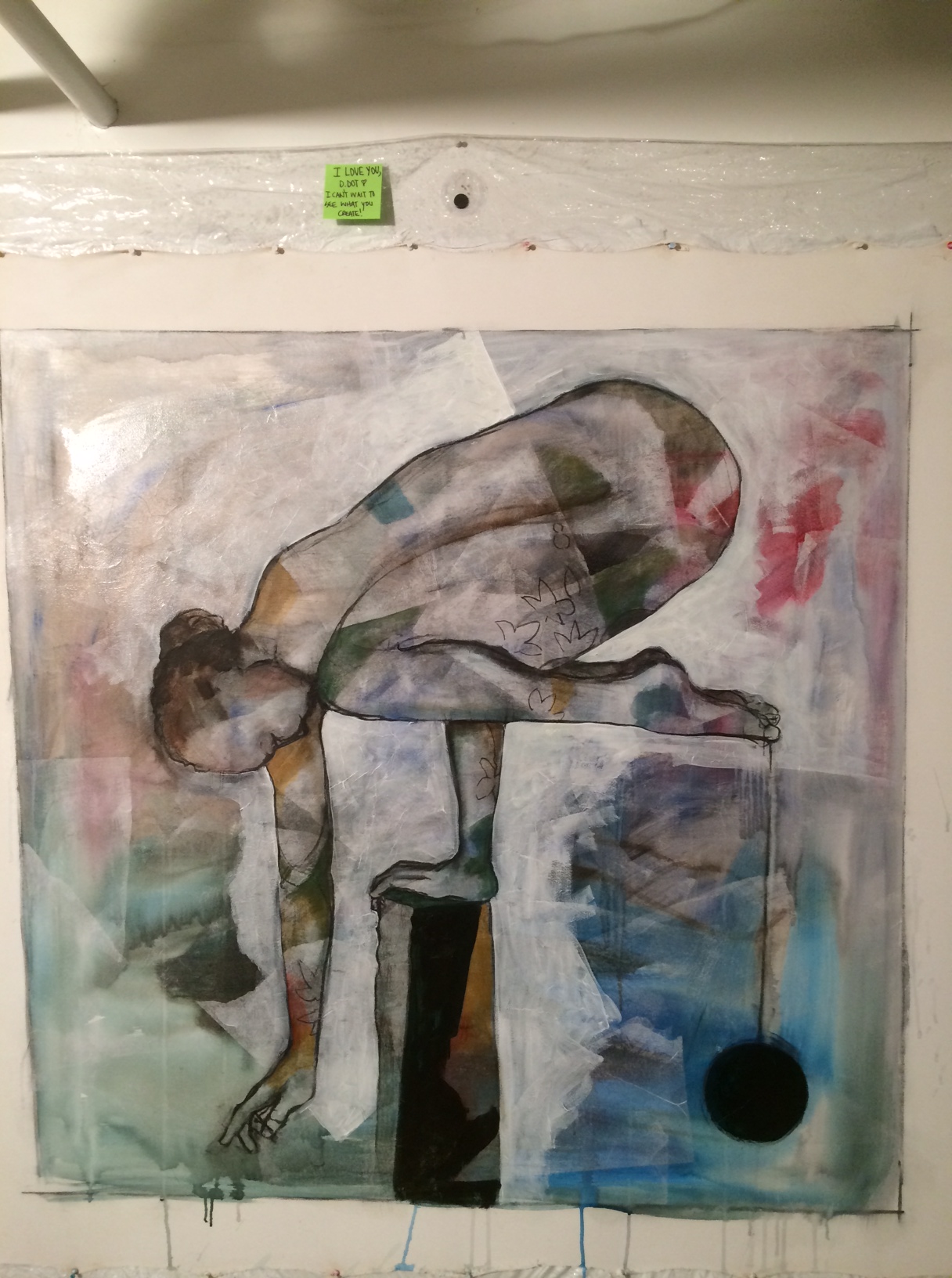
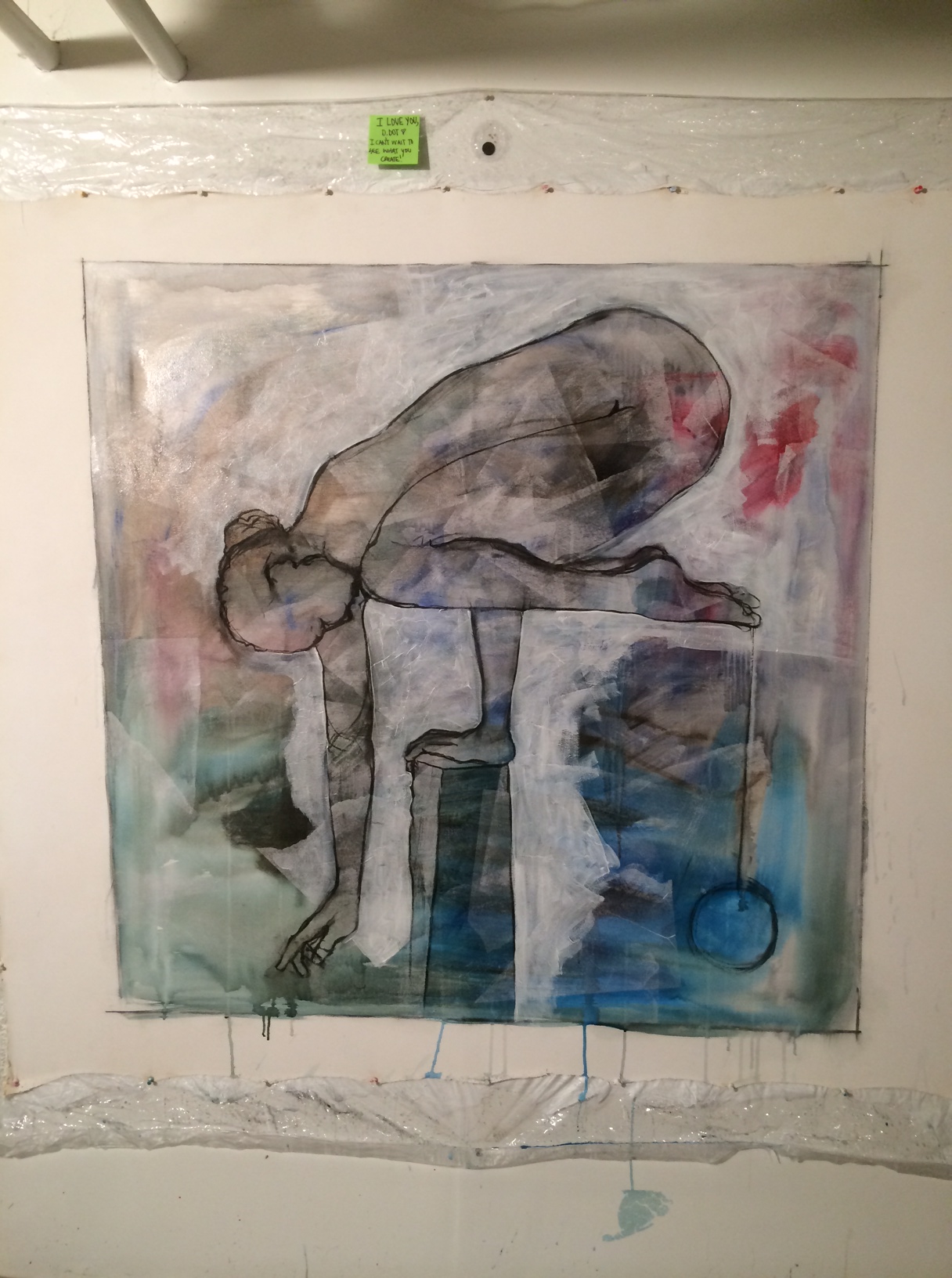
from my Yoga series of paintings.

from my Yoga series of paintings.

I’m back in the choir loft staring at the stained glass window. We’re having a conversation about the word ‘trespass;” it has lately been central to my meditation.

When I was a kid my cousin, Randal, and I used to trespass a lot. There was an old abandoned house built on a hillside. It had a big fence around it to keep us out. It also had the best tree swing in the world so it was worth the breach. Using the back porch as a launch pad, we could swing out over the hillside and let go, falling into a pile of mattresses and foam rubber stacked by all the trespassers. Many times we ran or hid when the police came to shoo us away, always returning when the coast was clear for another swing. It was thrilling.

I’ve trespassed a lot this past year, not into abandoned properties but into places within myself that I had erected fences, places I was not supposed to go. That is the necessity of growth. Transformation always requires a trespass. In stories it is the equivalent of leaving home and going where you are never supposed to go, the place where the monsters live, the place where the entire society (your psyche) tells you never to go. And, so, it becomes the one place that you must go to grow. It is usually ugly and messy and filled with betrayal – and that is the point: all the order dissolves into chaos so that a new order might emerge.

And, in the trespassing within, we trespass against others, especially against people we cherish. They are part of the old order. When the internal order dissolves, the outer order dissolves, too. That is also ugly and messy and filled with betrayal. There is loss of friendship. Love is tested.

My stained glass window tells me that forgiveness – of self and other – is a necessary step on the path to the new order. Trespass is a wrecking ball. Trespass is thrilling. The cops in the head (to borrow a phrase from Augusto Boal) will drive by to run you off or make you hide. The cops in the head will tell you that you are not safe or that you are doing damage that cannot be repaired. Fear wears a badge of authority. Fear wags a finger and calls you traitor, liar, or coward.

Trespass makes all things true and nothing true; that is the point of chaos. All location points disappear. My stained glass window tells me that forgiveness is new location point. It is an anchor. It is a sign that the new order, the butterfly, is emerging from the mush of chaos. Just as trespass is an essential movement away from the known, forgiveness is essential to return home. And, in story terms as in life, when you come home, finally and at last, after all of the trials and all of the betrayals, after all the mess and ugliness, you are new, so home is new, too. When you trespass, leave, and return, you find that there are no more fences and no more badges keeping you out. You find that the swing is available anytime. Love is reformed and everything becomes possible.

Go here to get my latest book, The Seer: The Mind of the Entrepreneur, Artist, Visionary, title_pageSeeker, Learner, Leader, Creator…You.

Or, go here for hard copies.


See The Force

from my children's book, Peri Winkle Rabbit Was Lost

from my children’s book, Peri Winkle Rabbit Was Lost

Bill is a board member for non-profit education organization and is forming a case for changing the curriculum. He’s asked me to help him shape his argument. The students going to the organization’s classes did not fare well in the public schools. As Bill wrote, most of the students are interested in the arts and there are no arts available. He wrote that the curriculum is mostly “traditional.”

Many years ago, my mentor, Tom, told me that the alternative schools were filled with artists, so Bill’s observation is not surprising. Anyone familiar with Howard Gardner’s work will recognize the notion that people learn in different ways. Desks are torture chambers to kids who need to move or manipulate things in order to process information. I was one of those kids and I can tell you that the word “torture” is not an overstatement. Even today, sitting is unproductive time for me. I do my best thinking while I walk or while painting. Staring out a window is also highly productive: after all, the imagination is a fancy dancer.

Bill is making the same wrong assumption made by all people interested in educational reform when they first wade into the swamps of change: he’s focusing on the teaching and the teachers. If only the teachers could see the value of working experientially, engaging the students in a real pursuit instead of an abstraction, all things would be better. On the surface, that might be true. What he’s not considering are the forces in place that require teachers to default to rote exercises, compartmentalization, and standardization. In his case (and all cases), the teachers are not being reinforced (paid) to engage the students on a learning journey; they are being reinforced to raise test scores. The change he seeks is not in the teachers or the teaching. He must address the forces of compliance that teachers, just like their students, must obey. He must address the systemic assumptions that define the expectations.

This is the same conundrum that organizations face when they desire their employees to work in teams but are structured to reward individual achievement. The desire for team is in direct conflict with the systemic foundations.

As Arnie recently reminded me, 1) our system of education was not created by educators, so 2) the aim was never to educate but to standardize. These two aspects, the structure and the intention, are powerful forces to change. They now define our assumptions of what education should be. Systems are living things, and, as I learned in school, will fight to the death just like all other living things.

Bill has his work cut out for him. Changing the focus of the teachers is the easy part and can only happen when the focus of the system supports the deep human desire to learn.

Go here to get my latest book, The Seer: The Mind of the Entrepreneur, Artist, Visionary, title_pageSeeker, Learner, Leader, Creator…You.

Go here for hard copies.

Take The Time

photoLife is so fragile. It hinges on subtleties, kindness and happenstance.

When the bird hit the window it sounded like a gunshot. It was early morning, the sun was just above the horizon and I was outside with Tripper-Dog-Dog-Dog. The sound startled me but Tripper was across the yard to the bird in heartbeat. I screamed, “Stop!” The Dog-Dog stopped even though his mouth was open and the bird was in it. Trip backed away and I took him into the house. He’s a good dog.

The bird, a finch, was stunned. It sat on the porch, its heart racing. Kerri came out of the house and sat with the bird. She started talking to it, placed her hand on the ground in front of it, and the bird stepped onto her fingers. She carried it to the sunny side of the deck and they sat together. The finch closed its eyes. Kerri continued talking to it, whispering that it would be all right and if it wasn’t, not to be afraid. After several moments, the finch opened its eyes, sat up, and shook itself back to life. And then it flew away. Kerri began to cry.

The sun was warm and the air was cold. It was a new day. We sat in the sun and drank coffee. We worked on Back To Center. This evening, Kerri led the Taize service and told the gathering about the finch. She talked about the feeling of connection and the fragility of our lives. Later, I asked her what the experience with the bird was about for her. She told me that, in the scope of all things, we are all just little birds. Gaze into the night sky and consider your place and you’ll know what she means. Then, she added, “You have to take the time to be kind. It’s as much a gift for you as for the receiver. It’s a gift both ways.”

Go here to get my latest book, The Seer: The Mind of the Entrepreneur, Artist, Visionary, title_pageSeeker, Learner, Leader, Creator…You.

Go here for hard copies.