Walk As One

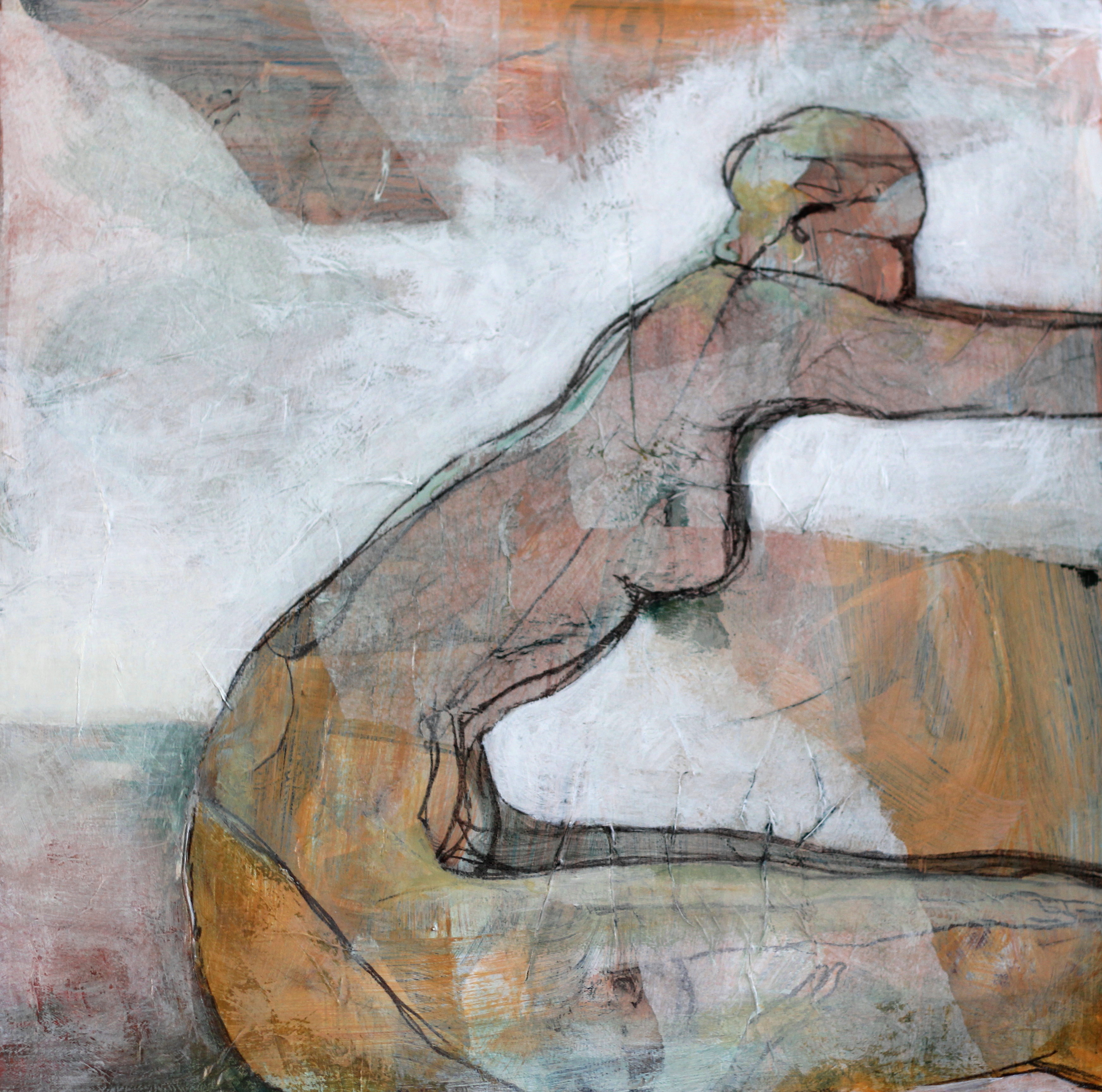
From my archives. I call this painting, "Alki."

From my archives. I call this painting, “Alki.”

Alan and I talked today. We are planning our upcoming Summit in Holland in June. Our conversations are always as wide-ranging as they are deep dives into sense making and soul. There seems to be no horizon that we won’t step towards, no secret passage that we won’t explore. This has been true since the moment we met. We’ve always been verdant collaborators. We joked that someday clients will hire us just to listen to how our minds spark each other. And, given our conversation today, we’d be worth every penny. We are both in the business of facilitating perceptual shifts and transformation so we do it for each other. Our planning sessions are a festival of insight upon insight, shift within shift. Together, we are innovation squared.

Recently, I shared a short TED talk by neurologist V.S. Ramachandran about mirror neurons and how deeply and concretely we are connected despite our belief/experience that we are separate. It came up again for me because during our call Alan and I discussed the waves of far-reaching impact that any simple action or word generates. Paul Barnes used to say to young actors, “Never underestimate the power you have to influence another person’s life.” Most of us are unaware of the impact that we have on lives that we never directly touch. For instance, I have had great teachers in my life and I carry their work forward in every word I write and every group I facilitate. My teachers will never know the many lives they touched and continue to touch. And, neither will I. And, neither will you. The best we can do is know that our actions matter, our thoughts matter, our intentions matter. We are more powerful than we understand.

No one lives in a vacuum. No one creates without influences. No one has a purely original thought. In fact, if you grasp what V.S. Ramachandran is addressing, no one thinks or feels independently of others. We are not as isolated or as separate as we believe ourselves to be. We have to work at separation. We are, each of us, continually co-creating (to use Alan’s term) our world in every moment of every day. What might you see if you stopped and pondered the implications of co-creation, if you took a moment and considered that you are not merely a bobber in an ocean but, in fact, are the ocean? How might you read the news of the day or address your dreams if you understood that you were a participant, a dynamic part, a burning point for the ancestors, a sender of ripples through space and time, and not simply walking this path all alone?

Go here to get my latest book, The Seer: The Mind of the Entrepreneur, Artist, Visionary, title_pageSeeker, Learner, Leader, Creator…You.

Or, go here for a hard copy.

Tell The Story

"...and for everything which is natural which is infinite which is yes..." e.e. cummings

“…and for everything
which is natural which is infinite which is yes…” e.e. cummings

Three hundred and sixty six days ago I met Kerri. What I thought was going to be a casual meeting, the beginning of a new friendship, was much more than I anticipated though I didn’t really understand the scope and depth of our relationship until three hundred and sixty five days ago. On that day, exactly one year ago, I went with her to experience a Taize service. Taize is a meditation service and she was guiding the music. I sat with her during the Taize and, in a single moment, on a specific word of the Lord’s Prayer, we had an experience so potent, so mystical that a year later I still am unable to explain or comprehend it. Our lives changed in an instant. The moment was so powerful that we sat in the church for hours after the service. We couldn’t move. We couldn’t leave that space.

Yesterday, we both cleared our calendars and spent the day telling the story of our year. Our telling was not for reminiscence. It was not like a new year’s review of things past. It was not a measure of how far we’d come. It was elemental. It was the kind of telling that communities used to tell when they renewed themselves. It was the kind of telling people used to do to define themselves. It was story as a sacramental act. We visited the fire and the transformation, the earth and the necessity of rooting, the water and the miracle of flow, and the wind of inspiration and ancestry. We generated by regeneration.

So, I offer this as an exercise: give yourself a gift, take some time, and tell the story of everything you experienced on this earth, in this life, over the past three hundred and sixty five days. Visit the awe, the disappointment, the hurt, the joy, the boredom, the loss, the discovery, the exhaustion, the wonder, and anything else that affirms your life as unique and gorgeous. No one else walked the path you walked. No one else can or will walk the path you walk. See it. You’ll be amazed.

Go here to get my latest book, The Seer: The Mind of the Entrepreneur, Artist, Visionary, title_pageSeeker, Learner, Leader, Creator…You.

Or, go here for hard copies.


Make Nonsense

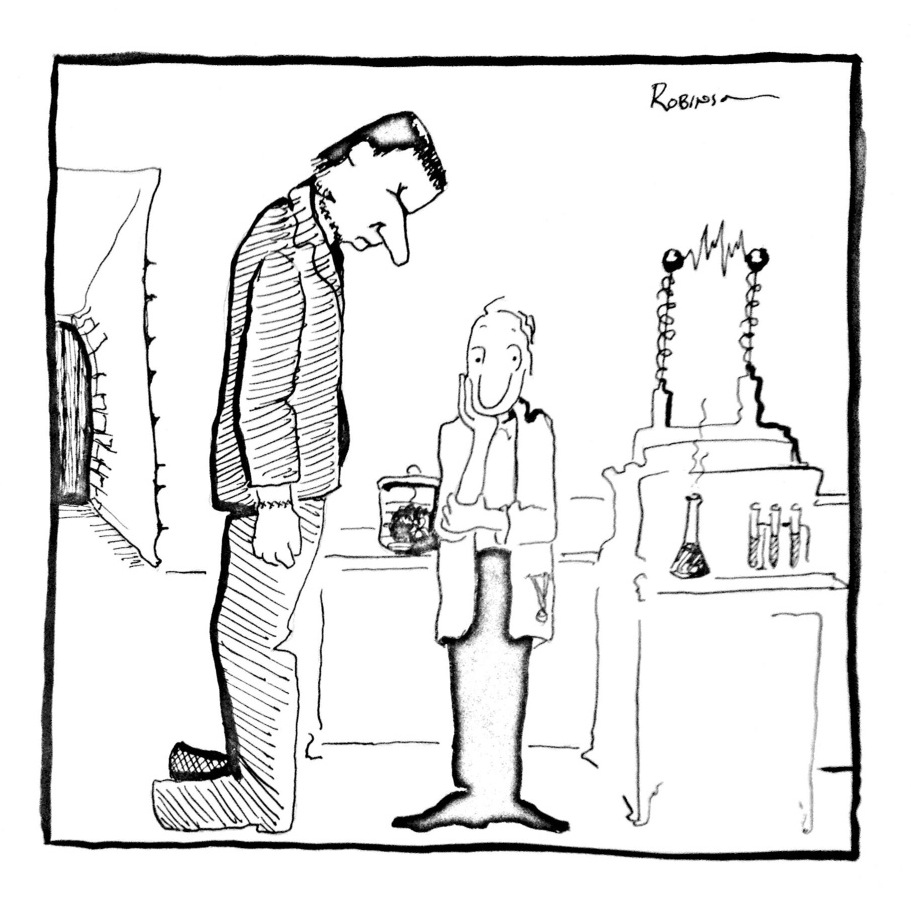
from the Flub cartoon series. Do you catch the joke.

from the Flub cartoon series. Do you catch the joke?

Life just gets weirder and weirder. That’s part of what I love about it. Many years ago when I was full to the top with frustration, Doug told me that my real problem was that I wanted life to make sense – and it doesn’t. Truer words were never spoken! Stop trying to make sense of things and most of life’s frustrations dissipate. Any good innovator or creative type will tell you that what they do is completely unreasonable. Buddhists call this state on nonsense beginner’s mind.

Sense making is often referred to as Reason. Parents are occasionally overheard in grocery stores pleading with their screaming child, “Be reasonable!” Couples married for years make the same appeal when they are not getting what they want from their spouse.

In some circles, sense making is known as Rational Thought. Useful words and necessary when getting onto an airplane (without Rational Thought, you’d necessarily confront the senseless act of getting into an aluminum tube and hurtling through space at 37,000 feet)!

If you are lucky, the more you live, the more you realize that meaning is all made up. What is reasonable to you may be unreasonable to me. What makes sense to me might not make sense to you. What is true for you may be untrue for me. The idea that there is a single overriding truth is the source of much frustration in the world and has created horrors throughout recorded time. The notion of a single truth makes seekers of us all as if we might find truth sitting in a cafe sipping wine. The notion locates truth outside of us and renders personal truth subject to someone else’s definition.

All seekers inevitably come to this question: “What is truth?” Asking the question usually brings the external-truth pursuit to an end. I’ve learned that no matter how diligently I’ve sought truth or ‘the answer’ in the eyes of others, I am only capable of finding what I seek by looking inside myself. Like all seekers, I find truth within. I find truth when I listen within to the still-small-voice. All the trouble I’ve ever created for myself came when I stopped listening to that voice.

Quinn told me years ago that, “Nothing makes sense.” He smiled. He was a master of double meanings. Where he less given to fun he might have said that people are story makers and given to make sense out of nothing. It’s a magic trick. The problem, as Doug pointed out to me years later, comes when we think the sense exists before we arrive.

Go here to get my latest book, The Seer: The Mind of the Entrepreneur, Artist, Visionary, title_pageSeeker, Learner, Leader, Creator…You.

Go here for hard copies.


Know What Matters

A day with Beaky

A day with Beaky

When you leave Florida driving north there is a stretch of highway in Georgia that is littered with billboards advertising everything from the adult superstore to the second coming. The spectrum is as breathtaking as it is comical.

I’ve driven this stretch three times during the past several months and each time I wonder what an archeologist from some distant future might deduce about us if this stretch of highway was the only remaining fragment of evidence of our culture. A few years ago I spent a day in Herculaneum, the other city buried with Pompeii on the day that Vesuvius erupted. Like Pompeii, it was remarkably well preserved. We have so much writing from that time, we have eyewitness accounts, we have museums stuffed with artifacts and art. While I walked the streets of Herculaneum on that hot summer day, I read about the social norms, the exercise practices, food preparation, infrastructure, and what we assume a normal day was like. I also read, based on the placement of the bodies, what that most unusual day, the day the world ended, must have been like. There was a timeline of events. All the while I couldn’t help but wonder if our study of their culture could only reach the superficial, the top layer, the economics. We can sort through the garbage and garner much about daily practices. To study is not the same as knowing. What we know is minute when compared to what we do not know. The timeline told me little of the terror. It told me nothing of the love. The economic statistics told me less than the plaster cast of the old couple huddled together, arms wrapped around each other on their final day.

I recently watched a short TED talk by Ric Elias who was on the plane that a few years ago landed in the Hudson River. He talked about his thoughts as the plane went down, what he learned about life when he faced his death. He was surprised that there was no fear in dying but there was great sadness for all the things he would miss, all the relationships he would leave behind. He learned from that experience that the only thing in his life that mattered was being a good father. He also decided to clear all the toxic relationships and never again participate in negative energy. He said that he gave up being right. I thought of him as I drove the billboard gauntlet a few days ago. The archeologist from the distant future would glean much about our economics and ponder our obvious confusion. She would write studies useful for the tourists that would travel halfway around the world to visit the site of a once thriving community. The tourists would walk the stretch of ancient freeway, gape at the billboards and speculate about our addictions. But they would know nothing of the people who everyday drove that stretch of road with their families, or about people, like me, who drove more than a thousand miles to spend a day or two with a 93 year old woman named Beaky who can tell a story better than almost anyone I’ve ever known.

Go here to get my latest book, The Seer: The Mind of the Entrepreneur, Artist, Visionary, title_pageSeeker, Learner, Leader, Creator…You.

Go here for hard copies.


Trespass And Forgive

from my Yoga series of paintings.

from my Yoga series of paintings.

I’m back in the choir loft staring at the stained glass window. We’re having a conversation about the word ‘trespass;” it has lately been central to my meditation.

When I was a kid my cousin, Randal, and I used to trespass a lot. There was an old abandoned house built on a hillside. It had a big fence around it to keep us out. It also had the best tree swing in the world so it was worth the breach. Using the back porch as a launch pad, we could swing out over the hillside and let go, falling into a pile of mattresses and foam rubber stacked by all the trespassers. Many times we ran or hid when the police came to shoo us away, always returning when the coast was clear for another swing. It was thrilling.

I’ve trespassed a lot this past year, not into abandoned properties but into places within myself that I had erected fences, places I was not supposed to go. That is the necessity of growth. Transformation always requires a trespass. In stories it is the equivalent of leaving home and going where you are never supposed to go, the place where the monsters live, the place where the entire society (your psyche) tells you never to go. And, so, it becomes the one place that you must go to grow. It is usually ugly and messy and filled with betrayal – and that is the point: all the order dissolves into chaos so that a new order might emerge.

And, in the trespassing within, we trespass against others, especially against people we cherish. They are part of the old order. When the internal order dissolves, the outer order dissolves, too. That is also ugly and messy and filled with betrayal. There is loss of friendship. Love is tested.

My stained glass window tells me that forgiveness – of self and other – is a necessary step on the path to the new order. Trespass is a wrecking ball. Trespass is thrilling. The cops in the head (to borrow a phrase from Augusto Boal) will drive by to run you off or make you hide. The cops in the head will tell you that you are not safe or that you are doing damage that cannot be repaired. Fear wears a badge of authority. Fear wags a finger and calls you traitor, liar, or coward.

Trespass makes all things true and nothing true; that is the point of chaos. All location points disappear. My stained glass window tells me that forgiveness is new location point. It is an anchor. It is a sign that the new order, the butterfly, is emerging from the mush of chaos. Just as trespass is an essential movement away from the known, forgiveness is essential to return home. And, in story terms as in life, when you come home, finally and at last, after all of the trials and all of the betrayals, after all the mess and ugliness, you are new, so home is new, too. When you trespass, leave, and return, you find that there are no more fences and no more badges keeping you out. You find that the swing is available anytime. Love is reformed and everything becomes possible.

Go here to get my latest book, The Seer: The Mind of the Entrepreneur, Artist, Visionary, title_pageSeeker, Learner, Leader, Creator…You.

Or, go here for hard copies.


Hide The Horse

from my archives. This one is called 'Angels At The Well.'

from my archives. This one is called ‘Angels At The Well.’

I first learned this story prompt from Rick Stone at The Storywork Institute: I come from a people who (fill in the blank), and from them I learned (fill in the blank).

Rick’s story prompt was with me when I awoke this morning because I’ve lately been thinking about my grandma Sue. Kerri and I just started rehearsals on our Back To Center concert series and for some reason Grandma Sue has been present when we rehearse. She passed away several years ago and I adored her. She was small in body but big in spirit. Over the weekend my mother said of her mother, “She took everything in stride and adapted to whatever came her way.” Grandma Sue did not resist her lot in life, she made the most of it. She had fun. She created fun.

I’ve been rolling over and over in my mind a specific story about her that happened before my time on this planet. The shorthand goes like this: the glue factory was coming for an old horse that lived in the pasture next to her house. She knew the truck was coming so she hid the horse in her kitchen.

I grew up playing in her house. I know her kitchen. What makes the story miraculous to me is that 1) her kitchen was teeny and 2) you had to climb some stairs to get from the back door into her kitchen. This tiny woman managed to get an old horse through her back door, make a right hand turn, and climb some very narrow stairs. And then she “hid” it from the owner and the glue factory search team.

I do not doubt the truth of this story for a moment and if you knew my Grandma Sue you would not doubt it either. She was a champion for the underdog, a lover of the small moment, a believer in the extraordinary in the ordinary. She lived from her heart and not her need to make sense. What do you do if the sweet old horse next door is in imminent danger? Anything you can.

This morning, as I awoke, I was again thinking of my Grandma Sue and Rick Stone’s prompt came to me. I smiled because I come from a people who act on what they believe- against all odds. And from them I learned moxie and perseverance.

Go here to get my latest book, The Seer: The Mind of the Entrepreneur, Artist, Visionary, title_pageSeeker, Learner, Leader, Creator…You.

Or, Go here for hard copies.

Love Yourself Better

this one is from the archives. I painted this 10 years ago.

this one is from the archives. I painted this 10 years ago.

He said, “The current goal is to love myself better.” And then he added, “Not so much a goal but something that needs teaching from our own mind.” His statement begs a great question, an ages old question: Can the mind teach itself? Really, the question is can the mind see itself clearly enough to teach itself?  Or, the question within the question: Can the mind teach itself to love itself? I scribbled the questions in my notebook and beneath them I wrote, “Is love teachable? Is love reachable through the mind, especially self-love?

We’d been chatting for a while and had covered a lot of territory, from Monte Blanc pens to typewriters to soap use around the world, clean water, the difference between good and bad scotch, the shapes of the 50 states and how they might influence personal identity and we’d somehow wandered into the epicenter: self-love.

His statement nailed the universal dilemma perfectly. It was a declaration of separation. The self watching and wanting more for the self. The separation is in the language: to love myself better. I don’t know anyone who hasn’t made this statement. Which part of the self will better love the other part of the self? Which part of the mind will teach the other to love?

It is where myth meets the everyday. Every human being who has walked the earth has wrangled with separation and the yearning for self-love (re-connection to self, unity). The human journey is a walk from separation (birth, if you want to take it literally) to reunification (death). The story lives in mythologies the world round. If we were still willing to read our mythologies (religions) metaphorically, we’d see it. For instance, being expelled from the Garden of Eden for eating from the tree of knowledge is the story the ancients told of the experience of separation. The inevitable bite of apple from the tree of knowledge brought duality consciousness: male/female, us/them, mine/yours, haves/have-nots, me/you. Separation. The rest of the story, not often told, is how, through out the rest of our lives, we seek the Garden where there lives a second tree: the tree of everlasting life (unity). We journey from knowledge (separation) to everlasting life (reconnection). The death need not be literal. To die to the self is necessary to experience the SELF.

Here’s the great paradox: loving another person is an act of self-love. The path to self-love is found when we serve something bigger than our selves. Think about it: the movement is always from separation to joining, from isolation to connectivity. The obvious question is, “Connectivity to what?”

Self-love is not found when the mind teaches the mind but when the mind gets out of the way of the heart. The love is always there. Love is never missing. Self-love reveals itself when the definition of self grows beyond our own skin. According to our latest neurological science, we experience ourselves as separate because we dull ourselves to our fundamental connectedness to others. In other words, we cultivate a story of isolation and then set about the real work of our lives: to see beyond what we think.

And then he said, “You know what else I just realized?”

“What’s that?” I asked.

“I just landed myself in a blog post.”

Yep.

Go here to get my latest book, The Seer: The Mind of the Entrepreneur, Artist, Visionary, title_pageSeeker, Learner, Leader, Creator…You.

Or, go here for hard copies.

Be A Team

can you see the team boosting the child? I have many of these and will soon begin intentionally pursuing this form

can you see the team boosting the child? I have many of these and will soon begin intentionally pursuing this form

Many years ago Judy gave me a book by African writer Malidoma Some. He wrote that, in the village where he grew up, there were no locks on the doors. In fact, there were no doors. The people of the community respected the possessions and privacy of others. Locks were not necessary. The community cared for the health of its members so its members cared for the health of the community. From his point of view, a society that needs locks on the doors is a sick society. Locks are sign of communal breakdown.

I’ve been thinking much about sickness and the need for locks as I prepare to do a workshop for organizations about effective teams. I’ve done too many of these workshops not to recognize that the need to build teams is a sure sign of an unhealthy community. In Malidoma Some’s community, people were aware of and acted from a consideration of the health of the whole. Loyalty begets loyalty. “Acting for the good of the whole” is a great working definition for a team. It’s all you need to know to nurture great teams: make sure everyone in the organization, from the top to the bottom, is caring for the health of all the members. Make sure the choices are made for the good of the whole.

An organization that needs to team build is like a society that needs locks: most organizational systems support a philosophy of “every man and woman for themselves” while the executive suite needs cooperation and compliance to get the job done. No amount of team building can transcend compensation for individual merit. Once, a CEO asked me, “How do I get them to do what I want them to do?”

The short answer: you don’t.

A healthy team, just like a healthy community, requires no leveraging to act. It requires no policing. A team is a not a “thing.” A team is a relationship and just like a sports team or a theatre troupe, everyone needs to feel safe to really bring their game. They have to know the team cares for them as much as they care for the team. Many years ago, while sitting in a jury pool, the judge asked us, “Why do people resent being called to serve?” A lovely older woman raised her hand and replied, “The government offices are inaccessible and unhelpful when I need information or support. Why should I be happy to serve a system that wants nothing to do with me until it needs my money or someone to sit on a jury.” The rest of the jury pool applauded. When loyalty is a two-way street, teams form naturally. When loyalty is a given, people quite naturally offer their service to something greater than themselves.

There are a few other elementary things necessary for the relationship known as, “team,” like a common story (a common center) and a clear intention, but they are not possible when the metaphoric doors need locks. “Team” is something we are, not something we build or do.

Go here to get my latest book, The Seer: The Mind of the Entrepreneur, Artist, Visionary, title_pageSeeker, Learner, Leader, Creator…You.

Or, go here for hard copies.


Dream It!

a blast from the past. A self portrait of yearning from long ago.

a blast from the past. A self portrait of yearning from long ago.

[continued from Step Into The Dot]

Standing with both feet in your life means you get rid of Plan B – or at least to put Plan A and Plan B in the right sequence. It has been a source of wonder for me why people (including myself at times) pour their energy into the back-up plan before they jump head first into their dream. Dreams rarely seem practical. Plan B always seems practical. In fact, that is the role of Plan B: lower the bar so it is easily cleared.

I’ve mentioned before how often in coaching relationships I hear the story of people diligently building their art studio but never entering it. Or, if they allow themselves to enter the creative space, they sit, frozen, unable to pick up the brush or the camera. It is dangerous to entertain the freedom that comes with dreaming. It’s as if we allow ourselves to pull back the covers, peek at the dream, to get close enough to feel the heat of it, but not close enough to ignite it into possibility. It is a special kind of pain to delay a dream. It satisfies the desire to want it but not pursue it. It affords the soothing notion of, “ I tried,” or the devastating notion of, “It wasn’t realistic.”

Kerri and I are bringing our work together in a new form: Be A Ray!

Kerri and I are bringing our work together in a new form: Be A Ray!

This is why Kerri and I are combining our performance, teaching and storytelling gifts in a palate of offers we’re calling Be A Ray! Dreams deferred cause energetic eddies; they make people swirl, putting time and energy into actions that feel good (like building a studio) but do not move the intention forward. To stop the spin is to see the pattern of deferment. It is to see the story beneath a lifetime of actions that lead everywhere but in the direction of the dream. In our vernacular, to “Ray Up!” is to stop the spin, to look squarely at the dream, and to seize the second chances. It is to claim the dream and pursue it.

Dreams need not be realized. They only need to be pursued. In fact, a proper dream pursuit is never realized just as an artist is never finished. Like every good art process, the dream changes with the pursuit. It grows and morphs until the pursuer and the dream unite. There is never an outcome, only a joining, a blending of dream and dreamer. And, this blending is the reason most people go with Plan B. Dreams can’t be controlled and neither can dreamers once unleashed. In other words, the first step in Raying Up! is to relinquish control. Pick up the brush and throw paint; let go of outcome and live in vital process. Let go of what anyone else thinks of your dream and dream it.

Go here to get my latest book, The Seer: The Mind of the Entrepreneur, Artist, Visionary, title_pageSeeker, Learner, Leader, Creator…You.

Go here for hard copies.

Shift The Frame

another of my illustrations for Lucy & The Waterfox

another of my illustrations for Lucy & The Waterfox

I’ve been sitting in my fair share of waiting rooms, coffee houses, and gathering spaces lately and so I’ve been eavesdropping on conversations. Who knew there were so many problems in the world! Based on my public space sample you’d think that things were dire. The news of the day concurs with the casual coffee shop discourse. Problems abound. Wars rage, resources dwindle, political leaders squabble, corporations pillage, siblings rival, and people cut each other off in traffic! As my friend Albert used to say, “Good heavens! Just drop the bomb, already!” With so much devoted suffering, so much impending doom, ill intent and disaster anticipation, it’s a wonder we can sleep or step out of our houses in the morning.

Why is this the story we tell? We talk about life as if it was happening to us, as if we play no role in making things happen. I used to make it my practice to count the acts of kindness I saw each day and compare them with my count of acts of cruelty. There was never a day when the cruelty outpaced the kindness. For every example of road rage there were 20 instances of road generosity. In fact, in my count, the acts of kindness so far outstripped the cruelty that it became ridiculous to keep the count. We are far more kind than cruel, far more capable than inept, far more connected than detached, yet our narrative reverses the order. We tell a story of separation, of dog-eat-dog, of the inability to cooperate.

Many years ago the good folks at Disney conducted a study and found that when people had a bad experience at Disneyland they’d tell on average 18 other people. If they had a positive experience at the park they’d tell 3 people. That’s a significant imbalance. We seem reticent to share our joys and adept at sharing our fears.

It’s as if we are addicted to conflict and, well, we are. We delight in defining ourselves by our problems. It’s a pattern. More, it’s a story imperative. We are, after all, storytelling beings. We never cease storying ourselves through our inner monologues and outer dialogues. We justify. We defend. We interpret. In general, stories – lived and scripted – are driven by conflict; conflict moves the story forward. Stories are made meaningful by overcoming the forces of opposition. Our lives are made meaningful by the metaphoric mountains we climb. We mistakenly define a good life as the absence of conflict. Conflict is necessary; it is our relationship to conflict that keeps us hooked on the drama like so much sugar.

There is a significant threshold, a passage into health and power that happens in a life when the narrative changes from, “things happen to me,” to a story of, “I make things happen.” Conflict is present in both story frames. In the frame of, “things happen to me,” conflict is an oppositional wind. In the frame of, “I make things happen,” conflict is fuel, we no longer are at the mercy of the forces but in alignment with them. The metaphoric wind is at our back moving us forward.

When we make this story frame shift, we no longer need the drama; we no longer seek to fix things. We see a different set of options. Literally, we see a different set of possibilities. We create and live from a different pattern. We see choices instead of victimization. We see active participation, conflict as challenge, engagement, and opportunity.

The, “I make things happen story,” necessitates responsibility: wars can’t just happen, resources can’t just dwindle, political leaders just can’t squabble, corporations can’t just pillage. We would tell a story of “we,” and take the step into maturity that the story of, “things happen to me,” obscures.

Go here to get my latest book, The Seer: The Mind of the Entrepreneur, Artist, Visionary, title_pageSeeker, Learner, Leader, Creator…You

Or, go here for hard copies (Amazon)