

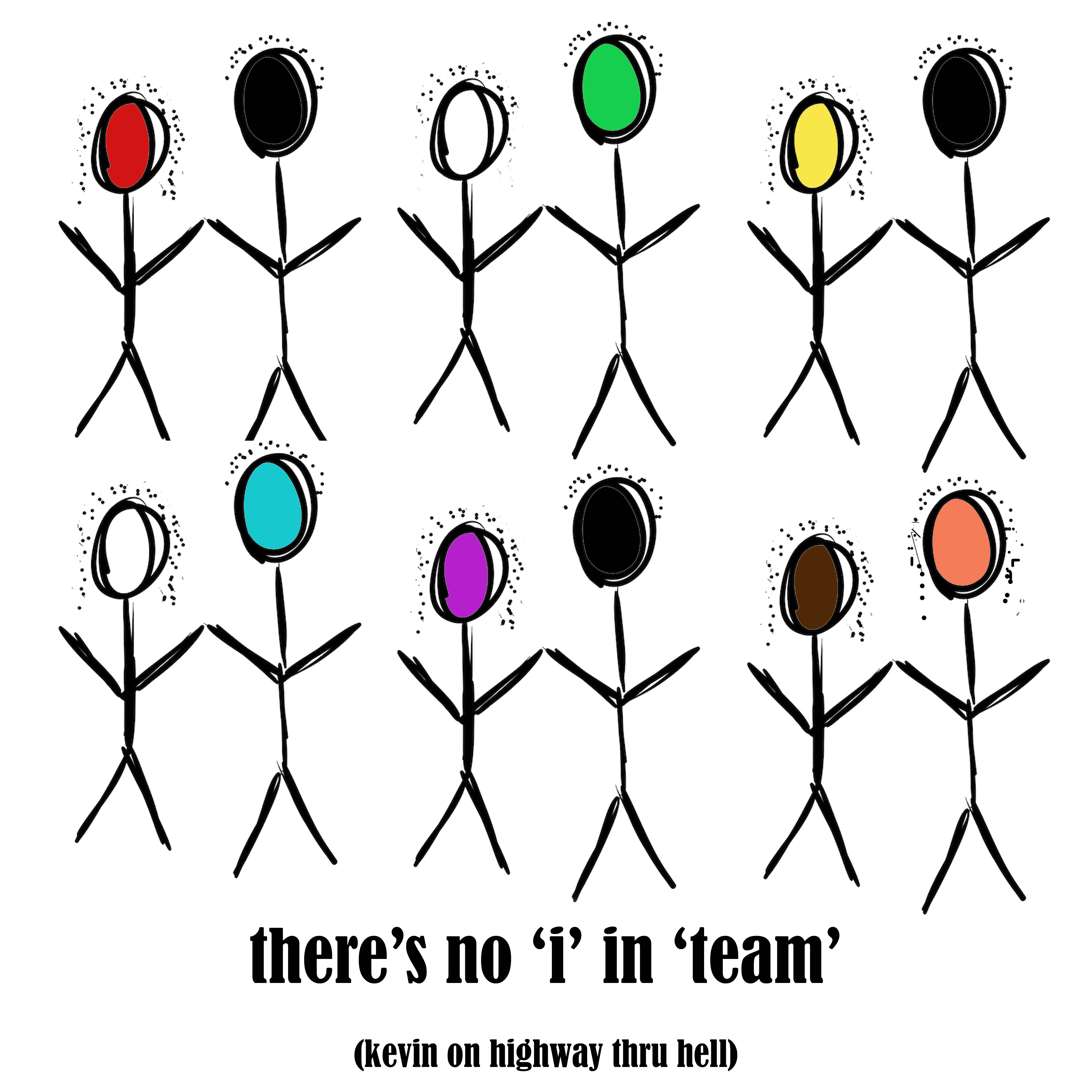
When the world is just too much to ponder, one of our favorite bits of escapism is to catch an episode of Highway Thru Hell. Heavy rescue tow trucks working miracles clearing the highways of impossible wrecks. Flipping large semi-tractor-trailers, pulling them off of icy bridges and out of ditches. The physics of their work is mind-bending. Angles of lift, leverage, and thrust. Marvels of nuance in heavy metal. It is a symphony of paradox: crude meets delicate, tender masculinity.
On the surface, it seems an odd choice of wellsprings to refill our faith in humanity. But, every time we indulge in our flight from the news-of-the-day, I find myself whispering, “Unbelievable.” Not only do they willingly wade into impossible messes, they do it with a singular and clear understanding: they are serving a greater good. They are trying to open or keep open a highway. Connectivity. Commerce. Community. Like any doctor removing a blockage, they are servants to communal flow. I think that is why we visit them on the highway.
At the shop, they work out their pecking order. There is no lack of flexing muscles and man-drama. But, once they are called to a crash, all the “I” flees the scene. There are police, and flag people. There is traffic backed up for miles; each and every car and truck a person with a place to be. And the tow truck operators know it. They talk about it. Their service outruns their egos. They do not hesitate to call for help. They make choices based on the needs of others. The fantasy-world of “I” dissolves into the hard reality of “Us.”
In that hard reality of “Us,” you’d be hard-pressed to find a more thankless job. They work long hours in extreme weather. The conditions are dangerous and dirty. They clear the wreck, get back into their trucks, and move onto the next, with little or no thanks from the community they serve. Yet, they show up everyday. They take extreme pride in doing their work. There is a mastery that they acknowledge in the older drivers and strive to achieve it themselves. They learn from each other. They mentor each other. They celebrate each other.
They.
When Kevin, one of the tow truck operators, driving away from an exhausting job that took many people and many hours to complete, said with tired satisfaction, “There’s no ‘I’ in team,” I thought, that’s exactly why I escape from my highway thru hell to this Highway Thru Hell.
These Highway Thru Hell guys are plugged into the simple reality of existence. They know unequivocally that no one walks this earth alone. They know that their work on this earth, amidst the mess and chaos and dirt, is about keeping the flow going, and that requires an “I” that lines up behind service to “They.”
read Kerri’s blog post about NO I IN TEAM

Filed under: Identity, Merely A Thought Monday, Metaphor, Perspective, Uncategorized | Tagged: British Columbia, community, connectivity, david robinson, davidrobinsoncreative.com, flow, greater good, Heavy Rescue, Highway Thru Hell, humanity, I, Jamie Davis, Kerri Sherwood, kerri sherwood itunes, kerrianddavid.com, kerrisherwood.com, team, they, tow trucks | Leave a comment »





 The Direction of Intention