Greet The Day

photo-1Behind Beaky’s house is a retention pond. There is an alligator that occasionally breaks the surface and when it does I say, “Looking for poodles…” Kerri punches my arm and smiles.

The house is nearly empty; Beaky moved into assisted living almost 2 years ago and slowly her possessions have been packed or passed on to family members. It has been a quiet attrition, a gradual acknowledgment of the step into the next phase of life.

We stay in the house when we visit. We sip our coffee, sit in camping chairs, and watch the waters of the pond change with the progress of the morning sun. A cormorant comes each morning. It stands at the pond’s edge, spreads it’s wings, and drinks the sun. “It’s as if it is opening its heart to greet the new day,” Kerri says.

She tells me that the cormorant comes to the exact spot where, a year ago, her family gathered to spread her father’s ashes. A single cormorant came that day, too. In the middle of the rite, the bird landed, stepped into the setting sun, and spread it’s wings. Her father loved the pond. It was as if the spirit of her father came as the cormorant. It opened its heart. It greeted the sunset.

The news with Beaky is not good. I watched Beaky’s face as Kerri wheeled her from the doctor’s office. Beaky is no longer living, as she says, “indefinitely.” Her path is now definite (as I suppose all of our paths are truly definite even though we rarely consider it so). She looked relieved. She looked easy and quiet. Beaky said, “I’ve lived a good life! I’m ready.”

Now, as is true with abundant life, there is metaphor upon metaphor. There is the house. There is the alligator breaking the surface. There is the cormorant spreading its wings. There are cycles of life, passing moments, possessions never really possessed. There are stories made and stories lost. There is a family with an open heart, watching the progress of the sun, ready to greet the day.

title_pageGo here to buy hard copies (and Kindle) of my latest book: The Seer: The Mind of the Entrepreneur, Artist, Visionary, Innovator, Seeker, Learner, Leader, Creator,…You.

Or, go here for all digital forms of The Seer


OR! Go here for fine art prints of my paintings

I call this painting, "Canopy"

I call this painting, “Canopy”


Leave Your Ghost

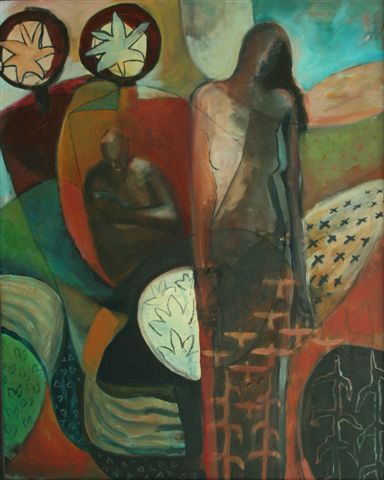
from the archives. I call this painting "Demeter."

from the archives. I call this painting “Demeter.”

As Alan said, this year for me is a year of departures. First Tom, then Kathy, Bob, and Doug passed; mentors all. Earlier this month Casey, who lived a long season and once told me that heaven didn’t want him and hell wouldn’t have him, finally found his way out of this life and into his proper place in the mystery.

When I was a boy my favorite book was an old college text of my father’s on comparative religions. It was moldering on a shelf in the basement with other long forgotten books. Finding it was like uncovering buried treasure. I fell into it, reading and rereading it. Among other things, it helped me understand that religion was not fact but a cultural expression of universal experiences. Human beings have to deal with the enormity of existence (who am I?), birth (where do I come from), death (where am I going?), and everything in between (what’s my purpose?). Human beings deal with the enormity of existence like they deal with everything in life: they story it.

Since there has been so many significant departures this year I’ve been doing some reading about death and dying. Lately, I’m reading Deepak Chopra’s book, Life After Death. He weaves the book around a parable of a young woman who must confront Death. The woman seeks the help of rishi, a wise contemplative who lives in the forest. In one of my favorite sections of the parable, the rishi introduces the young woman to ghosts. The first is a toddler; the second is young girl. The woman soon recognizes that the ghosts are her past; they are the phantoms of various stages of her own life. The rishi tells her, “Every former self you have left behind is a ghost. Your body is no longer the body of a child. Your thoughts, desires, fears, and hopes have changed. It would be terrible to walk around with all your dead selves holding on.”

He teaches her that death has been with her every moment of her life. “You have survived thousands of deaths every day as your old thoughts, your old cells, your old emotions, and even your old identity passed away. Everyone is living in the afterlife right now. What is there to fear and doubt?”

title_pageGo here for my latest book

Go here for fine art prints of my paintings.

Have The Conversation

A painting I did twenty years ago of my dad. I call him Columbus.

A painting I did twenty years ago of my dad. I call him Columbus.

When Bob died I wrote his wife, Ruby, a note saying that I’d give anything to have another conversation with Bob. Just one more conversation.

When Jim wrote to tell me of Doug’s passing, we had an email exchange.

I signed off the email with this phrase: “Yet another conversation I will never have….” Jim answered with a warm reminiscence of Doug, a recounting of their meeting as young teachers, watching Doug navigate and ultimately heal the psychological wounds from war. Jim signed off with this thought:

War is not just hell.  It is eternal hell.  Particularly for those with first hand experience. Why the race continues to tolerate it may be the greatest mystery. Another conversation I will never have with Doug.

I remember in vivid detail the last conversation I had with Tom. He was already sliding into the hell of his dementia and knew it. He desperately wanted to tell me a story, something that was vitally important for me to know though he did not know why. I sat attentive in his small cabin home as he told me the story of the lost boy, a story that together we’d spent years developing into a play. I’d heard the story a thousand times and he no longer remembered. He forgot everything but the imperative to tell me the story, to transmit the history to me. So we enacted the ritual as our final conversation.

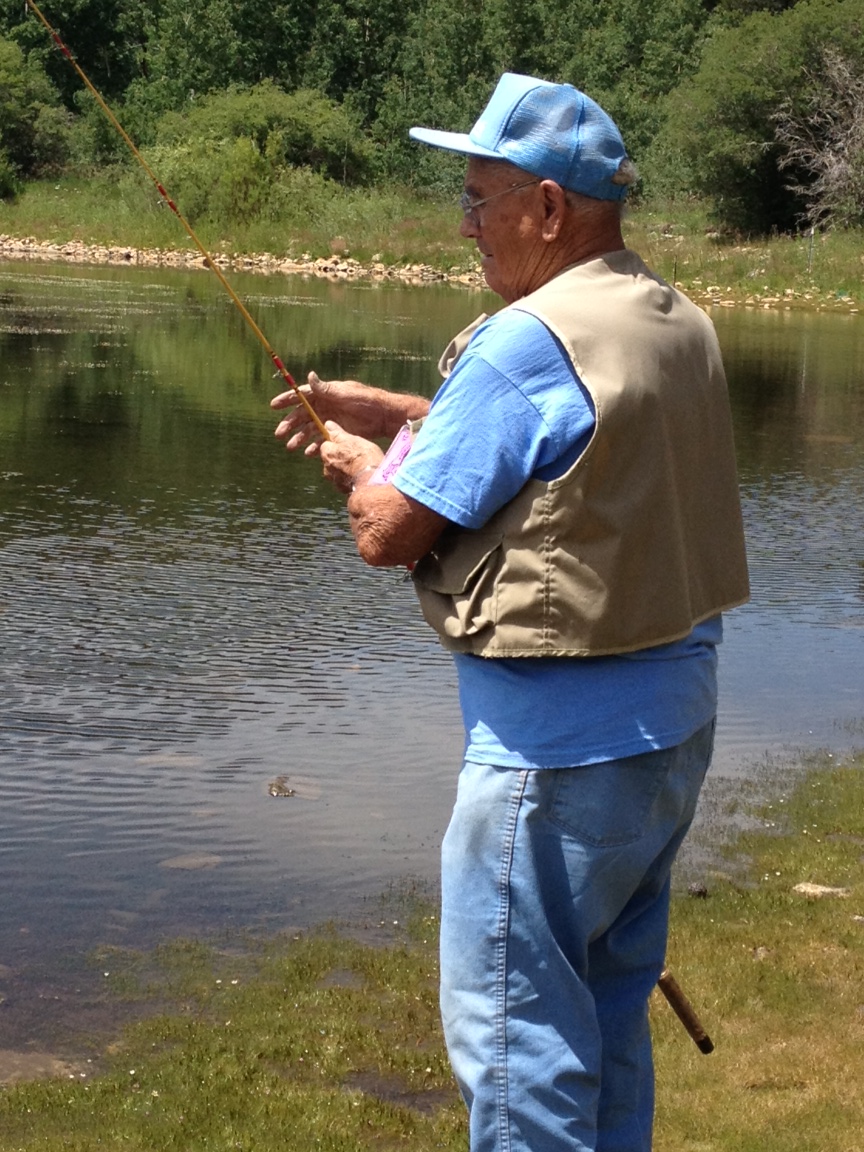
Columbus fishing at his 80th birthday celebration.

Columbus fishing at his 80th birthday celebration.

Many years ago I traveled home to spend time with my dad. I wanted to know who he was and felt as if I’d missed it, as if I didn’t really know the person behind the role. He was generous and vulnerable and spent three days with me answering all my questions, sharing the inner sanctum of his thought and being. It was the greatest gift I have ever been given and, at the same time, the greatest gift I have given myself: I asked if he would spend time with me.

One of the things I learned during those days with my dad is that there will always be the yearning for one more conversation. There is no bottom to the magic and mystery of the people that we love and who give order and richness to our world. This year I am learning that although there will always be the yearning for just one more conversation, there will of necessity be a last exchange. And, because that is an inescapable truth, there is nothing more important on this earth than to take the time, make the space, to ask, “How are you doing? What’s happening in your world?”

title_pageGo here to get my latest book, The Seer: The Mind of the Entrepreneur, Artist, Visionary, Seeker, Learner, Leader, Creator…You.

Or, go here for hard copies and Kindle.


Die To The Past

683. Join me in inspiring truly powerful people. Each day I will add a new thought, story or idea to support your quest and mine.

Today, Diane and I talked at length about dying to our pasts. She shared a potent meditation image – looking from her grave and in death no longer being invested in the limitations and attachments that previously confined her life. Her fears no longer mattered. She let go of her past and in so doing opened the way for growth and a new relationship with her future.

In story cycles, a character must leave behind all that they know in order to step into unknown territories. It is the movement away from the known, the comfortable, and the safe that is the metaphoric threshold to adventure and transformation. Leaving behind what you know is “story language” for dying to your past. Frodo will always return to the Shire but he will be a greatly changed. The Frodo that leaves on the adventure is not the same Frodo that returns. He knows too much about middle earth and himself to resume his former identity.

The caterpillar’s body does heroic battle resisting the cell replication that will eventually bring re-formation to a new way of being called butterfly. The caterpillar’s body reads the sweeping tide of change as cancer and fights back. This classic struggle within the caterpillar’s body of change meeting the conservative impulse ends when the resistance ends; the caterpillar can fight no more and surrenders the struggle. The imperative for change overwhelms the old identity; the caterpillar’s body releases the known and collapses into mush. Only then can the new form materialize and the new form is beyond the caterpillars capacity to imagine.

Diane’s meditation, Frodo’s journey, and the caterpillar’s process of transformation are the same metaphoric image. Each had to die to the past to step into the possible. The lesson over and over again, whether in story cycles, nature or human transformation, is that the new identity will always be greater than our wildest dreams. The only requirement is that we surrender the struggle, leave behind all that we know, experience the little death, and take a step.