Have A Chat With Erling

Kerri with her dad.

Kerri with her dad.

It seems as if the theme for the week is lost conversations. It occurred to me that, after writing yesterday’s post, there is, in my life, another conversation that I wish I could have but never will. And, because I never will have the actual conversation, I am reaching into the void and having another form of dialogue.

I wear on my right wrist, wrapped three times to form a bracelet, a pull chain for a light fixture that I found on a workbench. Kerri wears on her left wrist, wrapped three times, the rest of the chain. I found the chain during our first trip to Florida. We were visiting Kerri’s mom in an assisted living facility and, in the evenings, cleaning out her parent’s home. Kerri’s dad, Erling Arnson, died a year before we met, and she’s often said to me, “I wish you could have known my dad.”

I found the chain on Erling’s workbench. He was a watchmaker and a jeweler. He worked with his hands, rebuilt cars, machined new parts for things, and was the master of a quick fix. He liked to build things. He liked to tinker. You can tell much about a person by the way they keep their space and I spent a long time standing at Erling’s workbench. It had been mostly picked apart, scavenged, but the organizing principle was still in tact. He liked to re-purpose things. He liked to make things out of things; every bolt and scrap was filled with potential. I could feel (and understand) the simple joy of creation apparent at his bench.

When I saw the chain (discarded by the scavengers) I knew it would be a way for Kerri and I to bring her dad forward with us. We secured the chains on our wrists and because it is there, I think about Erling everyday. I wonder what I might have learned from him. I like to tinker, too. I like to make things.

Me at Erling's resting place.

Me at Erling’s resting place.

On the second anniversary of his death, Kerri said, “Daddy will show up, today. I don’t know how, but he will.” A few minutes later the faucet in the kitchen broke. Evidently Erling had a wicked sense of humor. As I replaced the faucet (the first faucet replacement of my life), a lengthy affair requiring a call to the neighbor for tools, I felt a deep sense of patience. I remember my grandfather telling me that a person can figure anything out if they just take the time to do it. “You don’t need to know how, you just need to give yourself the time to figure it out.”

Kerri was on the phone with her mom when I finished the job. I was feigning machismo, peacocking my plumbing prowess. Kerri’s mom said, “I think he passed Erling’s test.” She smiled and I thought, “Thanks for the help, Erling. Now, how do I fix the plaster on the ceiling?” His response: I don’t know. But, let’s figure it out.

title_pageGo here to get my latest book, The Seer: The Mind of the Entrepreneur, Artist, Visionary, Seeker, Learner, Leader, Creator…You.

Or, go here for hard copies and Kindle.

Have The Conversation

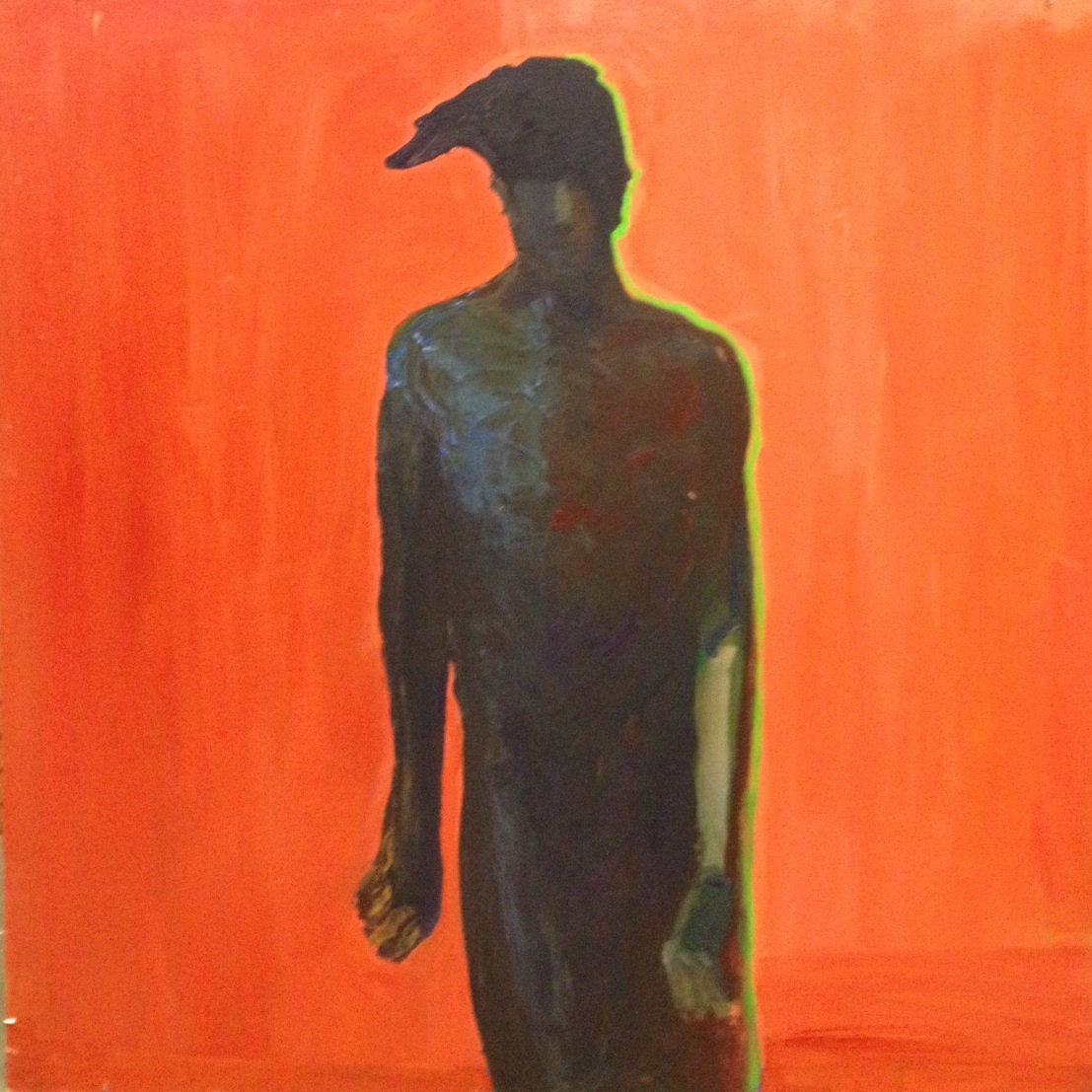
A painting I did twenty years ago of my dad. I call him Columbus.

A painting I did twenty years ago of my dad. I call him Columbus.

When Bob died I wrote his wife, Ruby, a note saying that I’d give anything to have another conversation with Bob. Just one more conversation.

When Jim wrote to tell me of Doug’s passing, we had an email exchange.

I signed off the email with this phrase: “Yet another conversation I will never have….” Jim answered with a warm reminiscence of Doug, a recounting of their meeting as young teachers, watching Doug navigate and ultimately heal the psychological wounds from war. Jim signed off with this thought:

War is not just hell.  It is eternal hell.  Particularly for those with first hand experience. Why the race continues to tolerate it may be the greatest mystery. Another conversation I will never have with Doug.

I remember in vivid detail the last conversation I had with Tom. He was already sliding into the hell of his dementia and knew it. He desperately wanted to tell me a story, something that was vitally important for me to know though he did not know why. I sat attentive in his small cabin home as he told me the story of the lost boy, a story that together we’d spent years developing into a play. I’d heard the story a thousand times and he no longer remembered. He forgot everything but the imperative to tell me the story, to transmit the history to me. So we enacted the ritual as our final conversation.

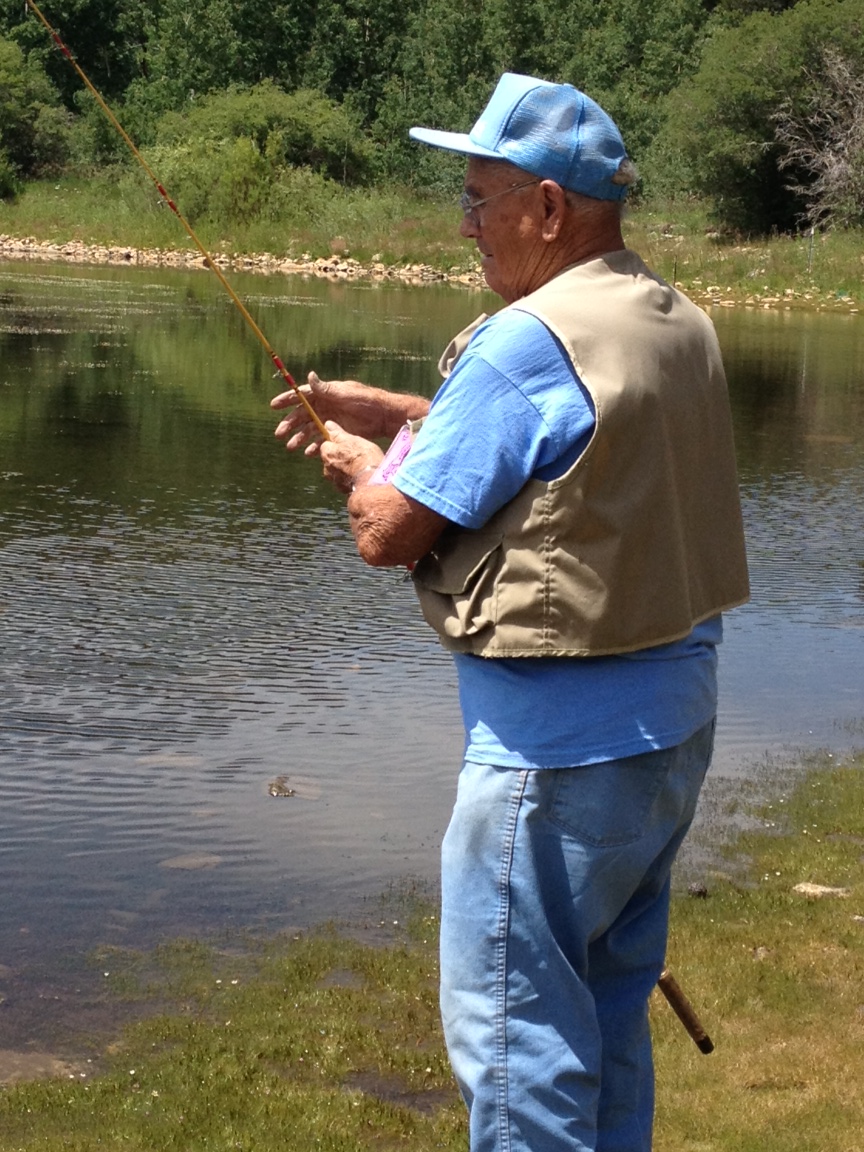
Columbus fishing at his 80th birthday celebration.

Columbus fishing at his 80th birthday celebration.

Many years ago I traveled home to spend time with my dad. I wanted to know who he was and felt as if I’d missed it, as if I didn’t really know the person behind the role. He was generous and vulnerable and spent three days with me answering all my questions, sharing the inner sanctum of his thought and being. It was the greatest gift I have ever been given and, at the same time, the greatest gift I have given myself: I asked if he would spend time with me.

One of the things I learned during those days with my dad is that there will always be the yearning for one more conversation. There is no bottom to the magic and mystery of the people that we love and who give order and richness to our world. This year I am learning that although there will always be the yearning for just one more conversation, there will of necessity be a last exchange. And, because that is an inescapable truth, there is nothing more important on this earth than to take the time, make the space, to ask, “How are you doing? What’s happening in your world?”

title_pageGo here to get my latest book, The Seer: The Mind of the Entrepreneur, Artist, Visionary, Seeker, Learner, Leader, Creator…You.

Or, go here for hard copies and Kindle.


Share A Poem

An old painting from my archives. This is "Hermes."

An old painting from my archives. This is “Hermes.”

One day, out of the blue, Doug came out of his office, stood at the door to my office and asked me to follow him. Doug was a bull in a china shop, gruff on the best of days, and his request was more of a command than an invitation. He’d spent his early life in the military, did two tours in Vietnam, and a piece of him was still fighting that war; the rigor, structure and discipline he’d acquired as a soldier was still saving his life. I’d worked with him long enough to know that he was soft to the center. Doug was a big heart wrapped in pit bull clothes.

I followed him back to his office and he asked me to close the door, a sign that usually meant battle was to ensue. I closed the door and sat opposite his desk, curious that the lights were off. The dim room was illuminated by a single thin window partially obscured by a bookcase. He sat. He took a deep breath and looked around as if he was worried that others might be listening, and said, “I want to show you something.” He took another breath, slid open the bottom desk drawer, and pulled out a book so worn and deteriorated that it was barely recognizable as a book. I knew immediately what it was and caught me breath. “I want you to see this,” he said. I gently held the tattered brittle pages and read the first poem in the book and, as I read it, Doug recited it. Tears came to my eyes.

I’d heard the story of the book many times. Doug told the story when he was in pain, when one of his students was self-destructing or when he was once again standing at the edge of his own personal abyss, a place that was never far away. He told me the story each time he was trying to find a shred of humanity in his very dark world.

When Doug was on his way to his first tour in Vietnam, he was not yet 18 years old, he was angry and alcoholic, and for reasons he could never explain, he stopped in an airport bookshop and bought a book of The World’s 100 Greatest Poets. When telling the story, Doug would say, “I’d never read a poem. I hated poetry! I was nearly illiterate! But I bought that book and stuffed it in my bag.” He told me that the guys in his platoon teased him the first night he brought out the book of poetry and read it. Initially he read the poems aloud to bother his mates. They’d shout and throw stuff at him. Every night he read poems aloud. Soon, after the horrors of the day, after the fears of being killed or having killed, they asked him to read poems to them. They had favorites. They made requests. They talked about what the poems meant. They asked him to find a good poem to send to their loved ones at home. Over the year, Doug learned to recite by heart each one of those poems.

Doug told me that poetry saved his life. The book saved his humanity. That day in his office we spent nearly an hour reading poems to each other; each poem had a story, a memory. He told me that people don’t understand the reason for art, the necessity of poetry. “It’s not a luxury,” he roared, “it’s the goddamn center.” He carefully placed the book back in the drawer and pushed it closed. I thanked him for sharing it and he waved me off. The moment had passed; he closed the drawer on his sharing, too. It was too much.

That day was nearly twenty years ago.

Doug Durham

Doug Durham

Jim sent me news that Doug passed away this week. The last time I saw Doug he showed up at my apartment in Seattle just as he’d showed up at my office door: out of the blue. He sat in my living room for fifteen minutes, fidgeting, unable to sit still. “I just wanted to see you!” he trumpeted. “I wanted you to see that things are good with me!” He was deciding whether or not to open that metaphoric desk drawer. He had something to share or say but had not yet decided whether it was the right time. He had cancer even then but was on top of it.

“Well!” he announced, standing, “it was good to see you.” I asked him what he wasn’t saying and he gave me the “be careful” look. He wasn’t ready and I knew better than to push him. “Stay in touch.” I said, as he climbed into his big red truck. “You know better than that!” he smiled, waved, and drove away.

Go here to get my latest book, The Seer: The Mind of the Entrepreneur, Artist, Visionary, title_pageSeeker, Learner, Leader, Creator…You.

Or, Go here for hard copies.


Summit

A painting from the distant past. For some reason I wanted to reach deep into the archives for this post.

A painting from the distant past. For some reason I wanted to reach deep into the archives for this post.

The theme for the workshop in Holland is “team.” I’ve never been linear about how I think about anything and this time of planning has been exceptionally circular. I complimented Alan the other day; he has a genius for immediately reducing complex concepts into easily graspable models. I, on the other hand, have to circle and circle in an ever-tightening spiral in order to articulate what I see to others. I generally live in the stratosphere and have to grab ahold of a stone in order to touch the ground.

It’s been over a year since I gave much thought to the corporate world or any form of facilitation. I left it when I went on my pilgrimage. Walking away affords space and perspective. I wrote my book, The Seer, during the first months of my walk-about. It served as a shorthand story for all the things I’ve so far learned. It also served as a “letting go,” a release of all the things I thought I knew. All of my previously held sacred assumptions dissipated. What was known is now unknown. I am certain that I know nothing at all so it is the perfect time to begin a discovery process with a group of people. My worth to any group has been my perspective, my capacity to say, “I don’t know. Let’s find out together.” I need to be an outlier to be able to see. I need to stand on the margin to serve.

I’ve come to recognize that my pilgrimage is not over. It entered a different phase. It is not a path to a cathedral or holy land, it is the ascension of a summit. My lengthy walk took me to base camp merely. For many months I’ve been acclimating to the altitude and now it is time to travel toward the summit. For the first time in my life I am asking myself a better set of questions about my unique pursuit. I can see how my unique K2 is distinct from all of the other peaks. I’ve climbed other people’s mountains. I’ve helped carry lots of other people’s stuff. This peak, this summit is mine.

As I spiral in tighter and tighter, coming to understand what is so allusive about this simple word, “team,” I am amused to realize that what was once charted territory is now the outland. The wilderness into which I step is the very field I left behind. What was known is now unknown. I am certain of two things and recognizing both lets me know I am ready to move forward: 1) I know nothing at all. 2) No one summits alone.

Go here to get my latest book, The Seer: The Mind of the Entrepreneur, Artist, Visionary, title_pageSeeker, Learner, Leader, Creator…You.

Or, go here for hard copies.