Circle The Nutshell

An illustration from A Dragon's Tale by David Robinson

An illustration from A Dragon’s Tale by David Robinson

A few days ago someone asked me, in a nutshell, to describe my book. I am a circular thinker and nutshells are generally too tight for me. Also, I tend to rant (my apologies to the many of you who’ve had to sit through my bluster) even when I have no intention of ranting. Fortunately, I made concept maps as support material found at the back of the book; being required to practice concept brevity has helped me find some sense of concision.

Here is my answer to the question: The book is about how to flip into a creative mindset (actually, it’s about how to regain the fantastically creative mindset that we are all born with but that requires some explaining. It’s easier to say, “flip perspective into…” like you can change your clothes and become an innovator. And, actually, that might be true if you assumed the role that the clothes inspired. For instance, Keith Johnstone writes about a “creativity” study done in the 1960’s in which people scoring low on a creativity test were asked to dress and act like hippies. They were then asked to retake the test in their hippie role and scored much, much higher). I warned you – I’m a circular thinker.

The rest of the nutshell goes like this: The book follows 3 cycles and each cycle facilitates a perspective flip:

The first cycle is Pattern: the flip is from needing “to know” to embracing not knowing (orient to patterns of curiosity).

The second cycle is Story: the flip is from “Things happen to me” to “I make things happen” (orient as the teller of the story). This one is the big one: people become capable of fulfilling their extraordinary capacity when they see how they make things happen.

The third cycle is Choice: the flip is from identifying as a witness to life to identifying as a creator of life (orient as a participant – a bringer of life).

And, the meta-flip that runs through it is all: Have the experience first and make meaning second. This is how your brain actually works. When you fool yourself into believing that you bring meaning to an experience before you actually have it, you are either lying to yourself, dulling your senses, or protecting yourself from learning something. Innovators, artists, creators, leaders, seekers, visionaries, and learners make their meaning after they have an experience: they know that the world is new every day.

Go here to get my latest book, The Seer: The Mind of the Entrepreneur, Artist, Visionary, title_pageSeeker, Learner, Leader, Creator…You.
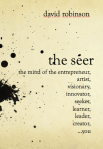
Go here for hard copies

Look. See.

LOOKToday I heard this phrase: There’s nothing to be done about it. It’s just the way that it is.

Sometimes I carry a pocket camera with me, not to capture the events of the day or landscapes, but because it helps me “see.” I go into the world looking for small things, the stuff I take for granted or pass without really noticing.

For a while I was interested in the symbols and markings on the street. They are everywhere. The next time you take a city stroll, look down. You’ll find a world of marks and symbols, children’s drawings, construction tags, and unintentional Jackson Pollock-esque scuffle. It’s gorgeous. It seems both random and by design – and it is. Our minds look at the random and compose. We can’t help it. We are artist’s all!

We live in an environment that is designed. Look in any direction and you’ll see a constructed environment. Even in farm country the tree lines that define the space are by design (necessity is always at the heart of good design). The buildings, the trees, the streets, the signs, the roads, the dams, the waterways, the constraints, the wide open spaces populated by fence posts and wire; a human with a need to communicate or create or control or delineate was involved.

We walk in a world of our own making. It is the way that it is because that is what we make it. Things are not happening to us. We make them happen and there’s plenty to be done. The first step is always to open our eyes and see just how capable we are at shaping things.

Go here to get digital copies of my latest book, The Seer: The Mind of the Entrepreneur, Artist, Visionary, title_pageSeeker, Learner, Leader, Creator…You.

 Go here for hard copies of The Seer

See The Majesty

Pidgeon Pier (Alan and David on the Sound) by David Robinson

Pidgeon Pier (Alan and David on the Sound) by David Robinson

This is a portion of the text I wrote Alan’s newsletter. He’s always been my champion and is helping spread the word for my book (hard copies available later this week! Stay tuned). I reread the rough text this morning and thought this chunk would also make a good post. 

Many years ago, during the first minute of my first class on the very first day of art school, a musty old professor stepped to the center of the studio and taught the class to see. The lesson took less than 5 minutes. As he stepped away from the center of the room he quietly said, “Learning to see is the only thing of value I will ever be able to teach you. The rest is nothing more than technique.”

He was right. Artistry is about how you see. Innovation is about how you see. Leadership is about how you see.  Transformation begins with how you see. Everything else is execution.

His lesson that day was simple. It was powerful. It was transformational. And, like all things simple and transformational, I didn’t recognize it at the time. I discounted it because it was so basic. He planted a seed that day that took me many years to understand. It took me a few more years to embody. It was with great delight that many years later I recognized his lesson as a threshold to my soul mission. I am on this planet to help people see.

The core of his lesson was this: most people merely look; they do not see. Their thinking gets in the way. In other words, we see what we think – which means we do not see at all. We miss the majesty of what is right in front of us. More importantly, it means we do not see the majesty of what is within us. I am on this planet to help people see the majesty within themselves. The Seer is a guide to seeing the majesty within so we might fulfill our extraordinary capacity.

Go here to get my latest book, The Seer: The Mind of the Entrepreneur, Artist, Visionary, title_pageSeeker, Learner, Leader, Creator…You.

Be Holy

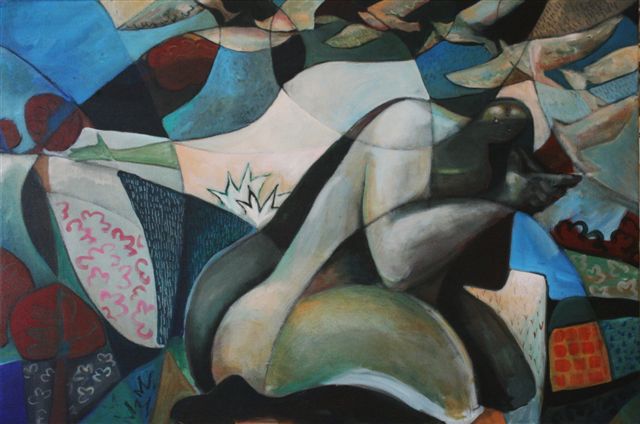
Eve, by David Robinson

Eve, by David Robinson

Pastor Tom asked the question, “What does it mean to be holy?” It caught me by surprise because I was sitting in the choir loft reading Paulo Coehlo’s, The Zahir. For the record, I usually pay attention to Pastor Tom’s sermons; he’s a gifted storyteller and one of a handful of preacher’s I’ve met who is actually rooted in a greater spirituality and not the rules and restrictions that bind the religious. He’s not a judger; he’s a seeker and his sense-making lens is Lutheran Christianity. We are just beginning our friendship and since I have a remarkably different lens I look forward to all that we have to share. But, on this Sunday I was plagued by an odd and surprising inner imperative to take The Zahir to church and read the next sections. I’d stopped in the middle of a chapter and I awoke with my inner nag screaming, “Take it with you! Finish the chapter! Now!!” I’ve learned to listen to my inner nag.

Life is funny. I never in my wildest dreams thought I’d be hanging out in a church. Many years ago I used to hang out with Father Lauren and talk theology. I was not Catholic but attended a Christian Brother’s college; the college had a great theatre program. Father Lauren was a Franciscan and came into the theatre one day to find an artist to help him make some banners for a high mass. I was the artist he found and we were immediate fast friends. He was more interested in the mystic than the pious aspects of his faith and I, too, am drawn to the mystic in any faith tradition. I began attending mass so we could compare notes. I found (and find) my greater spirituality in rivers, the arroyos, and the wind; his faith was solidly grounded in the rituals of the church.

Father Lauren believed in original sin: it is the idea that nature is corrupt – particularly human nature – and must be controlled. I believe the opposite: nature is perfect and health comes when we align with our nature and stop trying to control it. We talked for hours about the differences in our orientation to life. I appreciated our conversations because we weren’t trying to sway the other or win a point. He was not trying to convert me and I was not invested in being right. We were trying to appreciate and understand the other point of view. We were asking the other, “From your point of view, what does it mean to be holy?” To Father Lauren, a human might become holy if they transcended their nature. To me, a human is holy because he or she is nature; the challenge is to recognize the truth of your nature. As someone once said, “There are many paths up the mountain.” Father Lauren and I were like travelers swapping stories from the road. I loved our exploration of faith and life.

I was sitting in the choir loft and had just finished reading this passage from The Zahir: “Yes, we are all cathedrals, there is no doubt about it; but what lies in the empty inner space of my cathedral?” If you saw yourself as holy, how might you fill your space and time? Paulo’s response to his question: we need, each day, to rebuild ourselves, to improve our structure as best as we can so that we might understand and accept this: we are capable of loving another person more than we love our selves. To be holy is to love another more than you love yourself. To be holy is to fill your personal cathedral with the love of another. That’s the exact moment Pastor Tom asked, “What does it mean to be holy?” My inner nag smiled and whispered, “Told you so.”

Go here to get my latest book, The Seer: The Mind of the Entrepreneur, Artist, Visionary, title_pageSeeker, Learner, Leader, Creator…You.

Learn To Play

Illustration from Play-to-Play by David Robinson

Illustration from Play-to-Play by David Robinson

This is from a yet-to-be-published children’s book I wrote and illustrated based on concepts from James Carse’s book, Finite And Infinite Games. The girl wants to play but the gorilla is reticent to start a game until he knows what she means by the word, “play.” Are they playing to win or playing to play? The gorilla helps the young girl make the distinction and set an intention to play to play.

At first glance this might seem like a ridiculous distinction until considering that one definition of play (playing to play) leads to mastery and the other definition (playing to win) leads to an outcome that might include a temporary sense of gratification (or despair if you lose). Do you remember the school lesson about angles? At the inception of the angle, a single point, vector variance seems minute but the further the vectors travel from their source the greater the paths diverge. Artists that play to win inevitably stop making art: losing is a painful business. Artists that play to play master their technique; mastery, in James Carse’s terminology, is an infinite game. There is no such thing as losing if mastery is the aim. If mastery is the aim, how an artist creates is as important as what they create. A life of mastery is a simple matter of where the focus is placed at the beginning of the journey.

This distinction is at the core of what ails many organizations. When the focus drops to the bottom line and stays there, organizations play to win and lose their reason for being. In fact, in today’s world, the rules of the game modify every few months amidst the rapid pace of change; playing to win is a great strategy for losing everything. Playing to play makes an organization nimble enough to survive and thrive amidst ever changing circumstances. Business, like learning, like art, is primarily centered on relationship and gets lost at sea when the focus becomes achievement. Relationship is an infinite game.

The power is in a choice made before the game begins. Are you going to play to win? Or, will you walk a mastery path and play to become a better and better player?

Go here to get my latest book, The Seer: The Mind of the Entrepreneur, Artist, Visionary, title_pageSeeker, Learner, Leader, Creator…You.


What Is Your Location?

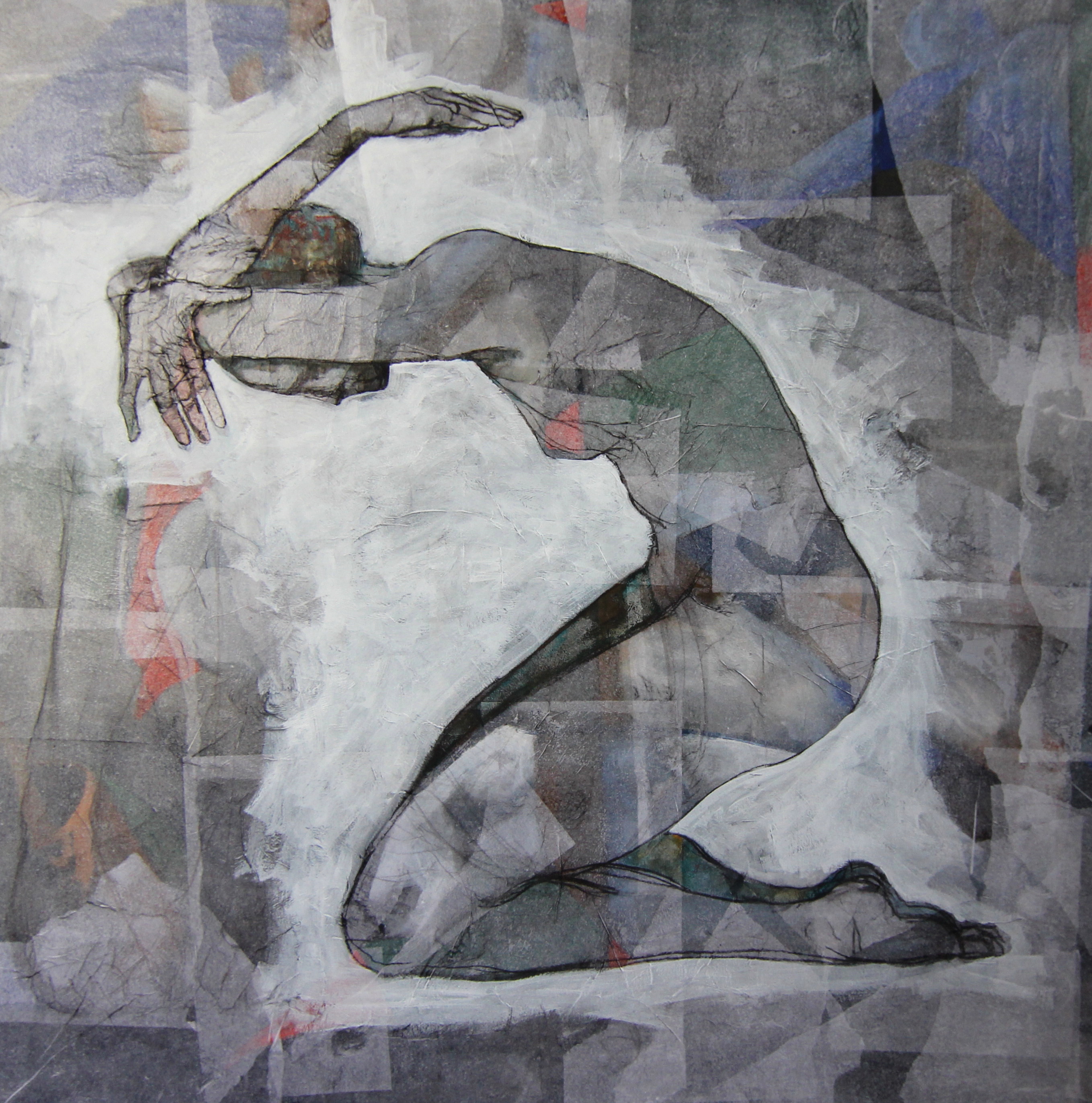
Yoga Series 7I painted this last year. For many months I’d been bored with my paintings – a sure sign of a coming growth phase – and was experimenting with new surfaces and techniques. This is the painting where all the experimentation came together. It landed and I was no longer wandering through an experimental geography but had found my new artistic location.

Just as I now locate myself within this arena, we are constantly locating ourselves in our lives. We physically locate ourselves in space (where do you like to sit when you go to the movies?) and we metaphorically locate ourselves, too. “Comfort zone” is a term of location, as is “preference,” as is “community.” “Safety” is a term of location. “Role” and “mine-to-do” are statements of location. What is yours to do? How do you know?

Some locations are given, others are chosen, and most are patterned. What we believe is possible to achieve is most often a pattern location. Children achieve according to how they are patterned; if you’ve never had an adult in your life attend college then you will most likely believe that college is out of your sphere. Economics are identity.

Once I led a group of students from the international center at their high school to the theatre where we were meant to rehearse a play. When we arrived at the theatre I walked through the front doors and the students stopped as if they’d hit a glass wall. They did! When I went back outside I asked what was wrong, a young woman from Cambodia said, “We don’t belong in there.” They’d learned that the theatre was for citizens; it was not for them. They could not imagine themselves there. I had to help them enter the building and locate themselves as “belonging.”

What you can or cannot imagine is a statement of location. Can you see yourself succeed? Can you see yourself painting a painting? Can you see yourself walking on the beach at sunset? How do you locate yourself? What do you imagine is possible?

Go here to get my latest book, The Seer: The Mind of the Entrepreneur, Artist, Visionary, Seeker, Learner, Leader, Creator…You.title_page


Consider The Root

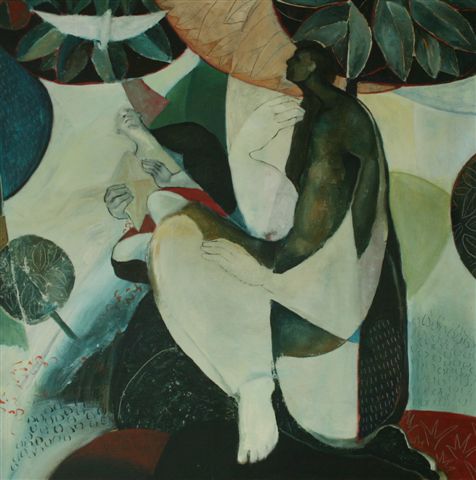
Doves by David Robinson

Doves by David Robinson

This one reads like a Zen koan. It is from Tom. We had a conversation the other day and I scribbled these thoughts from our exchange:

Change always shakes the tree. Leaves fall off. People see the leaves fall off and panic. They mistake the leaves for the trunk. They mistake the transient for the foundational. Superficial change is visible; leaves fall. The deeper, necessary change is invisible and much slower in pace; people rarely consider the roots.

It is necessary for the health of the tree to drop its leaves. Roots regenerate in the winter.

Leaves fall. Leaves return. Roots reach deeper so the tree can grow taller. These two oppositions are actually a single action.

Go here to get my latest book, The Seer: The Mind of the Entrepreneur, Artist, Visionary, title_pageSeeker, Learner, Leader, Creator…You

Water The Seed

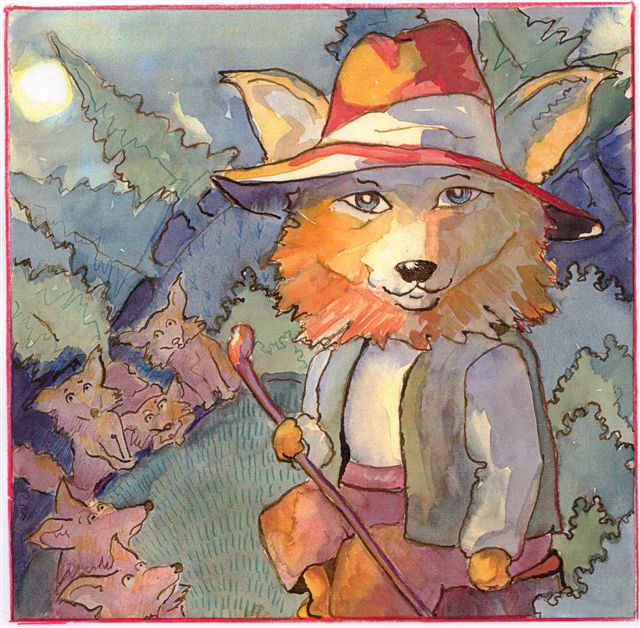
Illustration 07 Illustration 08In 2004 I wrote and illustrated a children’s book, Lucy and the Waterfox. I could have sworn that Lucy was only 5 years old and was taken aback to realize that she’d been around for a decade. Time flies! I recently bought a copy of Lucy since I had nothing in the archives and I will soon release her in versions for ipad and kindle. She’s an old fox and is not available in digital form. It felt funny to buy my own book. I was delighted when she came in the mail! It was as if she was coming home.

It had been a few years since I’d read Lucy so I was taken aback (again) by the parallels in Lucy to the book I just released, The Seer. I’ve been chewing on these ideas for a long time! In The Seer there is a mysterious guide named Virgil who challenges the assumptions of the main character and helps him reorient to a healthier more powerful way of being. In Lucy, a mysterious storyteller emerges from the forest one night; his story stirs deep yearning in Lucy to own and fulfill her extraordinary capacity. Lucy, I recognized, was a seed for The Seer.

Ten years ago I was hired to tell a story in several installments at a conference of health care providers. The conference lasted 3 days and the story served as a thread that tied all the conference segments together. The story also provided a central metaphor for the participants; it served – as stories always do – as the force that forged the individuals into a community. The participants had deep, meaningful conversations because they didn’t get stuck in the superficial, literal levels of their topics. They went into the well through their metaphor and, instead of trying to fix problems they explored their choices and opened to new opportunities.

On the second night of the conference there was a talent show and the organizers approached me and asked if I would tell a simple short story. I had nothing prepared but knew I had a little ditty in my journal about a fox named Lucy. She had a gift and was hiding it because it made other foxes uncomfortable. I told her story and Lucy was such a big hit that night, I received such enthusiastic feedback, that I returned home, illustrated, and published her. The experience of publishing Lucy inspired me: I’d never before thought of myself as a writer. Publishing ideas and stories was nowhere on my personal radar.

A decade later, publishing ideas and stories is the only thing on my radar. I have so many ideas! I have so many stories to tell and more show themselves to me everyday.

I’m delighted that Lucy came home to remind me that in the decade since she was born that I have grown, too, and have a much expanded personal radar. I look forward to the day, a decade from now, that a copy of The Seer comes in the mail and I say, “Whoa. Look at that! I’ve been chewing on these ideas for a long, long time.”

Go here to get my latest book, The Seer: The Mind of the Entrepreneur, Artist, Visionary, title_pageSeeker, Learner, Leader, Creator…You.


Know Your Metaphor

Canopy by David Robinson

Canopy by David Robinson

Metaphors matter far more than we know. In fact, it is not an exaggeration to say that we build our realities on the metaphors we entertain. The stories we tell about ourselves and are lives are built upon metaphor. For instance, is your god a hairy old thunder hurler, a pervasive energy, a spirit with intention, an abstract concept, science, or a force of nature? How you build your reality will have much to do with the metaphor you choose. Do you step into the future or does the future step toward you? Are you part of nature or the steward of it? Metaphors are not just for literature!

For instance: Don’t put all of your eggs in one basket. It’s a well-worn metaphor warning us to keep our options open. When Kerri and I first met she asked me to never forget that she’d placed all of her eggs in my basket. “Organic, free-range,” she said in response to my laughter at her reference. “I won’t forget,” I replied. Putting all of the eggs in a single basket is a great statement of commitment yet it’s not the best metaphor to build a relationship upon. Eggs are, after all, fragile. They break. While the metaphor for our relationship was eggs in a basket we necessarily treaded lightly. We’ve been much happier and healthier since we populated our basket with twelve organic free-range rocks.

The Holy Grail is a metaphor. When Arthur’s knights roamed the realm seeking the grail, they were establishing a lovely metaphor for personal fulfillment. The knight who finds the grail is the knight who finds the middle way between the armor of social obligation (self sacrifice) and the nakedness of an uncontrollable wild-child (self indulgence). Parcival must fail to find himself. And, isn’t that a lovely metaphor for living and learning? It is impossible to find the middle way until you’ve cracked some eggs or shifted your metaphor to something unbreakable and capable of sitting in the fire.

Go here to get my latest book, The Seer: The Mind of the Entrepreneur, Artist, Visionary, title_pageSeeker, Learner, Leader, Creator…You.


Make Sense

title_pageThe Seer is built upon 9 Recognitions. Much of the book is an email conversation between the protagonist and his mysterious guide, named Virgil. Virgil coaches the protagonist through his discovery and encounters with the 9 Recognitions. Here is a small excerpt from an email exchange between the protagonist and Virgil:

Me: I realized that I think in patterns. I think the same stuff over and over. This is a puzzle: the act of looking for patterns opened my eyes. So, patterns reveal. And yet, later, when I became aware of the patterns of my thinking, I recognized that those patterns were like ruts or grooves. It’s as if I am playing the same song over and over again so no other music can come in. My thinking pattern, my rut, prevents me from seeing. So patterns also obscure. Make sense?

Virgil: Yes. It must seem like a paradox to you. Think of the song or rut as a story that you tell yourself. Your thoughts, literally, are a story that you tell yourself about yourself and the world; the more you tell this story the deeper the rut you create. So, a good question to ask is: what is the story that you want to tell? Are you creating the pattern that you desire to create? We will return to this many times. This is important: the story is not happening to you; you are telling it. The story can only control you if you are not aware that you are telling it.

Me: Can you say more?

 Virgil: We literally ‘story’ ourselves. We are hard-wired for story. What we think is a narrative; this pattern (song) that rolls through your mind everyday is a story that you tell. You tell it. It defines what you see and what you do not see. What you think is literally what you see.

There was a pause. That was a lot for me to take in. When I didn’t respond, he continued:

Virgil: So, what you think is nothing more than a story; it’s an interpretation. You move through your day seeing what you think – instead of what is there. You are not seeing the world you are seeing your interpretation of the world. You are seeing from your rut and your rut is a pattern. So, your patterns of thinking, your rut, can obscure what you see. Make sense?

Go here to get my latest book, The Seer: The Mind of the Entrepreneur, Artist, Visionary, Seeker, Learner, Leader, Creator…You.