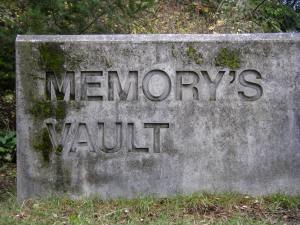
 Tom is what first nation’s people would call a ‘Rememberer.’ Within him he carries all of the family stories, stories that stretch back centuries. He knows them in vivid detail and you can feel the presence of his ancestors in him when he tells their stories. He is a living monument to those that came before him. Over many long nights sipping wine he’s told me the stories and now parts of them live on in me. One story in particular has become mine to tell.
It is about a little boy that died 125 years ago. The little boys name was Johnny Quiggle and he died of typhoid fever. At the time, 1885, people believed the fever could be passed through the possessions of the inflicted so Johnny’s doctor mandated that his mother, Isabelle, burn her little boy’s possessions; he asked her to erase any evidence that Johnny had lived. She couldn’t do it. In secret she packed his belongings in a trunk, wrote stories of Johnny’s life, and plastered the trunk into a wall for some distant descendent to find. Tom found the trunk in 1985 when he was restoring the ranch house.
Over our long nights sipping wine Tom and I have talked about Isabelle and Johnny, and about monuments and memorials. Why do people need to memorialize their departed loved ones? Why do we need to leave marks on the earth that say, “I was here” or “This happened on this day in this place?” “Remember me.”
Isabelle’s impulse was innate. Isabelle wanted Johnny to live into the future; she wanted someone to find the trunk and share his story. She wanted people in the future to know that her boy, Johnny Quiggle, lived.
We paint on the walls of caves. We pose for portraits and we erect pyramids and statues. We create altars and celebrate The Day Of The Dead. We bury time capsules and plaster treasure chests into the walls of our homes. We seek to connect with our ancestors and our descendents, we research family trees to know the root of our existence and explain our oddities and behavior. We fret about our legacy.
I’ve spent many hours in old graveyards reading the faded headstones and wondering about the people whose full rich lives are told in a few spare details carved in stone: birth and death date and perhaps a phrase like, “Devoted Mother” or “Civil War Veteran.” I will join them someday. I wonder about my life, what it is about, what I have achieved, who I have become and am becoming. I wonder what might be carved on my stone – what single phrase can possibly describe the fullness of my life. What is the story I want my life to tell? Who will tell it when I’m gone?
Sipping wine, Tom asked, “What would you put in your box? Better yet, what would others put in your box?” Beyond your awards and other fake social-face stuff, what would you put into your box that truly revealed who you were?
It’s a great question.
Carl Jung believed the human psyche was spiritual by nature and so do I. My friend Joe Shirley has taught me that the universe tends towards wholeness. What could I put in a box that would communicate these beliefs?
I believe we seek identification with something greater than our selves: god, nature, and community, work that truly matters. What is a life well lived? When I look at the things Isabelle packed into Johnny’s box, the stories she told about his brief life, I think he lived a life that truly mattered – not because of the stuff but because of her ceremonial act.
Someone once told me that the saddest thing they could imagine was a 40-year-old production assistant (someone who hadn’t achieved outward success). I’ve met some amazing people who have lived rich full lives, traveled and experienced all of the messiness of life and they mop floors for a living. Some of the saddest human beings I have met have achieved all outward success and are miserable in their very-safe-lives. What might go in their boxes?
For me, these questions always go into the mythic. We forget that in the story of the Garden of Eden there are two important trees: the tree of knowledge (apparently an apple tree) and the tree of everlasting life. Eat the fruit from the first tree and your consciousness splits; you see through the eyes of duality (me/you, him/her, us/them, black/white,). One bite from the apple of knowledge and you are no longer in the garden, you become distinct, separate, and alone. This is a birth metaphor. After a bite of apple, the ultimate quest in life is for unity (a return to the garden); it is a quest for greater connectivity, wholeness, and belonging. How do we get back to the garden and eat the fruit of the second tree, the tree of everlasting life? The transcendence of time is the transcendence of separation. This is a death metaphor, the return to unity: ashes to ashes, dust to dust. We live a life of cycles: spring, summer, autumn, winter, spring…. Birth, life, death. Rebirth. Every culture has a birth (separation) story and a death (unity) story. We make sense of our experiences of separation and transcendence through story – what else? Separation and transcendence with all the happenings of life in between; this is the stuff of our lives and we make meaning of it through story. Memorials and monuments are forms of story. Isabelle was separated from her boy and she reached across 100 years to share the story of her boys’ life.
For many people their children represent their transcendence of time – they live on in their children’s children through memory and genetics. For others, their work is their legacy; Van Gogh’s paintings are his children.
Neither Tom nor I have children though Tom is deeply connected to his ancestors and in his old age he is concerned for his family’s legacy. His people have lived for generations in the Sacramento valley and on the same piece of land. The city of Sacramento will soon gobble up his property and so he will be the last of his line connected to his ancestral land. When he asks, “What am I going to do with Johnny’s trunk?” he is also asking, “what am I going to do when the land is paved over and the memory of my family is gone?”
Another great question.
Tom’s stories are more than histories. Through the telling his ancestors are transcending time and he is leaning toward them, leaning into belonging and wholeness: telling the stories of ancestors is the same as saying, “this is who I am.” I feel that I know these people personally because they are present in Tom. And now, even though they are not my ancestors, I carry Tom’s stories within me. This is who I am.
Filed under: Story, Transcendence | 1 Comment »






 The Direction of Intention