Look At The Pictures

photoH’s wife passed after a long illness. This afternoon we went to the vigil and Kerri sang Amazing Grace for the service. We looked at the photographs of her life.

This summer, at my grandfather’s funeral, there was a similar board of photographs showing the span of his lifetime. They are a record of moments. He posed for some of the shots. In some, he had no idea that a camera was pointed at him. We are different when we know a camera is aiming our way. We put something on, a kind of mask, an attitude or assumption.

The photographs on the board served as a history of technology, black and white to color film, and then a jump to the proliferation of digital images. What was difficult became easy. What used to need chemicals and processing became instantaneous. This capacity to snap photographs and see them in a moment has changed us. Selfies abound! Once, at the Museum of Modern Art in New York City, I watched with fascination as people posed to have their picture taken with Van Gogh’s painting, Starry Night. They rarely looked at the painting. They just knew it was famous and wanted their picture taken with it. They primped. They smiled. They mugged for the camera or looked serious. Proof of life? Just like a handprint on the wall of a cave, those photographs shouted, “I was here!”

We are among the first people in the history of humanity to have this extraordinary window into our lives. I looked at the photo board of H’s wife and saw H at age 30, at age 40, and 50 and 60 and 70, 80, and I know him now at age 90. In the photographs I can see the cocky young man, the father, the achiever, the dreamer, the man who stopped resisting, the surrender,…each phase of his (and his wife’s) life. More to the point, he can see it. He can see the progression.

Two hundred years ago a photographic record of a life span was impossible. No one posed because there was no need. An old man remembered his life but did not have the window to see his path. No one had the opportunity to see the growth and process of age through the phases of their life. It changes us. And, it is a sword that cuts both ways. We can see. We can record. We can story ourselves like no other time in history. We can be known to future generations. We can talk to the future and the future can hear us. We were here. We had something to say. We had so much to share, so many rich experiences of living! And, we can miss our moment in the recording of it.

Kerri asked H what was his favorite photograph on the wall and he laughed and said, “I don’t know. We had happy times. Look at how much I weighed back then!”

“You need to eat more, H!” Kerri admonished and gave him a hug. He began to cry.

“I’m trying,” he said, laughing through tears. “I think I just need to drink more Frosties!”

title_pageGo here to buy hard copies (and Kindle) of my latest book: The Seer: The Mind of the Entrepreneur, Artist, Visionary, Innovator, Seeker, Learner, Leader, Creator,…You.

Go here for all digital forms of The Seer.

Go here for Fine Art prints of my paintings.Yoga.Meditation
Clear The Channel

Something else from the archives.

Something else from the archives.

It is the day before we fly to the Netherlands. We started the day early with a long walk, coffee, and a chat about everything but our prodigious to-do list. We’ve learned that it makes a huge difference to our day if we start slow. It makes a difference if we make a conscious choice about where we place our focus in the day.

For years I rose early and read something that inspired me. I read sacred texts, philosophers, artists, seekers, children’s books,…, anything that pulled my mind from my to-do list and grounded me in things that seemed more important to give my thought space. It was a form of meditation. I learned early on that my readings influenced what I saw during the day and, so, influenced my experiences; I interpreted my life according to my meditation instead of my to-dos. I opened to experiences instead of predetermining how I should feel about the list.

Now, after so many years, I have developed an automatic response to the flotsam that might catch my attention. When some clutter catches my attention I say to myself, “I don’t want that to occupy my mind.” And, like a cloud, it evaporates. I want to keep my thought channels clear. I want my thoughts focused on attention to and appreciation of the moment, creative processes, or noodling with cool ideas – and not snagged on the news of the day. Thought channels are like arteries and too much gunk will jam the flow. Gunk is a great source of depression. Last year I went on a news moratorium when I started my walk-about and found that I had a lot more thought space without the news-cycle-chatter. I learned that without turning on the news or opening a paper I heard everything worth knowing. I learned that I  had no need for the endless cycle of breaking news to be well informed; 24 hour news is like bad cholesterol. It is an addiction. It is a false high. I learned the necessity of questioning what I was plugging in to (what I was plugging into my mind).

Knowing what you don’t want clogging your mind necessitates becoming clear about what you do want occupying your thought. Thought requires a focus and focus is a choice. Mostly, my answer is no thought. I want silence. I want presence and presence requires almost no interpretation.

Go here to get my latest book, The Seer: The Mind of the Entrepreneur, Artist, Visionary, title_pageSeeker, Learner, Leader, Creator…You.

Go here for hard copies.


Give Joy

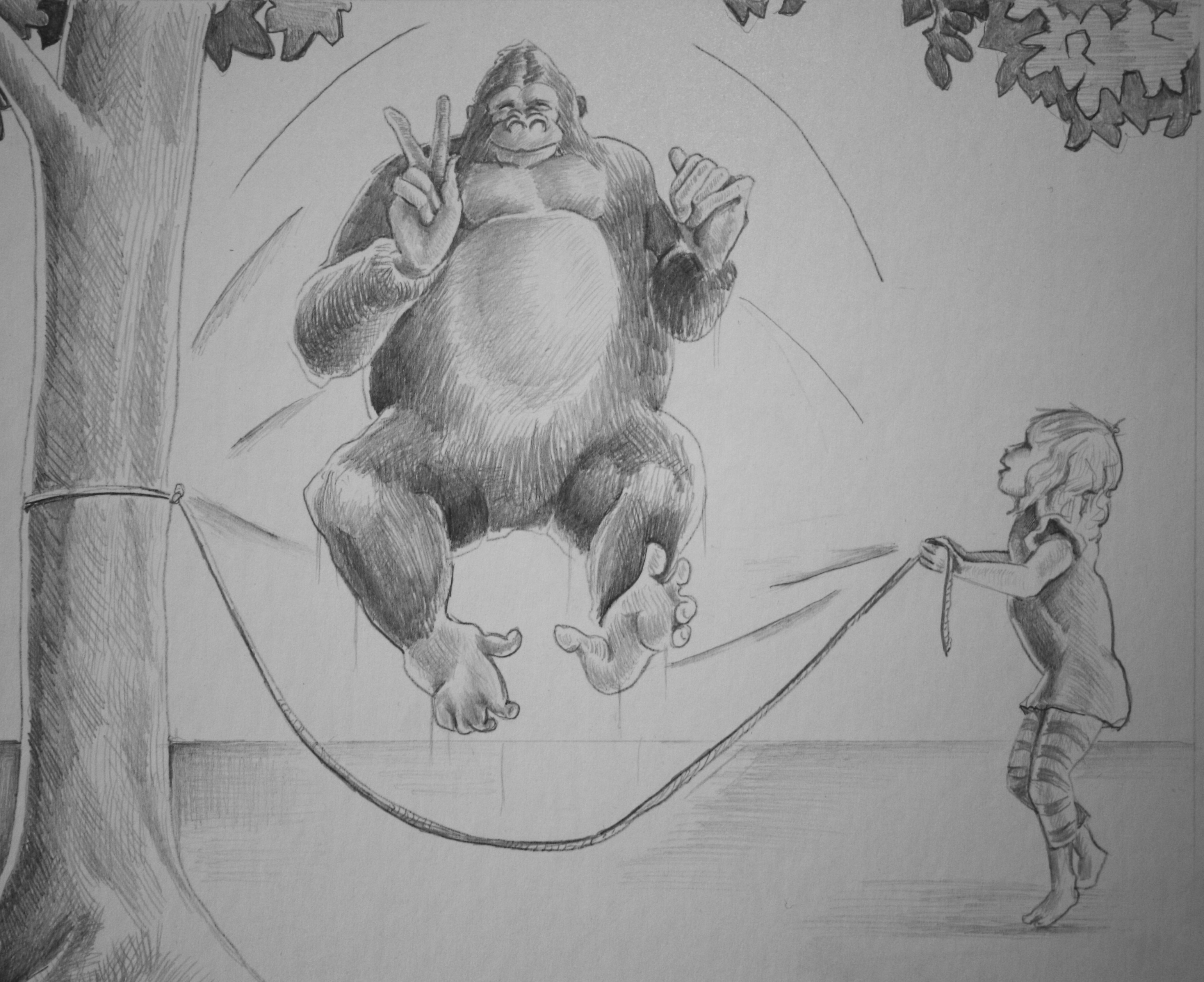
This is an illustration from my as yet unpublished children's book, Play To Play.

This is an illustration from my as yet unpublished children’s book, Play To Play.

The question was, “What gives you joy?” People responded with things like, “family,” “the sunrise,” and “community.” Someone offered, “Other people’s laughter gives me joy.” There were nods of agreement all around.

It is hard for me to hear a question like, “What gives you joy?” and not think of Viktor Frankel. As a young Jewish man in Nazi Germany, he somehow survived years in a concentration camp. He emerged believing that, other than sheer chance, the line that divided the survivors from those who perished was a capacity to give meaning to life – as opposed to seeking meaning from life. He noted that the prisoners who sought meaning from the experience perished. Those who made meaning from the experience were more apt to live another day; they storied hope instead of looked for it.

Viktor Frankel famously wrote that, “Happiness ensues.” Happiness follows. It is not something sought. It is not found on the outside. Happiness is a response. It comes from within. We bring happiness to a moment. We do not get happiness from the moment.

Joy is like happiness. As I listened to the responses to the question about joy, I thought about the language of “seeking” and “ensuing.” In the English language it is hard not to create a paradigm of separation. We rely heavily on our nouns. Things are distinct. Dissimilar. “It” is found outside; “it” is located inside. “I give meaning” versus “I get meaning.” Give. Get. Either way, within or without, there is a line of division; “it” cannot be in both places. I wondered if the experience of joy and happiness (or sadness and grief, for that matter) are co-creations. I wondered if the language of us/them, within/without actually obscured the other option: we seek it and it ensues because we engage life. We open and life opens. Joy, like happiness, is generated in the relationship space, the space between, and in the relationship space there is no separation. Your actions and my responses are intimately connected. Where is the line between my action and the impact it creates?

After the conversation about joy, Kristi talked about being empathic. She said, “I can feel other people’s pain and then I carry it.” Earlier in the week, Kerri and I had the same conversation. She told me that she wanted to learn how not to take on other people’s stuff. I told her about the time I sought a teacher named Anna Christensen who showed me how to feel but not take on other people’s pain. “We are all empathic to various degrees,” Anna said. “Most people, to survive, need to numb their capacity for feeling. It’s necessary for most people because they need to know where they end and other people begin. They need the illusion of the individual. But, that comes with a cost; it creates the terrible experience of aloneness,” she added.

If other people’s laughter gives joy, and we can universally agree that is true, then my laughter and your laughter give joy to others. Isn’t it really just that simple?

Go here to get my latest book, The Seer: The Mind of the Entrepreneur, Artist, Visionary, title_pageSeeker, Learner, Leader, Creator…You.

Go here for hard copies.

Sit With Sadness

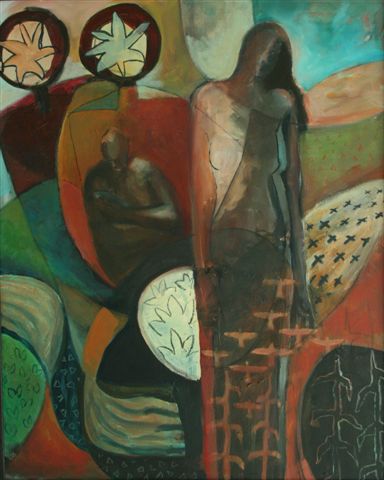
Demeter by David Robinson

Demeter by David Robinson

I awoke this morning deeply, profoundly sad. It is unusual for me to emerge from sleep with sadness; I’m generally a happy person. It was the brand of sadness that has no attachment to a reason. I was earth-sad. I’ve learned that when I come into possession of a sacred sadness, I need to pay careful attention to it rather than struggle to find a way out. It will inevitably illuminate something important if I sit with it, feel it to my bones, honor it, and listen.

I brought sadness with me when swam out of my dreams and broke the surface of consciousness. It was as if I was pulling a drowning man from the ocean floor to the surface; he was heavy and I was exhausted by the effort. I gasped for breath when I broke the surface and I can only imagine that my companion, sadness, gasped, too. I lay in bed. He sat with me. Our breathing calmed. Both of us were quiet. I wanted to say, “What?” but I know better than to force the conversation. Sadness talks when sadness is ready.

Khalil Gibran wrote that, “Sadness is but a wall between two gardens.” In his Letters To A Young Poet, Rainer Maria Rilke advises, “Go into yourself. Search for the reason that bids you write: find out whether it is spreading its roots in the deepest places of your heart, acknowledge to yourself whether you would have to die if it were denied to you to write. This above all – ask yourself in the stillest hour of the night: must I write?” If the answer is yes, Rilke advises the young poet to build his life according to this necessity.

I believe everyone has an inner imperative. For some it looks like having a family. For some it is tending a garden. Some need to travel. Some people need to seek spirit. It’s hard to explain a drive that must either be satisfied or kill you – especially when that drive looks like an art form. What must you do or die? What inner necessity transcends physical comfort or safety or security or measures of success? Twice in my life I denied myself my artistry in an attempt to have a normal “career” and twice I nearly died (not metaphorically). Of course, on the up side, following an inner imperative makes you bullet proof. Social norms wad like wet tissue paper in the face of do-or-die necessity. Fear has no footing when the alternative to acting on the imperative is to die.

I’ve known since I was a small child my answer to Rilke’s question. After a long silence, Sadness looked at me this morning and said, “Well?  Are you ready to redesign your garden?”

Go here to get my latest book, The Seer: The Mind of the Entrepreneur, Artist, Visionary, title_pageSeeker, Learner, Leader, Creator…You.

Or go here for hard copies.

Say What You Mean

643. Join me in inspiring truly powerful people. Each day I will add a new thought, story or idea to support your quest and mine.

One of Don Miguel Ruiz’s 4 Agreements is to be impeccable to your word: say what you mean and mean what you say. This, he writes, is an act of self-love. It is the greatest act of self-love.

I have been thinking much about this agreement particularly as I step through another threshold and leave behind all that I know. I find that am often NOT impeccable to my word. I am not so concerned with my honesty with others. I edit myself, I soften the impact of my words, and I manipulate my meanings; I am human. I’m not sure what it means to be honest with others because I am not sure that I am honest with myself. Impeccability with others is only possible if I am impeccable with myself.

Someone once told me that the best part about me was that I tell a great story and the worst part about me is that I tell a great story. I have exercised my capacity to see the light side to such a degree that I sometimes make light of the darkness. A friend once asked me, “Why is it okay that these things are happening to you? Where’s your rage?” It was a great question and, in fact, opened my eyes to my lack of impeccability with myself.

Say what you mean to yourself. Mean what you say to yourself. It is a double-edged sword. Like me, you are not impeccable when you call yourself names: are you truly an idiot? Neither am I. Do you mean to diminish yourself? Neither do I. Do you mean to diminish others? Do you need to push others down to elevate yourself? Neither do I. These are the easy misalignments to spot. Suspend your judgments and you will return, at least partially, to impeccability.

The more difficult stories to catch are the stories of, “It’s okay.” Is it truly okay for you to give up your needs to fulfill the needs of others? Is it okay for you to give away your voice? Are you sure it is not important if you let go of your dream? Are you certain that is doesn’t matter if the world steps all over you? Impeccability comes when we say, “That’s not okay.” Boundaries and impeccability go hand-in-hand. That’s why, to Don Miguel Ruiz, impeccability is an act of self-love.

Recently, a woman in class, who lost her house to Hurricane Sandy, said that she was “investing in her darkness.” She was telling herself the story of “everything is ruined.” Certainly the house was ruined. She realized that she was not ruined; she was alive. She needed to feel what she was feeling; she needed to grieve so she could move forward. So, rather than telling a story of ruin, she began to tell a story of grieving so she could reach the story of “what’s next.” She said, “ I realized that we need the light AND the dark. We need them both…it was all okay when I allowed that it wasn’t okay.”

Be A Mystery

597. Join me in inspiring truly powerful people. Each day I will add a new thought, story or idea to support your quest and mine.

Sitting on the pier watching the sun come up, the temperature already 85 degrees, I had an epiphany. I realized that I have spent much of my life trying “to figure it out,” which, in essence, is an attempt to figure out myself. Watching the sky erupt into orange and fiery red, I thought, “What if I am mystery? What if I was meant to be a mystery? What if all of this “figuring out” was really an attempt to control or contain the uncontrollable? How would I be in the world if I stopped trying to figure it out and instead reveled in the mystery? I think I’d play more than I do currently. I’d run in circles and roll down hills. I’d be less concerned about things making sense.

I know this. I give meaning to the world I inhabit. The meaning is not “in” the world; it is “in” me. The perpetual search for meaning stopped when I ceased to seek meaning as something separate from myself. This shift of perspective is a quality of empowerment: we become power-full when we own our choices and the epicenter of choice is where we decide to place our focus. In other words, what do you choose to see and how do you choose to interpret (story) your experiences.

Even knowing this, it came as a surprise when I recognized the need to surrender my control and containment imperative: figuring it out is a fool’s errand. We can discover how to split an atom but we will never discover what it means. It means nothing without our participation, how we use it, what we intend. With that sunrise, the world regained its scope and infinite variety. My assumptions dribbled away with the dawn. The truth is that I don’t know. I don’t really know anything. It is too vast for me to know. The best I can do is close my eyes and feel the sun on my face. I can smell the salt sea air, I can listen to the waves and the birds and the distant voices. I can make a story of it all. Ask me what it means and I will ask you what it means to you. Ask me what it means to me and I just might tell you, “Nobody knows! It’s a mystery.”

Truly Powerful People (422)

422.
Join me in inspiring truly powerful people. Each day I will add a new thought, story or idea to support your quest and mine.

Let me begin by saying that I have always liked big porches. That will mean nothing to you until the end of this post.

Aloof (adj): remote in manner. Separate. The antonym if aloof is friendly – implying that to be aloof is to be unfriendly. Once, many years ago, Tom said that I was the only person on the planet that was more aloof than he was. Out of seven billion people on earth I won the blue ribbon for aloofness. Tom awarded himself the red ribbon assuming the number two spot in the aloof games. I laughed heartily at his scorecard and told him I would have given him the blue ribbon. I was certain that he out-aloofed me by a mile. He snickered at my deflection and I accused him of deflection and his snicker blossomed into a full guffaw. “I’m shy!” I exclaimed. “I’m an introvert!” I claimed a bit too emphatically. I was a victim of my own label-libel. Who might I be if I stopped arguing so adamantly for my reticence?

I’ve been working on being less aloof for a decade. I’d have made an excellent hermit though I know my shack would have had a porch since I like porches. So, I would have been a conflicted hermit. I’ve attended Aloof Anonymous and have learned to make causal conversation at parties. Sometimes I smile when I have my picture taken even though I fear I look like Baron Sardonicus.

Enter the present day. Teresa is helping me market myself. She is brilliant and our first phone call left me speechless: she helped me see that my business is me – so, her homework for me was to discover how I could become more of my self (try this. It is an excellent task certain to lead through madness before illumination. Note: I’m making up the part about illumination). During the second call she reduced my brains to pudding: she agreed with Tom, though she did not know it (and I will not tell either that they have an ally in my blue ribbon aloofness); she said, “Your door is open. You invite people onto the porch. Why don’t you them invite into the house?” When I stuttered she said, “You allow people to see your paintings and have their own response don’t you? You don’t try and tell them what the painting is about or control what they see do you?” “No.” I agreed. “Then be like your paintings. Let people see you. Invite them in!”

In my stunned silence she snickered (suspiciously like Tom!) and said, “You thought you were exempt from this stuff didn’t you.”

Truly Powerful People (366)

366.
Join me in inspiring truly powerful people. Each day I will add a new thought, story or idea to support your quest and mine.

When I first started to write this blog I had severe doubts that I could sustain it for more than 10 days. Horatio said, “Hell! If you can write for 10 days you can write for a thousand.” He was, of course, correct.

I was concerned that there was a limit to my experiences, a finite number of things to say. I was certain that I’d exhaust anything of interest in less than a month – like an introvert at a cocktail party I’m okay at the opening but oh-my-god-now-what-do-I-say. Horatio laughed. He already knew that experiences are infinite, that each day brings a new gem. His message to me: pay attention: your only true limit is your idea of yourself.

There were days that I wondered why I was writing. It was for me, certainly, but why post my random thoughts about power. And then, Patricia would send me a reflection on a post, an encouragement, a question. She’d write: “This rang a bell for me!” or she’d thank me for the thought. So I’d post the next – a secret thought for Patricia and no more doubt about why I was writing. Once, Jill’s connection was broken and she didn’t receive the post. The subject line of her email to me was, “Hey! Where is it?” There were a few secret thoughts for Jill, too.

Then, there were the thoughts that came back at me. More than once Megan took my breath away with the depth of her insight, the expanse of her curiosity. Early on Ana-the-wise would teach me, “I read what you wrote and I have a question,” she would say. And then, “I think you are missing an important point.” And so a rich dialogue ensued. Tamara sent me stories, lyrics, and a piece of the sun.

Today, I crack open a bottle of bubbly to mark this milestone and an ever-growing community of Truly Powerful People. I can’t wait for you to meet each other and I look forward to what we will create together in the year to come.

Truly Powerful People (357)

357.
Join me in inspiring truly powerful people. Each day I will add a new thought, story or idea to support your quest and mine.

Today a friend told me that I have the greatest job in the world. My eyebrows shot to the top of my forehead – “It’s a good thing,” I thought to myself, “that I still have a full head of hair or else my eyebrows would have kept on going.” I am fairly phobic when it comes to the word “job.” I’ve never understood it. Actually, that’s not quite true. I understand it as an abstraction; to me a job is akin to a root canal: I’ve never had a root canal and will be most grateful if I never have one. I feel the same way about a “job.”

Don’t get me wrong. I’ve waited tables, thrown bales of hay, dug foundations, painted houses, sold office products, unloaded semi-trucks filled with mattresses, cleaned chicken coops; I consider those things experiences, not jobs. There’s never been a separation between who I am and what I do. I am an artist. That is not an occupation, it is not something I leave at 5:00; it is a way of being in the world and I can’t remember being in the world any other way. I’m not sure what a day-off means. My dad used to say that he worked for his weekends; I used to wonder what that would feel like: working 5 days for 2.

My friend was referring to my work as a coach. She said, “You have the greatest job in the world. It must be so much fun to help people step into the fullness of their lives.” What a great phrase – and a terrific aspiration: step into the fullness of your life. She is right; coaching is great fun. And, I can’t help it; my coach-ness and artist-ness are one-and-the same thing: artistry is about the fullness of living, isn’t it? Coaches, like artists, help people see what was there all along: the fullness of life. I see it because I’ve had to find it for myself. Art was my Virgil.

Her follow-up statement brought gravity back to my eyebrows. She said, “You do it so well so why do you suck so badly at telling people what you do?” She laughed as my face bobbed from the force of my eyebrows descent. I stammered, which is what I usually do when people ask me what I do. This is what I know: if you are smart you will avoid me at the party because I’m the guy that will have you revealing your deepest desires 3 minutes after meeting me; you will have made a mistake in asking me, “What do you do?” I will say “artist” or “coach” and both will be equally ethereal. I will have no satisfactory answer. We will talk, your mask will come down, the evening will pass and you will leave the party wondering what hit you; you will feel better, fuller, more alive – or sad that you missed the dancing. Either way, you will hope that I didn’t record our conversation. I will leave the party thinking, “What a fantastic story!”