Truly Powerful People (207)

207.

Join me in inspiring truly powerful people. Each day I will add a new thought, story or idea to support your quest and mine.


“Innumerable confusions and a profound feeling of despair invariably emerge in periods of great technological and cultural transitions. Our ‘Age of Anxiety’ is, in great part, the result of trying to do today’s job with yesterday’s tools – with yesterday’s concepts.”


Along with Quentin Fiore, Marshall McLuhan published that thought in 1966. He had some idea of what was coming down the pike for us but I wonder if he could imagine the world we inhabit today. It is the hallmark of our time that we are always in a period of great technological change; we are nothing if not a culture perpetually defined by transition: transition is at the center of this experiment that we call democracy and the United States of America. The idea that we are static, fixed, and that our destiny is manifest is a rusty old tool that’s been outdated for a century or more.


Yesterday’s tools are corporate and tribal. Yesterday’s tools assume opposition – in fact they thrive on opposition. They assume access to knowledge is the province of the few, they assume people will sit passively in front of their television sets as banks make record profits while they lose their homes. They assume that communication has borders. Yesterday’s tools are failing all around us; our education system, our political process, our media, our ideas of who we are and our place in this world. Yesterday’s tools bank on the idea that the red states and the blue states will continue fighting over foggy notions and won’t notice what’s going on in the state of our national being.


“Power over” is a tool from another time. Its shadow reaches into our day (thus the anxiety) but “power with” is on the rise; have you ever known a time when people were more capable of immediate and potent connection (Egypt was not an accident). The pace of technological change is not going to stop anytime soon; neither will our culture of transition. Our tools are changing. Our modes of communication are changing, our way of being in the world is changing and one of those ways is how we view power – power in ourselves and in everyone around us.

Truly Powerful People (202)

202.
Join me in inspiring truly powerful people. Each day I will add a new thought, story or idea to support your quest and mine.

I am 18 years old and all I’ve ever wanted to be is an artist, a painter. I am in my first year of college and I am dismayed to discover that my art classes bore me. I can barely sit still. I don’t know why, this makes no sense to me, I feel as if I am suffocating every time I go to class. And, I can’t stay away from the theatre. I’m there everyday. I take the class available to a non-major. I audition and play minor roles in plays.

The next year I jump to a new school and a new degree. I am studying acting and know deep down that I will never be an actor – there is something more beyond this study but I can’t see it (yet) and I expend massive amounts of energy and anxiety – again – wondering what I am doing and hiding the feeling that I am pursuing something without knowing what it is. It is an imperative yet makes no sense; I’m chasing a phantom and feel like I am lying to my teachers because I’m still under the illusion that most people know what they want and have a clear sight on what it is (so, I feel like I am lacking somehow).

In the next several years I direct plays, I consult with schools, I paint paintings, I coach and for a while these feel like different actions – energy in opposition. I tell myself that when I am in rehearsal I’m not painting so I’m not growing. And, if I am painting, I am not growing as a director. I am at war within myself and neither side can win.

The surrender comes when I recognize that painting and directing and consulting are forms; and beneath the form there is an intention. Alan calls this a soul mission – when you recognize that what is yours-to-do can take many shapes. I am a particularly adept chameleon; mine-to-do is to open stories for people, to illuminate paths to self-knowledge (it is what an artist does).

Ana-the-wise busted my chops the other day when I was whining that I didn’t know what form I wanted my work to take. I said, “What do I want to create for myself?” She said, “You will always be confused until you ask a different question. It is not what you want to create for yourself, the question is what do you want to bring to this world.”

Amen. And bring it!

Truly Powerful People (199)

199.
Join me in inspiring truly powerful people. Each day I will add a new thought, story or idea to support your quest and mine.

I found a slip of paper tucked in an old journal. It carries a message to myself, a vow that I made on a weekend retreat several years ago. This is what I wrote: I will leave starving behind and orient my life according to the feast.

I used to create starvation because I used to fear starvation. I used to feel as if the world was too big and that I had no capacity or skill to negotiate it. My way of controlling – of fending off the starvation was to retreat from the world, to hide as if the hounds of my fear would not find me in my retreat.

One day, the day I wrote this note to myself, I realized that I was starving myself – it was not “the world” that was starving me or my size relative to my desires – it was my fear that kept me from the table and the table was rich with taste and texture. The hounds of my fear created my retreat. I’d never literally starved (which was my fear) but I had never fully fed myself, never allowed myself to feast at the table of life because I was clinging to the shadows. The realization of my starvation-creation took my breath away.

Fear was my focus so fear was my creation. Starvation was my focus so starvation was my foundation. I’m grateful I found this note! It has been a long time since my emaciated soul stepped up to the table and took a seat. The feast is now my focus and yet everyday I see people just like me, starving, trying to control the things they cannot control, creating the things they fear the most.

I long ago learned I cannot open anyone’s eyes to the abundance of this life, but I can make room and keep an open seat at table.

Truly Powerful People (141)

141.
Join me in inspiring truly powerful people. Each day I will add a new thought, story or idea to support your quest and mine.

It was very quiet during my morning walk. There was no breeze coming off the Sound, even the birds were still. Although it was very early the sky was steel grey; the cloud cover drooped like a heavy blanket over the city. No movement.

As I walked in this quiet I thought about how adept I have become in my life at looking inward. I am an introvert so it should be no surprise (to myself) that I am expert at inner gazing. I used to need quiet to rejuvenate. Parties and large crowds of people exhaust me, though not so much any more. I am changing and I was trying to identify what exactly is changing.

As an introvert I have spent a good deal of my life marginalizing myself. When I was young I listened to myself and judged my responses to other people. Did I sound smart enough? Why didn’t I say…? Why did I say…? My witness had a scorecard. It occurred to me as I walked that, if you are standing at your margin (as I believe most introverts do) you will of necessity look inward. Just as in many traditional cultures, the shaman lives on the edge of the community, at or just outside the outer ring of the community circle and one reason for this is so that she can see more clearly the community. She looks inward.

I realized that the change I feel is about moving off the margins. I am walking toward the middle of my circle. I am occupying my center. If you stand in the center of your village, outward is the only direction you can look. I know how to gaze within. I am learning now how to stand in a center and look out.

The story is much different from the center of my being than it was at the margins. My witness no longer needs to keep score; all the wars are over. In the center lives the most profound stillness.

Truly Powerful People (123)

123.
Join me in inspiring truly powerful people. Each day I will add a new thought, story or idea to support your quest and mine.

What are your strengths? Have you stopped to consider what you do well? What do you love to do? Make a list of what you love to do and what you believe are your gifts. Make a list of your strengths. Enjoy it. Brag to yourself. Try it.

Is it possible to identify your strengths separate from your needs?
Make a list of the things you think you need. Embellish this list; have fun with it just like you did in making your list of strengths. Compare your list of needs with your list of strengths.

Now, throw away your list of needs. They are not useful but chances are this list dominates most of your time and focus. It is useful, creative and productive (not to mention generative) to focus on your gifts and build upon your strengths. If you want to create something new, your strengths will help you. Placing your focus on your needs will generally lead to lots of excuses.

Bring your strengths to the party. They are far more interesting than what you think you need.

Sing To The Sun

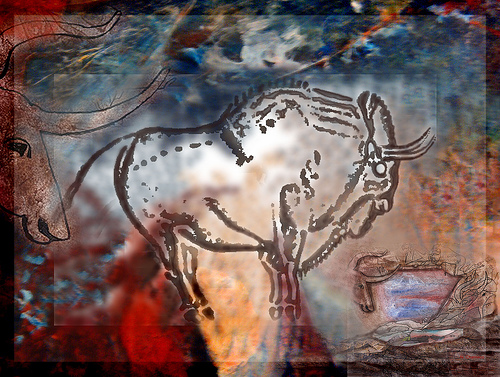
Image by N. Charneco

I am sitting in Leigh’s townhouse. From here I can see downtown Oakland, the Bay Bridge and now I can see downtown San Francisco; the city is just emerging from the morning fog, a cold grey silhouette. I knew it was there. For the past hour I’ve been sitting at the window, sipping coffee, waiting for the city to reappear. I wanted to see the moment. I wanted to be present when the city returned like Avalon from the mists of time.

Lora tells me that her mother used to stop what she was doing and go outside to watch the sun disappear beneath the horizon. Every evening of her adult life, for a few moments, she would step outside, feel the last rays of the days’ sun on her face and watch until the last hint of light dipped beneath the horizon. In my imagination she stepped out of her “to-do list” and for a few moments stood as a silent witness, present in the world.

These rituals of appearance and disappearance are much on my mind. There are cultures that face east in the dark predawn hours and sing so that the sun will rise. It took me years to understand that their song was not so much about invoking the sun to rise (a result) as much as it was about reaffirming their connection to the cycles of life (a relationship). While going through college I drove a bread truck to support myself. My route took me east so I saw the sun rise every morning. After several weeks of watching the sunrise something changed in me. I no longer watched sunrise as an event or a marker of time. The sun rising had little to do with time. It had everything to do with renewal and affirmation. The sun invoked a song in me and I sang with a kind of abandon I have not known since. It was an imperative. I had to participate in the reappearance of the sun.

My friends surprise me sometimes because they see my time in the bread truck as a hardship or as something beneath me. They say, “I don’t know how you did that.”  They do not understand; at that point in my life I had disappeared like San Francisco into the fog. I was in a liminal space, no longer what I was and not yet what I would become. I was like the body of the caterpillar gone to mush, unrecognizable with no hint of the butterfly yet apparent. I was lost and afraid. The bread truck was my cocoon. In the stillness of the predawn hours I regained the quiet of my mind. I lived simply. I delivered bread, I drank coffee, I ate hot baguettes, and each morning the sun raised from within me a song of renewal. In my bread truck I began to understand that my life would no longer be understood through results, lists, achievements, or outcomes. The meaning of my life would be defined by the quality of my relationships – and by that I mean my capacity to be present. Slowly, I appeared out of the fog.

Most of the people I coach are somewhere in the cycle of reappearing or disappearing. They are usually uncomfortable because they are still living under the expectation that their song must raise the sun (their focus is on the result). The things on their to-do list have overtaken the reason why they are doing them. We live in a society that has little awareness or appreciation of the cycles of life and sometimes I think my work is simply to give witness to the caterpillar as it reduces to mush. Disappearing is natural and necessary for the butterfly to emerge and the butterfly always emerges. The struggle is necessary. Resisting the change is like trying to keep the sun from going down.

Leigh is one of the world’s leading authorities on Rock Art (cave painting, petroglyphs, etc.) and his townhouse is a feast for someone like me. It is a treasure house of books and images from Rock Art sites – places where centuries ago humans scratched an image into rock or painted a picture on the wall of a cave. We don’t know why they made these images, we can only speculate about the figures and what they represent. I’m willing to bet that these people weren’t working for some effect or result. The images they created were less important than the relationships the image encouraged; the “doing” was in support of the “being” and happened in that space between disappearing and reappearing.