Truly Powerful People (134)

134.
Join me in inspiring truly powerful people. Each day I will add a new thought, story or idea to support your quest and mine.

Within the “story-I-tell-myself-about-myself” school of thought, I like the idea from Don Miguel Ruiz that all people grow through 3 primary roles in their journey through life. The roles are Victim, Warrior, and Seer. A role is nothing more than a commitment to a point of view. This progression is not linear; you don’t leave one role behind and move into the other (until the Seer is realized). They are fluid with one role serving as the primary mask.

The Victim is the role played in stories of “I can’t” or stories fueled by comparison or expectations of perfection. Playing the role of Victim is not unlike being an alcoholic: it is addictive, a dis-ease that requires a truckload of self-denial and self-abuse to maintain. There is gravity to the Victim role, a powerful orbit around the planet blame; to a Victim, things happen to you. For a Victim, the answer and the power are in other hands. The Victim does not generate; reaction to circumstance becomes the path of least resistance.

The Victim is dedicated to the point of view (belief) that they have no control over their life or their thoughts. Accompanying their dedication is an abdication of responsibility, an investment in circumstance. This is the drug. It feels good to be free of actual personal responsibility. It feels good to have someone to blame; the past or the boss or the other political party. There is a unique high in telling a tale of woe and injustice. Go to any public place; listen to the gossip, the stories of “what they did to me.” Watch the body language and you’ll see the need for more of the drug.

Most people say they want power until offered the responsibility for creating their own happiness. Empowered people empower others because they’ve discovered their commitment to the Victim and made a new commitment not sip from the cup of “look what they did to me.” They’ve decided to own their thoughts, change their language, their point of view and their actions. One thought at a time, one day at a time, they gain enough rocket power to break free of the gravity of their blame story.

And, some people go cold turkey. Their shift is quantum. They drop the Victim like an old suit of clothes.

Truly Powerul People (131)

131.
Join me in inspiring truly powerful people. Each day I will add a new thought, story or idea to support your quest and mine.

Dear Horatio,
There are many, many ways to suffer in this world. There is starvation and cold. There is war and the brutality that befalls people living in the way of a resource like oil, rubber or water. These are the obvious and are easy to see.

Many forms of suffering live only in our heads but are no less real because of it. They are spawned in pools of false expectations like trying to be perfect (whatever that means) or when false comparisons obscure your unique offer to the world. They come from false investments in a story that says you can or can’t do something or that you are not valid until…. These forms of suffering are insidious and pervasive; I see them everywhere. Almost every person I meet is suffering because they are hiding their investment in the idea that they are not good enough or that they can’t realize their dreams. They discount the road already traveled; they judge themselves for every decision. Hiding compounds the suffering and is exhausting.

I have read mountains of material on the fear of success and I doubt that it is success that we fear. It is being seen. It is vulnerable to show up 100% and make your strong offer to the world without investment in what others might think; without investment in how your offer (you) will be received.

When I am afraid I check in with what I am doing (am I making art or trying to please?). If I am trying to please I stop and throw away what I am doing because it has no merit. If I am making art I make a list of the actions I need to take. The actions are rarely difficult; the story I wrap around them is where the challenge arises. How can you take the actions without investing in the story? I break the actions into small steps. I take the first step and actively doubt the story I try to tell myself. The purpose of the story is to keep me from moving, to keep me from showing up. How can you invest in the actions and not the story?

[to be continued]

Truly Powerful People (112)

112.
Join me in inspiring truly powerful people. Each day I will add a new thought, story or idea to support your quest and mine.

I am walking alone in the desert. I am in Saguaro National Park, late on a February day, quiet inside myself, grateful to be away from the noise and pace of my life. I saw a trail, impulsively stopped the car, gauged how much time I had before the sun dipped beneath the mountains, and started walking. No one knows where I am. I have no phone. I feel free.

I’m 15 minutes down the path when I hear the coyotes. Not one, many. Many. They howl, not the kind of howl they might aim at the moon, this is a different sort, the kind that lets me know that I am a possible selection on the dinner menu. They are near, I can hear them but I cannot see them.

How quickly the illusion drops away, this idea that man is on the top of a pyramid. Once, when preparing for my first trip to Alaska, a friend told me, “You will love it there because you are no longer exempt from the food chain.” In this moment, I know that I am no longer exempt so I pick up a large stick, stand very still for a moment, and then carefully, quietly, and with surprising reverence retrace the path back to my car. I do not hurry, I do not run, I don’t know why. My invisible escort is with me most of the way.

Once back in the car I recognize this feeling that I have not felt deeply since I was a child: respect – and not the superficial respect that comes in pop songs or appears on lists of expectations – the kind that is born of veneration. I begin to shake, not from the adrenaline of being escorted to my car by coyotes but the recognition of how rarely I am in relationship with anything real, experiences that are not constructed, values that are not abstractions, problems of any true significance. I wonder if anything in my day-to-day life is real or has any worth beyond the value I assign it. When was the last time I saw beyond the labels or gave myself over to the enormity of the stars?

Lean Into Something Bigger

photo courtesy of Lora Abernathy

I met Bob when I was in college. He was directing a production of Romeo and Juliet at a local community theatre. I auditioned and he cast me as the County Paris – the guy Juliet is supposed to marry but loathes. Paris, the character, is a man of privilege. If he lived in our world he’d attend Harvard like his father and his father before him. After school he’d accept a position at the family law firm where he’d be groomed for a step into politics. He would belong to the country club, have multiple homes, wear all the right clothes, and have a battery of advisors carefully crafting his image. Juliet would have been chosen for him because of her breeding and her father’s position in society. In the play, the character, Paris, serves a function – he is a form of social pressure on the lovers, he represents the expectations, what Juliet is supposed to want. The social expectations crush the young lovers, including Paris.


Bob’s close-cropped grey hair sat above a face shaped like the full moon but was weathered brown and cracked by long hours in the sun. His broad easy smile scored deep trenches that ran from his eyes. His Cheshire grin was always punctuated by a hearty, “bitchin’!”


During the day he was a caretaker and gardener of luxury houses built just outside the city limits of Santa Fe, houses occupied by their owners only a week or two each year. Early each morning he’d drive his aging powder blue Volkswagen beetle to one of the houses. He’d get stoned, rake leaves, prune trees, sweep patios, he’d take care of the minor repairs and in the afternoon he’d climb onto the roof, eat apples, cheese, and good crusty bread. Sometimes he’d stay on the roof until the sun dropped beneath the horizon. He loved the quiet of it, the no-rush of it.


Bob had a great passion for the theatre and absolutely no gift for it; he was the Ed Woods of the local theatre scene. He cared deeply for the people, the doctors, waitresses and accountants that stole a peak behind the curtain of their desire and, for a short while, could say they were actors in a play. He loved that. He adored the engagement with the play and his excitement was infectious. No one cared whether his productions where good or bad. It didn’t seem to matter that much.


Life for Bob seemed like one giant finger painting and he delighted in showing the marks on the paper and the color on his hands. He could make a fantastic mess and yet there was always a rose that blossomed through the wreckage.


Before his life as a gardener Bob was a movie executive. He was Icarus and flew too close to the sun. He lived a fast paced life and was enamored with the bright lights and the prestige of his position. He told me that his relationships were superficial and based on usury and status. He lived in that cocktail culture (you know the one) in which you smile and look over the shoulder of the person to whom you are talking to see if there is someone else more important at the party. The higher he flew the emptier his life became. One day while previewing a film in his private viewing studio he stood up, not knowing why, he fled his office, got in his flashy fast car and drove east until the car ran out of gas. He abandoned it on the side of the road and kept walking. He has no memory of how he got to Santa Fe or how he got to the nunnery. He remembers the sisters teaching him to prune and to weed the plants. They taught him to care for the garden and helped him process his grief and eventually reclaim his sanity. It was a long fall and a slow slog out of a muddy depression.


Having lived a life of wealth without meaning, consumption without substance – and having died to it – Bob had eyes uncluttered by the debris of excess that obscures most of our lives. He released his American-style attachment to lack and ceased trying to fill the gap with stuff and status. He stepped into the gap. Most people feared him so they wrote him off; “he was a loser,” he was “just a gardener.”


Recently one of the participants in our tele-coaching class asked, “Why don’t we do what we want to do? Why don’t we do what we know is good for us, when we know it is good for us?” In other words, why do we desire to be a writer but refuse to make time in our lives to write; why do we continue smoking even when we know it will kill us; why do we yearn for something more and turn on the television to blot out the yearning?


To do those things you have to let go of other things, you have to lean into something bigger.


I’ve come to believe that asking the question, “why?” often doesn’t matter. There is an action and there is the story you wrap around that action. In fact, asking “why” can be a dodge, a defense against making the change you want to make. It is to believe that if you can rationalize your behavior, if you can possibly understand what you do, you will change it. Despite what we want to think, there is no sense to be made of yearning, there is no rational explanation for passion; those impulses swim in pools deeper than the intellect can reach.


Bob asked himself the question “why” for years: “why do I feel so empty?” He had to fall to the earth before he stopped asking “why?” Like Paris, he was in love with the idea of success and traded away the essential for the superficial. He was crushed by his own social expectations. After Bob re-emerged he no longer concerned himself with questions of worth or the angst of wondering “why.”


Bob was leaning into something bigger.


One autumn day Bob found me in tears sitting in the plaza. After college I decided to stay in Santa Fe for a while. Unlike Icarus I was afraid of my wings so I refused to put them on. I wasn’t ready. I needed a job. I thought I had to do what was expected because I could not imagine doing what I wanted to do. I took a position in the office of a financial advisor. My job was to make cold calls while my boss sat across the desk looking at me, waiting for me to “snag a live one.” I hated it. Several hundred numbers into my call-list an elderly woman answered the phone and I asked to speak to her husband (his was the name on my list). She told me that he’d died the night before and she started to cry. My boss demanded that I hang up but I couldn’t. She sobbed. My boss glared at me and hissed that I was wasting time. She caught her breath and asked why I was calling and I was too embarrassed to tell her. I’d lasted for less than a day. After the call I fled the office and sat in the sun in the plaza and cried.


“So, what did you tell the old lady?” Bob asked after listening to my story.


“There was no answer to ‘why?’ that I could stomach.” I whispered. “I apologized and told her it didn’t matter. I told her I was sorry for her loss.”


“Bitchin,” he smiled, unwilling to participate in my tale of woe.


He winked and said, “I think you’re ready to be just a gardener!” He jumped up like a kid who had money for the ice cream truck – and shouted over his shoulder that he’d pick me up in the morning.


This world has never made much sense to me (and I suspect it makes no sense to most of us). For a few months in a tender time I worked as “just a gardener” with a man who’d fallen from the sky and lived. Without saying a word (well, except for,“Bitchin’”) I learned from him to lean into something bigger.

Two Practices Useful For Stepping Off The Edge

This is an excerpt from my forthcoming (and yet to be titled) book in collaboration with Patti Digh

Photo by Paulo Brabo

.

Two Practices

There must be a moment when the butterfly, newly emerged from the cocoon, virgin wings gently flapping, untested and unknown, releases for the first time its hold on the branch; it cannot know what will happen because it has never experienced flight and yet it lets go. It steps into space. Can you imagine? The earthbound caterpillar following an internal imperative, an impulse devoid of sense-making, weaves a chamber around itself and falls into a deep sleep, fully protected, safe and warm. When it awakens it is profoundly changed. Does it wonder, “who am I?” Its once comfy cocoon is now a complete misfit for its body, a giant cramped in a kid’s bed it wrestles mightily to be free of this tight chamber. Once free of its wrapping it shakes and stretches its new body for the first time – and recognizes nothing about itself. Had it a mirror it would gape at its reflection looking for some remnant of its former self. Nothing in its experience has prepared it for a body with wings. Nothing in its experience has prepared it for that first big step into space. And, at the same time, every impulse in its body says, “Let go! See what happens!” The same imperative that drove the caterpillar into the cocoon fulfills itself in when the butterfly steps into space.


We do not underestimate how difficult it is to step out of the cocoon of the story you tell yourself about yourself though, if you are reading this book, you are probably like the newly minted butterfly still locked in the cocoon of an old story. You are following an inner imperative that makes no intellectual sense. If you are like the rest of us you daily ask yourself, “What am I doing?” Following an inner imperative necessarily comes with struggle because, like the butterfly, it requires you to leave the safety and comfort of everything you know and step into a new way of being that makes no sense from the old perspective. The struggle to be free of the cocoon is necessary – in fact it is vital to the growth and survival of the butterfly. In fact, if you help a butterfly out of its cocoon, if you try to eliminate the struggle, you will kill it. The inner imperative requires an obstacle and this is true in every process of transformation.


To help you begin the process of wrestling your way out of the old story we offer these two practices that are helpful in the struggle – these are the first of sixteen practices and form the foundation upon which all the others are built. And as is true of every practice we offer, you will only benefit from them if you practice them. They are practices; they are not inert concepts:


Have the experience first and then make meaning of the experience second. Much of what we ask you to do won’t make sense until the end of the series. Making meaning second is actually how things work naturally with your brain and yet we find most people invested in the idea that they need to make sense of something BEFORE they try it; that’s folly and will keep you in the cocoon forever. It’s the equivalent of the butterfly standing on the branch saying, “No Way! I’ve never done this before! I don’t care what the rest of you do but this caterpillar is keeping its belly safe on the ground!” Following an imperative rarely makes sense until after you step off the branch. So, we ask that you suspend your need to know, your need to control, your need to be right and open yourself to having experiences that may or may not make sense.  We promise the meaning will emerge – it always does. Practice having the experience first and then make meaning of the experience second.


All significant learning happens at the edges of your comfort zone. Think about it: it is generally uncomfortable to “not know.” In fact, most people go to great lengths to create the illusion that they know because to “not know” is vulnerable. The first thing we do when we are uncomfortable is to judge ourselves and/or others, usually both. When you go into judgment you impede your capacity to learn. Self-judgment creates a thick blanket of fog around you; it’s one of the most dense stories you can generate and (obviously) obscures your capacity to see. Ironically, most of us have an inner superhero that tells a great story about what it does in the face of danger but has no idea of what it really does when uncomfortable. The second practice is to suspend your judgments and learn: witness what you actually do at the edges as opposed to what you think you do. Suspending your judgments allows you to see and honor your choices: running away is just as valid as jumping over the edge or standing very still –  they are valuable because they are conscious choices available to you whey you give yourself the gift of not having to know. Suspending your judgment affords you the privilege of learning something new.

The Invisible Silk Robe (Part 2)

The heroine or hero of a story, in order for the transformation to be possible, must take enormous risks – literally or metaphorically going to the place you’ve been warned never to go. This is the unknown place, filled with monsters or dangerous trials from which no one ever returns; in story (metaphoric) terms this means that if you do return from the adventure, you will be different – the person who went on the adventure is not the person who returns.

Stories are helpful – if you know how to read them – because they beg you to consider where in your life you are withholding your voice, not speaking your truth. How do you choose safety at the expense of your growth? What do you know in your gut that you need to do but are resisting? How bad does it have to get before you walk toward the place you are most afraid to go?

II. Speaking Truth

It was a special day. The King was to dine with their master that night. That’s why the cook let the young wife go without nicking to her face with the cleaver. All must be beautiful in the eyes of the king.  As she polished the finest china and silver, the young wife knew she had to find a way out of this hell.

The king was a renowned dandy and was given to fashion and high style. His closets were vast and full. He was known to change his clothes several times each day. He kept his designers and tailors busy and hated to be behind the trends. As far as he was concerned, one of his main duties as king was to set the fashion standards. Had there been photographers in his day he’d have legislated that only his photograph could grace the cover of the gentlemen’s fashion quarterly magazine.

Dining at the homes of his advisors was one of his favorite ploys to “be seen.” He thought himself quite clever to make his subjects think that he was a ruler of the people by occasionally gracing their homes with his presence – when actually he was designing opportunities to peacock his latest get-up.  So, the king arrived at the appointed time, sweeping out of his coach, the young wife’s master bowed deeply and gushed about the king’s appearance while hordes of onlookers peeped through the fence and from the rooftops.

All of the servants had been scrubbed and dressed and put on display for the royal welcome. As the king passed the house staff they bowed and averted their eyes after the appropriate gape at the king’s finery, of course. The stable staff followed suit and then, as the king swept passed the kitchen staff, all bowed except the young wife, who, for a moment stood looking in horror at the king. She gasped, “oh my,” and then attempted to bow like the others but could not help taking another look at the royal garments. The king, of course, stopped and glared at the young wife, who averted her eyes and blushed.

The king glowered at the young woman; clearly she was a foreigner. As the master of the house begged the king’s pardon and appealed to him to ignore the impertinent woman, the young wife stole another quick glance and visibly shuddered. The king was offended and demanded that the young woman step forward. She obeyed, keeping her eyes averted as the rest of the staff cowered at the royal disapproval. The king puffed himself up and in a wounded tone asked the young woman what on earth inspired her behave in such a manner. In a whisper, the young wife answered that, she wished to respond but did not wish to “embarrass my lord in front of the household.”

The king raised his eyebrows. Did she not know that he could have her killed? He swallowed hard and dismissed his attendants. The young wife asked that her master, also, leave them for a moment. Fuming, the master followed the servants into the house, leaving the young woman and the king all alone.

“Now,” hissed the king, “tell me why you shuddered at my appearance?”

The young wife replied, “My lord, I meant no disrespect. In my country I am considered a master weaver and have many times made beautiful clothes for the king. I have woven such beautiful clothes; my finest was a copper-colored silk robe for the king of my country. It was like the thin silk robes that must be worn in the divine world. In comparison to my king, my apologies, my lord but you look like one of his servants.”

The king was stunned into silence. The hot blood of rage rushed into his face.

(to be continued)

Sing To The Sun

Image by N. Charneco

I am sitting in Leigh’s townhouse. From here I can see downtown Oakland, the Bay Bridge and now I can see downtown San Francisco; the city is just emerging from the morning fog, a cold grey silhouette. I knew it was there. For the past hour I’ve been sitting at the window, sipping coffee, waiting for the city to reappear. I wanted to see the moment. I wanted to be present when the city returned like Avalon from the mists of time.

Lora tells me that her mother used to stop what she was doing and go outside to watch the sun disappear beneath the horizon. Every evening of her adult life, for a few moments, she would step outside, feel the last rays of the days’ sun on her face and watch until the last hint of light dipped beneath the horizon. In my imagination she stepped out of her “to-do list” and for a few moments stood as a silent witness, present in the world.

These rituals of appearance and disappearance are much on my mind. There are cultures that face east in the dark predawn hours and sing so that the sun will rise. It took me years to understand that their song was not so much about invoking the sun to rise (a result) as much as it was about reaffirming their connection to the cycles of life (a relationship). While going through college I drove a bread truck to support myself. My route took me east so I saw the sun rise every morning. After several weeks of watching the sunrise something changed in me. I no longer watched sunrise as an event or a marker of time. The sun rising had little to do with time. It had everything to do with renewal and affirmation. The sun invoked a song in me and I sang with a kind of abandon I have not known since. It was an imperative. I had to participate in the reappearance of the sun.

My friends surprise me sometimes because they see my time in the bread truck as a hardship or as something beneath me. They say, “I don’t know how you did that.”  They do not understand; at that point in my life I had disappeared like San Francisco into the fog. I was in a liminal space, no longer what I was and not yet what I would become. I was like the body of the caterpillar gone to mush, unrecognizable with no hint of the butterfly yet apparent. I was lost and afraid. The bread truck was my cocoon. In the stillness of the predawn hours I regained the quiet of my mind. I lived simply. I delivered bread, I drank coffee, I ate hot baguettes, and each morning the sun raised from within me a song of renewal. In my bread truck I began to understand that my life would no longer be understood through results, lists, achievements, or outcomes. The meaning of my life would be defined by the quality of my relationships – and by that I mean my capacity to be present. Slowly, I appeared out of the fog.

Most of the people I coach are somewhere in the cycle of reappearing or disappearing. They are usually uncomfortable because they are still living under the expectation that their song must raise the sun (their focus is on the result). The things on their to-do list have overtaken the reason why they are doing them. We live in a society that has little awareness or appreciation of the cycles of life and sometimes I think my work is simply to give witness to the caterpillar as it reduces to mush. Disappearing is natural and necessary for the butterfly to emerge and the butterfly always emerges. The struggle is necessary. Resisting the change is like trying to keep the sun from going down.

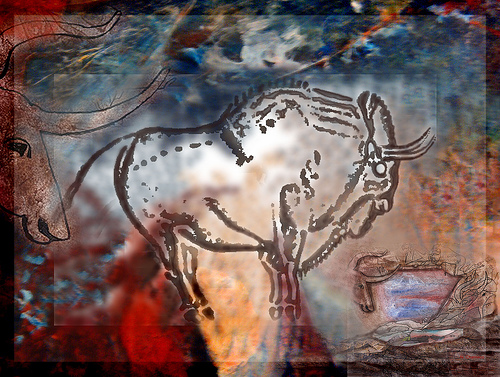
Leigh is one of the world’s leading authorities on Rock Art (cave painting, petroglyphs, etc.) and his townhouse is a feast for someone like me. It is a treasure house of books and images from Rock Art sites – places where centuries ago humans scratched an image into rock or painted a picture on the wall of a cave. We don’t know why they made these images, we can only speculate about the figures and what they represent. I’m willing to bet that these people weren’t working for some effect or result. The images they created were less important than the relationships the image encouraged; the “doing” was in support of the “being” and happened in that space between disappearing and reappearing.

See Like Celeste

“The life of every man is a diary in which he means to write one story and writes another, and his humblest hour is when he compares the volume as it is with what he vowed to make it.” James Barrie

Celeste died last week. Megan gave birth to her first child, a daughter. Stephen graduated from high school. Sally had a life changing epiphany. Dado brought the mail as he does each weekday; you can set your clock to Dado yet he always seems to have plenty of time to talk. Bruce came to visit after a seven-year absence. Tess had her teeth pulled and then had a birthday. Lora sold her first photograph in a gallery. And then her second and her third. Amy shared her poems and also shared a dream. Pete made a collage and had it printed; he’s making a portfolio, his first. Harald and I each drank a Stone and later split an Arrogant Bastard. And that was before dinner. Lisa took a vacation, a trip with her son. She will marry Harry in July. Don walked to the bank on the first sunny day of the season. Arnie returned from travels abroad and left a message on the machine. Dane had a conversation with his friend Brian, a mechanic. They have rules about what they can talk about: no politics, no religion, no talking about wives. Tania and Chan bought their first house. Kate sent a hilarious limerick. Lorilee shared photos of her green wall. Gwyn wept. Rosemary and Lona sent poems for the tribute Judy was assembling. Carol resurfaced. Scott asked for advice. Mark prepared his ship for Alaska (seriously) after he went to drawing class. Makaela wore a dress to the opening of the museum she helped create. Patti wrote an obituary, prepared a eulogy, and helped Nina live more comfortably – all in a single day. Joe walked by the tide pools and laughed with delight. Stephen (another Stephen) rolled his paintings out for us to see; he had fire in his eyes. Nicole brought chocolate and shared it! Ana went home and faced her demons. They were not as big as she remembered. Theresa knew what coffee to make before I even ordered it. Made brought popsicles and comfort. Class met and embodied a purpose. Sue offered her thoughts. Kendy asked for prayers for Max. Max had surgery on his heart. We bumped into Diane in the hospital, to our great delight as we’d lost touch with her. Kathleen is off-loading the stuff of her life. Her sister came to help. Liz has a new garden. Duncan drank really good coffee and watched his first episode of LOST. Joyce interviewed Alan and is looking for others to interview. John is designing and building furniture for a restaurant because he’s never done it before. Beau catered a meal for 300. Margaret got lost in her thoughts. Ken sent his congratulations.

I could go on and on and on. This list barely touches the marvels of this week.

Celeste died quite suddenly. She was 82. Because she was so alive her death at age 82 came as a shock. She taught me that James Barrie had it all wrong. I think she would have rewritten his quote this way:

“The life of every person is a diary in which we mean to write one story and write another. Our humblest hour is when we realize the story we meant to write is not nearly as interesting as the story we actually lived, if only we had the eyes to see it.”

Celeste had the eyes to see it; she savored it – each and every moment. If you had met her, you’d have found yourself savoring a bit of life, too. Her enthusiasm and present-focus was infectious. Like me you’d be making a list of all the little moments and the big that happen each week in your life, a practice to remind yourself that the value of your life is not in the Academy Award that you may never win, it is in the relationships that that you probably discount; it is in the present moment that you miss because you are flailing yourself for not being something or somewhere else.

In response to my question, “What do you bring?” this is how Celeste replied:

“I bring a willingness to be open to whatever excitement is waiting!  I look into the eyes of each person I see, and have my arms ready if a hug is appropriate.”

Yes. That’s it.

Meet Beneath The Boardroom Table

“A single event can awaken within us a stranger totally unknown to us. To live is to be slowly born” Antoine de Saint-Exupery

Sam is an extraordinarily gifted facilitator and coach. His specialty is helping corporations have hard conversations. Let’s face it, people in organizations are no better than people in other forms of relationship at having difficult conversations. Like the rest of us they don’t want to feel uncomfortable so, when discomfort looms, they chatter, that is to say, they avoid, deny, pretend and ignore their distress. When their dis-ease swells to the point of silence, they call Sam.

One day Sam was working with an executive team at a multi-national corporation: people in power suits seated in high-back genuine leather chairs around a larger-than-life, acres-long, mahogany and oak boardroom table. And, although the coffee was served in china cups, the fruit plate was fresh and aesthetic, his clients paid no attention, employing every avoidance strategy in their arsenal: blackberries were clacking and cell phones were binging, assistants were beckoning; status toys are fantastic tools for avoidance. Sam tried everything in his arsenal to crack their citadel of “professionalism.” “Professionalism” is a favorite ruse of businesses to avoid meaningful contact:  under the guise of “professionalism” business folk posture and pretend that they are not comprised of people in relationship; they will, if pushed, cop to being ‘people’ as long as the definition of ‘people’ includes 1) compartmentalizing themselves so that their feelings do not interfere with their powers of reason (thereby rendering themselves less than human), and 2) pretending that they believe #1 is actually plausible; you know, “business is business,” “nothing personal,” and so on. With relationship comes responsibility and responsibility is the last thing most businesses want (the legal department has cautioned against it). To have a meaningful conversation, especially a difficult one, even “professionals” must first entertain the possibility of entering into a relationship. Do you see Sam’s dilemma?

After a morning of extreme executive evasion, in exasperation, Sam did the unthinkable. While the team yammered on about anything other than what they needed to discuss, Sam ever so slowly slid out of his leather power chair until he disappeared from view beneath the table. In the shocked silence that followed, Sam watched all the executive legs fidget until finally one curious face peaked beneath the table. Sam waved and motioned for that person to join him. Then another face, looked. Sam and his new ally waved and motioned and that person slid under the table, too. One by one, all of the power suits slid under the table and joined Sam, leaving their status toys behind. When they were all “under the table,” Sam whispered, “Now that we’re under the table, can we finally begin talking about what’s really going on in this organization?” They laughed together and began a very difficult and honest conversation that addressed the real issues impeding their growth, a conversation that included their feelings.  They left behind their individual stories of blame and victimization and began the process of creating a new narrative together, a narrative that included the possibility of feeling discomfort.

When Sam slid under the table, he cracked their masks of professionalism, neutralized all the roles being played, and removed for a while the status games being waged so that his clients, a group of people in relationship, could reach beyond their compartmentalization and grasp what was personal and relevant about their challenges and their lives. He made them aware of the destructive story they were playing and helped them imagine themselves playing a different story, one that included support and collaboration along with competition and success. I imagine the old story was lonely to play so the new story must have come as somewhat of a relief.

I think of Sam slowly sliding beneath the boardroom table every time my courage fails me and I think I “should do” something “because that’s what is expected” or “it’s the way things are done.” I think of Sam every time I cast a group I am about to engage in the role of “enemy” or convince myself that “they” will meet me with resistance. Any time I stereotype a person or diminish another’s point of view (or my own), I imagine myself sliding down my high-backed red leather chair, surrendering my status, and slipping into the unknown beneath the power table because that’s where the shoes can come off, the collars unbuttoned, and the humans – uncompartmentalized, vulnerable, and responsible to each other – can see beyond their dramas and find each other again.

Step Out Of The Fog

Shadows Of Imagination by Maggie's World

We are hardwired for story. We can’t help it; it is what we do. We interpret, we judge, we speculate, we remember, we ponder, we investigate, we justify we imagine,…we story. Meaning-making and interpretation are processes of story. We narrate each moment of our lives. I call this the-story-you-tell-yourself-about-yourself.

The-story-you-tell-yourself-about-yourself is often hard to see because, well, you don’t see it as a story.  It’s your life and you are so used to the inner-narrative that you stop recognizing your self as the narrator/interpreter of your life. Your thoughts, judgments, comparisons, expectations, investments, aspirations and fears are your story. As much as you want your point of view to be fact, it’s not. It is truth relative to you but not to anyone else. These stories you tell do not exist outside of you; they are your creation. Don’t let anyone tell you that you aren’t creative! We are, each of us, masterful storytellers.

Neil Postman writes,”Our genius lies in our capacity to make meaning through the creation of narratives that give point to our labors, exalt our history, elucidate the present and give direction to the future. To do their work, such narratives do not have to be “true” in a scientific sense…. The purpose of a narrative is to give meaning to the world, not to describe it scientifically.”

It’s when we confuse our story for truth that we get into trouble. There is an image that I love from the story of Sisyphus. It illuminates both the power and the problem of this inner storytelling:

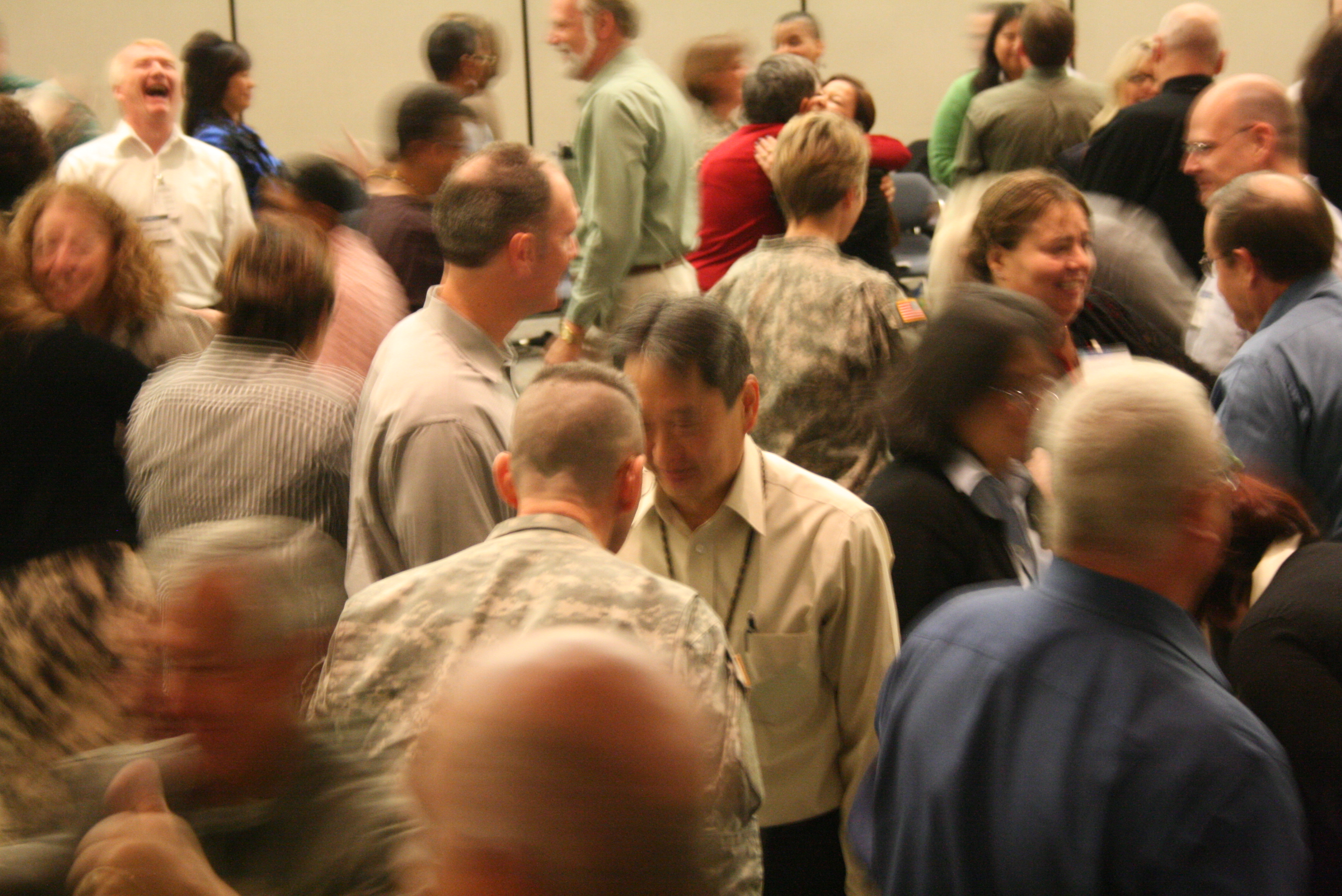
Sisyphus has been taken to the underworld. He’s in trouble for making the gods look bad – twice. He has crossed the river Styx but isn’t yet allowed to get out of the boat. He has to wait and while he waits, he watches all the other souls file off the boat and mingle on the banks of the river. He is stunned when he realizes that each soul is so invested in their story that they don’t realize they are surrounded by other souls; even though they are in a crowd, each believes they are alone. Their story wraps around them like a blanket of fog, their inner chatter obscures them to the presence of others.

The-story-you-tell-yourself-about-yourself becomes an especially thick fog when used to belittle the teller (you). Using your story against yourself is guaranteed to isolate you. It is hell. Stories of “I’m not good enough” or “I have to be perfect.” Stories of “I am racing to get there,” stories of “past shames” and “future fears.” Stories act like a dense fog when they swirl around you and pull your focus from the present moment.

The lesson I most appreciated in art school came during the first class of the first semester. The professor, a short burley man who wore a walrus mustache and smelled of pipe tobacco asked us to examine a yellow #2 pencil. His simple question made us roll our eyes, “What color is the pencil?” We groaned and yawned in unison, “Yellow!” and acted as if the poor man was daft. He asked us to look again, to really look. He challenged us to see what was there and not what we thought was there. When I looked again, really looked beyond my thinking, I saw an explosion of color, reds, greens, and purples. I saw beyond my abstraction (story) and what was before me came to life. It was a festival of light and shadow all dancing in the form of a #2 pencil. For a few moments I suspended my story; I saw.

As Sisyphus sat in the boat, watching all the other souls wander lost and alone, wrapped in a fog of their own creation, he saw. He awoke to the story-he-tells-himself-about-himself and knew that it was not truth. He chose to tell a different story. The myth tells us that his new awareness transformed him. He became present in his life.

We are hardwired for story. We can’t help it; it is what we do. And, like Sisyphus, we have the capacity to recognize our story for what it is, and tell a different story. We have the ability to step out of the fog.